
When Memory Care Becomes the Safer Choice for Alzheimer’s
Memory care for Alzheimer’s patients provides 24-hour supervision, dementia-trained support, secure spaces, help with daily routines, and activities designed for cognitive decline. It may be the right next step when a parent is wandering, missing medications, falling, struggling with personal care, or when care at home is no longer safe or sustainable.
For many families, the goal is not simply to find a place to live. It is to find a setting where a loved one can have structure, comfort, dignity, and meaningful connection – while the family gains clearer communication and less day-to-day worry.
Alzheimer’s changes over time, and the right care setting can change with it. Assisted living may work for someone who needs limited support. Memory care adds specialized dementia programming and safety measures. Skilled nursing is generally intended for people with more intensive medical needs.
This guide explains what to look for, how to compare options, what memory care may cost, and how to make a difficult transition with more confidence.
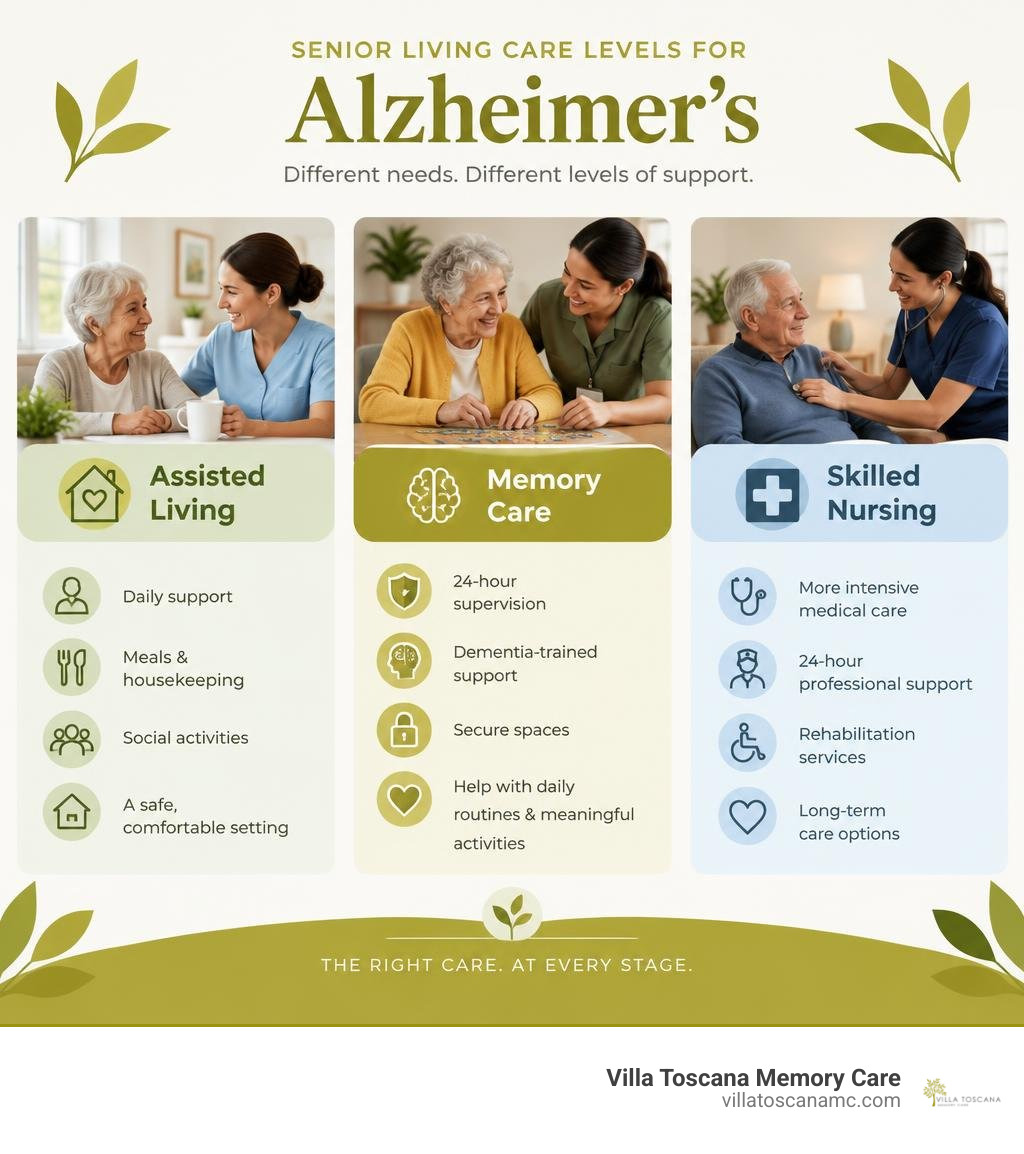
Quick memory care for Alzheimer’s patients terms:
What Defines Memory Care for Alzheimer’s Patients?
Memory care is a specialized form of residential senior living designed specifically to meet the unique, evolving needs of individuals experiencing Alzheimer’s disease and other forms of dementia. Unlike standard residential communities, memory care environments integrate structured daily routines, secured architecture, and highly individualized cognitive support to ensure resident safety, reduce confusion, and foster emotional well-being.
At its foundation, memory care provides around-the-clock supervision by professionals trained in the progression of neurodegenerative diseases. Rather than viewing behaviors like agitation, repetition, or pacing as disruptions, memory care teams understand them as expressions of unmet physical, sensory, or emotional needs. For an authoritative medical perspective on what these environments entail, the Harvard Health guide on memory care options emphasizes how purpose-built programs and clinical oversight help preserve autonomy while providing an essential safety net.
Comparing Assisted Living, Memory Care, and Skilled Nursing
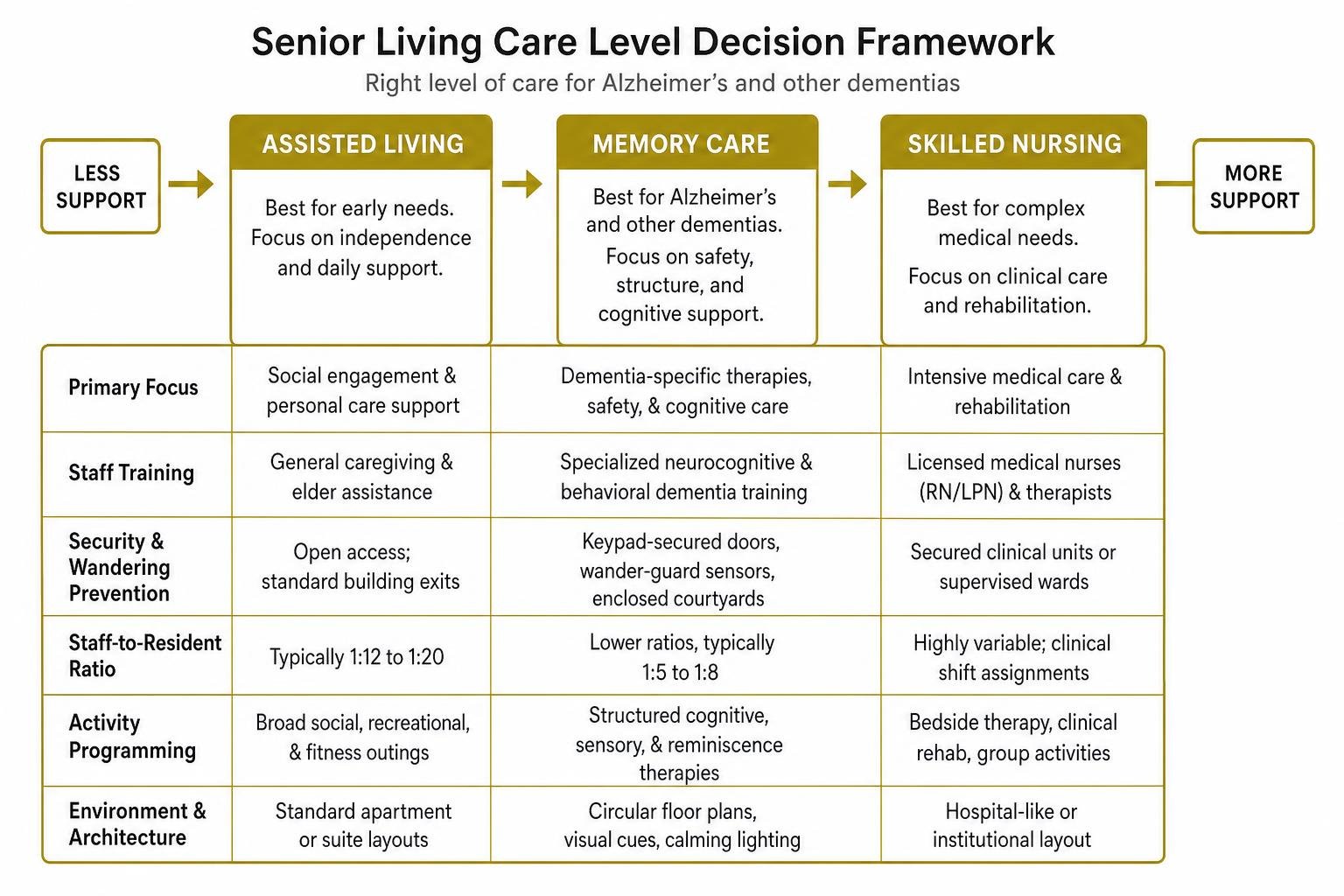
Choosing the right level of support requires understanding the fundamental differences across the spectrum of senior living. While standard assisted living offers basic support with activities of daily living (ADLs) such as dressing and meal preparation, it lacks the specialized security protocols and neurological support needed for mid-to-late-stage dementia. On the other end of the continuum, skilled nursing facilities focus on clinical, hospital-level medical intervention.
Understanding the differences between memory care and skilled nursing helps families choose an environment that balances clinical capability with quality of life.
| Feature / Care Level | Assisted Living | Memory Care | Skilled Nursing Facility |
|---|---|---|---|
| Primary Focus | Social engagement & personal care support | Dementia-specific therapies, safety, & cognitive care | Intensive medical care & rehabilitation |
| Staff Training | General caregiving & elder assistance | Specialized neurocognitive & behavioral dementia training | Licensed medical nurses (RN/LPN) & therapists |
| Security & Wandering Prevention | Open access; standard building exits | Keypad-secured doors, wander-guard sensors, enclosed courtyards | Secured clinical units or supervised wards |
| Staff-to-Resident Ratio | Typically 1:12 to 1:20 | Lower ratios, typically 1:5 to 1:8 | Highly variable; clinical shift assignments |
| Activity Programming | Broad social, recreational, & fitness outings | Structured cognitive, sensory, & reminiscence therapies | Bedside therapy, clinical rehab, group activities |
| Environment & Architecture | Standard apartment or suite layouts | Circular floor plans, visual cues, calming lighting | Hospital-like or institutional layout |
Staffing Standards and Specialized Training
The quality of daily life within a memory care community hinges on the expertise, empathy, and consistency of the care team. Caregivers in dedicated memory care settings receive extensive education in validation therapy, non-verbal communication, fall mitigation, and gentle redirection. These techniques prevent behavioral crises without relying unnecessarily on sedating medications.
Furthermore, lower caregiver-to-resident ratios allow staff to notice subtle changes in appetite, gait, hydration, or mood before minor issues escalate into medical emergencies. State regulations establish minimum staffing guidelines, but premier communities often exceed these base standards to deliver truly individualized attention. Families exploring options can learn more about state mandates by reviewing staffing ratio requirements and regulations.
Key Indicators It Is Time for Memory Care
Determining the right time to transition a loved one from home care to a specialized residential setting is rarely simple. In many instances, the tipping point involves progressive safety risks, escalating health challenges, or severe caregiver exhaustion.

Common warning signs include:
- Frequent Medication Errors: Missing vital doses, taking duplicate medications, or confusion surrounding prescriptions.
- Unintended Weight Loss: Forgetting to prepare meals, inability to safely operate kitchen appliances, or forgetting how to chew and swallow properly.
- Worsening Hygiene and Self-Care: Wearing soiled clothing, refusing to bathe, or difficulty managing basic personal grooming.
- Sundowning and Agitation: Increasing confusion, pacing, anxiety, or aggression in late afternoon and evening hours.
- Caregiver Exhaustion: Primary family caregivers experiencing severe sleep deprivation, chronic stress, or declining physical health. Families facing this reality can explore practical strategies to relieve caregiver stress and burnout before a crisis occurs.
Managing Wandering Risks and Fall Prevention
Wandering is among the most alarming behaviors associated with Alzheimer’s disease. An individual may attempt to “go home,” search for a long-deceased relative, or leave the house to head to an old workplace. Without round-the-clock monitoring, wandering can quickly lead to elopement, exposure to extreme weather, and severe injury.
Dedicated memory care communities incorporate passive monitoring technologies, delayed-egress emergency doors, and disguised exits to keep residents secure without making them feel imprisoned. Additionally, dementia significantly alters depth perception and gait, greatly increasing the likelihood of balance loss. Understanding proactive home and community fall prevention can help family caregivers evaluate whether home modifications remain adequate or if a specialized physical space is required.
Addressing Progressive Symptoms and Frontotemporal Decline
While Alzheimer’s disease is the most common form of dementia, other neurodegenerative disorders introduce distinct clinical challenges. Conditions such as Lewy body dementia, vascular dementia, and frontotemporal dementia (FTD) present with early personality shifts, loss of social inhibitions, or significant motor changes.
Properly identifying frontotemporal dementia symptoms ensures that care plans are tailored to specific neurobehavioral profiles rather than relying on a one-size-fits-all approach. Memory care teams adjust their engagement strategies to match the specific subtype and stage of cognitive impairment.
Therapeutic Programs and Environmental Design
Purpose-built memory care facilities move beyond standard custodial care by turning the physical space and daily schedule into therapeutic tools. Through deliberate sensory design, consistent rhythms, and life-enrichment programming, residents experience lower stress and improved cognitive function.

Therapeutic Activities in Memory Care for Alzheimer’s Patients
Engaging the senses and unlocking preserved long-term memories provides immense comfort to individuals with cognitive impairment. Effective memory care programs incorporate structured, failure-free therapies such as:
- Reminiscence Therapy: Using vintage objects, historical photographs, and familiar music from a resident’s youth to spark conversation, reduce anxiety, and reconnect them with their personal identity.
- Music and Expressive Arts: Melodic memory often remains intact long after verbal language declines. Interactive music programs evoke emotional connection, stimulate dopamine release, and reduce agitation.
- Sensory Engagement and Pet Therapy: Tactile experiences, therapeutic gardening, and gentle animal interactions ground residents in the present moment, satisfying deep emotional needs for companionship and touch.
- Structured Physical Movement: Chair yoga, gentle stretching, and accompanied walks preserve joint mobility, improve balance, and enhance nighttime sleep patterns.
To explore how these daily interventions foster purpose, read more about enriching sensory activities for seniors with cognitive decline.
Modern Architectural Features and Environmental Innovations
The layout of a memory care community plays a profound role in reducing confusion and preventing distress. Modern architectural standards incorporate several evidence-based design elements:
- Continuous Circular Pathways: Hallways designed in gentle loops eliminate frustrating dead ends, allowing residents to walk and pace safely without becoming trapped or anxious.
- Circadian Lighting Systems: Dynamic indoor lighting mimics natural daylight cycles, supporting the body’s internal clock and mitigating late-afternoon sundowning symptoms.
- Wayfinding and Visual Contrast: High-contrast color palettes help residents distinguish doorways, bathroom fixtures, and seating areas. Clear visual cues, memory boxes outside bedroom suites, and intentional focal points aid independent navigation.
- Secure, Accessible Outdoor Spaces: Enclosed courtyards and secured therapeutic gardens offer safe access to fresh air, sunlight, and nature.
Families interested in modern layout strategies can review recent award-winning dementia care architectural innovations that define exceptional environments.
Financial Planning and Paying for Memory Care
Planning for the financial aspects of memory care requires an understanding of community pricing models, bundled services, and available benefit programs.
Evaluating the Cost of Memory Care for Alzheimer’s Patients
The cost of memory care reflects the extensive 24-hour staffing, specialized therapeutic programming, and secure architectural infrastructure required. Nationwide, the average annual cost for comprehensive memory care in a specialized U.S. nursing facility ranges around $104,025 for a semi-private room to $116,800 for a private suite, though residential memory care communities often offer bundled, all-inclusive monthly structures.
Base rates generally cover accommodation, three chef-prepared meals daily, housekeeping, maintenance, and basic programming. Additional fees may apply based on individualized tiers of personal care support (such as mechanical lift assistance or extensive incontinence care). For a detailed geographical analysis, view our state-by-state memory care costs and support tiers.
Insurance, Medicaid, and Veteran Support Programs
Because standard Medicare does not pay for non-medical, long-term residential room and board, families utilize a variety of funding strategies:
- Private Funds and Asset Liquidation: Personal retirement savings, investments, home equity conversion (such as reverse mortgages or bridge loans), and life insurance conversions.
- Long-Term Care Insurance (LTCI): Traditional policies often provide a daily or monthly benefit stipend toward residential memory care once a physician certifies that the policyholder needs assistance with two or more ADLs.
- Veterans Benefits (Aid and Attendance): Wartime veterans and their surviving spouses may qualify for the VA Aid and Attendance pension, which provides substantial tax-free monthly financial assistance toward memory care expenses. For more information on eligibility, explore navigating veteran dementia care benefits.
- Medicaid Home and Community-Based Services (HCBS) Waivers: In select states, Medicaid waivers help cover the personal care service portion of memory care for qualifying low-income individuals, though room-and-board charges remain private responsibility.
Frequently Asked Questions About Memory Care
What is the average cost of memory care in 2026?
As of September 2026, memory care costs typically range between $6,000 and $9,500 per month across most residential communities in the United States, depending on location, suite style (private vs. companion), and required care level. While this represents a significant investment, bundled memory care often proves more cost-effective and clinically comprehensive than paying for 24/7 private in-home nursing aides.
How do memory care communities manage sundowning and agitation?
Memory care teams address sundowning through non-pharmacological, preventative care methods. Key strategies include:
- Establishing predictable, calming daily routines that minimize afternoon overstimulation.
- Increasing exposure to natural morning light and adjusting interior circadian lighting before sunset.
- Offering soothing sensory interventions, such as aromatherapy, low-tempo music, or warm snacks.
- Employing skilled validation techniques and gentle redirection, meeting residents in their perceived reality rather than attempting harsh confrontation or correction.
How does a family navigate the emotional transition to memory care?
Moving a parent or spouse into memory care frequently triggers feelings of guilt, grief, and self-doubt. It is vital to remember that choosing professional memory care is an act of love, ensuring your family member receives the dedicated safety, structure, and socialization they deserve.
To ensure a smooth transition:
- Personalize the Suite Early: Decorate the room with familiar bedspreads, family photos, and cherished keepsakes before the resident arrives.
- Partner with the Care Team: Share your loved one’s personal history, daily preferences, favorite meals, and career accomplishments with the staff.
- Establish a Visit Schedule: Work with community coordinators on visit timing during the first few weeks, allowing your loved one ample time to bond with caregivers and adapt to community life.
Conclusion
Navigating an Alzheimer’s or dementia diagnosis is an emotional journey, but you do not have to walk it alone. Choosing a dedicated memory care community provides your loved one with safety, round-the-clock professional attention, and life-affirming engagement, while allowing you to step back from the exhausting role of full-time caregiver and return to being a supportive daughter, son, or spouse.
At Villa Toscana Memory Care, we provide family-owned memory care designed to honor each resident’s individuality. Located in Mountain View, CA, our award-winning architectural community features 24-hour specialized staff, stimulating daily programming, and restaurant-quality dining created through our unique on-site partnership with Giorgio’s Italian Grill. Contact us today to schedule a personalized tour and see how we create a safe, vibrant, and comforting home for your loved one.