
Private Memory Care: A Safer, More Personal Option
Private memory care is specialized dementia support in a smaller, more personal setting. It may be a residential care home, boutique community, or dedicated memory-care neighborhood. These settings typically provide 24-hour supervision, help with daily routines and medications, secure spaces to reduce wandering risks, and activities designed for people with memory loss.
A private setting can be a strong fit when a parent is no longer safe at home due to falls, wandering, missed medications, or rising care needs – especially when family caregiving is becoming physically or emotionally overwhelming.
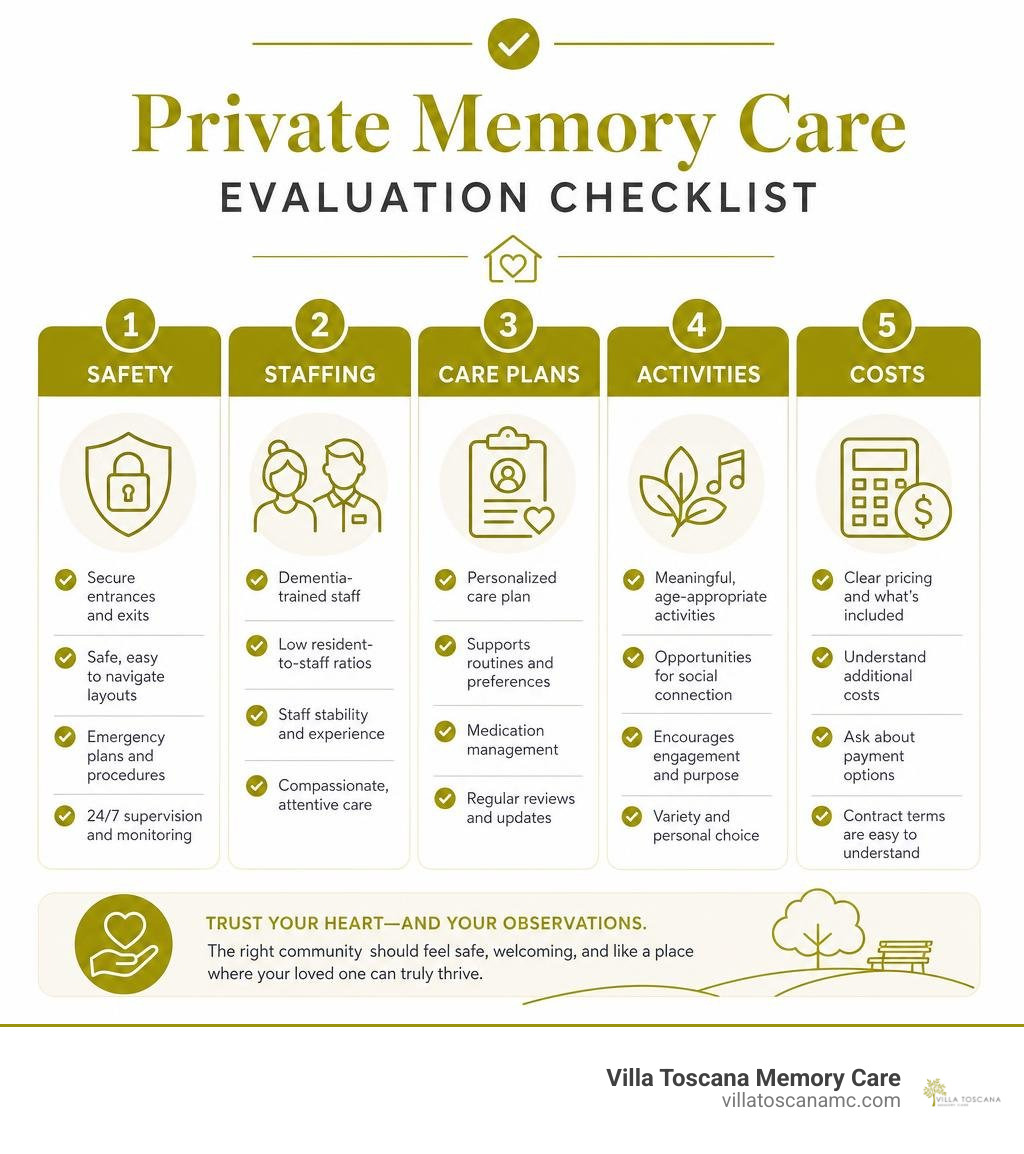
When comparing options, focus on three essentials:
- Safety: Secure entrances, clear layouts, emergency procedures, and supervision day and night.
- Personalized care: Dementia-trained staff, low resident-to-staff ratios, and a plan built around your loved one’s routines and needs.
- Quality of life: Meaningful activities, familiar meals, comfortable shared spaces, and clear communication with family.
The right community should feel calm and welcoming while still being ready to respond as dementia progresses. This guide explains how to compare private memory care options, understand costs, ask better tour questions, and plan for changing medical and end-of-life needs.
What Sets Private Residential Care Apart from Institutional Facilities?
When families begin researching options for a loved one diagnosed with Alzheimer’s disease, vascular dementia, or Lewy body dementia, they often encounter large institutional facilities. These massive senior living centers may house 100 or more residents across vast, sprawling wings. While they serve a specific purpose in the healthcare ecosystem, larger environments can inadvertently cause sensory overload, confusion, and anxiety for someone experiencing progressive cognitive loss.
Private residential care flips this dynamic completely. By shifting the focus away from institutional scales and toward boutique settings, private communities create an atmosphere that prioritizes calm, predictable rhythms and close personal relationships. Instead of navigating cavernous corridors where every doorway looks identical, residents live in purposeful spaces designed around familiarity, accessibility, and comfort.

The most striking difference lies in the level of personalized attention. In large facilities, a single caregiver might be assigned to assist a dozen or more residents simultaneously. This makes it challenging to provide anything beyond basic physical maintenance. In contrast, smaller communities foster intimate environments where caregivers know each resident’s life history, preferred waking times, food cravings, and non-verbal cues. If you find yourself facing exhausting days and restless nights trying to balance medical appointments and constant supervision, finding dedicated dementia care support practical paths to relieve caregiver burden can restore balance to both your life and your loved one’s daily routine.
Types of Private Memory Care Settings
Private memory care encompasses several distinct models tailored to individual lifestyle preferences, clinical requirements, and budgets:
- Residential Care Homes (Board and Care Homes): These are private single-family homes situated in regular residential neighborhoods that have been licensed, modified, and staffed to support senior living. They typically accommodate between 6 and 15 residents, offering an intimate family dynamic with shared home living areas, home-cooked family meals, and continuous supervision.
- Boutique Memory Care Communities: Purpose-built or custom-renovated residences designed specifically for dementia support. These boutique residences blend the close-knit feel of a private home with advanced clinical oversight, upscale amenities, curated sensory programming, and specialized safety architecture.
- Dedicated Memory Care Neighborhoods: Specialized, secure wings within boutique assisted living communities. These self-contained neighborhoods restrict public through-traffic, offering specialized dining, sensory gardens, and cognitive programs tailored exclusively to dementia support while maintaining an intimate neighborhood feel.
- Specialized Care Environments: Highly tailored programs equipped to support unique behavioral expressions, advanced physical mobility limitations, or specific dementia variants such as frontotemporal dementia (FTD) or Parkinson’s-related dementia.
Home-Like Atmosphere Versus Skilled Nursing Environments
There is a fundamental contrast between a home-like residential setting and a skilled nursing facility (nursing home). Skilled nursing facilities are clinical, hospital-like environments designed primarily for short-term rehabilitation or intensive 24-hour medical interventions (such as continuous IV therapy, ventilator dependency, or complex wound care).
While clinically vital, the sterile hallways, medical alarms, fluorescent lighting, and constant shift rotations of a nursing home can heighten agitation, sundowning, and wandering among individuals living with dementia.
| Feature | Private Residential Memory Care | Traditional Skilled Nursing Facility |
|---|---|---|
| Atmosphere & Design | Residential, warm lighting, intuitive layouts, homelike living spaces | Clinical, hospital-like corridors, centralized nurse stations |
| Dining Experience | Family-style dining, custom culinary choices, social interaction | Tray-service dining, institutional dietary schedules |
| Outdoor Access | Secured sensory courtyards, walking paths, raised garden beds | Supervised, limited hospital grounds or clinical courtyards |
| Primary Focus | Cognitive engagement, dignity, independence, daily living support | Intensive clinical medical care, rehabilitation, post-acute stabilization |
| Sensory Environment | Low noise, soothing colors, reduced clinical interruptions | High activity, paging systems, medical equipment alarms |
In our private setting, architectural design choices are made specifically to preserve dignity and independence. Circular walking paths eliminate dead ends that cause frustration. Color-coded walls and memory shadow boxes outside private bedrooms make wayfinding natural and stress-free.
Shared spaces feature family-style dining that encourages social bonding over freshly prepared meals, while secured outdoor sensory courtyards offer fresh air and sunshine without the fear of wandering. When an environment feels like a real home rather than an institution, anxiety decreases, sleep cycles improve, and seniors thrive.
Understanding the Core Benefits of Private Memory Care
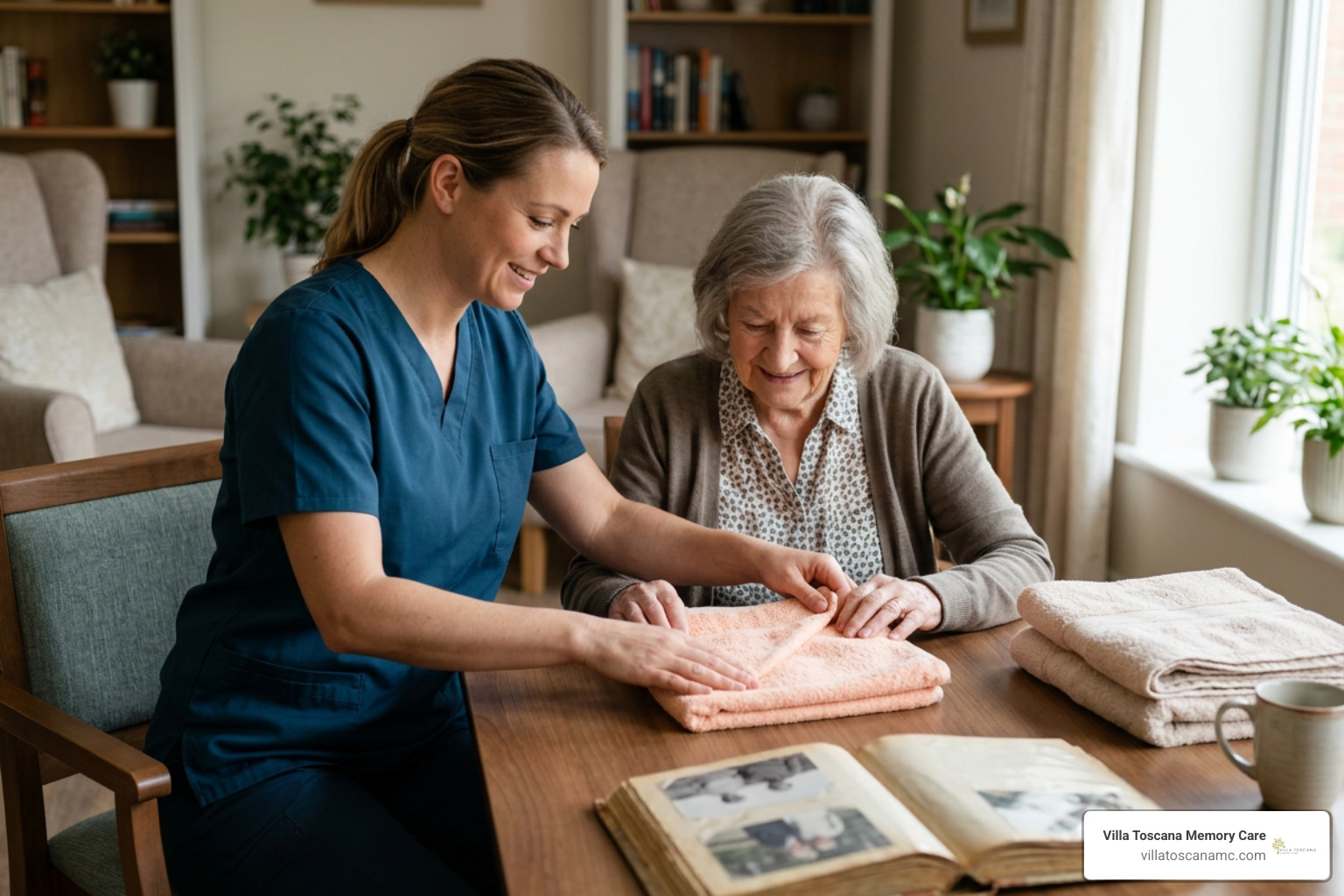
The genuine value of private residential care stems from an unwavering focus on individual dignity. A standard assisted living facility might offer generic support with medication and bathing, but dedicated memory care provides an environment where every single interaction is shaped around the neurology of dementia.
From clinical care planning to spontaneous afternoon conversations, the goal is to make every interaction supportive and uplifting. Rather than viewing behaviors like pacing, agitation, or repetitive questioning as problems to manage, trained caregivers view them as unmet physical or emotional needs.
By actively integrating structured therapeutic interactions throughout the day, communities create meaningful moments of joy and connection. Exploring how to enrich daily life through making moments matter stimulating activities for seniors with memory loss demonstrates how tailored cognitive programs can spark joy, preserve remaining skills, and restore a sense of purpose.
Specialized Staff Training and Low Resident Ratios
The cornerstone of exceptional memory care is the relationship between the resident and their direct caregiver. In standard facilities, caregiver-to-resident ratios frequently sit at 1:8, 1:10, or even 1:15, leaving staff rushed and stressed.
In boutique and private residential memory care settings, staffing ratios are significantly higher, often maintaining daytime ratios of 1:3 or 1:4. This intimate ratio ensures that caregivers are not simply checking off daily tasks—they have the time to sit, listen, hold a hand, and walk at the resident’s natural pace.
Furthermore, private care communities prioritize comprehensive, ongoing dementia education. Staff members master essential clinical and behavioral competencies, including:
- Non-Verbal Communication: Learning to interpret body language, facial tension, and eye movement when expressive language begins to decline.
- Validation Therapy: Meeting residents where they are in their personal timeline rather than confusing or distressing them with factual arguments.
- Behavioral De-escalation: Recognizing subtle early environmental triggers for agitation and gently redirecting focus using soothing sensory interventions.
- Personalized Pacing: Allowing seniors ample time to complete tasks independently, supporting their autonomy and self-worth rather than rushing through personal routines.
Tailored Daily Enrichment and Cognitive Therapies
Daily life in a private setting avoids one-size-fits-all schedules. Instead, life enrichment teams craft personalized itineraries that mirror the lifelong passions, hobbies, and past professions of each resident.
A former teacher might find deep fulfillment in organizing a community bookshelf or reading to a small group, while a passionate gardener tends to raised vegetable beds in a sunny courtyard.
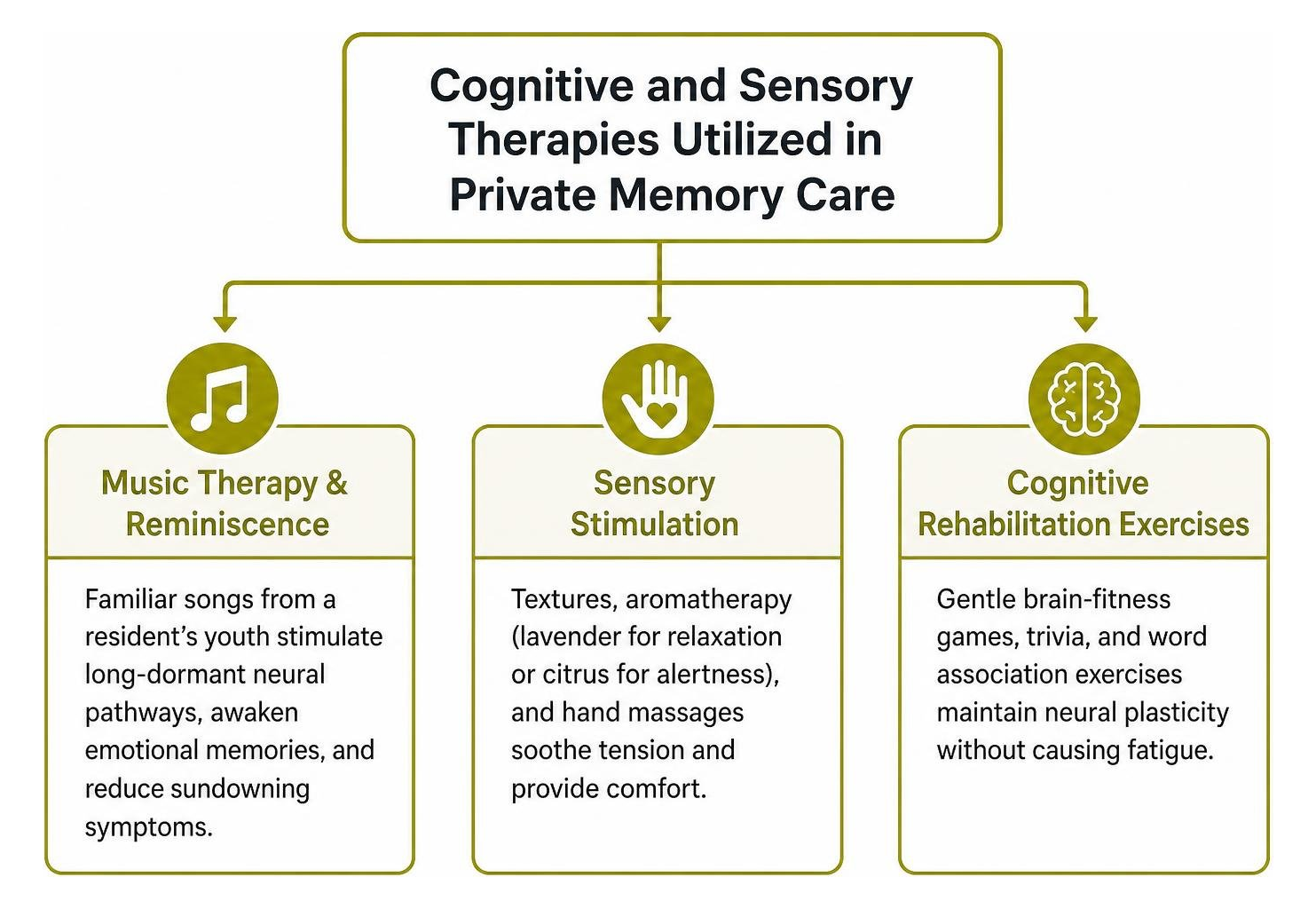
Key therapeutic modalities integrated into private memory care include:
- Music Therapy & Reminiscence: Playing familiar songs from a resident’s youth to stimulate long-dormant neural pathways, awaken emotional memories, and reduce late-afternoon sundowning symptoms.
- Sensory Stimulation: Utilizing textured fabrics, aromatherapy (such as lavender for relaxation or citrus for morning alertness), and hand massages to soothe tension and provide comfort.
- Cognitive Rehabilitation Exercises: Gentle brain-fitness games, trivia, and word association exercises that maintain neural plasticity without causing fatigue.
- Adaptive Physical Fitness: Seated yoga, balloon volleyball, walking clubs, and gentle stretching routines designed to maintain balance, preserve fine motor skills, and reduce fall risks.
Comparing Long-Term Care Costs and Financial Planning
Understanding the financial investment required for memory care is essential for families navigating long-term planning. Because memory care requires specialized architectural safety features, dedicated therapeutic programming, and higher staff-to-resident ratios, monthly rates reflect a higher baseline of care than independent or standard assisted living.
When evaluating these numbers, families should understand what is included in the base rate versus tiered fee structures. Some facilities operate under an all-inclusive pricing model—where accommodations, chef-prepared meals, personal care, medication management, and daily activities are bundled into a single predictable monthly invoice.
Others utilize tiered pricing, charging an entry-level base rate and adding “a la carte” fees as physical or cognitive care needs increase over time. When planning family finances, examining options such as breaking down the true cost of short term respite care can also provide clear insight into budgeting for trial stays or short-term relief before committing to a permanent move.
Cost Breakdown Across Long-Term Care Settings
To help put these figures in perspective, here is a comparison of current national long-term care averages and medians:
| Care Setting | Average Monthly Cost | Average Annual Cost | Primary Inclusions & Service Details |
|---|---|---|---|
| Assisted Living (Basic Services) | ~$6,200 / mo | $74,400 / yr | Housing, utilities, basic ADL assistance, group meals, social activities. |
| Private Memory Care | $6,450 / mo (National Median) | $77,400 / yr | Secured environment, specialized dementia staff, 24/7 supervision, cognitive therapies, personal care. |
| Nursing Home (Semi-Private Room) | $9,277 / mo | $114,975 / yr | 24-hour skilled nursing, shared room, medical oversight, clinical therapies, post-acute care. |
| Nursing Home (Private Room) | $10,646 / mo | $129,575 / yr | 24-hour skilled nursing, private room, intensive clinical care, full medical management. |
Note: Costs vary substantially based on geographic location. High-cost metropolitan markets like New York, San Jose, and Los Angeles often command higher monthly rates, while lower-cost regions like Houston and Phoenix trend closer to or below national medians.
Key Financial Strategies for Private Memory Care
Because private residential memory care is largely a private-pay service, families frequently combine multiple funding avenues to build a sustainable, long-term financial plan:
- Personal Assets and Real Estate Equity: Liquidating family investments, selling a primary residence, or leasing real estate assets is often the primary source of private care funding.
- Long-Term Care Insurance (LTCI): Many comprehensive long-term care policies cover a significant portion of memory care room and board costs, provided the resident requires assistance with at least two Activities of Daily Living (ADLs) or requires direct supervision due to cognitive impairment.
- Veterans Benefits (Aid and Attendance): Wartime veterans and their surviving spouses may qualify for the VA Aid and Attendance benefit, which provides a tax-free monthly pension supplement explicitly intended to offset out-of-pocket costs for daily personal care.
- Home Equity Conversion (Reverse Mortgages): If a spouse remains in the family home, a reverse mortgage (HECM) can release equity to fund memory care for the partner without displacing the spouse.
- Bridge Loans: Short-term, specialized senior care bridge loans can cover the immediate transition costs while the family prepares to sell real estate or awaits the processing of insurance claims and VA benefits.
How to Evaluate and Choose the Right Care Community

Choosing a residential memory care community is an emotional and practical decision. Online reviews and brochures provide an introductory overview, but nothing replaces walking through the front door in person.
When touring, trust your senses: Does the residence smell fresh and clean, or is there an institutional mask of heavy deodorizers? Are residents smiling, dressed appropriately, and engaged in activities, or are they seated passively around a blaring television set? Do caregivers address residents warmly by name, making direct eye contact?
We strongly encourage families to schedule formal tours, but also to consider dropping by for an unannounced visit during late-afternoon hours. This allows you to observe how the team manages dinner routines and evening transitions when sundowning behaviors naturally peak.
You can also cross-reference communities with regional health and social service departments to review recent state inspection reports, safety compliance records, and licensing surveys. Resources from organizations like the Alzheimer’s Association can provide additional guidance on how dedicated community design and low resident ratios elevate daily living standards.
Essential Questions to Ask During Community Tours
Take this targeted checklist with you on every tour to gather clear, comparative data across providers:
- Staffing & Care Ratios: What is your exact caregiver-to-resident ratio during the day, during dinner, and overnight? Are Registered Nurses (RNs) on site, or are they on call?
- Staff Training & Retention: What specific dementia training certifications are required for all staff? What is your annual staff turnover rate?
- Care Planning: What is the difference between your state-mandated Service Plan and your internal clinical Care Plan? How often are resident needs re-assessed?
- Safety & Security: How is the perimeter secured without making residents feel locked in? What emergency response protocols are in place for sudden medical changes?
- Dining & Culinary Standards: How are meals prepared? Can the kitchen accommodate unique diets, pureed foods, and finger-food preferences for residents who prefer to walk while eating?
- Physician & Specialist Access: Do visiting medical specialists (such as geriatricians, podiatrists, physical therapists, and dentists) visit the community regularly?
Managing Disease Progression and End-of-Life Transitions
Dementia is a progressive condition. An environment that works well in the early or middle stages of memory loss must also be equipped to provide comfort, safety, and specialized physical support during the advanced and final stages.
Moving a loved one multiple times as their condition changes is physically disorienting and emotionally taxing. Therefore, families should prioritize communities that embrace the philosophy of “aging in place.”
When caregiving demands at home become unsustainable, taking proactive steps to recharge your energy while ensuring safe care for your loved one allows you to step back into the role of a supportive spouse or child while dedicated professionals handle complex daily physical care.
In a boutique setting, as mobility decreases or swallowing difficulties arise, the care team adapts the resident’s individualized care plan. In advanced stages, private memory communities coordinate directly with local, trusted hospice organizations. Hospice nurses, social workers, and chaplains provide layered palliative support on-site, ensuring your loved one remains in their familiar room, surrounded by known caregivers, with complete dignity and comfort.
Frequently Asked Questions About Memory Care
What is the main difference between assisted living and memory care?
While both assisted living and memory care provide supportive housing, housekeeping, meals, and assistance with Activities of Daily Living (ADLs like bathing, dressing, and medication administration), memory care is engineered exclusively for individuals with cognitive impairments.
Memory care facilities feature secure perimeters with delayed-egress doors to prevent unsafe wandering, circular interior layouts to reduce confusion, specially trained staff skilled in dementia communication and behavioral management, and daily cognitive therapies designed to sustain neurological function.
When should a family transition a loved one to residential memory care?
A transition is recommended when safety hazards at home begin to escalate or when family caregiving capacity is exceeded. Common signs include:
- Unsafe wandering or getting lost in familiar neighborhoods.
- Frequent falls or unmanaged physical injuries.
- Medication errors, such as skipping doses or accidental double-dosing.
- Severe caregiver burnout, chronic fatigue, or health decline in the primary caregiver.
- Aggression, sundowning agitation, or paranoia that cannot be safely managed at home.
If your family is uncertain whether the time is right, learning everything families need to know about short term respite care offers an ideal pathway to test a supportive community environment without a permanent long-term commitment.
Does Medicare or Medicaid cover private memory care costs?
Medicare does not cover the long-term custodial care, room, or board fees associated with memory care or assisted living communities. Medicare only covers short-term skilled medical needs, including inpatient hospital stays, prescription medications (Part D), limited home health visits, and up to 100 days of skilled rehabilitative care in a nursing facility following a qualifying three-day inpatient hospital stay.
Medicaid coverage rules vary significantly from state to state. While standard Medicaid primarily funds institutional care in skilled nursing facilities, many states offer Home and Community-Based Services (HCBS) Medicaid waiver programs that can partially subsidize personal care support within licensed residential assisted living or memory care settings. However, room and board costs in boutique private care communities are almost entirely funded out-of-pocket through private assets, insurance, and veterans benefits.
Conclusion
Choosing the right memory care community is one of the most loving, thoughtful, and impactful decisions you will ever make for your loved one. While letting go of daily home caregiving responsibilities can bring feelings of hesitation, transitioning into a specialized environment designed specifically for cognitive challenges opens the door to greater safety, enriched social connection, and an elevated quality of life.
At Villa Toscana Memory Care, our family-owned, boutique community provides the safety and clinical excellence your loved one needs, paired with the warmth, comfort, and dignity of home. With our innovative, award-winning architectural design, exceptional caregiver-to-resident ratios, and an exclusive culinary partnership with Giorgio’s Italian Grill delivering delicious dining daily, we provide an environment where residents thrive.
When you are ready to explore how dedicated memory care can support your family, we invite you to connect with us, tour our beautiful community, and discover the peace of mind that comes with high-quality private memory care.