
Dementia Living: Choosing Safe, Supportive Care at Every Stage
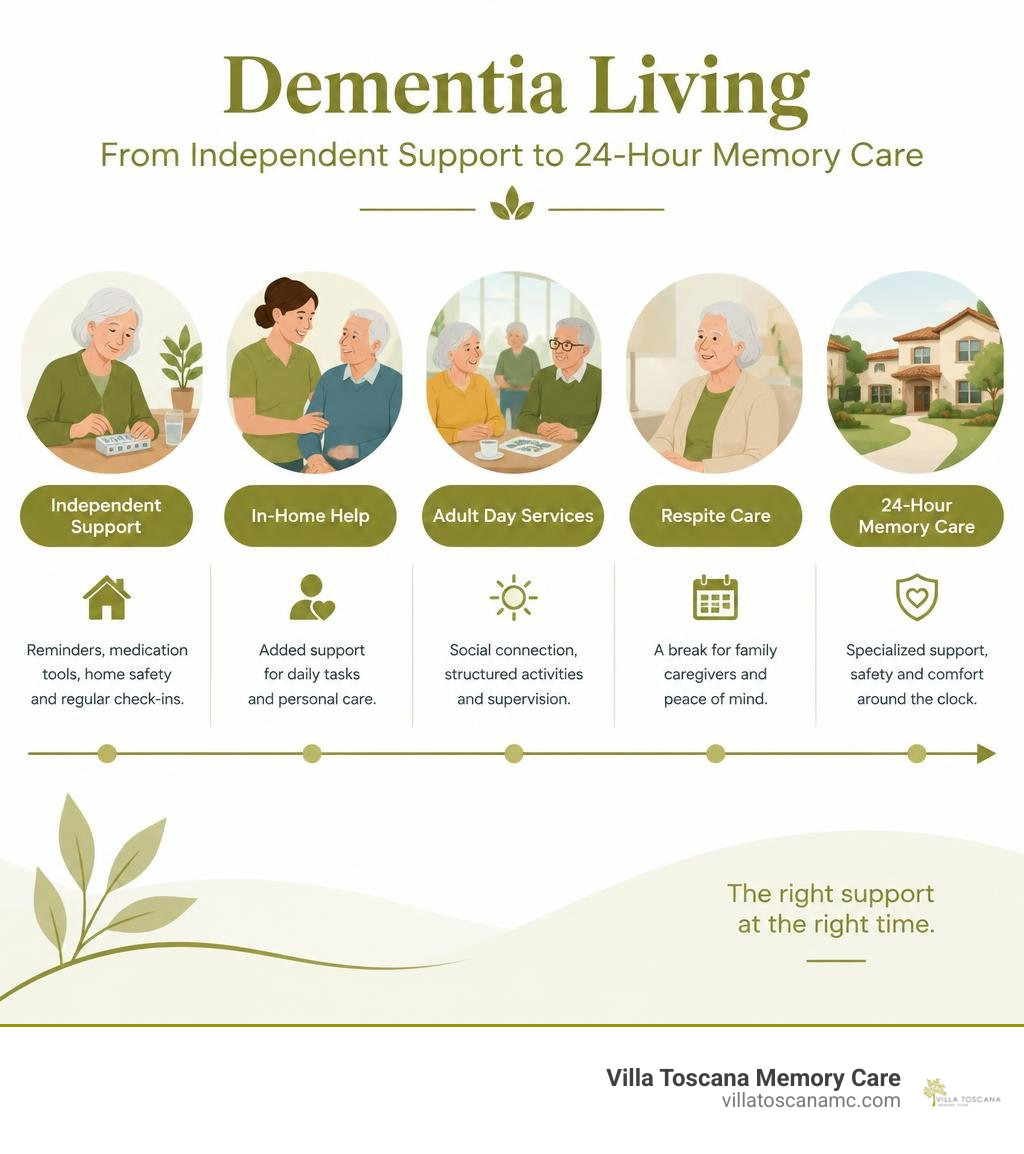
Dementia living means matching support to a person’s changing needs while protecting safety, routine, dignity, and connection. In early stages, many people can remain at home with reminders, medication tools, home safety updates, and regular check-ins. As memory loss, confusion, wandering, mobility issues, or care needs increase, families may need added in-home help, adult day services, respite care, or a secure memory care setting with 24-hour support.
For adult children, the goal is not to take away a parent’s independence too soon. It is to make sure they have the right help before a missed medication, fall, kitchen accident, or isolation becomes a crisis.
Dementia affects daily life differently for every person and progresses at different rates. Still, the need is widespread: the World Health Organization estimated that 57 million people were living with dementia worldwide in 2021. Family and friends often carry much of the care, averaging about five hours of care and supervision each day.
This guide explains practical dementia living options, from safer routines at home to specialized memory care, so your family can make informed decisions with more confidence and less guesswork.
Understanding Dementia Living and Progression Stages
Navigating a cognitive diagnosis begins with understanding how symptoms evolve over time. Dementia is not a single disease, but an umbrella term for conditions characterized by declining cognitive function, changes in executive functioning, and shifts in emotional perception.
In the initial diagnostic phase, individuals often experience subtle lapses in short-term recall, trouble managing complex multi-step tasks, and slight changes in mood. Over time, progressive neural changes influence spatial awareness, motor coordination, and sensory processing. As cognitive decline advances, communication transitions from complex verbal reasoning to non-verbal cues, requiring caregivers and families to adjust their communication strategies.
Sensory engagement becomes a vital lifeline throughout every stage. Familiar melodies, soothing textures, and visual cues can anchor individuals when verbal language becomes difficult to process. Responding with reassurance rather than correction helps preserve emotional security and personal dignity.
Adapting Daily Routines for Early-Stage Dementia Living
Establishing predictable, stress-free routines during the early stages preserves autonomy and reduces daily anxiety. The cognitive load of everyday life can be eased significantly with structured task-management systems.
- Automate Financials: Transition regular utility bills, mortgage payments, and recurring subscriptions to automatic direct debits. Having a trusted family member or co-signer periodically review bank statements protects against scams and missed payments.
- Structured Medication Management: Utilize weekly segmented pill organizers, blister packs, or electronic dispensers featuring automated alarms to prevent duplicate or missed doses.
- Organized Daily Schedules: Prominently display a central whiteboard, printed calendar, or digital display near the kitchen or living room showing the date, weather, and day’s agenda.
- Meal and Shopping Support: Implement grocery delivery services or meal-kit preparation to guarantee regular, balanced nutrition without the cognitive strain of navigating crowded supermarkets. Following practical tips for people with dementia makes managing personal appointments and errands straightforward.
Navigating Symptom Progression Across Dementia Types
Understanding the specific form of dementia diagnosed helps families anticipate clinical needs and tailor daily environments.
Alzheimer’s disease represents 60% to 70% of all dementia cases. It typically manifests with early short-term memory impairment, gradual language decline, and difficulty navigating familiar spaces. In contrast, vascular dementia often results from cerebrovascular damage (such as micro-strokes) and presents with sudden, step-wise changes in executive decision-making, attention, and gait stability.
Dementia with Lewy bodies is distinguished by fluctuating attention, vivid visual hallucinations, and motor symptoms that mimic Parkinson’s disease. When families are navigating the unique challenges of frontotemporal dementia symptoms, changes in social conduct, empathy, impulse control, and language often precede severe memory deficits, frequently surfacing in younger individuals under age 65 (young-onset dementia accounts for up to 9% of total dementia diagnoses).
Across all variations, the later stage of dementia tends to be the shortest, averaging about one to two years. In this final phase, care needs shift toward extensive physical support, assistance with eating and swallowing, skin integrity management, and intensive non-verbal comfort.
Creating a Safe and Independent Home Environment
A thoughtfully adapted home reduces environmental stress, eliminates trip hazards, and prevents confusion. Conducting a structured home safety audit allows families to identify potential hazards before accidents occur.

Environmental cues play a decisive role in spatial orientation. Simple labels containing both text and clear photographic images affixed to kitchen cabinets, bedroom dressers, and bathroom doors help individuals locate items without frustration.
Minimizing sensory clutter is equally vital. High-patterned wallpapers, busy carpet designs, and excessive background noise can overwhelm sensory processing. Replacing glossy floors with non-reflective matte surfaces prevents the illusion of wet or slippery surfaces, and removing loose throw rugs immediately reduces fall risks.
To mitigate wander-related emergencies, install discreet sensor chimes on exterior doors, use smart video doorbells, and keep a current emergency profile updated with local safety networks.
Safety Modifications for Dementia Living Alone
For older adults maintaining an independent household, targeted safety interventions prevent domestic emergencies:
- Kitchen Safety: Install automatic stove turn-off mechanisms or motion-activated stove shut-off sensors that deactivate burners if left unattended.
- Scald Protection: Regulate the home’s water heater thermostat to a maximum of 120°F (49°C) to prevent accidental burns during handwashing or bathing.
- Bathroom Enhancements: Install securely anchored grab bars inside showers and beside toilets, replace standard toilet seats with high-contrast colored seats to aid visual depth perception, and lay down non-skid rubber mats.
- Lighting and Visibility: Place automatic dusk-to-dawn nightlights along hallways, bedrooms, and bathrooms. Installing high-contrast door frames and banisters helps define physical boundaries.
- Emergency Connectivity: Implement wearable medical alert pendants or emergency call buttons.
Reviewing practical tips for living alone with early-stage dementia and standard guidance on how to make your home dementia friendly ensures that every modification preserves daily dignity while eliminating known hazards.
Maintaining Independence, Activity, and Healthy Sleep
Promoting daily physical, cognitive, and social activity directly enhances mood, stabilizes circadian rhythms, and slows functional decline. Research demonstrates that staying independent with dementia relies heavily on intuitive daily living aids, such as large-display digital day-and-night clocks, simplified universal remotes with oversized buttons, and clear voice-activated assistive technology.
Aim for at least 30 minutes of varied physical exercise daily—split into manageable 10-minute mini-workouts covering flexibility, light resistance, balance, and endurance walking. Integrating purposeful stimulating activities for seniors with memory loss, such as sorting games, gardening, and therapeutic music, provides meaningful cognitive enrichment throughout the day.
Sleep disturbances and late-afternoon restlessness (sundowning) can be managed with strong sleep hygiene:
- Regulate Daylight: Provide ample natural sun exposure early in the morning to synchronize the brain’s internal master clock.
- Limit Late Stimulants: Avoid caffeine, high-sugar snacks, and heavy evening meals after 2:00 PM.
- Establish Calming Wind-Downs: Develop a predictable evening ritual featuring soft lighting, relaxing music, aromatherapy, and screen-free activities.
- Optimize Bedroom Safety: Use low-wattage, indirect nightlights to illuminate pathways to the bathroom, preventing disorientation if waking during the night.
Comparing Residential Care and Support Options
As dementia progresses, care requirements naturally expand beyond what home adjustments can accommodate. Evaluating residential living options helps families identify the right level of clinical oversight, security, and enrichment.
Memory Care vs. Skilled Nursing Environments
Families often weigh the differences between memory care and skilled nursing facilities. While both offer professional care, their operational frameworks serve distinct needs.
Skilled nursing facilities focus on clinical and medical management, offering 24-hour monitoring by registered nurses for individuals with complex medical ailments, wound care, or severe physical rehabilitation needs. In contrast, specialized memory care communities provide environments designed specifically for cognitive impairments.
Memory care neighborhoods feature secure, circular architectural designs that prevent dead ends, reducing agitation and wandering anxiety. Knowing the distinctions in memory care vs skilled nursing helps families match their loved one’s specific stage of life with the right balance of healthcare and lifestyle support.
State-regulated memory care staffing ratios and standards ensure that care teams possess deep training in non-pharmacological behavioral de-escalation, sensory cueing, and validation therapy. In top-tier memory care settings, culinary programs transform into therapeutic dining experiences, offering finger-food options, visual plate contrasts, and personalized assistance to encourage optimal hydration and nutrition.
Relieving Caregiver Burden with Respite Care
Caring for a relative with dementia is physically, mentally, and emotionally demanding. Globally, informal caregivers—most of whom are women providing 70% of family care hours—face high rates of chronic fatigue and burnout.

Utilizing structured dementia care support to relieve caregiver burden protects both the family caregiver’s health and the senior’s well-being. Scheduling short term respite care solutions provides primary caregivers with planned breaks—whether for a few days or several weeks—while their loved one enjoys professional memory care, safe socialization, and engaging activities.
Comprehensive guides on looking after someone with dementia emphasize that seeking assistance is a responsible care strategy, not a personal shortcoming. Professional support allows family relationships to return to loving companionship rather than constant caregiving management.
Essential Legal, Financial, and Future Planning
Establishing legal and financial protections immediately following a diagnosis guarantees that the individual’s personal preferences are respected while they retain full legal capacity.
- Durable Power of Attorney (Financial): Designates a trusted agent to manage financial transactions, bank accounts, pensions, taxes, and property decisions if the individual becomes unable to do so.
- Advance Healthcare Directives and Living Wills: Outlines precise medical treatment choices, resuscitation preferences, artificial nutrition decisions, and end-of-life care options.
- Designation of Healthcare Surrogate: Names a dedicated proxy to make healthcare and residential placement decisions when medical consensus indicates the individual can no longer communicate their choices.
- Long-Term Care Financing: Review existing life insurance, long-term care insurance policies, veteran benefits, and local public assistance programs to create an adaptable financial plan for long-term care costs.
- Advance Statements of Preferences: Documents personal values, dietary preferences, religious views, and lifestyle desires to guide future caregivers and residential staff.
Families should also connect with local Area Agencies on Aging, senior legal aid foundations, and community social services to access guidance on long-term planning, legal paperwork, and community benefits.
Frequently Asked Questions About Dementia Living
How can someone with dementia live safely alone during the early stages?
Living alone safely during the early stages requires layered safety nets. Helpful strategies include installing automated pill dispensers with audio alerts, setting up stove-safety shutoff switches, placing smart telecare motion sensors throughout the house, establishing daily check-in routines with neighbors or relatives, and consulting the national guide on living alone with dementia to maintain organized routines and home safety.
What daily lifestyle habits help manage dementia sleep disturbances?
Managing sleep disturbances and evening sundowning relies on predictable daytime habits:
- Encourage 20–30 minutes of natural outdoor morning light exposure.
- Maintain consistent wake and bedtime schedules seven days a week.
- Limit daytime naps to under 30 minutes before 2:00 PM.
- Remove caffeine, alcohol, and high-sugar foods in the late afternoon and evening.
- Use low-wattage hallway nightlights and calming background soundscapes at night.
When is the right time to transition from home care to memory care?
The right time to transition is before a safety crisis occurs. Key indicators include:
- Unsafe wandering, getting lost in familiar neighborhoods, or leaving exterior doors unlocked.
- Accidental domestic hazards, such as leaving burners on or mishandling household chemicals.
- Noticeable declines in personal hygiene, nutrition, hydration, or medication adherence.
- Severe physical or emotional exhaustion experienced by family caregivers.
- Escalating social withdrawal, confusion, or agitation that requires professional 24-hour engagement.
Conclusion
A dementia diagnosis marks the start of a journey that requires compassion, proactive planning, and supportive care. Matching support to each stage—from early home modifications to specialized residential environments—ensures that individuals with memory loss live with dignity, comfort, and purpose.
At Villa Toscana Memory Care, our family-owned, boutique community provides a dedicated, award-winning environment tailored to individual cognitive needs. With 24-hour specialized staff, engaging social programming, and exceptional dining through our partnership with Giorgio’s Italian Grill in Mountain View, CA, we create an enriching home where residents thrive and families find peace of mind.
To learn more about our community, explore our floor plans, discover our luxury amenities, view our daily activities, or request a tour today. You can also contact us directly to discuss how our dedicated team can support your family’s needs while exploring personalized memory care living options.