
Find Temporary Assisted Living Near Me for Safe Short-Term Support
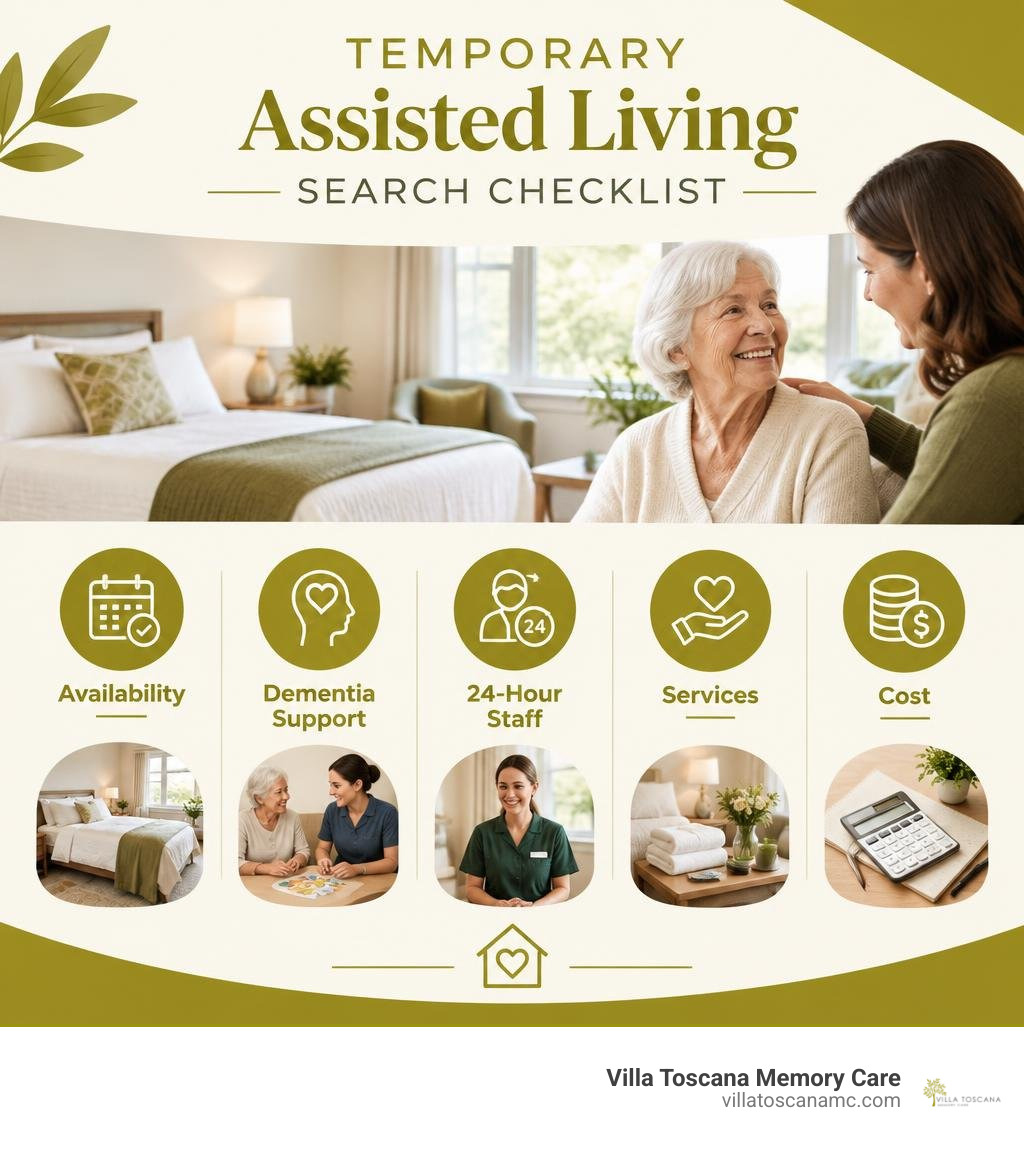
If you are searching for temporary assisted living near me, start by calling local communities to ask about short-term or respite-stay availability, dementia care experience, 24-hour staffing, medication support, and the minimum stay requirement. A temporary stay can give your parent a furnished, supervised place to recover, stay safe while you are away, or try senior living before making a long-term decision.
For a parent with dementia, the right setting should offer more than a room. Look for consistent routines, help with daily tasks, engaging activities, secure surroundings, and clear updates for family members. According to the National Institute on Aging, respite care can also help family caregivers avoid burnout while ensuring their loved one receives professional support.
Temporary assisted living can be a practical bridge after a hospital stay, during a caregiver emergency, or when home is not safe enough for the moment. This guide explains what to look for, what services may be included, and how to compare nearby options with confidence.
Core Reasons to Consider Temporary Assisted Living
Caring for an aging family member is an act of deep love, but caregiving needs rarely remain static. Life brings unexpected medical events, sudden family obligations, and moments where continuing care at home without support is no longer viable. Temporary assisted living—often referred to as short-term respite care—provides an adaptable solution that bridges the gap between acute medical events and everyday home life.

Rather than committing immediately to long-term residency, families can utilize short-term stays to address immediate vulnerabilities. Whether an individual needs physical reinforcement after a surgery or a family caregiver requires scheduled time away, temporary arrangements ensure older adults remain secure, socially connected, and properly assisted around the clock.
Post-Hospitalization and Recovery Support
The period immediately following a discharge from a hospital or rehabilitation center is one of the most vulnerable windows for any senior. Navigating new medications, managing wound care, adjusting to temporary mobility aids, and handling basic self-care tasks can easily overwhelm an individual returning directly to an empty or poorly equipped home.
In a short-term assisted living setting, transitional care reduces the risk of hospital readmissions. Dedicated staff members assist with personal hygiene, transfer support, and fall prevention protocols. Care teams coordinate closely with outside physical, occupational, and speech therapists, ensuring that rehabilitation routines established in the hospital continue seamlessly. With 24-hour professional oversight, medication administration is meticulously tracked, eliminating missed or duplicated doses that frequently occur when seniors manage complex post-discharge prescriptions on their own.
Caregiver Burnout and Respite Relief
According to data from national caregiver organizations, more than 53 million Americans provide unpaid care to adult family members. While rewarding, round-the-clock caregiving frequently leads to physical, emotional, and mental exhaustion. When primary caregivers neglect their own health or face unexpected personal emergencies, the entire family support structure is compromised.
Temporary stays provide planned or emergency relief. Whether a caregiver must travel for work, undergo their own medical procedure, or simply take time off to prevent burnout, short-term placement offers absolute peace of mind. You can recharge your energy while ensuring safe care for your loved one, knowing that experienced staff members are managing meals, personal assistance, and safety monitoring throughout the day and night.
Trial Stays Before Long-Term Senior Living Transitions
Making the transition to assisted living or memory care is a major life decision. Many seniors feel apprehensive about leaving their private residences, worrying about losing independence or adapting to a communal environment. A temporary stay functions as a low-pressure, low-commitment evaluation.
During a trial stay of a few weeks or a month, seniors experience the daily rhythm of community living firsthand. They can participate in social events, sample chef-prepared meals, build friendships with peers, and interact with the care staff without the emotional weight of a permanent move. For families, this trial period offers valuable insights into the exact level of support their loved one truly needs, making future permanent placement decisions collaborative and informed.
Essential Care Services and Amenities in Short-Term Stays
Short-term guests in a high-caliber community receive the same level of attention, hospitality, and daily assistance as full-time residents. Programs are designed to be entirely turnkey so that families do not have to worry about moving furniture, setting up utility accounts, or arranging grocery deliveries.
| Service Feature | Standard Permanent Residency | Short-Term Respite Stay |
|---|---|---|
| Living Accommodations | Unfurnished (personalized by resident) | Fully furnished with linens & decor |
| Commitment Length | Ongoing monthly lease (often 12+ months) | Flexible: a few days, weeks, or 30-day blocks |
| Personal Assistance (ADLs) | Comprehensive, tailored care plan | Immediate, individualized care plan |
| Dining & Nutrition | 3 chef-prepared meals daily + snacks | 3 chef-prepared meals daily + snacks |
| Utility & Cable Management | Included or billed per apartment | Fully bundled and ready upon arrival |
| Social & Wellness Activities | Full access to daily community calendar | Full access to daily community calendar |
| 24/7 Staff Oversight | Continuous monitoring & emergency response | Continuous monitoring & emergency response |
Furnished Accommodations and Daily Living Support
When arranging a short-term stay, convenience is essential. Suites dedicated to temporary living come fully furnished, featuring comfortable beds, seating areas, accessible private bathrooms, televisions, and safety call systems. Families only need to pack clothing, basic toiletries, and personal keepsakes.
Everyday assistance covers all standard Activities of Daily Living (ADLs), tailored to the individual’s functional abilities:
- Bathing and Dressing Support: Dignified, gentle assistance ensuring safety on slippery surfaces.
- Chef-Prepared Dining: Nutrient-dense, delicious meals designed around dietary restrictions, such as low-sodium or diabetic-friendly menus.
- Housekeeping and Laundry: Regular linen changes, personal laundry service, and daily tidying.
- Scheduled Transportation: Safe transit to local medical appointments, therapy clinics, and organized community outings.
Specialized Medical and Cognitive Support
For seniors living with Alzheimer’s disease or other forms of dementia, a temporary stay requires specialized structure. Environmental changes can occasionally trigger confusion, making expert cognitive support essential. Communities with dedicated memory care programming implement structured daily routines, secured perimeters, sensory-rich activities, and specialized communication techniques to keep temporary residents feeling calm, oriented, and respected.
Understanding the difference between care models is critical when choosing where to place a loved one. Evaluating memory care vs skilled nursing helps families determine whether their loved one primarily needs long-term behavioral and cognitive support or complex, clinical hospital-grade nursing.
Finding Quality Temporary Assisted Living Near Me for Short-Term Needs
Identifying the ideal short-term community involves matching your loved one’s specific physical, medical, and social requirements with the community’s capabilities.

Key Indicators That It Is Time to Search for Temporary Assisted Living Near Me
Recognizing when to arrange a short-term stay prevents preventable injuries and caregiver crisis. Consider temporary placement if you observe:
- Declining Mobility or Frequent Falls: If balance issues make navigating stairs or the bathroom at home hazardous.
- Post-Surgical Vulnerability: When hospital discharge instructions require more physical assistance than family members can safely provide.
- Caregiver Fatigue: When the primary caregiver shows signs of extreme stress, illness, or sleep deprivation.
- Seasonal Hazards: During severe winter freezes or intense summer heat waves, when living alone at home presents power failure or mobility risks.
- Social Isolation: When an older adult becomes withdrawn, inactive, or uninterested in preparing meals for themselves.
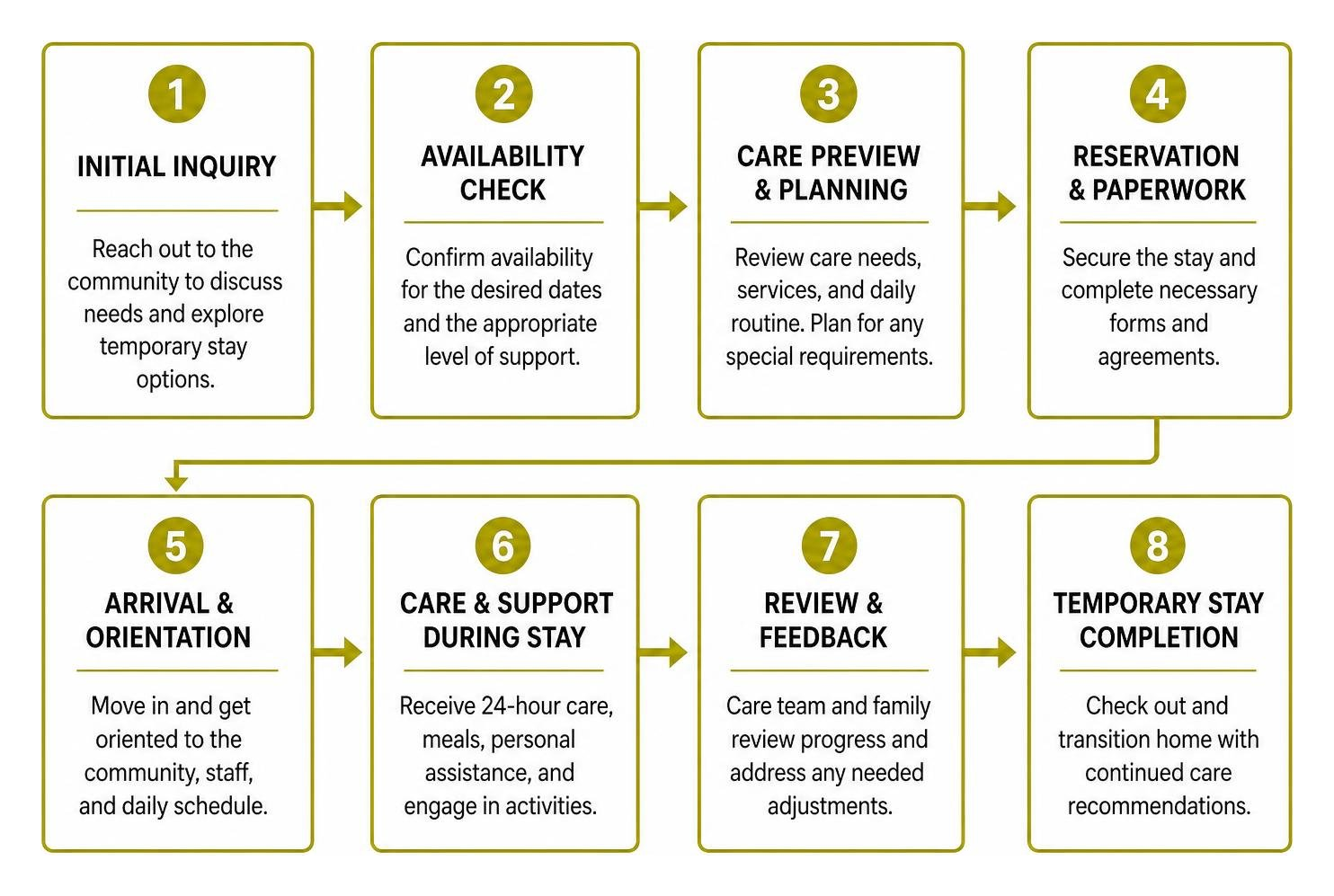
Steps to Secure Temporary Assisted Living Near Me on Short Notice
When emergencies arise—such as an unexpected hospital discharge or a sudden family illness—finding care rapidly is vital. Having a clear plan of action streamlines the admission process. If you find yourself in an urgent situation, review our guide on finding short-term respite care on short notice to ensure all medical evaluations and paperwork move forward without delay.
- Gather Medical Documentation: Obtain recent physical evaluations, current medication lists, tuberculosis (TB) screening results, and physician orders.
- Confirm Current Availability: Call local communities directly to verify whether fully furnished respite suites are open.
- Schedule an Assessment: The community’s wellness director will assess the senior to confirm that their care needs can be appropriately managed.
- Review the Agreement: Clarify the minimum stay requirement (many communities require at least 14 to 30 days) and check what is included in the daily or monthly rate.
Financial Considerations and Coverage for Short-Term Stays
Planning for senior care requires transparent budgeting. Because temporary assisted living provides high-touch hospitality combined with professional care oversight, costs reflect both housing and staffing.
Daily and Monthly Pricing Breakdown
Temporary assisted living is typically billed as an all-inclusive daily rate or a bundled monthly fee. While pricing varies based on geographic region, apartment style, and required level of personal care, daily rates generally range from $150 to $350+ per day.
To plan your budget accurately and avoid unexpected add-ons, examine the true cost of short-term respite care before finalizing an agreement. Standard packages generally cover:
- Furnished apartment and all utilities (electricity, water, Wi-Fi, cable)
- Three meals daily plus snacks and hydration stations
- 24-hour caregiver availability and emergency call monitoring
- Medication administration and routine ADL assistance
- Housekeeping, linen service, and community activity participation
Navigating Insurance and Private-Pay Options
A common misconception among families is that traditional health insurance covers temporary assisted living. Standard Medicare does not pay for room and board in assisted living or residential memory care settings. Medicare coverage is restricted to medically necessary interventions, such as physical therapy visits, home health nursing orders, or short-term skilled nursing rehabilitation following a qualifying hospital stay.
Most temporary stays are funded via private payment. However, several alternative financial resources may help offset costs:
- Long-Term Care Insurance (LTCI): Many comprehensive policies include respite care benefits, covering a specified daily amount for short-term stays up to an annual limit.
- Veterans Aid and Attendance: Eligible wartime veterans and surviving spouses may apply pension benefits toward supportive care.
- State-Specific Programs: Depending on location, certain Medicaid waiver programs may provide limited respite funding. For a broader perspective on regional pricing variations, review our detailed memory care cost breakdown by state.
Frequently Asked Questions About Temporary Assisted Living
How long can a senior stay in temporary assisted living?
The duration of a temporary stay is flexible and depends on the family’s needs and the community’s policies. Stays commonly range from one to two weeks for caregiver vacations, up to 30, 60, or 90 days for post-surgical rehabilitation and trial transitions. Many communities establish a 30-day minimum stay to allow the individual adequate time to settle in, adjust to the routine, and benefit from the community’s wellness programs. Extensions can typically be arranged if space permits.
Is short-term respite care covered by Medicare or private insurance?
Medicare does not pay for the room, board, or general custodial care provided in assisted living communities. However, if a senior requires specialized physical therapy, occupational therapy, or visiting physician services while staying in temporary assisted living, Medicare Part B may cover those specific medical services. Private long-term care insurance policies often provide reimbursement for respite stays if the policyholder meets the required benefit triggers (such as needing assistance with two or more ADLs).
What should families pack for a temporary assisted living stay?
Because the living space is fully furnished, packing is simple. Bring:
- Comfortable, easy-to-wash clothing for 7 to 10 days, including layered sweaters and non-skid footwear.
- All current prescription medications in their original pharmacy containers.
- Personal hygiene items, eyeglasses, hearing aids (with extra batteries), and mobility devices (walkers or canes).
- Familiar comfort items, such as family photos, a favorite throw blanket, or personal reading materials, to help the suite feel welcoming immediately.
Conclusion
Navigating care transitions does not have to be an overwhelming journey. Whether you are managing the aftermath of an unexpected medical event, stepping back to prevent caregiver burnout, or testing the waters of community living, temporary assisted living offers a compassionate, safe, and structured environment.
At Villa Toscana Memory Care in Mountain View, CA, we understand how important it is for your loved one to feel valued, comfortable, and thoroughly supported. Our family-owned community combines specialized, 24-hour memory care with an innovative, award-winning design. Through our exclusive on-site partnership with Giorgio’s Italian Grill, our residents enjoy exceptional dining alongside tailored cognitive and personal support.
To learn more about how a temporary stay can support your family, explore everything families need to know about short-term respite care or contact our team today to check availability and schedule a personal tour.