
Understanding Short-Term Rehabilitation and Post-Acute Care Needs
Short-term rehabilitation provides temporary, goal-oriented care designed to help patients bridge the gap between an acute hospital stay and returning safely home. Rather than simply resting, recovery in these transitional care programs is proactive, intensive, and multidisciplinary. Patients receive coordinated support from licensed physical, occupational, and speech therapists alongside 24-hour skilled nursing care to restore their physical health, daily functional independence, and overall strength.
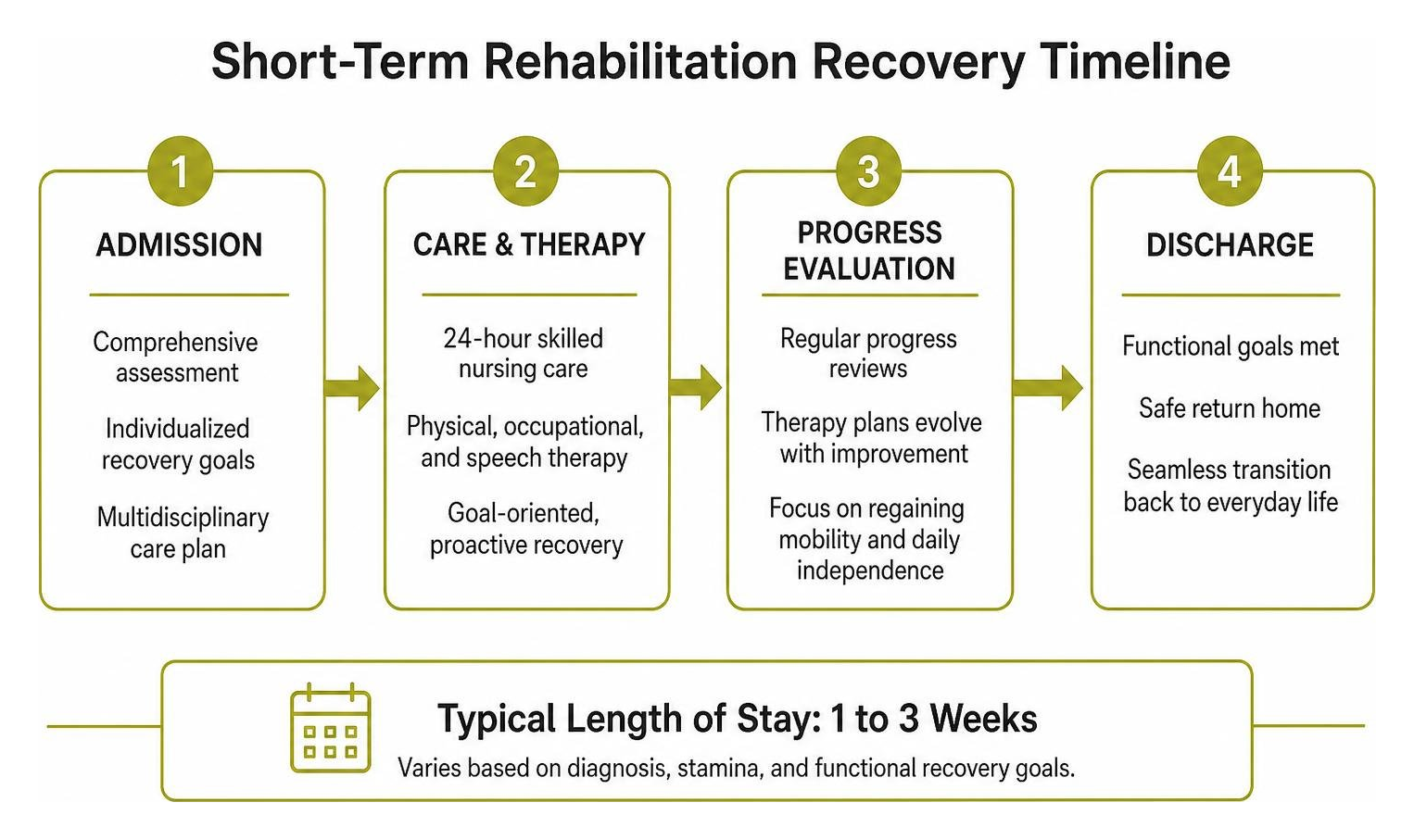
Unlike permanent senior residential living, a short-term sub-acute stay is defined by focused medical milestones. Clinical teams evaluate progress regularly to ensure therapy plans evolve as the individual regains mobility. Programs generally last between one and three weeks, though lengths of stay depend entirely on individual diagnosis, personal stamina, and functional recovery goals. The overarching objective is simple: stabilize health, rebuild functional capacity, and ensure a seamless return to everyday life.
Common Medical Conditions and Surgeries Requiring Short-Term Care
Many health crises and elective procedures leave older adults temporarily weakened and unable to navigate home routines safely without professional assistance. Short-term rehabilitation supports recovery for several common medical events:
- Orthopedic Surgeries: Total hip replacements, knee arthroplasties, and spinal surgeries require intensive gait training and pain management to restore natural range of motion.
- Bone Fractures and Falls: Fall-related fractures, particularly pelvic and femoral fractures, demand structured weight-bearing exercises and balance rebuilding.
- Stroke and Neurological Diagnoses: Neurological events often alter motor control, cognitive processing, and speech, necessitating targeted, repetitive neuro-rehabilitation.
- Cardiopulmonary Conditions: Congestive heart failure (CHF), chronic obstructive pulmonary disease (COPD) flare-ups, and severe acute bronchitis require carefully monitored endurance rebuilding and respiratory support.
- Post-Infection Stabilization: Severe pneumonia, sepsis, or post-COVID-19 conditions leave patients physically depleted, needing restorative physical conditioning.
Core Therapy Programs: PT, OT, and Speech Therapy
A well-rounded post-acute program integrates three foundational clinical disciplines to build strength, rebuild motor pathways, and restore independence:
- Physical Therapy (PT): Targets gross motor skills, leg strength, core balance, and gait stability. Physical therapists help patients navigate stairs, transfer from beds to chairs, and move through therapeutic outdoor spaces or mobility gardens with custom assistive devices.
- Occupational Therapy (OT): Focuses on restoring the fine motor skills necessary for Activities of Daily Living (ADLs). Therapists work on tasks like buttoning shirts, safe cooking techniques, bathing maneuvers, and adaptive equipment usage to ensure practical domestic safety.
- Speech-Language Pathology (SLP): Addresses communication challenges, cognitive-linguistic retraining, and dysphagia (swallowing difficulties). Speech therapists design customized swallowing exercises and cognitive routines to safeguard airway protection and daily communication.
For a broader overview of how these therapies fit into post-hospital recovery, see the rehabilitation hospital model used in many transitional care programs.
Comparing Care Settings: Inpatient Rehab, Skilled Nursing, and Memory Care
Selecting the proper environment for recovery depends on medical acuity, the required volume of daily therapy, and underlying cognitive health. While Skilled Nursing Facilities (SNFs) and Inpatient Rehabilitation Facilities (IRFs) provide direct clinical therapy, specialized memory care and assisted living provide supportive environments for ongoing daily needs or respite.
| Care Setting | Medical Acuity & Nursing Support | Daily Therapy Intensity | Typical Length of Stay | Primary Out-of-Pocket / Insurance Considerations |
|---|---|---|---|---|
| Inpatient Rehabilitation Facility (IRF) | High (24/7 physician oversight and specialized nursing) | High (minimum 3 hours/day, 5–7 days/week) | 1 to 3 weeks | Covered by Medicare Part A / Private Insurance if strict clinical criteria are met |
| Skilled Nursing Facility (SNF) | Moderate to High (24/7 skilled nursing, regular physician visits) | Moderate (1 to 2 hours/day, 5–7 days/week) | 2 to 4 weeks (up to 100 days under Medicare) | Medicare Part A covers days 1–20 fully; daily co-pays apply for days 21–100 |
| Memory Care / Assisted Living Respite | Low to Moderate (24/7 personal care, medication management) | Coordinated through visiting home health or outpatient therapy | 1 to 8 weeks (flexible temporary stays) | Primarily private pay; respite rates typically start around $200 per day |
Inpatient vs. Outpatient Rehabilitation Options
When deciding on rehabilitation pathways, families often weigh inpatient residential stays against outpatient therapy schedules. Inpatient rehab offers 24-hour clinical monitoring, on-site meal preparation, and round-the-clock therapy support, making it ideal for those who cannot safely manage steps, bathroom transfers, or complex medication routines at home. Inpatient protocols also demonstrate higher program completion rates because therapy is woven directly into the resident’s daily routine.
Conversely, outpatient therapy allows individuals to live at home while attending scheduled appointments multiple days per week. Programs often begin with full- or half-day sessions several times weekly before stepping down to one- to two-hour visits. While outpatient programs offer familiarity, they require reliable transportation and a safe, accessible home setting.
Planning for Memory-Care Needs After Rehabilitation
For seniors living with dementia or Alzheimer’s disease, recovering from a physical illness or fracture involves unique challenges. Hospitalizations and room transitions can trigger acute confusion or delirium. While skilled medical therapy repairs bone fractures or improves cardiovascular capacity, it does not treat progressive cognitive impairment.
If an older adult cannot safely resume independent living following therapy discharge, exploring specialized options becomes essential. Families can review everything families need to know about short-term respite care to understand how temporary memory-care stays provide safe, structured environments with 24-hour awake staff, secured courtyards, and cognitive engagement.
How to Evaluate and Find Short Term Rehabilitation Facilities Near Me
When searching for short term rehabilitation facilities near me, evaluating objective clinical quality metrics and scheduling on-site visits helps ensure a smooth, restorative recovery for your family member.
Begin by reviewing federal certification data. The Centers for Medicare & Medicaid Services (CMS) issues 5-Star Quality Ratings evaluating health inspections, nurse staffing ratios, and patient outcome metrics. In fact, fewer than 5–7% of nursing facilities nationwide achieve a completely Deficiency-Free CMS Annual Survey. Choosing facilities with high compliance records ensures strict infection control, transparent administration, and dedicated clinical oversight.
Key Criteria for Short Term Rehabilitation Facilities Near Me
Look closely at specialized clinical and lifestyle accommodations:
- Accreditations and Medical Leadership: Verify certifications from organizations like The Joint Commission, and check whether on-site physiatrists (physicians specializing in physical medicine and rehabilitation) supervise recovery plans.
- Therapy Scheduling and Availability: Inquire whether physical and occupational therapies are available up to seven days a week to prevent functional regression over weekends.
- Suite Accommodations and Privacy: Ask whether private recovery suites are available, as quiet, dedicated spaces reduce sleep disruptions and promote faster mental and physical healing.
- Culinary and Dietary Support: Quality nutrition directly impacts wound healing and muscle retention. Look for communities offering fresh, chef-curated meals tailored to specific dietary and texture requirements.
Navigating Hospital Discharge to Short Term Rehabilitation Facilities Near Me
Hospital discharge planners and medical social workers help coordinate post-acute placement. To ensure seamless continuity of care, bring these specific questions to your discharge team:
- What specific physical, occupational, or speech therapies are prescribed for my loved one’s recovery?
- Does the recommended facility accept our specific insurance or Medicare Advantage plan without requiring unexpected out-of-pocket gap payments?
- Have all durable medical equipment (DME) orders—such as oxygen concentrators, hospital beds, or walkers—been confirmed and delivered prior to admission?
- Is there an updated, reconciled medication administration record ready to transfer with the patient to avoid missed doses?
- What specific warning signs, pain levels, or vital sign changes should prompt an immediate physician consultation during recovery?
Costs, Medicare Coverage, and Insurance for Short-Term Stays
Understanding post-acute care financing helps families avoid unexpected expenses. Under traditional Medicare Part A, coverage for skilled nursing and rehabilitation requires an inpatient hospital stay of at least three consecutive midnights. If the patient enters a Medicare-certified facility within 30 days of that qualifying hospital stay:
- Days 1–20: Medicare covers 100% of the cost for approved semi-private accommodations, nursing care, meals, and therapy.
- Days 21–100: Medicare covers all eligible costs except for a daily co-insurance fee, which is often paid by supplemental secondary insurance policies.
- Beyond Day 100: The patient is fully responsible for all ongoing costs.
For individuals paying privately or seeking transitional recovery without a prior hospital stay, costs vary by region and room type. In 2025, the national median monthly cost for skilled nursing care reached approximately $9,277 for a semi-private room and $10,646 for a private suite. For families seeking temporary supportive living without intense medical needs, the national median cost for room and board in assisted living communities is approximately $5,190 per month, with respite care rates starting around $200 per day. You can review our detailed breakdown on the cost of short-term respite care to evaluate budget expectations across residential models.
Frequently Asked Questions About Short-Term Rehabilitation
How long does a typical short-term rehab stay last?
Most short-term rehabilitation stays range from one to three weeks. The exact length is determined by the patient’s individual recovery milestones, the severity of their surgery or medical event, and their ongoing ability to meet functional therapy goals established by the clinical team.
Does Medicare cover private rooms in short-term rehab facilities?
Standard Medicare Part A coverage covers semi-private (shared) rooms. While most specialized rehabilitation centers provide private suites, Medicare only pays for a private room if it is deemed medically necessary (such as for strict infection isolation). Otherwise, patients may choose to pay a private room upcharge fee out-of-pocket.
Can family members tour a rehab facility before admission?
Yes. Pre-admission tours are highly encouraged. When hospital discharge timelines require rapid decisions, many families also rely on virtual tours or coordinated assessments to secure care on short notice. If you are balancing urgent discharge deadlines, review our guide on finding respite care on short notice for actionable scheduling tips.
Conclusion: Securing the Right Path to Recovery and Independence

Recovering from major surgery, an accidental fall, or an acute cardiopulmonary illness requires structured physical conditioning and dedicated clinical support. By partnering closely with hospital discharge planners, reviewing verified CMS quality ratings, and selecting short-term rehabilitation facilities that offer modern therapy equipment, private accommodations, and multidisciplinary care, you can help your loved one regain mobility and confidence.
If you are evaluating post-hospital steps for an aging parent with cognitive changes, explore our comprehensive guide on finding short-term respite care for elderly loved ones. Here at Villa Toscana Memory Care in Mountain View, California, our family-owned community offers luxury-style accommodations, 24-hour attentive memory care, engaging social activities, and an exclusive culinary partnership with Giorgio’s Italian Grill. We are proud to serve families across the Peninsula and South Bay—including Los Altos, Palo Alto, Sunnyvale, Cupertino, and San Jose—offering a warm, supportive environment where your loved one can thrive. Reach out to our compassionate care team today to discover how our tailored short-term stay options support your family throughout every stage of recovery.