
What Families Should Budget for Short-Term Assisted Living
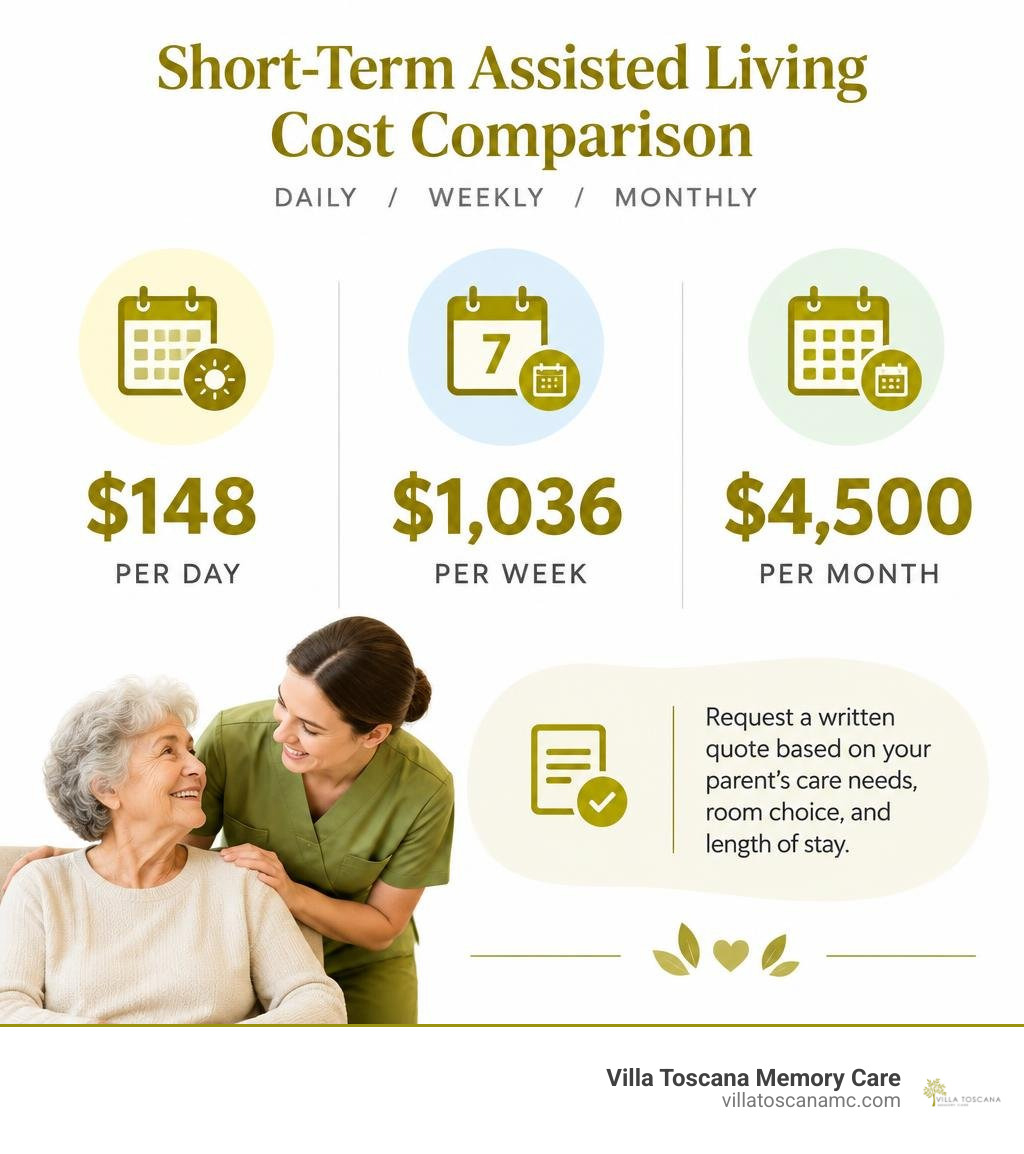
Short-term assisted living cost averages about $148 per day, $1,036 per week, or $4,500 per month. Use those figures as a starting point, then request a written quote based on your parent’s care needs, room choice, and length of stay. A temporary stay can cost more per day than a long-term move because communities may have minimum stays, furnished-room costs, and one-time assessments.
For a parent with dementia, the lowest rate is not always the best value. Ask whether the price includes 24-hour staffing, medication support, meals, help with daily routines, and memory-focused activities. Also confirm every extra fee before move-in.
This guide helps you compare short-term care options, understand what is included, and plan for a safe respite stay without surprises.
Understanding Short-Term Assisted Living Cost: Daily, Weekly, and Monthly Rates
When arranging temporary care for an aging parent, navigating pricing models can feel overwhelming. Communities typically bill short-term stays—often called respite care—on a daily or weekly basis. While the national average hovers at $148 per day (about $1,036 weekly or $4,500 per month), the broader assisted living median nationwide climbed to roughly $6,200 per month, reflecting steady 5% annual increases driven by direct-care staffing wages and operational inflation.
To get a clearer picture of your financial commitment, we recommend reviewing our detailed guide on breaking down the true cost of short-term respite care. Temporary rates are structured differently from permanent residential contracts because communities provide fully furnished suites, linens, and full access to programs without requiring long-term leases. You can also explore local market baselines via the Cost of Long Term Care by State report to see how regional metrics align with national trends.

What Is Included in the Base Short-Term Assisted Living Cost?
A quality short-term stay bundles essential daily living expenses into a predictable rate. In most licensed communities, the base fee covers:
- Furnished Accommodations: A private or semi-private apartment equipped with safety features, emergency pull cords, accessible bathrooms, and comfortable furnishings.
- Nutritious Dining: Three chef-prepared daily meals plus snacks, accommodating specialized dietary restrictions.
- 24-Hour Support: On-site direct-care staff ready to assist day or night with mobility, personal hygiene, and safety supervision.
- Assistance with ADLs: Support with Activities of Daily Living, such as bathing, dressing, and grooming.
- Medication Management: Trained staff coordinating prescriptions, reminders, and administration schedules.
- Housekeeping and Laundry: Regular linen changes, personal laundry service, and daily apartment upkeep.
- Enrichment Activities: Full access to cognitive games, fitness classes, musical performances, and organized social outings.
Factors That Influence Your Total Short-Term Assisted Living Cost
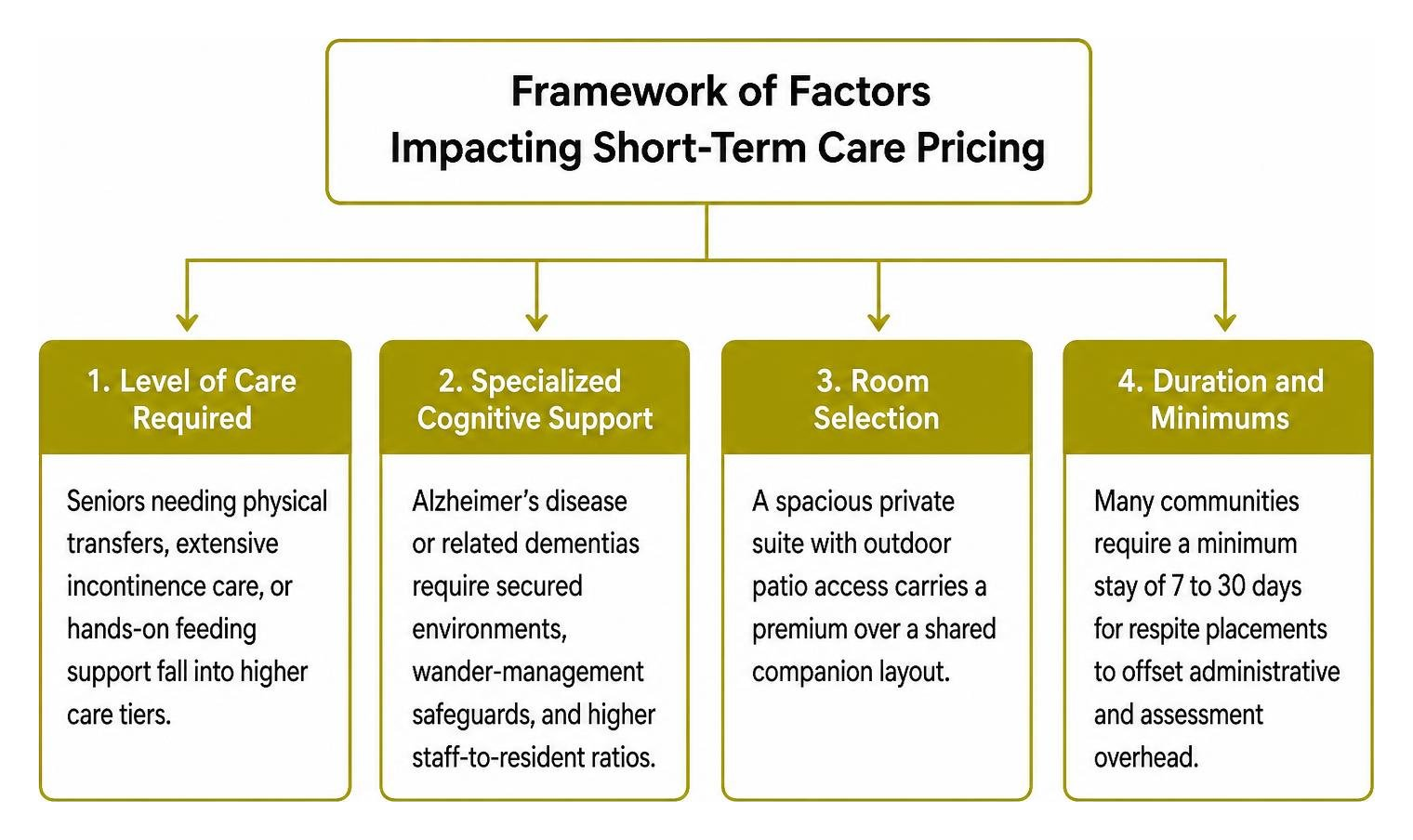
Not every short-term resident pays the exact same rate. Pricing variables include:
- Level of Care Required: Seniors who require physical transfers, extensive incontinence care, or hands-on feeding support fall into higher care tiers.
- Specialized Cognitive Support: Individuals living with Alzheimer’s disease or related dementias need secured environments, wander-management safeguards, and higher staff-to-resident ratios. For detailed figures on tiered cognitive support, explore our memory care cost breakdown by state and level of support.
- Room Selection: A spacious private suite with outdoor patio access carries a premium over a shared companion layout.
- Duration and Minimums: Many communities require a minimum stay of 7 to 30 days for respite placements to offset administrative and assessment overhead.
Comparing Short-Term Stays to Memory Care and Other Senior Care Considerations
Choosing the right care setting requires balancing clinical needs against your family’s budget. While adult day care provides daytime supervision, short-term residential placement provides 24-hour round-the-clock peace of mind.
| Care Setting | Average Daily Cost | Average Weekly Cost | Average Monthly Cost | Key Benefits & Distinctions |
|---|---|---|---|---|
| Short-Term Assisted Living | $148 | $1,036 | $4,500 – $6,200 | All-inclusive hospitality, 24/7 staff, furnished private/companion suites. |
| Dedicated Memory Care | $215 – $255 | $1,500 – $1,785 | $6,480 – $7,666 | Specialized dementia programming, secured perimeters, high staffing ratios. |
| In-Home Caregiver (44 hrs/wk) | $190 | $1,330 – $1,540 | $5,720 – $6,160 | Non-medical 1-on-1 assistance ($35/hr median); does not include food or housing. |
| Nursing Home (Private Room) | $355 | $2,485 | $10,798 | 24/7 skilled clinical nursing and intensive medical rehabilitation. |
| Adult Day Health Care | $95 – $120 | $475 – $600 | $2,050 – $2,600 | Daytime supervision and group activities; no overnight accommodations. |
As shown in recent data from Senior Living Costs in 2026, memory care averages about 35% to 49% more than standard assisted living due to specialized staffing and secure environmental architecture. For families evaluating clinical recovery versus residential memory support, understanding memory care vs skilled nursing helps determine whether medical rehabilitation or cognitive enrichment is the priority.
Regional Price Variations Across the United States
Geographic location significantly drives pricing. High-cost metropolitan statistical areas (MSAs) reflect elevated real estate and local labor expenses, while rural areas offer lower base rates:
- High-Cost Coastal Markets: States such as Massachusetts, California, Hawaii, Connecticut, and Washington D.C. range from $5,500 to over $9,200 per month.
- Mid-Range Markets: States like Florida average between $3,500 and $5,500 monthly, with a statewide median of roughly $4,200.
- Affordable Regions: Southern and midwestern states—including Mississippi, Missouri, Arkansas, and Alabama—feature median rates between $2,800 and $3,800 monthly.
Financial Assistance, Insurance Coverage, and Payment Strategies
Funding a temporary placement often involves a combination of personal savings, benefit programs, and insurance coverage.

According to the comprehensive 2026 Senior Care Cost Report, out-of-pocket planning remains standard, but several strategic programs can offset expenses:
- Medicare Limitations: Medicare does not pay for room, board, or activities of daily living in assisted living or residential memory care communities. It only covers skilled medical interventions, outpatient therapy, or hospice clinical services delivered on-site.
- Medicaid HCBS Waivers: While traditional Medicaid does not pay for assisted living room and board, Home and Community-Based Services (HCBS) waivers in select states provide reimbursement for direct personal care services.
- VA Aid and Attendance: Eligible wartime veterans and surviving spouses can utilize this monthly pension supplement to offset assisted living and memory care expenses.
- Long-Term Care Insurance: Many policies include respite care riders that cover licensed short-term residential stays up to a designated daily cap (e.g., $150–$300 per day for 30–60 days per calendar year).
- Short-Term Bridge Loans: Specialized senior care lines of credit help families cover upfront respite costs while waiting for a family home sale or VA claim approval.
Navigating Additional Fees and Hidden Community Expenses
When comparing cost estimates, request an itemized fee sheet to prevent unexpected billing. Common ancillary charges include:
- Initial Clinical Assessment Fee: A one-time charge ($250 to $500) for a nurse to evaluate medical history and design the care plan.
- Incontinence Care Supplies: Routine supply restocking fees if the community supplies briefs, wipes, and pads.
- Specialized Medical Transportation: Non-emergency scheduled transport to external specialty physician appointments.
- Guest Meals and Catering: Extra charges when family members join their loved one for dining.
- Medication Delivery & Packaging Surcharges: Pharmacy fees for pre-sorted blister packaging.
How to Select and Budget for the Right Short-Term Care Community
Price alone should never be the sole determining factor when placing a vulnerable family member. When evaluating communities, look closely at:
- Staff-to-Resident Ratios: Observe whether caregivers are attentive and responsive, especially during busy morning routines and evening dining hours.
- Thoughtful Environmental Design: High-quality memory care communities utilize easy-to-navigate circular floor plans, soothing color schemes, and secure sensory courtyards.
- Engaging Life Enrichment: Review the activity calendar to ensure activities support emotional well-being rather than just passive entertainment.
- Culinary Standards: Fresh, nutritious meals stimulate appetite and hydration. At Villa Toscana Memory Care in Mountain View, California, our on-site culinary partnership with Giorgio’s Italian Grill delivers restaurant-quality dining tailored to individual dietary preferences.
If you are facing an urgent caregiving transition or planning an upcoming vacation, our step-by-step guidance on finding the best respite care short-term stay near me on short notice provides a roadmap for swift, stress-free placement.
Frequently Asked Questions About Short-Term Senior Care Pricing
Does Medicare pay for short-term assisted living stays?
No. Medicare does not cover room, board, or custodial care in residential assisted living communities. Medicare Part A and B will continue to cover qualifying medical costs, such as physical therapy, diagnostic testing, prescription medications, or physician visits, even while staying in a community.
How do daily respite rates compare to permanent monthly rates?
Daily respite rates generally carry a 10% to 20% premium over long-term rates. This per-diem increase covers furnished accommodations, short-term administrative scheduling, flexible lease lengths, and comprehensive onboarding without requiring a multi-thousand-dollar permanent community move-in fee.
Are short-term assisted living expenses tax deductible?
In many circumstances, yes. If a licensed physician certifies that a resident requires continuous supervision or assistance with at least two activities of daily living (such as bathing, dressing, or eating) due to cognitive or physical impairment, the care component of assisted living expenses may qualify as a deductible medical expense under IRS guidelines. Families should consult a qualified tax professional regarding their individual situation.
Conclusion
Planning for short-term senior care gives family caregivers essential relief while ensuring older adults receive attentive, around-the-clock support in a vibrant setting. By understanding daily benchmarks, regional cost drivers, and fee structures upfront, you can make informed decisions that protect your family’s finances and enhance your loved one’s comfort.
At Villa Toscana Memory Care, our family-owned community combines boutique hospitality, 24-hour specialized memory care, and exceptional dining in Mountain View, California. For a complete look at preparation and scheduling, read everything families need to know about short-term respite care and connect with our team to arrange a personalized tour and transparent cost assessment today.