
Recognizing Frontotemporal Dementia Symptoms Early
Frontotemporal dementia symptoms often begin with changes in behavior, personality, judgment, or language – not memory loss. A person may become unusually impulsive, less caring about others’ feelings, withdrawn, socially inappropriate, or unable to find and understand words. Some people also develop compulsive routines, strong cravings for sweets, or problems with balance, stiffness, and movement.
FTD can be easy to miss because these changes may look like depression, stress, a midlife crisis, or another mental health concern. It also often starts younger than Alzheimer’s disease, commonly between ages 40 and 65. About 60% of people with FTD are ages 45 to 64.
For families, the key is to look for a gradual pattern of change that does not fit the person’s usual character or abilities. Early medical assessment can help rule out other causes and guide practical care planning.
FTD is an umbrella term for diseases that damage the frontal and temporal parts of the brain. These regions help manage behavior, emotions, decision-making, speech, and understanding language. As the condition progresses, a person may need increasing help with communication, safety, daily routines, and eventually round-the-clock care.
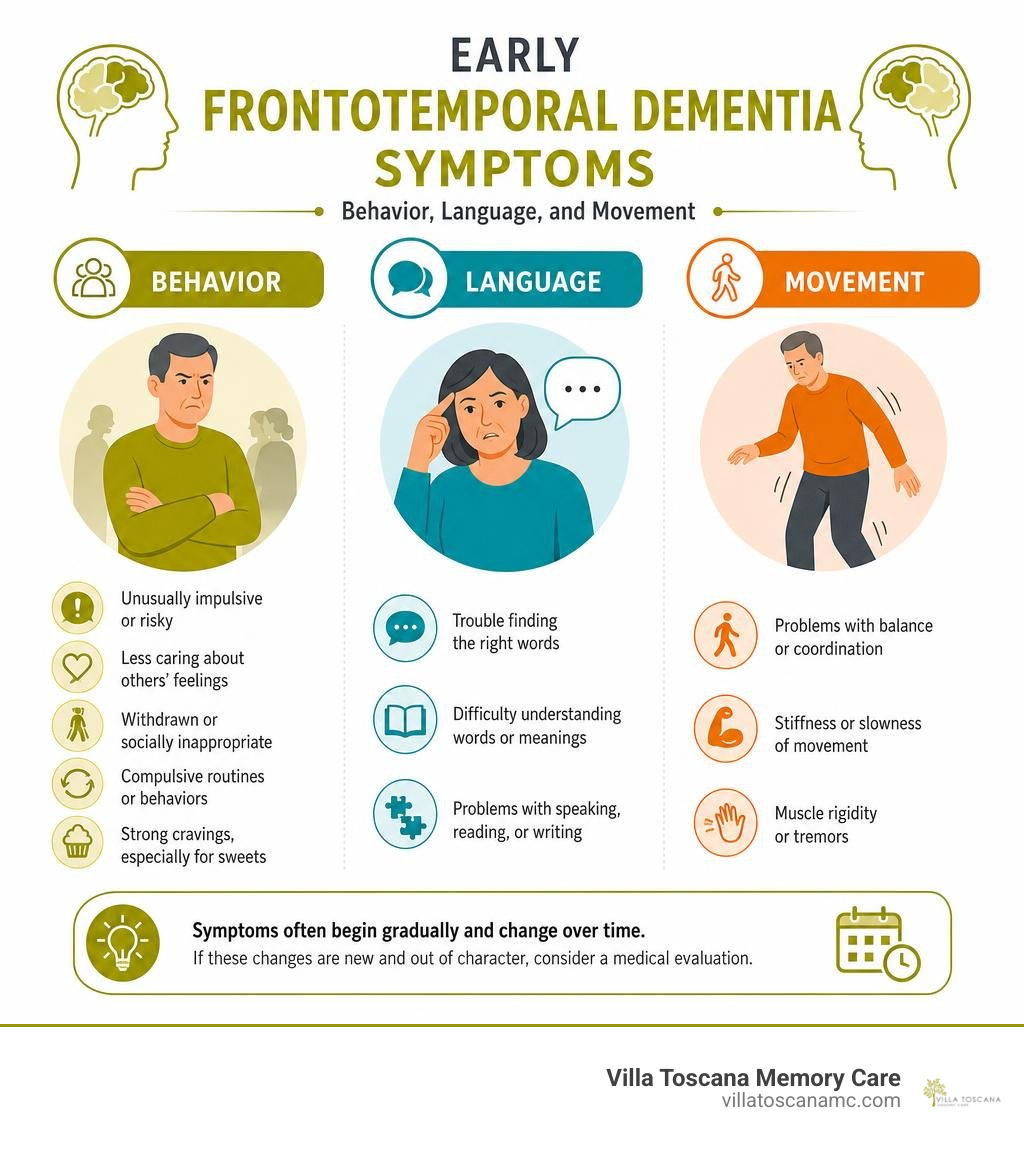
Understanding Frontotemporal Dementia Symptoms: Types and Early Signs
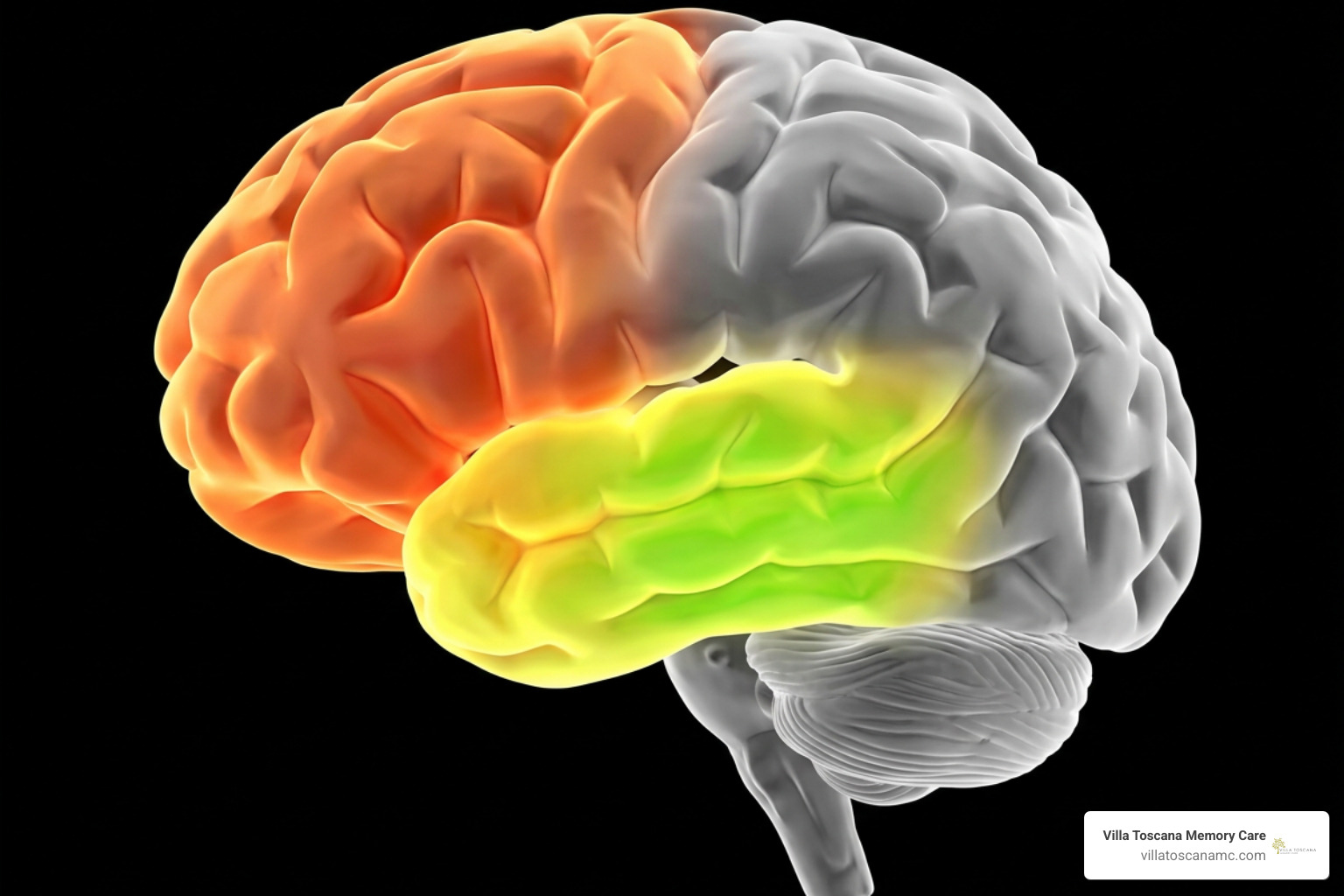
Frontotemporal dementia accounts for roughly 10% to 20% of all dementia cases. Unlike late-onset neurodegenerative disorders, FTD strikes earlier in life, with a mean age of presentation around 58 years. When nerve cells in the anterior lobes begin to break down, the symptoms reflect the specific functions governed by those regions. The frontal lobes regulate executive function, emotional responses, judgment, and motor control, while the temporal lobes manage language, semantics, and object recognition.
Because early symptoms target interpersonal conduct rather than day-to-day memory, recognizing the warning signs requires looking beyond standard cognitive benchmarks. Clinical insights from the National Institute on Aging show that FTD manifests primarily in three clinical presentations: behavioral variant frontotemporal dementia (bvFTD), primary progressive aphasia (PPA), and motor-related syndromes.
Early Behavioral Frontotemporal Dementia Symptoms vs. Psychiatric Illness
Behavioral variant FTD (bvFTD) is the most common form of the disorder. It causes progressive changes in personality, social awareness, and impulse control. One hallmark of bvFTD is anosognosia, a neurological inability to recognize one’s own deficits. Because individuals cannot perceive their behavioral changes, family members and colleagues are almost always the first to notice something is amiss.
These early behavioral signs are frequently misdiagnosed as late-onset depression, bipolar disorder, or a severe midlife crisis. However, close observation reveals key distinctions:
- Apathy Without Sadness: The individual loses motivation, ceases participation in hobbies, and detaches emotionally from family life, yet reports no subjective feelings of sadness, guilt, or despair typical of major depression.
- Social Disinhibition: A previously reserved person may start making tactless remarks about others’ physical appearance, telling inappropriate jokes at solemn events, approaching strangers aggressively, or shoplifting.
- Loss of Empathy: Patients demonstrate a profound lack of warmth, occasionally showing indifference to a spouse’s illness, a job loss, or a family crisis.
- Hyperorality and Dietary Shifts: Compulsive overeating develops, often accompanied by an intense predilection for carbohydrates, refined sugars, or attempts to put non-food items in the mouth.
- Compulsive and Utilization Behaviors: Repetitive rituals emerge, such as pacing exact routes, persistent foot-tapping, hand-clapping, counting, or compulsively using objects placed before them (like endlessly clicking an unfamiliar pen).
As noted by the Mayo Clinic, these behaviors stem from physical atrophy in the orbitofrontal and anterior insular networks rather than intentional misconduct or psychological rebellion.
Language and Speech Impairments in Primary Progressive Aphasia
When temporal lobe degeneration takes precedence, language capabilities erode while personality and visual memory remain relatively intact. This presentation is classified under Primary Progressive Aphasia (PPA). PPA is divided into distinct subtypes based on how language processing breaks down:
- Semantic Variant PPA (svPPA): Individuals speak with natural rhythm and fluency, but their speech gradually loses substance. They experience a profound loss of semantic knowledge, forgetting the meaning of common words and failing to identify familiar objects or tools. A person might call a wrench a “thingy” or ask what a “toaster” is.
- Non-Fluent/Agrammatic Variant PPA (nfvPPA): Speech becomes slow, hesitant, effortful, and telegraphic (such as saying “I… walk… store”). People with this subtype struggle to construct grammatical sentences and may invert binary terms (saying “no” when they intend to say “yes”). However, their single-word comprehension remains intact early on.
- Primary Progressive Apraxia of Speech: While related to language decline, apraxia of speech represents a motor-speech planning impairment. The person knows precisely what they wish to articulate, but the brain cannot coordinate the neuromuscular commands necessary for clear articulation.
Detailed clinical taxonomies from the National Institute of Neurological Disorders and Stroke highlight that specialized speech therapies for PPA require compensatory and visual communication aids rather than stroke-rehabilitation methodologies.
Motor and Physical Frontotemporal Dementia Symptoms
Approximately 10% to 20% of people with frontotemporal dementia also experience neuromuscular and motor decline. These motor phenotypes can appear before, during, or after cognitive and behavioral changes become apparent:
- FTD with Motor Neurone Disease (FTD-MND/FTD-ALS): Combines cognitive or behavioral decline with amyotrophic lateral sclerosis. Patients experience rapid muscle wasting, fasciculations (muscle twitching), profound weakness, and bulbar symptoms like dysphagia (swallowing difficulties).
- Progressive Supranuclear Palsy (PSP): Characterized by early gait instability, unexplained backward falls, severe axial muscle rigidity, and vertical supranuclear gaze palsy (inability to coordinate downward eye movements).
- Corticobasal Syndrome (CBS): Causes asymmetric limb rigidity, apraxia (inability to complete familiar motor tasks despite normal strength), involuntary myoclonus (jerking), and “alien limb” phenomenon, where a hand or arm appears to act independently of conscious intent.
Comprehensive clinical reviews in the NCBI Bookshelf emphasize that movement-related variants carry distinct physical risks, requiring specialized physical therapy and proactive fall-prevention plans.
Frontotemporal Dementia vs. Alzheimer’s Disease: Key Differences
Distinguishing FTD from Alzheimer’s disease is essential for accurate clinical prognosis and long-term care planning. While Alzheimer’s disease typically affects older seniors (65+) and begins with short-term episodic memory loss and spatial disorientation, FTD frequently strikes younger working adults and initially spares memory while impairing executive function, social cognition, or speech mechanics.
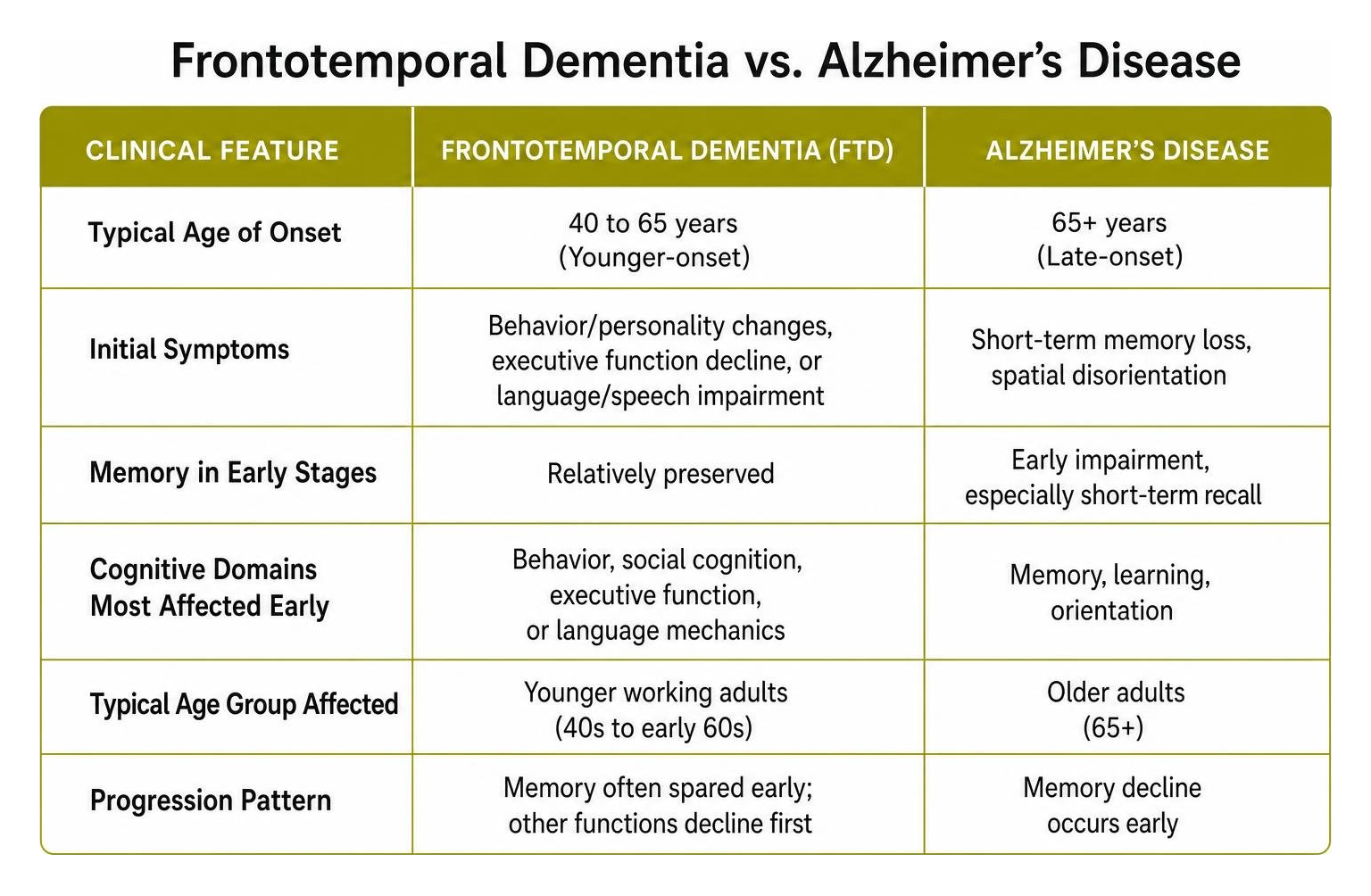
The diagnostic differences between these conditions are summarized below:
| Clinical Feature | Frontotemporal Dementia (FTD) | Alzheimer’s Disease |
|---|---|---|
| Typical Age of Onset | 40 to 65 years (Younger-onset) | 65+ years (Late-onset) |
| Primary Early Symptoms | Personality shifts, loss of empathy, disinhibition, language deficits | Short-term memory loss, disorientation, difficulty learning new information |
| Episodic Memory | Relatively preserved in early stages | Significantly impaired early |
| Spatial Orientation | Typically preserved; rarely get lost in familiar settings early | Impaired early; wandering and getting lost are common |
| Underlying Neuropathology | Tau or TDP-43 protein accumulation; frontal/temporal atrophy | Beta-amyloid plaques and neurofibrillary tau tangles; temporoparietal atrophy |
| Speech & Language | Semantic loss, non-fluent grammar, or motor apraxia | Word-finding difficulty (anomia) secondary to memory retrieval deficits |
| Diagnostic Neuroimaging | Anterior (frontal/temporal) hypometabolism on FDG-PET | Posterior (temporoparietal/hippocampal) hypometabolism on FDG-PET |
Neurological criteria from the MSD Manual Professional Edition point out that standard Alzheimer’s medications, such as acetylcholinesterase inhibitors, offer no therapeutic benefit for FTD and may exacerbate agitation.
Causes, Genetics, and Disease Progression
The biological mechanisms underlying frontotemporal disorders involve the abnormal accumulation of cellular proteins that damage neurons in the frontal and temporal lobes. Histopathologically, roughly 50% of cases are characterized by TAR DNA-binding protein 43 (TDP-43) inclusions, 45% involve microtubule-associated protein tau aggregates (tauopathies), and 5% to 10% involve fused-in-sarcoma (FUS) proteins.
Genetics plays a major role in FTD compared to other neurodegenerative conditions. Approximately 40% of individuals have a family history of dementia or psychiatric illness, and an estimated one-third of all FTD cases are directly inherited in an autosomal dominant pattern. The primary genetic mutations include:
- C9orf72: The most common genetic cause of both familial FTD and familial ALS.
- MAPT: Mutations in the microtubule-associated protein tau gene leading to abnormal tau deposition.
- GRN: Progranulin gene mutations that can produce widely differing symptoms and onset ages even within the same biological family.
As outlined by Johns Hopkins Medicine, disease progression varies widely. Some individuals live more than 10 years after diagnosis, while those with aggressive subtypes like FTD-ALS may experience rapid decline in under two years. The average survival across all variants is roughly 7.5 years from symptom onset.
In late-stage FTD, the differences between subtypes converge. Patients experience severe functional decline, immobility, urinary and bowel incontinence, loss of meaningful verbal communication, and profound swallowing difficulties. Aspiration pneumonia and secondary infections remain the most frequent direct causes of mortality.
Daily Management, Caregiver Strategies, and Therapeutic Support
Because there are currently no disease-modifying cures for frontotemporal dementia, daily care focuses on behavioral adaptation, environmental modification, communication support, and caregiver wellness.
Managing behavioral changes requires adjusting how we react:
- De-escalate Rather Than Debate: Avoid arguing, correcting, or attempting to use logic when an uninhibited behavior occurs. Recognize that the frontal lobe’s impulse-control network is physically compromised.
- Redirect Compulsive Behaviors: Channel repetitive motor habits into safe, structured activities like sorting items, walking in secure outdoor gardens, or folding linens.
- Simplify Daily Choices: Instead of open-ended questions like “What do you want for lunch?”, ask “Would you like soup or a sandwich?”
- Supervise Meals: If compulsive overeating or hyperorality is present, secure pantry doors and refrigerators, offer small pre-portioned healthy snacks, and monitor meal pacing to reduce choking risks.
- Integrate Meaningful Programming: Engaging the senses through music therapy, structured motor exercises, and stimulating activities for seniors with memory loss helps maintain functional independence, self-worth, and emotional regulation.
Caring for someone with FTD can be emotionally and physically demanding. Caregivers face high rates of burnout, depression, and social isolation due to the uninhibited behaviors and personality shifts common in younger-onset cases. Building a strong support network early—including physical therapists, speech pathologists, elder law attorneys, and specialized support groups—is essential. When home-based care is no longer feasible or safe, transitioning to a dedicated residential memory care environment ensures 24-hour safety, behavioral management, and specialized therapeutic support.
Frequently Asked Questions About Frontotemporal Dementia
What is typically the very first sign of frontotemporal dementia?
The earliest signs usually involve subtle changes in personality, social judgment, or speech fluency rather than memory problems. A person may exhibit apathy toward activities they used to love, make tactless or socially inappropriate remarks, display an unusual lack of empathy toward family members, or struggle to find words during everyday conversations.
How fast does frontotemporal dementia progress over time?
Progression varies significantly depending on the subtype and underlying biology. On average, life expectancy ranges from 7 to 10 years following the onset of symptoms, though some individuals survive more than a decade. Conversely, individuals diagnosed with the FTD-ALS variant experience a faster progression, often leading to severe functional and respiratory decline within 2 to 3 years.
Is frontotemporal dementia inherited?
An estimated one-third of all FTD cases are inherited. About 10% to 30% of behavioral variant cases are caused by specific autosomal dominant genetic mutations, most commonly in the C9orf72, MAPT, or GRN genes. Families with a history of younger-onset dementia, ALS, or atypical parkinsonism should consider meeting with a genetic counselor for comprehensive risk screening.
Conclusion
Recognizing early frontotemporal dementia symptoms is vital for securing an accurate diagnosis, accessing supportive therapies, and putting practical care plans in place. Because FTD alters personality, social behavior, and language while leaving day-to-day memory intact early on, it requires a specialized approach tailored to its unique clinical course.
At Villa Toscana Memory Care, we understand the distinct challenges that accompany frontotemporal disorders and younger-onset dementias. Our family-owned community in Mountain View, CA, provides an innovative, award-winning design paired with 24-hour care, dedicated activity programs, and scratch dining through Giorgio’s Italian Grill. By focusing on safety, dignity, and specialized behavioral support, we help families navigate the complexities of dementia with confidence and compassion.