
Finding the Right Short-Term Care Facility
A short-term care facility offers a temporary place to stay when someone needs more support than they can safely get at home. The right option depends on what kind of help they need: a skilled nursing facility may provide medical care and rehabilitation after a hospital stay, while a temporary memory care stay may offer supervision and daily support for someone with dementia.
Start by asking what care is needed, how long the stay might last, and what help will be available when it is time to return home. Those answers make it easier to compare facilities without getting lost in the details.
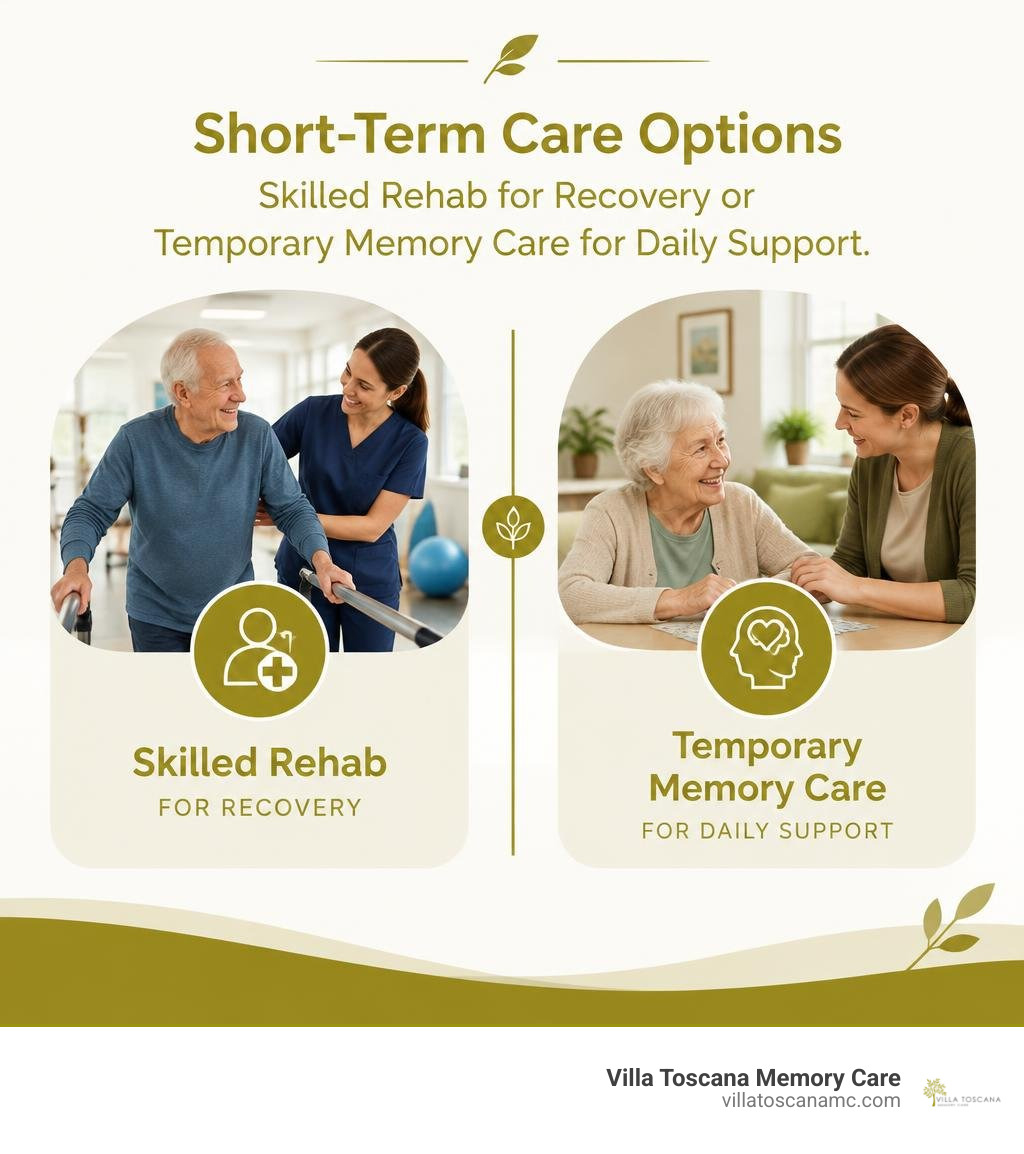
Know your short term care facility terms:
What Is a Short Term Care Facility and Who Needs It?
A short term care facility provides goal-oriented, temporary residential support for individuals who require specialized clinical attention, cognitive supervision, or intensive physical therapy before returning to their regular living arrangements. Rather than settling in for an open-ended stay, patients enter these communities with a clear roadmap designed around recuperation, reconditioning, and safety.
These facilities serve a wide range of individuals across several common circumstances:
- Post-Surgery Rehabilitation: Patients recovering from joint replacements (such as hip or knee surgery), cardiac operations, or spinal procedures who need daily therapy and wound management.
- Stroke and Neurological Recovery: Individuals regaining speech, motor skills, or cognitive function through multidisciplinary therapeutic interventions.
- Acute Illness Recuperation: Seniors recovering from severe infections, pneumonia, or cardiac events who require medical monitoring and medication stabilization.
- Injury and Fracture Management: Individuals who have suffered falls or fractures and cannot navigate stairs or manage self-care safely at home.
- Respite and Cognitive Support: Older adults with cognitive changes who benefit from structured memory support while primary family caregivers step away to rest or travel, utilizing temporary assisted living stays that keep seniors safe and supported.
Key Differences Between Short-Term and Long-Term Care
While both settings emphasize compassionate support and safety, their overall objectives, daily rhythms, and timelines differ significantly.
| Care Aspect | Short-Term Care | Long-Term Care |
|---|---|---|
| Primary Goal | Medical stabilization, rehabilitation, and a safe return home | Sustained assistance with daily activities and ongoing health maintenance |
| Average Duration | A few days to several weeks | Months to multiple years (permanent residency) |
| Therapy Focus | Intensive, goal-oriented physical, occupational, and speech therapy | Maintenance therapy, gentle movement, and functional preservation |
| Care Plan Reviews | Frequent, weekly progress assessments tied to discharge milestones | Periodic quarterly reviews focused on quality of life and routine adjustments |
| Primary Need | Post-acute medical treatment, injury healing, or temporary respite | Custodial care, chronic disease management, or advanced memory care |
Why Choose Recovery in a Short Term Care Facility Over Home?
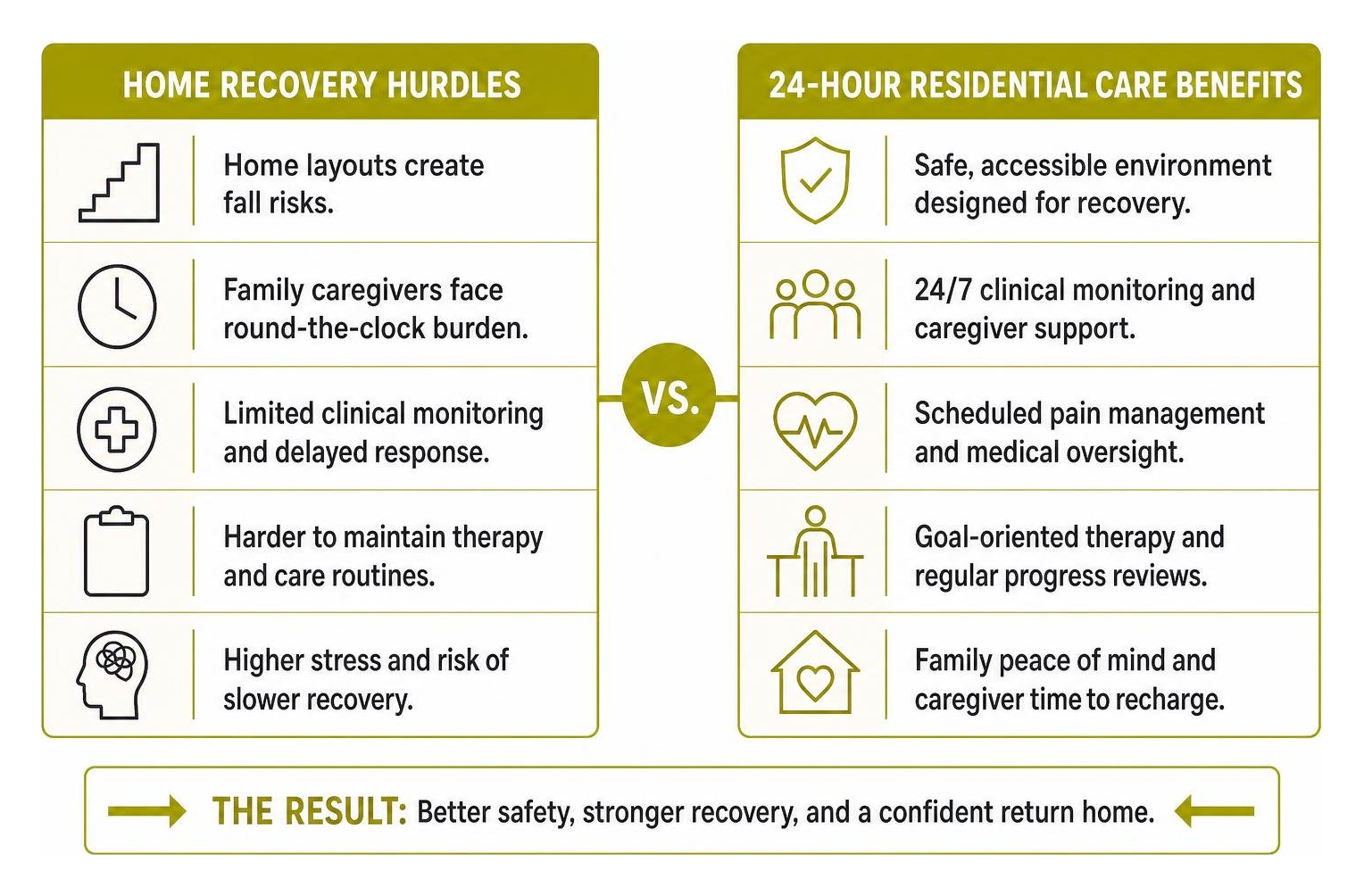
Recovering in the comfort of one’s own bedroom sounds wonderful in theory, but in practice, early post-hospital recovery can quickly overwhelm family members. Standard homes often feature narrow doorways, steep stairs, and slick bathroom surfaces that pose severe fall hazards for individuals with reduced mobility.
In a dedicated transitional care setting, patients receive 24-hour on-site clinical monitoring, scheduled pain management, and direct access to adaptive equipment. Furthermore, temporary residential care prevents caregiver burnout, allowing family members to recharge your energy while ensuring safe care for your loved one rather than acting as round-the-clock nurses.
Comprehensive Services, Therapies, and Daily Amenities

A comprehensive transitional stay combines high-level healthcare with community hospitality. Clinical staff address immediate physical needs while life-enrichment teams provide engaging social environments that support emotional well-being.
- 24-Hour Skilled Nursing: Continuous observation, vital sign tracking, and immediate emergency response.
- Advanced Wound Care: Sterile dressing changes, surgical incision monitoring, and specialized treatment for pressure injuries.
- Intravenous (IV) Therapy: Safe delivery of antibiotics, hydration, or specialized medications.
- Nutritional Support: Registered dietitians tailor menus to manage diabetes, renal care, or swallowing difficulties.
- Medication Administration: Careful reconciliation to avoid drug interactions and ensure strict adherence to prescribing schedules.
Physical, Occupational, and Speech Rehabilitation
Rehabilitation is the engine of short-term recovery. Multidisciplinary teams evaluate baseline abilities upon arrival and build customized daily schedules targeting functional independence.
- Physical Therapy (PT): Centers on restoring gross motor function, balance, transfer techniques, and gait training to prevent post-discharge falls.
- Occupational Therapy (OT): Focuses on fine motor skills and activities of daily living (ADLs), such as dressing, bathing, preparing meals, and using adaptive kitchen or bathroom tools.
- Speech-Language Pathology (ST): Evaluates swallowing mechanics (dysphagia management) to prevent aspiration pneumonia and delivers cognitive retraining to rebuild communication, memory, and problem-solving skills.
Accommodations and Social Community Life
Healing involves more than physical therapy drills; an uplifting environment speeds emotional recovery. Modern communities design their accommodations to feel warm and homelike rather than sterile and clinical.
Guests enjoy private or semi-private suites, accessible en-suite bathrooms, and inviting communal dining spaces. When not engaged in therapy, residents can relax in secure outdoor courtyards, take part in gentle music or art programs, or practice chair yoga—a gentle, seated stretching routine that builds flexibility without balance risks. Delicious, restaurant-style meals bring nutrition and pleasure back to daily routines.
Understanding Costs, Insurance, and Length of Stay
Navigating healthcare billing requires an understanding of payer guidelines, benefit periods, and out-of-pocket thresholds. Length of stay typically spans from a few days to several weeks, directly tied to personal recovery progress and clinical necessity.
- Medicare Coverage: For post-acute skilled nursing stays, Medicare covers care following a qualifying three-day inpatient hospital admission. Days 1 through 20 are covered at 100% for qualifying services. Days 21 through 100 require a daily copayment, after which Medicare coverage ends for that benefit period.
- Private and Commercial Insurance: Medicare Advantage, HMOs, and private health plans often cover short-term rehabilitation, though they require prior authorization and ongoing clinical updates to approve continued stays.
- Medicaid and State Programs: Medicaid may assist with specific clinical rehabilitation or custodial care expenses for individuals meeting state financial and medical criteria, aligned with California public healthcare resources and standards.
- Private Pay / Respite Stays: If a temporary stay is purely for social respite or non-skilled assistance, families often pay out-of-pocket, as outlined when breaking down the true cost of short-term respite care.
Navigating Admissions and Planning a Smooth Return Home

Securing a room in a quality facility can happen proactively before an elective procedure or reactively during an emergency hospital admission. Hospital discharge planners and social workers regularly liaise directly with community admissions coordinators to transmit medical charts, verify insurance coverage, and arrange transportation.
When unexpected caregiving emergencies arise, families can utilize strategies for finding the best respite care short-term stay near me on short notice to ensure continuous supervision and comfort.
Steps to Tour and Choose the Right Short Term Care Facility
Taking an in-person tour provides clear insight into daily operations, team culture, and overall cleanliness.
- Inspect the Physical Environment: Look for wide, unobstructed hallways, secure handrails, fresh air circulation, and well-maintained outdoor patios.
- Evaluate Staff Interactions: Observe whether caregivers greet residents warmly and respond promptly to call lights.
- Review Clinical Credentials & CMS Ratings: Check public health inspection reports and Centers for Medicare & Medicaid Services (CMS) star ratings to gauge regulatory compliance and staffing depth.
- Assess Rehabilitation Gyms: Confirm that therapy suites feature modern training stairs, parallel bars, and adaptive simulation kitchens.
Discharge Planning and Transitioning Back Home
Effective recovery communities begin discharge planning on day one. A multidisciplinary team constantly tracks progress against functional goals to ensure that leaving the facility is safe and sustainable.
- Home Safety Evaluations: Therapists recommend grab bars, ramp installations, or rug removals before the patient arrives home.
- Home Health Coordination: Arranging visiting physical therapists, occupational therapists, and visiting nurses for continued progress.
- Durable Medical Equipment (DME): Ordering walkers, shower chairs, or hospital beds ahead of discharge.
- Caregiver Education: Demonstrating medication schedules, transfer mechanics, and warning signs of complications to family members.
Frequently Asked Questions About Short-Term Care
How long does an average stay last in a short-term care center?
Most short-term rehabilitation and respite stays range from one to four weeks. The exact timeline depends on individual recovery speed, how quickly physical milestones are achieved, wound healing progress, and physician clearance for home safety.
Does Medicare pay for 100% of short-term rehabilitation?
Medicare covers 100% of allowable costs for the first 20 days of skilled nursing care, provided the patient had a qualifying three-day inpatient hospital stay and requires daily skilled services. Starting on day 21 through day 100, a daily coinsurance copay applies. Medicare does not cover non-skilled, purely custodial stays.
What items should patients pack for a short-term stay?
Pack comfortable, loose-fitting clothing suitable for exercise (such as sweatpants, elastic-waist shorts, and breathable shirts), supportive non-skid athletic shoes, personal toiletries, eyeglasses, dentures, hearing aids with extra batteries, an updated medication list, and personal identification or insurance cards.
Conclusion
A temporary recovery stay offers a supportive bridge between acute medical treatment and independent living at home. By providing around-the-clock professional oversight, dedicated daily rehabilitation, and a comfortable, engaging environment, these communities turn a potentially stressful transition into a focused, empowering recovery.
At Villa Toscana Memory Care in Mountain View, CA, we understand that whether your loved one requires short-term transitional support, respite relief, or specialized memory support, personalized attention and high-caliber dining make all the difference. Explore everything families need to know about short-term respite care to take the next confident step toward health, safety, and lasting peace of mind.