
How to Find the Right Memory Center Near Me
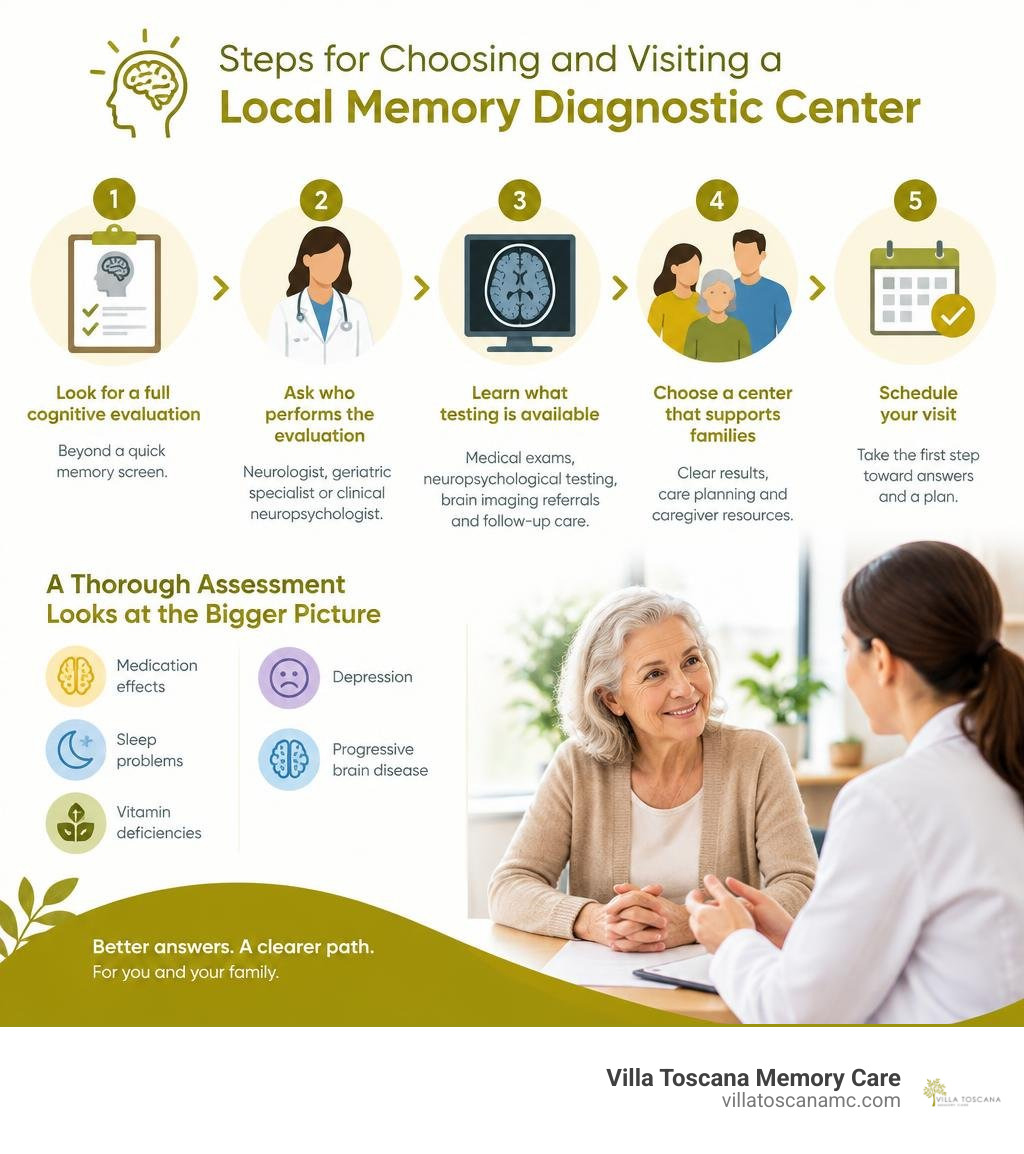
If you are searching for a memory center near me, start by looking for a clinic that provides a full cognitive evaluation, not just a quick memory screen. Ask whether the center evaluates conditions such as Mild Cognitive Impairment (MCI), Alzheimer’s disease, vascular dementia, Lewy body dementia, Parkinson’s-related dementia, stroke effects, and traumatic brain injury.
When you call, ask three practical questions:
- Who performs the evaluation? Look for a neurologist, geriatric specialist, or clinical neuropsychologist.
- What testing is available? A strong center may offer medical exams, detailed neuropsychological testing, brain imaging referrals, and follow-up care.
- Do they support families? Clear results, care planning, and caregiver resources matter as much as the diagnosis.
Memory changes can have many causes, including medication effects, depression, sleep problems, vitamin deficiencies, or progressive brain disease. A thorough assessment helps separate these possibilities and gives families a clearer next step. For a broader overview of how specialists evaluate cognitive decline, the dementia diagnosis process described by medical references can provide helpful context.
For adult children supporting a parent, an early evaluation can replace uncertainty with a plan: understand what is changing, learn what support is needed now, and prepare for safe long-term care if symptoms progress.
Conditions Diagnosed and Early Warning Signs
A clinical memory diagnostic center does far more than determine whether someone is simply “getting forgetful.” Geriatric neurologists, neuropsychologists, and memory specialists evaluate a wide spectrum of cognitive disorders, identifying the root biological or psychological triggers behind cognitive decline.

Conditions Commonly Diagnosed at Clinical Centers
- Mild Cognitive Impairment (MCI): A measurable decline in memory, language, or executive function that is noticeable to the individual and family, but does not yet significantly interfere with daily independent living.
- Alzheimer’s Disease: The most common form of neurodegenerative dementia, characterized by progressive loss of short-term memory, disorientation, spatial difficulty, and impaired judgment.
- Vascular Dementia: Cognitive impairment resulting from reduced blood flow to the brain, frequently following strokes or cumulative microvascular disease.
- Lewy Body Dementia (LBD): Marked by fluctuating alertness, visual hallucinations, sleep disturbances, and motor symptoms similar to Parkinson’s disease.
- Frontotemporal Dementia (FTD): Early degeneration of the frontal and temporal lobes, often affecting individuals under 65 and presenting through personality shifts, behavioral changes, or language loss. Recognizing and navigating the unique challenges of frontotemporal dementia symptoms requires specialized diagnostic protocols because memory loss may not appear until late in the disease.
- Pseudodementia (Depression-Related Cognitive Impairment): Cognitive slowing and memory complaints stemming from severe mood disorders, which can mimic dementia but are frequently reversible with appropriate mental health treatment.
- Traumatic Brain Injury (TBI) & Post-Concussion Deficits: Long-term memory and attention challenges resulting from head trauma.
- Reversible Secondary Causes: Deficiencies in vitamin B12, thyroid dysfunctions, normal pressure hydrocephalus (NPH), medication toxicity, and chronic sleep apnea.
Red-Flag Cognitive Symptoms
While misplacing car keys or momentarily forgetting an acquaintance’s name can happen to anyone (especially before morning coffee), consistent patterns of decline warrant professional evaluation.
Watch for these warning signs:
- Repeating the same questions or stories within short intervals.
- Struggling with complex, familiar tasks like balancing a checkbook, managing medication schedules, or following a favorite recipe.
- Uncharacteristic executive dysfunction, such as difficulty planning or making logical financial decisions.
- Spatial disorientation or getting lost in familiar neighborhoods.
- Personality and mood shifts, including sudden apathy, withdrawal from social gatherings, or uncharacteristic paranoia.
Comprehensive Diagnostic Services and Clinical Testing Modalities
Modern memory centers use an evidence-based, multi-tiered approach to separate normal age-related changes from neurodegenerative conditions. Rather than relying on a single questionnaire, clinicians combine behavioral tests, structural imaging, and biochemical profiling.

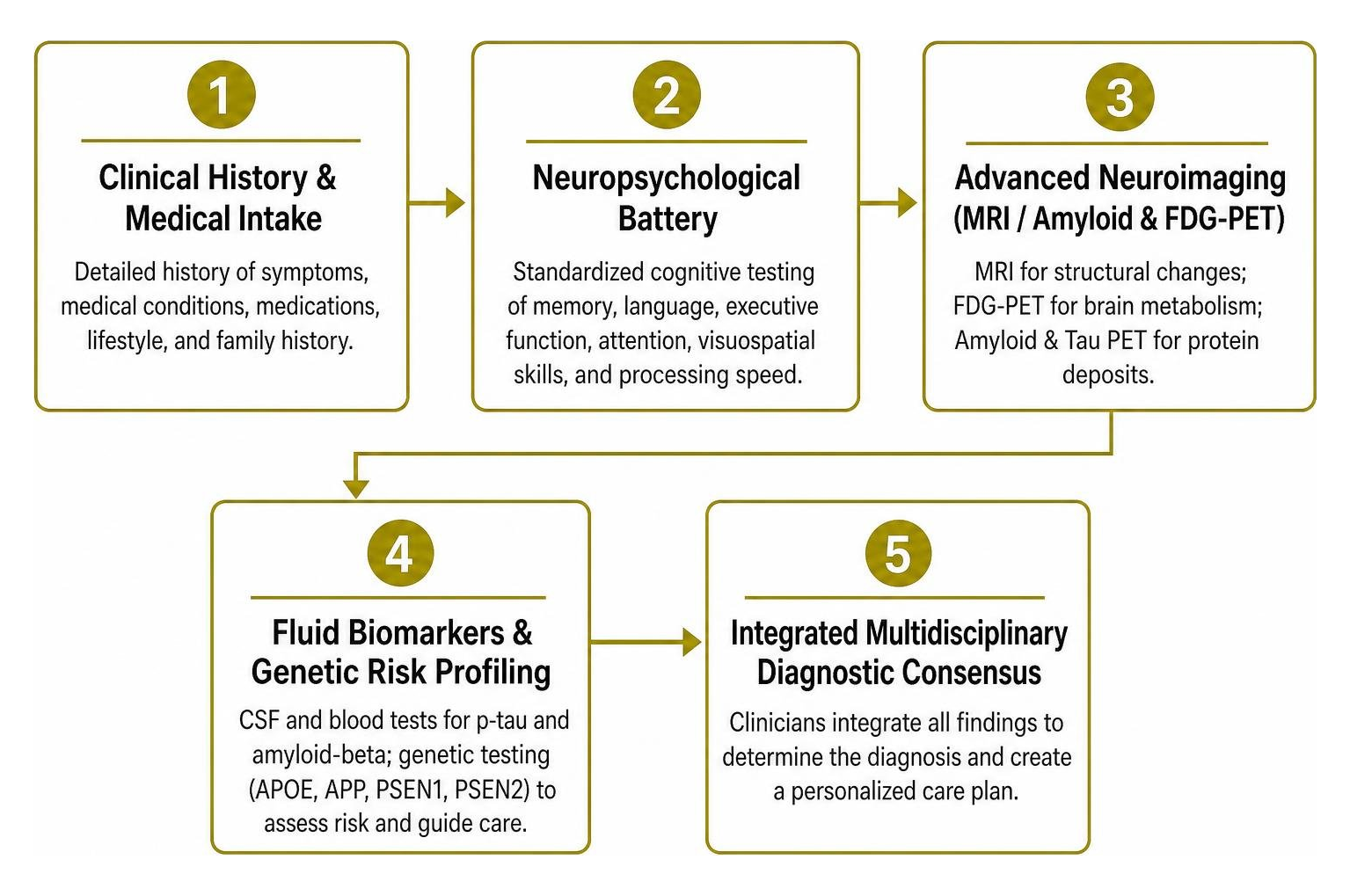
- Neuropsychological Testing: A comprehensive assessment of cognitive domains using standardized pen-and-paper or computerized tools. These batteries evaluate working memory, verbal recall, processing speed, visuospatial construction, abstract reasoning, and language fluency.
- Advanced Neuroimaging:
- Magnetic Resonance Imaging (MRI): Pinpoints structural changes, such as hippocampal atrophy (common in Alzheimer’s) or white matter hyperintensities (indicating vascular disease).
- Positron Emission Tomography (PET): FDG-PET scans evaluate brain glucose metabolism, while advanced Amyloid and Tau PET scans detect the presence and density of characteristic protein deposits.
- Biomarker and Genetic Testing: Lumbar punctures (cerebrospinal fluid analysis) and high-sensitivity blood tests detect phosphorylated tau (p-tau) and amyloid-beta ratios. Genetic testing assesses mutations in genes such as APOE, APP, PSEN1, or PSEN2, helping clinicians gauge familial risk and tailor interventions.
- Cognitive Rehabilitation & Training: Structured cognitive exercises designed by neurologists and neuropsychologists to build cognitive reserve and support everyday functional abilities.
Neurologist, Neuropsychologist, and Memory Coach: Understanding the Roles
Understanding the care team’s roles helps families know what to expect during diagnosis and ongoing treatment.
| Specialty / Role | Core Credentials | Primary Diagnostic & Clinical Scope | Typical Treatment Interventions |
|---|---|---|---|
| Neurologist / Geriatrician | M.D. or D.O. with residency and fellowship training | Medical and physical exams, brain imaging analysis, biomarker testing, differential diagnosis of neurological pathology. | Prescribes medications, manages comorbid medical conditions, orders neuroimaging, tracks disease progression. |
| Clinical Neuropsychologist | Ph.D. or Psy.D. in Clinical Psychology with specialized neuropsychology fellowship | In-depth psychometric testing, mapping brain-behavior relationships, measuring specific cognitive domain deficits. | Recommends compensatory strategies, cognitive rehab targets, and behavioral interventions. |
| Memory Coach / Cognitive Trainer | Varied backgrounds (OT, SLP, psychology, or certified coaching) | Non-diagnostic; focuses on functional memory exercise, routine reinforcement, and daily living strategies. | Delivers guided cognitive exercises, lifestyle coaching, and organizational strategies for daily tasks. |
Finding the Right Memory Center Near Me: Step-by-Step Selection Guide
Choosing the right diagnostic clinic ensures you receive an accurate diagnosis, clear guidance, and ongoing support.
- Confirm Clinical Credentials and Affiliations: Prioritize centers led by board-certified neurologists, geriatricians, and licensed clinical neuropsychologists. Clinics affiliated with academic medical institutions or designated research networks often provide direct access to advanced biomarker testing and cutting-edge clinical trials.
- Review Referral and Intake Guidelines: Determine whether the clinic requires a primary care physician (PCP) referral. Gather past medical records, lab work, and prior brain imaging before your intake call to avoid scheduling delays.
- Verify Insurance and Clearances: Neuropsychological evaluations and advanced imaging involve specific medical billing codes. Confirm with both the clinic and your insurer whether diagnostic codes (such as CPT 96132/96133 for neuropsychological interpretation) are covered and if prior authorization is needed.
Evaluating Diagnostic Capabilities at a Memory Center Near Me
A high-quality memory clinic provides more than just a diagnosis; it offers a long-term plan for care. When evaluating facilities, look for:
- Multidisciplinary Teams: Seamless collaboration between medical doctors, testing psychologists, social workers, and occupational therapists.
- Longitudinal Tracking: Regular follow-up evaluations (typically every 6 to 12 months) to monitor changes, update interventions, and adapt care plans over time.
- Holistic Lifestyle and Cognitive Programs: Evidence-based guidance on diet, physical exercise, and structured cognitive enrichment. Engaging in meaningful, stimulating activities for seniors with memory loss plays an essential role in sustaining daily cognitive function and emotional well-being.
Questions to Ask When Calling a Memory Center Near Me
- What specific diagnostic tools (neuroimaging, biomarker blood tests, neuropsychological batteries) are performed on-site versus referred out?
- How long is the current wait time from the initial phone call to the completed diagnostic feedback session?
- Will our family receive a comprehensive written report detailing practical daily strategies and care recommendations?
- Does the clinic offer direct caregiver education or connect families with dedicated dementia care support to relieve caregiver burden?
What to Expect During Your Initial Diagnostic Evaluation
Visiting a memory center for the first time can feel overwhelming, but knowing the structure of the evaluation helps ease anxiety.
- Pre-Visit Preparation: You will be asked to provide detailed medical histories, current medication lists, sleep pattern summaries, and past laboratory work. Bringing a close family member or care partner is critical for providing an accurate outside perspective on daily changes.
- The Clinical Interview & Physical Exam: The neurologist or geriatric specialist conducts an extensive interview, checking reflexes, balance, sensory responses, and cranial nerve function to rule out motor disorders, stroke damage, or neuropathy.
- Neurocognitive Testing Session: The patient works one-on-one with a psychometrist or neuropsychologist for 1.5 to 4 hours. These structured tasks test recall, language fluency, shape copying, mathematical reasoning, and problem-solving without distractions.
- Biomarker and Imaging Referrals: If not completed beforehand, the doctor may order high-resolution brain MRIs, targeted PET scans, or blood panels to rule out metabolic imbalances.
- The Diagnostic Consensus and Feedback Session: Within a few weeks of testing, the multidisciplinary team meets with the patient and family to present their findings. You will receive a formal diagnosis, a discussion of the underlying pathology, and a clear roadmap covering medical management, safety adjustments, and community support.
As conditions evolve, this roadmap often includes understanding long-term memory care options to ensure a safe, supportive living environment tailored to your loved one’s specific stage of need.
Frequently Asked Questions About Memory Centers
Are cognitive and memory training programs effective for early-stage dementia?
Yes. Structured, clinician-designed cognitive training programs can improve attention, processing speed, and executive functioning in individuals with Mild Cognitive Impairment (MCI) and early-stage dementia. Unlike generic mobile games, personalized cognitive training stimulates neuroplasticity and enhances functional brain connectivity. Clinical studies show that regular cognitive exercises can help preserve independence in daily tasks for extended periods.
Does Medicare cover diagnostic evaluations at specialized memory clinics?
Medicare Part B generally covers medically necessary diagnostic visits, neurological physical exams, and clinical neuropsychological testing when ordered by a physician to evaluate suspected cognitive impairment. Diagnostic brain imaging (such as structural MRIs) and certain laboratory tests are also covered under standard guidelines. However, coverage for specific advanced biomarker PET scans or genetic risk tests varies by plan and medical indication, so always confirm pre-authorization requirements with your provider.
What are the latest clinical treatments available for Alzheimer’s disease?
Modern clinical approaches combine disease-modifying therapies with targeted lifestyle and behavioral interventions. Monoclonal antibody treatments targeting amyloid plaques in the brain can help slow cognitive and functional decline in individuals with confirmed early-stage Alzheimer’s disease or MCI. Memory centers also use symptom-focused medications (such as cholinesterase inhibitors and NMDA receptor antagonists), personalized cardiovascular and metabolic plans, and access to emerging clinical trials studying tau-targeted therapies and neuroinflammation.
Conclusion
Seeking an evaluation at a specialized memory center is an empowering first step toward clarity and proactive care. Accurate early diagnosis allows families to rule out reversible issues, access modern disease-modifying treatments, build cognitive reserve, and plan thoughtfully for the future.
When home care needs evolve, our team at Villa Toscana Memory Care in Mountain View, CA, is here to provide exceptional, compassionate support. We offer boutique residential living with 24-hour trained care, innovative architectural design, engaging daily activities, and exceptional dining through our partnership with Giorgio’s Italian Grill. Contact us to learn more about our specialized memory care and residential support or to schedule a personal visit.