
Why Services and Staffing Matter When Choosing Dementia Care
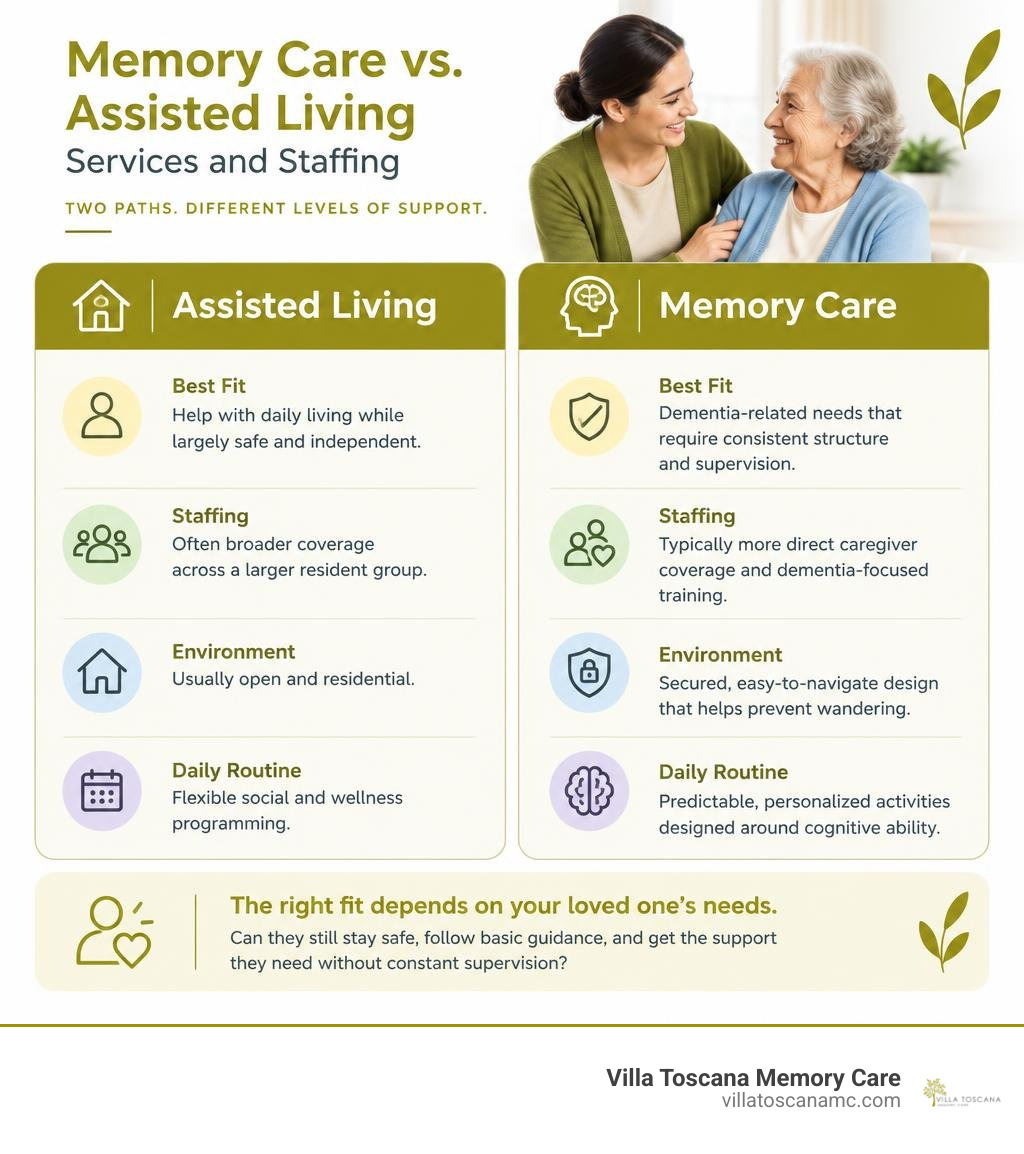
The key difference in memory care vs assisted living services and staffing is the level of dementia-specific support. Assisted living helps with daily tasks while preserving independence for people who can remain safe with less structure. Memory care adds a secure setting, closer supervision, dementia-trained caregivers, and planned activities for people whose memory loss creates safety or behavior risks.
| Area | Assisted Living | Memory Care |
|---|---|---|
| Best fit | Help with daily living while largely safe and independent | Dementia-related needs that require consistent structure and supervision |
| Staffing | Often broader coverage across a larger resident group | Typically more direct caregiver coverage and dementia-focused training |
| Environment | Usually open and residential | Secured, easy-to-navigate design that helps prevent wandering |
| Daily routine | Flexible social and wellness programming | Predictable, personalized activities designed around cognitive ability |
This distinction matters because cognitive impairment is common in senior living. Research suggests up to 70% of assisted living residents have some cognitive impairment. But a diagnosis alone does not mean someone must move to memory care.
The better question is: Can your parent still stay safe, follow basic guidance, and receive the support they need without constant supervision? Early-stage dementia may be manageable in assisted living. Repeated exit-seeking, nighttime confusion, medication errors, falls, or distress that staff cannot reliably address may signal that memory care is the safer fit.
Families should look beyond a brochure or a single staff-to-resident ratio. Ask who is present overnight, whether a licensed nurse is available, what dementia training caregivers receive, and how the community responds when a resident becomes confused or distressed.
Explore more about memory care vs assisted living services and staffing:
Evaluating Memory Care vs Assisted Living Services and Staffing: Core Differences
Choosing between assisted living and memory care often comes down to understanding the clinical spectrum of aging. Both settings provide housing, personal care, and community life, but they serve fundamentally different clinical profiles.
Assisted living is built around custodial care and maintaining personal independence. Residents here generally know when they are thirsty, can ask for assistance when they need to visit the restroom, and understand how to navigate hallways safely. In contrast, specialized memory care caters directly to progressive neurodegenerative conditions such as Alzheimer’s disease, Lewy body dementia, and vascular dementia.
| Feature / Metric | Assisted Living Communities | Specialized Memory Care Units |
|---|---|---|
| Primary Resident Goal | Maintaining independence with custodial help | Ensuring safety, comfort, and cognitive engagement |
| Direct Caregiver Ratios | 1:8 to 1:15 during daytime hours | 1:3 to 1:6 dedicated daytime coverage |
| Overnight Coverage | Minimal aide staffing; on-call nursing common | Awake overnight staff; higher direct observation |
| Staff Training Focus | General safety, basic hygiene, and transfers | Dementia stages, de-escalation, non-verbal cues |
| Building Security | Open residential entries; standard egress | Monitored keypads, secured perimeters, enclosed gardens |
| Physical Architecture | Multi-wing layouts; varied floorplans | Circular pathways, high-contrast visual cues, low glare |
| Activity Programming | Independent clubs, lectures, off-site outings | Sensory therapy, reminiscence, predictable routines |
| Dining Support | Communal sit-down dining; extensive menu choice | Adaptive utensils, finger-food options, textured dining |
Understanding Assisted Living Capabilities and Limitations
Assisted living provides hands-on help with activities of daily living (ADLs)—such as bathing, dressing, grooming, and managing medications. Caregivers offer verbal prompting, schedule management, and physical assistance with mobility.
However, assisted living assumes a baseline level of cognitive orientation. If a resident forgets how to use an emergency call button, wanders into other residents’ private apartments, or leaves the stove unattended, the traditional assisted living model reaches its practical limit. Understanding these boundaries is critical when navigating care transitions when needs exceed assisted living to ensure your loved one never experiences unsafe gaps in daily supervision.
What Defines Specialized Memory Care Environments
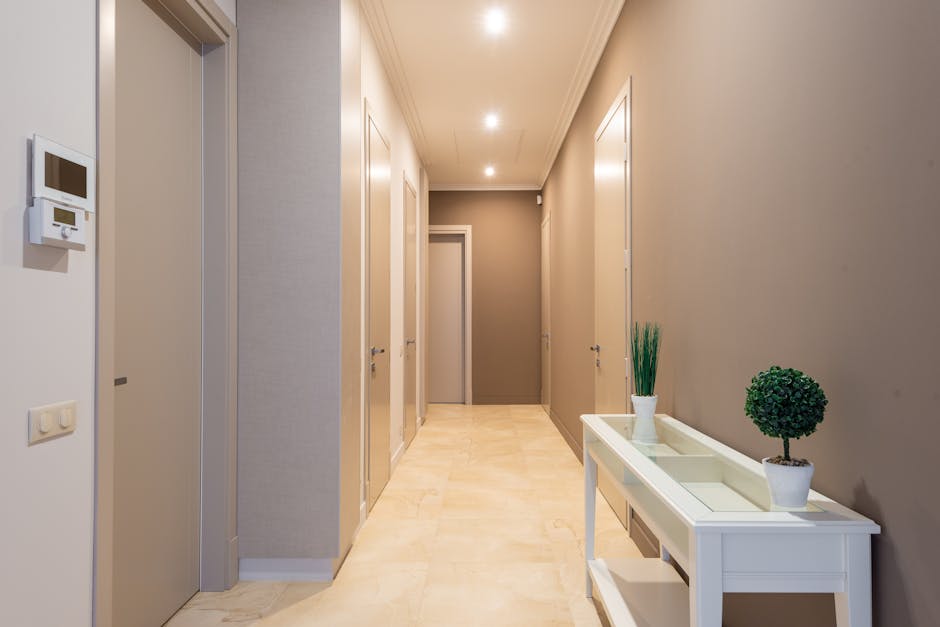
Specialized memory care removes environmental triggers that cause frustration, anxiety, and disorientation. Rather than relying solely on locked doors, physical design is leveraged as a therapeutic tool:
- Continuous Circular Hallways: Hallways designed without dead ends prevent the agitation and panic that occur when a resident encounters an abrupt barrier.
- Color-Coded Wayfinding and Memory Boxes: Distinct color palettes and personalized glass shadowboxes outside each apartment help residents identify their private suites independently.
- Secure Courtyards: Access to sunshine and fresh air reduces anxiety and normalizes circadian rhythms while preventing accidental elopement.
- Acoustic and Visual Calming: Specialized lighting reduces harsh shadows that trigger hallucinations, while sound-dampening flooring keeps ambient noise low.
When discovering luxury private memory care community features, families find that combining high-end residential architecture with intentional clinical safeguards allows seniors to move freely without feeling restricted.
Staffing Ratios, Shift Coverage, and Specialized Dementia Training
Direct staffing is the single most important factor determining resident outcomes in cognitive care. The presence of empathetic, skilled caregivers ensures that physical needs are met and emotional distress is recognized early.

Analyzing Memory Care vs Assisted Living Services and Staffing Ratios Across Shifts
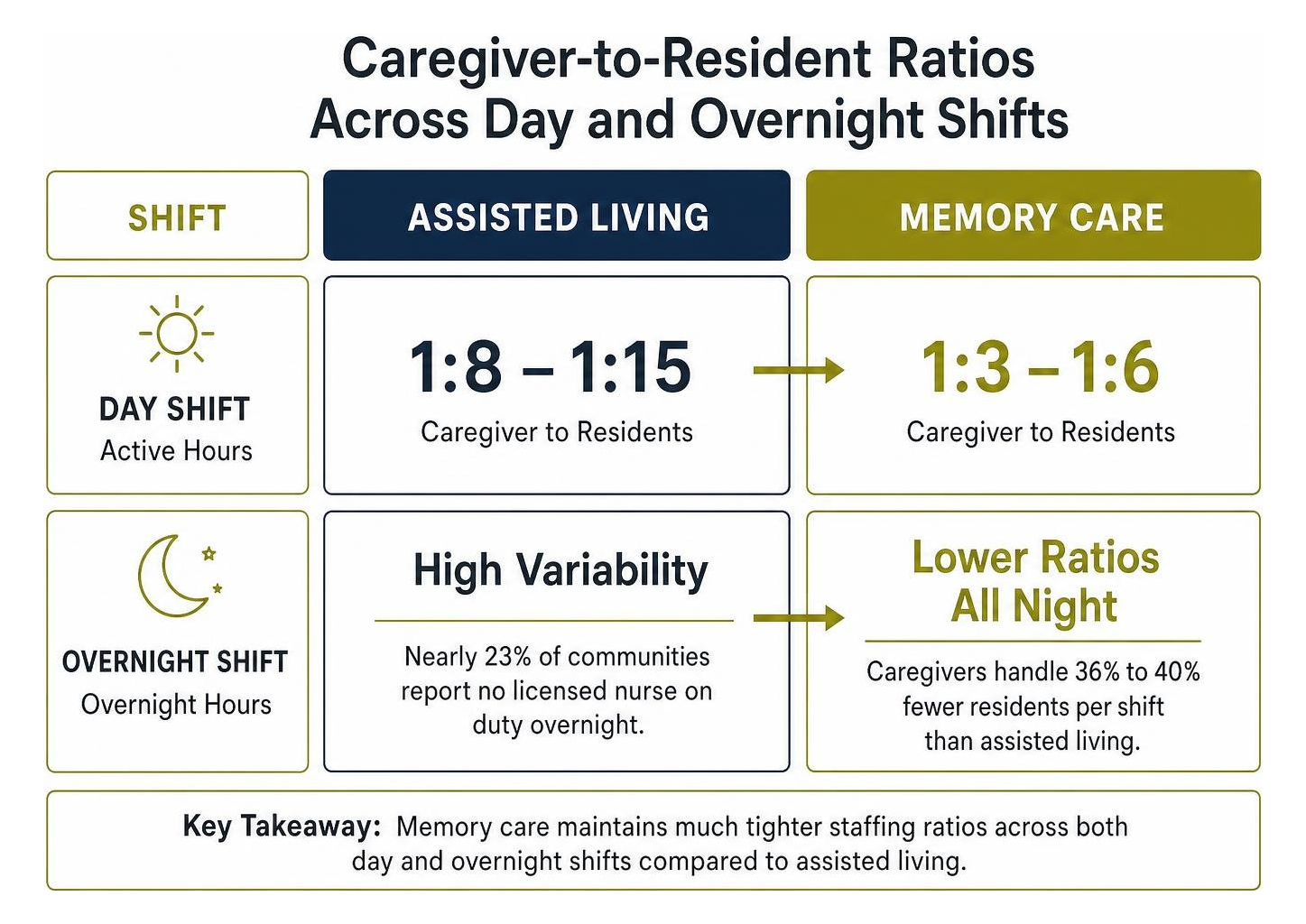
Staffing patterns vary dramatically between general residential care and specialized dementia wings. In assisted living, daytime aide-to-resident ratios often range from 1:8 to 1:15, expanding significantly during evening hours. In memory care, ratios are much tighter—routinely maintaining 1:3 to 1:6 direct caregiver coverage during active day shifts.
The disparity is particularly striking during the overnight shift. According to an original study on staffing patterns across shifts, nearly 23% of assisted living communities report having no licensed nurse on duty overnight, relying instead on a small pool of aides and an on-call triage protocol.
Conversely, memory care units maintain lower resident-to-staff ratios across all shifts, with caregivers in memory care handling 36% to 40% fewer residents per shift than their assisted living counterparts. Exploring this topic further requires understanding state staffing mandates and minimum nurse ratios to assess how local standards influence daily care quality.
Certified Dementia Practitioner Training vs Standard Caregiver Prep
Standard assisted living staff training covers vital hygiene practices, transfer mechanics, infection control, and fire safety. While essential, these modules rarely prepare caregivers for the nuanced psychiatric symptoms of progressive memory loss.
Memory care specialists undergo rigorous instruction in dementia stages, enabling them to interpret behavioral changes effectively:
- Reading Non-Verbal Cues: Recognizing that physical tension, pacing, or sudden withdrawal often signals physical pain, dehydration, or an impending urinary tract infection.
- Sundowning Management: Mitigating late-afternoon disorientation by adjusting ambient lighting, offering protein snacks, and initiating calming sensory routines.
- Behavioral Attunement and Validation: Joining the resident’s current reality rather than attempting harsh reality orientation, which reduces agitation and maintains emotional trust.
- Non-Pharmacological De-escalation: Utilizing personalized music playlists, aromatherapy, and guided reminiscence to soothe emotional distress before considering psychotropic medications.
When to Transition: Recognizing Clinical Indicators and Safety Risks
Determining the exact moment a loved one needs to transition from assisted living to memory care is an emotional milestone. Waiting for a major fall or an elopement event often means the transition happens during an acute medical crisis.
Watch for these clinical and behavioral indicators:
- Wandering and Exit-Seeking: Pacing near external doors, attempting to follow visitors out of the building, or expressing an urgent need to “go to work” or “go home.”
- Nighttime Disorientation: Waking up at 2:00 AM, getting dressed, and attempting to leave the room, increasing the risk of unobserved falls.
- Inability to Direct Personal Care: Struggling to choose clothing appropriate for the weather, forgetting how to initiate showering, or skipping meals due to dining room overstimulation.
- Escalating Distress or Aggression: Exhibiting sudden paranoia, accusing staff of theft, or resisting assistance during basic hygiene routines.
- Severe Caregiver Strain: Family members or assigned private duty aides expressing exhaustion and worry regarding safety coverage.
Structured environments provide continuous safety and peace of mind. Learning how specialized memory care center programming and community support are integrated into daily routines helps families plan smooth, stress-free transitions.
Financial Breakdown and Long-Term Funding Options
The specialized staffing and built-in security features of memory care create a distinct pricing model. While assisted living provides a baseline of housing and shared care, memory care operates with higher operational overhead due to dedicated personnel and active programming.
Nationally, the median cost for assisted living averages approximately $5,830 per month ($74,400 annually). Memory care generally commands a 20% to 30% premium, with national averages hovering around $6,999 to $7,645 per month (over $91,000 annually).
To cover these monthly costs, families utilize several financial avenues:
- Long-Term Care Insurance (LTCI): Policies typically cover both assisted living and memory care once a physician certifies that the policyholder requires assistance with two or more ADLs or requires supervision due to cognitive impairment.
- Veterans Aid and Attendance Benefit: Qualified wartime veterans and surviving spouses can access monthly tax-free pension supplements to offset memory care costs.
- Private Pay and Bridge Loans: Utilizing proceeds from home sales, retirement accounts, or short-term bridge financing while liquidating assets.
- Medicaid Waivers: Depending on regional availability, specific state home and community-based services (HCBS) waivers can help subsidize personal care costs for qualifying low-income seniors, though room and board fees remain out-of-pocket.
Memory Care vs Assisted Living Services and Staffing Costs: Breaking Down the Value
When comparing quotes, families must determine whether a community utilizes an all-inclusive pricing model or a tiered fee-for-service schedule. In a tiered model, base rent covers the room, but the monthly invoice increases as the resident requires additional points of care for incontinence management, medication passes, or nighttime checks.
For detailed budgeting, reviewing a comprehensive breakdown of memory care costs by level of support gives families a transparent forecast of long-term expenses across all stages of cognitive decline.
Frequently Asked Questions About Senior Care Placement
Can a resident with early-stage dementia stay in assisted living?
Yes. Individuals with mild cognitive impairment (MCI) or early-stage dementia frequently thrive in assisted living communities. As long as the resident can recognize basic safety cues, successfully navigate common areas, find their apartment, and manage personal emergencies with staff assistance, assisted living preserves independence. Ongoing cognitive screenings and regular reassessments ensure the care plan evolves alongside the resident’s capabilities.
What is the primary difference in overnight staffing between assisted living and memory care?
The main distinction lies in staff presence and active monitoring. Assisted living often operates with minimal aide staffing overnight, and many communities rely on an on-call nurse rather than an on-site nurse. Memory care communities employ awake overnight caregivers who conduct scheduled visual safety checks, monitor sensor alarms, and assist residents experiencing disrupted sleep patterns or late-night confusion.
How do therapeutic activities differ between assisted living and memory care?
Assisted living activities center on social, educational, and recreational interests—such as book clubs, fitness classes, card tournaments, and organized excursions. Memory care programming focuses on therapeutic, sensory, and failure-free engagement. Certified activity directors use reminiscence therapy, tactile sensory stations, gentle music therapy, and small-group routines tailored to meet varying cognitive processing levels without causing frustration.
Conclusion
Choosing the right care community is one of the most compassionate decisions a family can make. While assisted living provides wonderful social support for older adults needing a helping hand, memory care delivers the secure architecture, lower staff ratios, and specialized dementia expertise necessary to protect residents experiencing progressive cognitive loss.
At Villa Toscana Memory Care, our family-owned, award-winning community provides 24-hour attentive support, intentional architecture, and culinary excellence through our partnership with Giorgio’s Italian Grill. We invite you to schedule a personalized tour and consultation at Villa Toscana Memory Care to discover how dedicated, boutique memory care can bring comfort, dignity, and renewed peace of mind to your family.