
Understanding the National Average Memory Care Monthly Cost in 2026
When evaluating residential options for a loved one with Alzheimer’s disease, vascular dementia, or other forms of cognitive impairment, budgeting accurately requires understanding national benchmarks. In 2026, research shows a spectrum of averages across the country.
Industry benchmarks from the 2026 Senior Care Cost Report show a national median baseline of $6,480 per month, while comprehensive national averages frequently sit between $6,999 and $7,666 per month. For a private room with specialized clinical oversight, national figures can reach $7,908 per month.
The table below outlines how monthly costs generally align with different levels of care across senior living settings:
| Senior Living Care Type | Median Monthly Cost (2026) | Typical Cost Range | Primary Focus & Staffing |
|---|---|---|---|
| Independent Living | $3,200 – $3,800 | $2,000 – $5,500 | Hospitality, meals, social activities; no personal care |
| Assisted Living | $4,774 – $5,146 | $3,500 – $7,200 | Help with 1–2 Activities of Daily Living (ADLs), shared staff |
| Memory Care | $6,480 – $7,666 | $5,000 – $13,000+ | 24/7 dementia supervision, secured building, high staff ratio |
| Nursing Home (Semi-Private) | $8,669 – $9,581 | $7,000 – $12,500 | Intensive medical care, skilled nursing therapies |
| Nursing Home (Private Room) | $10,798 | $8,500 – $15,000+ | Round-the-clock clinical supervision, private accommodation |
Average Base Rates vs. All-Inclusive Models
Memory care communities generally structure their pricing in one of two ways:
- All-Inclusive Pricing: Under this model, a single monthly fee covers accommodation, utilities, three daily chef-prepared meals, snacks, laundry, housekeeping, daily life-enrichment programs, medication administration, and varying degrees of personal care. This structure provides predictable monthly budgeting without unexpected invoices for additional hands-on help.
- Tiered or Fee-for-Service Pricing: Here, the community charges a base room rate (covering housing, meals, utilities, and general programming) alongside a separate “level of care” fee. Care tiers (often Level 1 through Level 5) increase the monthly rate based on an assessment of how much physical assistance a resident requires.
Beyond recurring monthly fees, most communities require a one-time community entrance fee upon move-in. The national median community fee is around $3,000. This one-time charge covers administrative intake, pre-admission clinical assessments, and apartment refurbishment.
Understanding What Sets Memory Care Pricing Apart
A common question families ask is why memory care costs roughly 20% to 49% more than standard assisted living. As detailed in the data on Senior Living Costs in 2026: Assisted Living, Memory Care, and Nursing Home Data, this price difference reflects the specialized resources required to support individuals experiencing memory loss safely:
- Enhanced Staffing Ratios: Memory care requires fewer residents per caregiver to ensure prompt redirection, mobility support, and cueing throughout the day and night.
- Dementia-Specific Training: Caregivers and nurses complete advanced education in communication strategies, crisis de-escalation, wandering prevention, and managing behavioral expressions.
- Secured Architecture: Purpose-built physical designs feature secure interior courtyards, keypad-controlled entries and exits, and circular walking paths that allow freedom of movement without the risk of elopement.
- Cognitive Therapies: Daily schedules are intentionally crafted around sensory stimulation, music therapy, reminiscence exercises, and structured social engagement to foster purpose and maintain cognitive function.
State-by-State Memory Care Pricing and Regional Variations
Geographic location is one of the most significant variables affecting monthly memory care pricing. Because senior living communities must account for localized real estate prices, municipal taxes, and regional wage standards, monthly rates fluctuate substantially from coast to coast.
Most and Least Expensive States for Memory Support
Nationally, monthly rates range from approximately $5,250 to over $11,314 depending on the state:
- Higher-Cost States: States located in the Northeast and Pacific West—including Massachusetts, California, Vermont, Connecticut, Hawaii, and New York—frequently feature average rates ranging from $8,000 to over $11,000 per month.
- Lower-Cost States: States in the Southeast and Midwest—such as South Dakota, Mississippi, Missouri, Alabama, Arkansas, and Louisiana—often feature median monthly rates ranging between $5,200 and $6,200.
- Regional Benchmarks (e.g., Arizona): In rapidly growing retirement hubs like Arizona, memory care costs generally align closely with national medians, averaging between $6,600 and $7,150 per month.
Why Location Dictates Memory Care Monthly Cost
The substantial variance in pricing across regional markets comes down to several economic drivers:
- Local Direct-Care Wages: Labor accounts for the largest share of a community’s operating budget. In areas with higher minimum wages or acute caregiver shortages, direct-care worker compensation is higher, which is reflected in the monthly service fee.
- State Regulatory Mandates: Individual states establish distinct rules governing staff-to-resident ratios, mandatory training hours, nurse availability, and facility physical plant requirements.
- Real Estate and Construction Overhead: Building and maintaining secured luxury communities in dense metropolitan areas like the San Francisco Bay Area requires significantly more capital than in suburban or rural regions.
Key Factors That Influence Monthly Memory Care Rates and Levels of Support

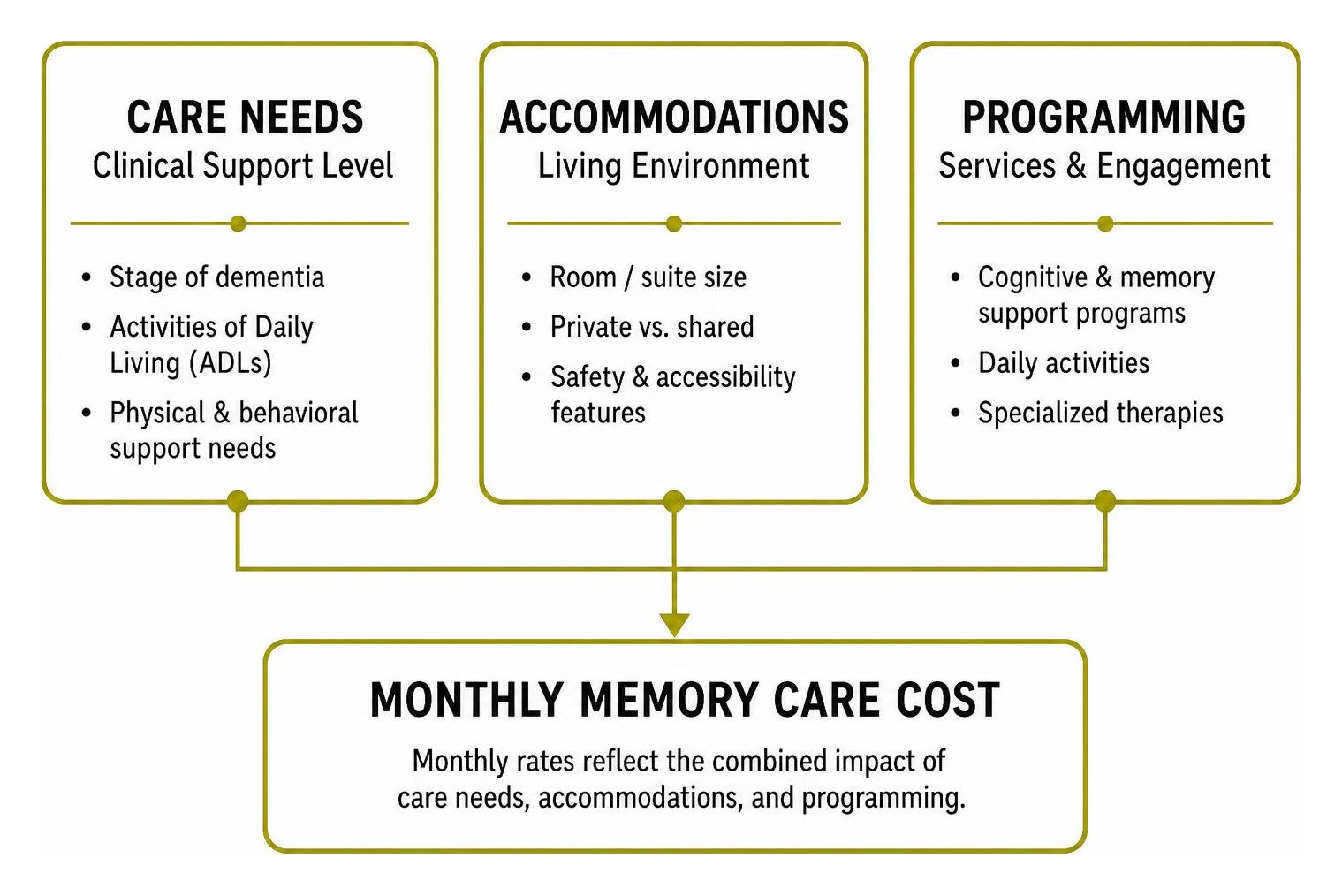
Beyond geographic location, the exact monthly cost for an individual resident depends heavily on their specific clinical profile and living preferences.
Cognitive Support Tiers and Stages of Dementia
As cognitive conditions progress, an individual’s physical and behavioral needs evolve. Communities conduct routine assessments to evaluate:
- Activities of Daily Living (ADLs): The degree of assistance required for dressing, bathing, toileting, personal hygiene, and eating.
- Medication Management: The complexity and frequency of administering daily prescriptions.
- Mobility and Transfers: Whether a resident requires one-person or two-person physical assistance to stand, walk, or reposition.
- Incontinence Management: Hands-on assistance, scheduled toileting programs, and specialized supplies.
- Behavioral Support: Tailored interventions for sundowning, anxiety, wandering, or agitation.
For families seeking temporary relief or assessing a community before a permanent transition, exploring options like breaking down the true cost of short-term respite care provides a clear view of day-to-day rate structures and baseline care assessments.
Facility Staffing Ratios, Security, and Specialized Programming
The operational quality of a community directly shapes its fee structure. Dedicated memory care providers invest heavily in:
- 24/7 On-Site Nursing: Ensuring licensed clinical oversight around the clock rather than relying solely on on-call nurses.
- Advanced Safety Systems: Integrating silent wander-management sensors, discreet door alarms, and motion-activated lighting to preserve dignity while maximizing safety.
- Culinary Excellence: Specialized memory dining programs, such as adaptive utensils, visual menus, and sensory culinary experiences, ensure residents receive balanced hydration and caloric intake even if their appetite or motor skills change.
How to Pay for Memory Care and Practical Cost-Saving Strategies
Funding a multi-year stay in a specialized residential community requires proactive financial coordination. Most families leverage a combination of personal assets, private investments, and targeted benefit programs.
Financial Assistance: Insurance, Veterans Benefits, and Medicaid
Understanding which programs provide financial support—and which do not—is crucial for long-term planning:
- Long-Term Care Insurance (LTCI): Traditional or hybrid LTCI policies often cover a substantial portion of memory care room and board, provided the policyholder requires assistance with two or more ADLs or has a diagnosed cognitive impairment.
- VA Aid and Attendance: Eligible wartime veterans and surviving spouses can receive supplemental monthly pension benefits to help offset the cost of memory care services.
- Medicaid and HCBS Waivers: While standard Medicaid covers skilled nursing home care, many states offer Home and Community-Based Services (HCBS) waivers that help cover personal care services within assisted living and memory care settings, though room and board remain private-pay.
- Life Insurance Conversions & Home Equity: Families frequently tap into home equity through property sales, bridge loans, or reverse mortgages, or convert existing life insurance policies into dedicated long-term care benefit accounts.
Families evaluating these pathways during transitional periods can review everything families need to know about short-term respite care to see how temporary funding and benefit claims operate in practice.
Actionable Tips to Lower Your Memory Care Monthly Cost
There are several practical strategies families can use to optimize their monthly care budget:
- Choose a Semi-Private Companion Suite: Selecting a shared apartment instead of a private deluxe studio can reduce base monthly rent by 20% to 35% while providing social companionship.
- Inquire About Move-In Incentives: Ask community directors if move-in promotions, community fee reductions, or introductory rate locks are available during lower-occupancy seasons.
- Bring Your Own Ancillary Supplies: Supplying personal care items such as incontinence briefs, barrier creams, and specialized hygiene products privately can avoid markup charges on community-provided items.
- Regularly Re-evaluate Care Tiers: Request care plan reviews to ensure your loved one is accurately categorized and not paying for support levels they do not currently need.
Frequently Asked Questions About Memory Care Expenses
Does Medicare cover memory care monthly costs?
No. Original Medicare (Part A and Part B) does not pay for custodial long-term residential care, room, or board in memory care or assisted living communities. Medicare is designed to cover acute medical care, including:
- Formal cognitive assessments and diagnostic testing
- Inpatient hospitalizations and emergency visits
- Short-term, medically necessary skilled physical or occupational therapy
- Prescription drug coverage via Medicare Part D
- Intermittent home health care when prescribed by a physician
- End-of-life hospice comfort care services delivered on-site within a memory care community
What questions should families ask about pricing during a community tour?
When touring prospective communities, bring this checklist of financial questions:
- What specific services are included in the base rate, and what triggers an additional charge?
- How frequently are care levels evaluated, and who participates in the reassessment?
- What has your historical annual price increase averaged over the past three years (e.g., 3% to 8%)?
- Is the community entrance fee fully or partially refundable if my loved one transitions out within 90 days?
- How are medication administration and diabetic management billed?
- What happens financially if our family funds diminish—does the community accept Medicaid waivers, or is it strictly private-pay?
What is the typical length of stay and total lifetime cost for memory care?
The average length of stay for an individual in a dedicated memory care setting is typically between two and three years, requiring an estimated $183,000 to $275,000 to cover housing and personalized care. However, because dementia journeys vary, some residents stay between 4 and 10 years, which can push cumulative lifetime care costs above $400,000 when factoring in prior in-home support, adult day care, and medical treatments.
Conclusion: Planning for Compassionate, Long-Term Memory Care
Navigating memory care expenses requires balancing practical financial realities with the desire for exceptional, compassionate care. Understanding national baselines, local state drivers, and care tier models empowers families to make confident choices that protect their loved one’s dignity, security, and quality of life.
At our boutique memory care community, Villa Toscana Memory Care in Mountain View, California, we believe residential dementia support should combine clinical expertise with everyday joy. Our family-owned community features an innovative, award-winning architectural layout designed specifically for safe cognitive navigation, paired with 24-hour specially trained care teams, engaging daily memory therapies, and an exclusive culinary partnership with Giorgio’s Italian Grill. We invite you to contact us today to discuss transparent pricing, schedule a personalized tour, and discover a warm, enriching environment your loved one will be proud to call home.