
Making Moments Matter: Stimulating Activities for Seniors with Memory Loss
Meaningful Activities for Seniors With Memory Loss
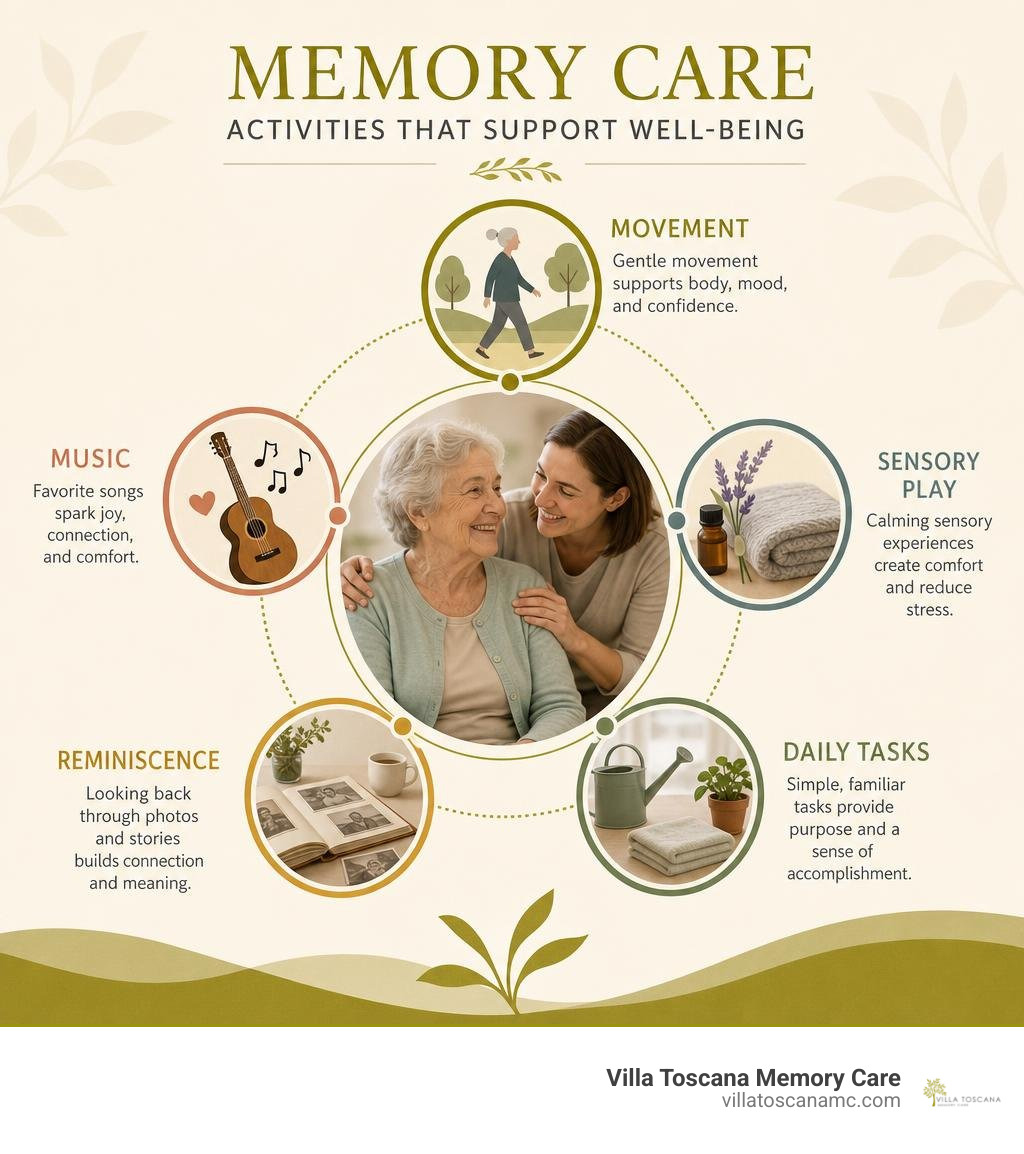
The best activities for seniors with memory loss are familiar, simple, and matched to the person’s energy and abilities that day. Choose activities that create comfort and connection rather than test memory or demand a finished result.
Helpful options include:
- Looking through family photos, recipe cards, or memory books
- Listening to favorite songs and singing along
- Folding towels, watering plants, or sorting safe household items
- Doing simple art, matching games, or large-piece puzzles
- Taking a supported walk, sitting in a garden, or tending plants
- Using calming sensory cues such as soft fabrics, familiar scents, or hand lotion
The goal is not to make someone remember every detail or complete a task perfectly. It is to support purpose, enjoyment, movement, and social connection. Personal items can be especially powerful because long-term memories may remain meaningful even when recent events are hard to recall.
For families, the most effective approach is usually simple: offer one clear choice, join in as a partner, and pause or switch activities if the person seems tired, confused, or upset. Small moments of success can make the day feel safer and more fulfilling.
The Science of Cognitive and Physical Stimulation in Memory Care
When supporting someone with Alzheimer’s disease or other forms of dementia, meaningful activity serves as a vital component of daily health. The human brain retains neuroplasticity—the capacity to form new neural connections and strengthen existing ones—well into late adulthood. Structured physical, cognitive, and sensory stimulation actively supports this resilience.
Regular physical movement enhances cerebral blood flow and triggers the synthesis of Brain-Derived Neurotrophic Factor (BDNF). BDNF is a specialized protein that supports neurogenesis, enhances synaptic communication, and aids the survival of existing brain cells. Research indicates that completing 30 minutes of cardiovascular activity three times per week significantly reduces the risk and progression speed of cognitive decline.
Similarly, quiet mindfulness practices provide profound neurological protection. Engaging in 15 to 30 minutes of daily meditation slows the volume loss of the hippocampus—the brain structure responsible for memory formation and spatial navigation—while improving baseline neural network connectivity.
Evidence-Based Reminiscence Therapy
Reminiscence therapy uses tangible prompts—such as personal photographs, cherished music, or familiar household artifacts—to guide seniors back to positive memories from earlier life stages. Because dementia typically compromises short-term working memory while preserving remote episodic memory networks, reminiscence activities provide immediate feelings of competence and comfort.
A comprehensive meta-analysis of 16 randomized controlled trials involving 1,749 participants revealed that reminiscence therapy generates significant improvements in cognitive performance, reduces depressive symptoms, and elevates overall quality of life. Furthermore, a randomized cluster trial of 455 caregiving pairs demonstrated that structured family-centered care enabled individuals with dementia to return to baseline function at twice the rate of control groups, while dramatically decreasing behavioral distress and hospital readmissions.
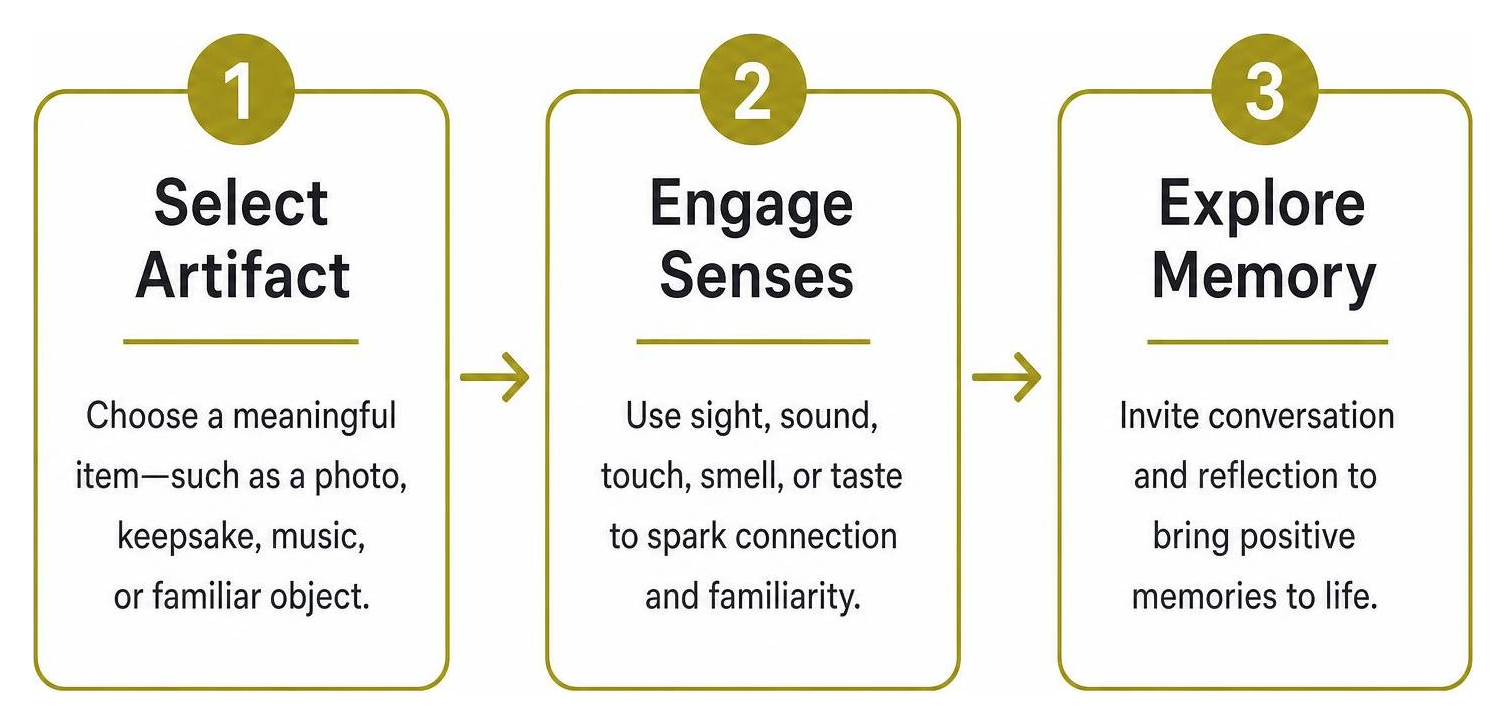
Clinical research indicates that the most effective reminiscence therapy programs are conducted over 8 to 12 weeks in 45-minute sessions. Individual sessions are uniquely effective at lifting personal mood and cognition, whereas small group formats enhance interpersonal communication. Utilizing a personal culinary heirloom—such as research on reminiscence therapy and sensory connections highlights—allows caregivers to sit side by side as supportive companions, letting handwritten notes and familiar baking aromas awaken deep-seated memories without the pressure of a memory quiz.
Structured Brain Training and Routine Neurobics
Structured brain exercises should be enjoyable, low-stress, and varied across distinct cognitive domains: recall, sequencing, and matching. Regular engagement with crosswords, word block challenges, and word searches helps preserve language faculties and delays memory decline.
To maximize cognitive benefits, consider incorporating gentle “neurobics”—activities that deliberately challenge routine neural pathways:
- Non-Dominant Hand Tasks: Brushing hair, stirring batter, or holding a cup with the non-dominant hand activates underutilized motor and sensory areas of the cortex.
- Backward Sequencing: Practicing short reverse-word exercises (e.g., repeating “Summer love I” when given “I love summer”) trains active working memory networks.
- Card Sorting & Matching: Sorting standard playing cards by suit or color exercises executive categorization and visual scanning without feeling overwhelming.
- Chunking Exercises: Breaking long strings of information into manageable 3- or 4-digit groups (such as remembering telephone numbers or street addresses) reduces cognitive overload.
Clinicians utilizing Cognitive Stimulation Therapy (CST) emphasize that 10 to 15 minutes of light aerobic movement immediately preceding cognitive training optimizes neurochemical receptivity, priming the brain for higher retention and sharper focus.
Essential Daily Activities for Seniors with Memory Loss

Meaningful engagement does not require complicated equipment or rigid schedules. In fact, everyday domestic tasks offer rich sensory stimulation, rhythmic movement, and a comforting sense of purpose. When inviting a senior to participate in daily life, focus entirely on the process rather than the outcome. If a towel is folded into a lopsided triangle, it is still a success—the true value lies in the shared moment and the validation of their contributions.
- Sorting and Folding Fresh Linens: Handling warm, clean washcloths or towels provides tactile comfort and utilizes familiar, automatic muscle memory.
- Setting the Table: Arranging placemats, cloth napkins, and safe utensils reinforces daily temporal rhythms and mealtime anticipation.
- Polishing Silverware or Wooden Spoons: The repetitive, rhythmic motion of buffing safe items with a soft microfiber cloth provides a soothing, meditative focus.
- Shelling Peas or Snapping Green Beans: Preparing fresh vegetables taps into long-practiced culinary skills while promoting fine motor dexterity.
- Sweeping or Dusting: Light domestic care gives older adults an active, dignified role in maintaining their living space.
Creative Word and Sensory Activities for Seniors with Memory Loss
As cognitive changes progress, word retrieval difficulties (anomia) can make spontaneous speech frustrating. Traditional conversations may cause seniors to withdraw if they struggle to find the “right” word. Creative word activities remove the blank-page barrier by replacing open recall with visual recognition and free-form arrangement.
Using therapeutic word block activities allows participants to pick, hold, and arrange magnetic or wooden words into brief poetic phrases. There are no grammatical errors or incorrect arrangements; every creation is an authentic reflection of their inner thoughts.
Sensory art offers another low-pressure creative outlet. Engaging in sensory spice painting sessions combines tactile expression with rich olfactory stimulation. By mixing warm, aromatic kitchen spices like cinnamon, nutmeg, cloves, and ginger with small amounts of water, seniors create fragrant, textured paint.
Because the olfactory bulb connects directly to the amygdala and hippocampus, smelling these familiar baking spices bypasses damaged cognitive channels, sparking rich recollections of holiday kitchens, family dinners, and childhood traditions. Keep sessions between 20 and 40 minutes, using heavy cardstock and wide-grip brushes or finger-painting techniques to accommodate varying motor abilities.
Tactile Crafts and DIY Memory Matching
Artistic hobbies like painting, drawing, sculpting, and woodworking are clinically linked to less severe cognitive impairment compared to passive pastimes like watching television. Creating accessible, hands-on games at home provides tactile feedback and boosts hand-eye coordination.
One engaging project is building DIY tactile matching games using upcycled flip-top baby wipe lids attached to a sturdy board or wheelchair tray. Beneath each lid, caregivers can secure pairs of laminated family portraits, vintage car photos, or textured fabrics like velvet and burlap. The physical action of lifting each lid produces an audible “click” that rewards the user, while the hidden images spark spontaneous storytelling and reminiscence.
For structured memory support, utilizing free printable memory book activities offers a peaceful, 30-minute framework for connection. Presenting just one or two pages at a time—featuring gentle prompts about childhood pets, favorite songs, or first jobs—encourages open-ended conversation. If writing is difficult, caregivers can transcribe answers verbatim, preserving the senior’s unique voice, humor, and personality for generations to come.
Designing Indoor, Outdoor, and Multisensory Experiences

A comprehensive activity plan incorporates varied indoor and outdoor environments to support natural circadian rhythms, mood stability, and restful sleep patterns. Sunlight exposure during morning and early afternoon hours helps regulate melatonin production, reducing the evening restlessness and confusion often known as sundowning.
Horticultural therapy connects seniors directly with nature. Planting easy-to-grow herbs like basil, mint, and rosemary in raised garden beds or tabletop planters offers tactile, visual, and olfactory enrichment. Watering plants with a small, lightweight watering can gives older adults a meaningful daily routine and an ongoing sense of stewardship.
Indoors, music remains one of the most resilient memory triggers in dementia care. Even in advanced cognitive stages, individuals frequently retain the ability to hum melodies, tap their feet, and recall full song lyrics from their teenage and early adult years. Building personalized playlists of favorite songs from their youth provides comfort during transitions, calms agitation during personal care routines, and inspires joyful dancing or singing.
Adapting Physical and Social Activities for Seniors with Memory Loss by Stage
To ensure safety and sustained engagement, activities should match the person’s current cognitive and functional abilities:
- Early-Stage Engagement: Seniors in the early stages thrive with activities that maintain independence and problem-solving skills. Excellent options include playing familiar card games like Gin Rummy or Bridge, baking using pre-measured ingredients, assembling 100-piece custom photo puzzles, and walking along smooth nature trails.
- Moderate Decline (Middle Stage): In this stage, simplify complex rules and prioritize sensory, process-oriented tasks. Focus on 12-to-24 piece large-format puzzles, sorting colorful buttons or hardware, folding soft linens, sensory spice painting, and tossing soft beanbags into laundry baskets.
- Late-Stage Sensory Comfort: In late-stage care, shift the focus entirely to non-verbal comfort and sensory soothing. Providing gentle hand massages with lavender or vanilla lotion, brushing hair, playing soft orchestral or acoustic music, and offering weighted lap blankets or soft plush sensory animals provides deep emotional grounding and comfort.
- Mobility & Wheelchair Adaptations: For individuals with physical limitations, mount tactile activity boards directly onto wheelchair lap trays, position tabletop herb planters at seated height, and lead gentle seated balloon volleyball or upper-body chair yoga using soft resistance bands.
Safety Guidelines and Frustration-Free Caregiver Strategies
Planning activities for seniors with memory loss requires creating a physically safe, emotionally reassuring environment. When cognitive processing slows down, complex instructions or test-like environments can trigger confusion, frustration, or catastrophic reactions.
Caregivers can support a positive experience with these best practices:
- Lead with Accompaniment: Approach every activity as an equal partner rather than an instructor or monitor. Sit side by side, model actions gently, and share in the fun.
- Ask Open-Ended Prompts: Avoid confrontational recall questions such as “Do you remember what this is?” or “Who gave you this?”. Instead, invite open exploration: “This color is so bright,” or “The smell of this cinnamon reminds me of holiday baking.”
- Prioritize Non-Toxic, Ergonomic Supplies: Use non-toxic, food-grade materials for arts and crafts. Choose ergonomic, large-grip pens, jumbo paintbrushes, and rounded safety scissors to protect fragile skin and ease arthritic joints.
- Eliminate Background Distractions: Turn off televisions, reduce harsh fluorescent lighting, and minimize background chatter to prevent sensory overload and preserve cognitive focus.
- Embrace Validation Over Correction: If an older adult insists they are sewing clothes for their young children or sorting mail for their old job, validate the underlying emotion rather than correcting their reality. Praise their helpfulness and ask them to share more about their work.
Frequently Asked Questions about Memory Loss Activities
How long should an activity session last for someone with dementia?
Most structured cognitive or craft activities should last between 20 and 40 minutes. Because dementia increases cognitive fatigue, extended sessions can lead to frustration or restlessness. It is far more effective to offer multiple short, engaging 15-to-20-minute sessions throughout the day than a single lengthy activity. Always monitor energy levels and end on a positive, successful note.
What should caregivers do if a senior becomes frustrated or refuses to participate?
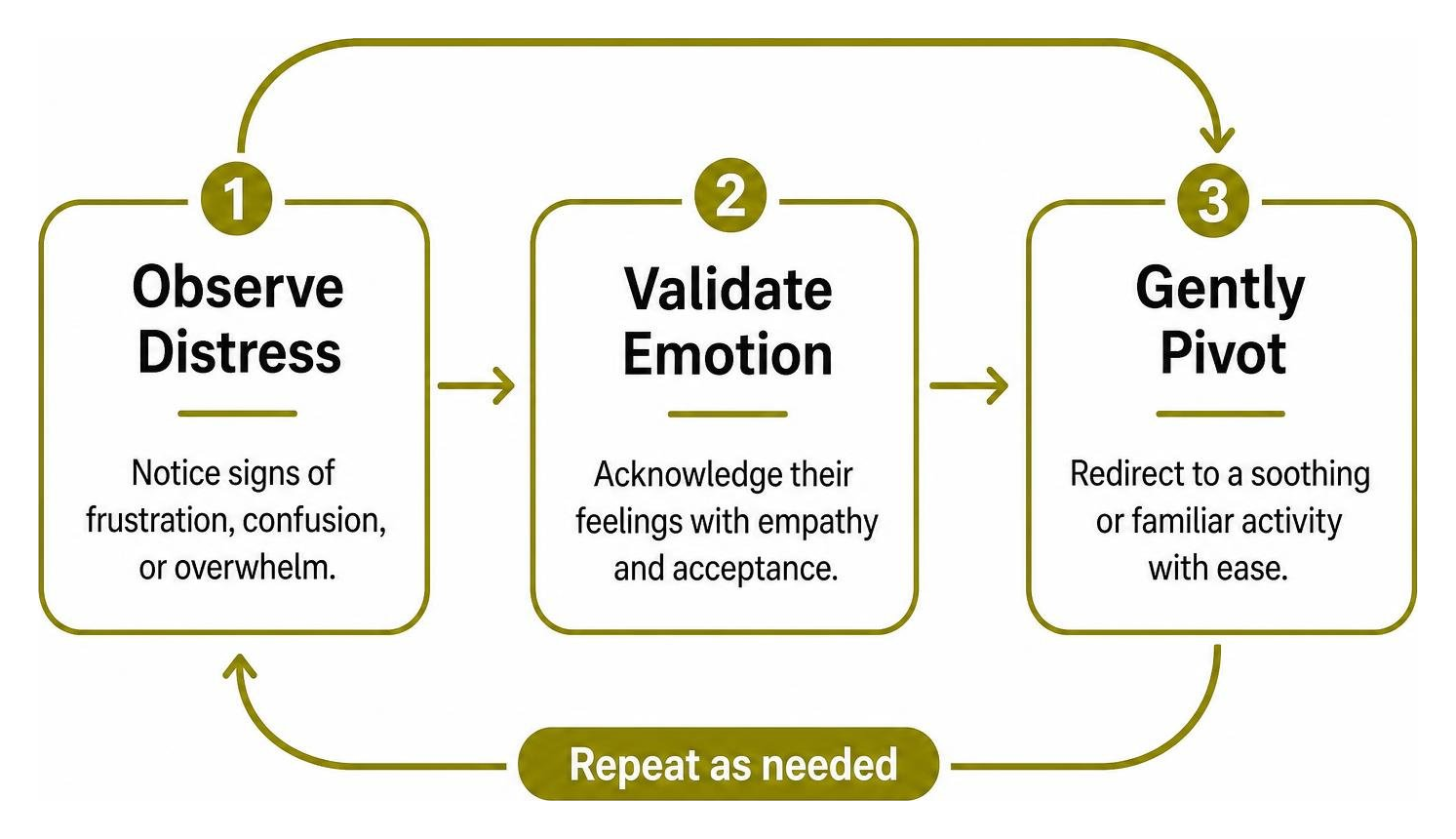
Never force participation or argue. If a senior shows signs of distress—such as sighing, crossing their arms, furrowing their brow, or pushing materials away—immediately validate their feelings (“It looks like you’d rather relax right now, and that’s completely fine”). Gently remove the activity and offer a warm beverage, a comforting song, or a quiet walk. Sitting quietly and observing others in a group environment is a valid, beneficial form of sensory engagement.
Can simple household chores count as therapeutic activities?
Yes. Everyday domestic tasks like folding warm washcloths, matching clean socks, wiping down dining tables, or watering indoor plants provide meaningful cognitive and physical engagement. These familiar routines tap into long-established procedural memory, giving seniors a dignified sense of purpose, structured daily rhythm, and active belonging within their household or community.
Conclusion
Engaging seniors with memory loss is about celebrating connection, shared laughter, and personal dignity in every moment. By shifting away from rigid expectations of task completion and embracing sensory, physical, and reminiscence-based experiences, we honor who they are right now. Every song shared, garden herb smelled, and family story revisited helps build a day filled with security, purpose, and joy.
At Villa Toscana Memory Care, our family-owned community is dedicated to providing compassionate, innovative memory care in Mountain View, CA. From our unique, award-winning architectural design and 24-hour specialized staff to our exceptional dining partnership with Giorgio’s Italian Grill, we create an enriching environment where residents thrive.
Explore how our specialized memory care community can support your family with personalized activity programs, luxury-style accommodations, and loving, expert care tailored to every stage of memory loss.