
How to Make Memory Care Family Meetings More Productive
The best memory care family meetings have one clear goal: agree on what will help your parent feel safer, more comfortable, and more engaged right now. Keep the meeting focused by following four steps:
- Send a short agenda and questions before the meeting.
- Include your loved one when appropriate, using simple questions and extra time to respond.
- Review daily life, health changes, behaviors, and family concerns in plain language.
- End with written action items, a person responsible for each one, and a follow-up date.
For adult children, a meeting can turn worry into a workable plan. It gives families and care staff one place to discuss changes in sleep, appetite, mood, activities, medications, safety, and care goals without relying on scattered updates or assumptions.
The most useful meetings are not just status reports. They are shared problem-solving sessions that protect the resident’s voice, reduce confusion among relatives, and help the care team respond early when needs change.
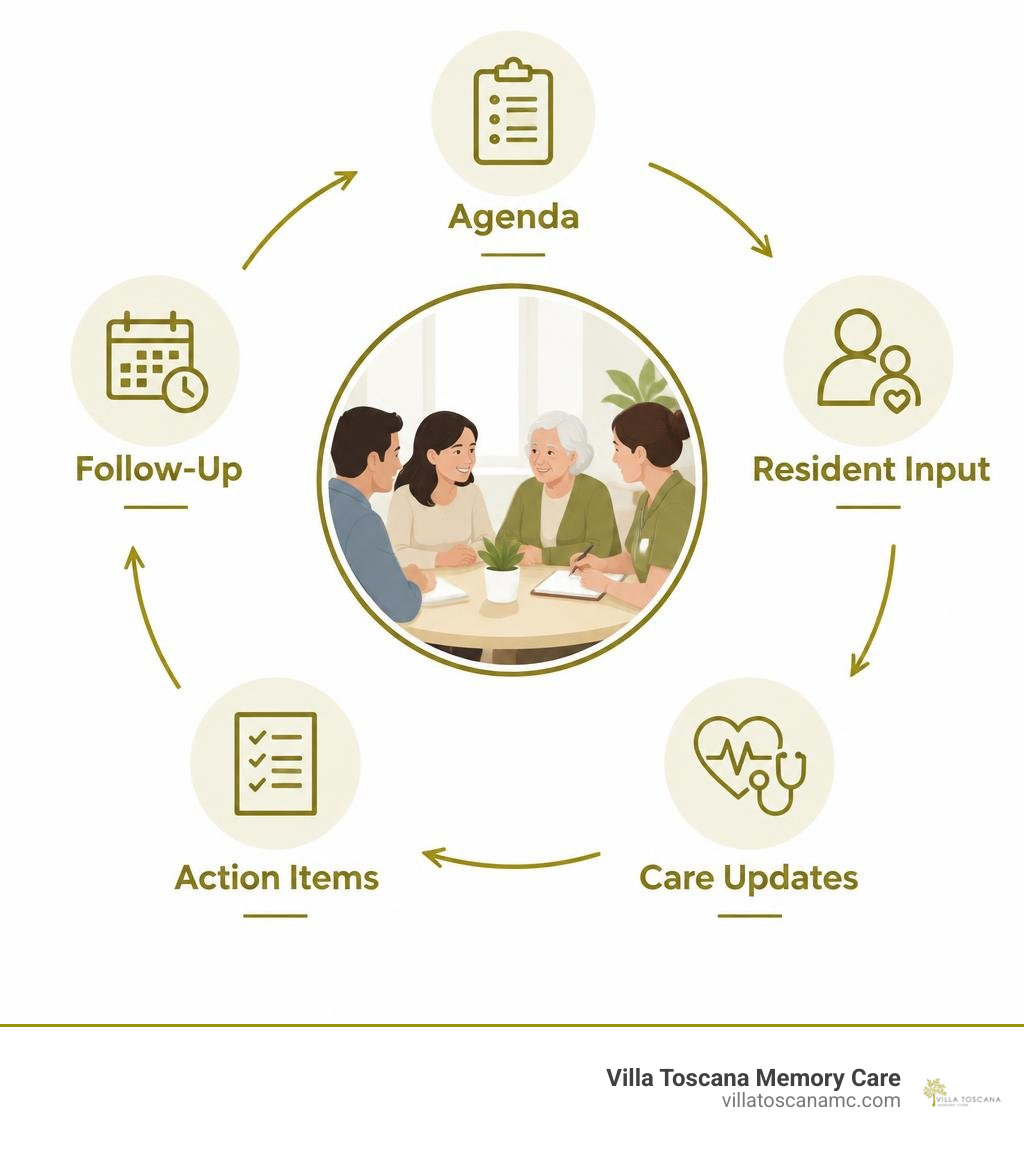
Quick memory care family meetings definitions:
Understanding the Value of Memory Care Family Meetings
When caring for a loved one with cognitive impairment, communication gaps can quickly lead to misunderstandings, caregiver fatigue, and delayed interventions. A structured care conference bridges the divide between daily professional observations and a family’s intimate knowledge of their loved one’s history. These sessions establish a predictable forum where our interdisciplinary team and your family collaborate as true partners.
Establishing proactive communication helps families access essential dementia care support to relieve caregiver burden. Instead of navigating progressive symptoms in isolation, families gain clear insights into baseline health shifts, behavioral changes, and emerging clinical needs. Tracking these patterns over time prevents sudden crises, ensuring that adjustments to support plans occur smoothly and with full family consensus.
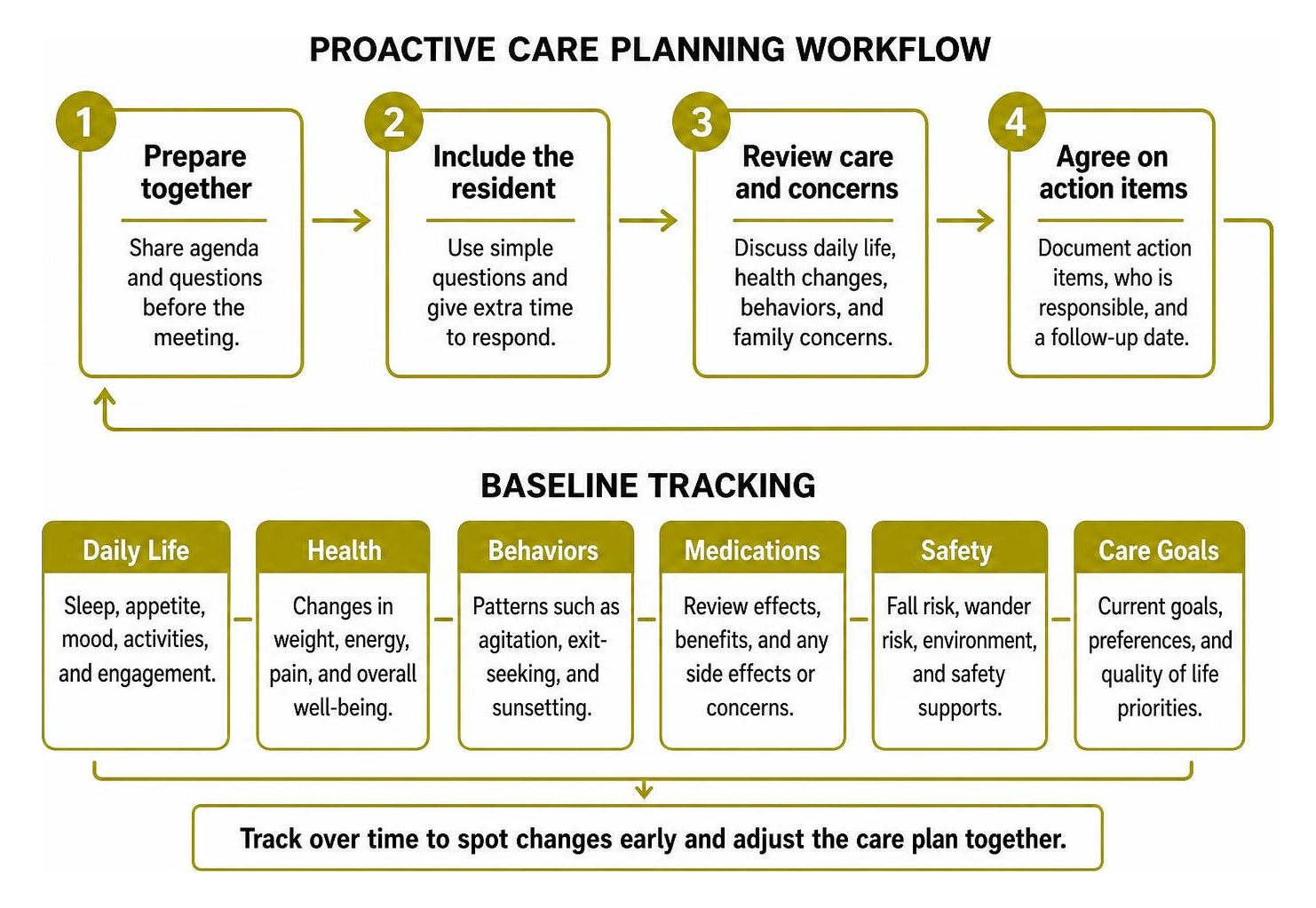
Aligning Clinical Goals with Resident Well-Being
A meaningful care plan balances clinical necessities with personal enrichment. During conferences, we evaluate how well the resident manages Activities of Daily Living (ADLs)—such as bathing, dressing, and mobility—alongside vital wellness markers like weight maintenance, hydration, and medication routines.
Clinical stability is only one half of the equation; emotional vitality is equally critical. We explore how daily routines incorporate stimulating activities for seniors with memory loss to promote joy, connection, and cognitive stimulation. Whether adjusting a dining setup to encourage appetite or tailoring afternoon music sessions to minimize sunsetting agitation, aligning clinical care with personal preferences preserves our residents’ self-worth.
Legal, Ethical, and Decision-Making Rights
Productive care discussions require a clear understanding of legal and ethical frameworks. Health privacy standards, including HIPAA regulations, dictate who can receive medical details and participate in formal decision-making. Families should confirm that essential paperwork—such as a durable financial power of attorney and a healthcare proxy—is current and accessible to the care administration team.
Even as cognitive abilities decline, residents retain the ethical right to participate in choices impacting their daily lives. Assessing decision-making capacity is an ongoing process rather than an all-or-nothing threshold. Families looking for formal advocacy standards can review established guidelines for care planning participation to understand their rights and ensure their loved one’s values guide every care decision.
Step-by-Step Guide to Organizing a Structured Meeting

A successful care conference requires thoughtful organization. Without designated roles and an intentional structure, discussions can easily become unfocused or sidetracked by administrative details.
- Designate a Meeting Coordinator: Appoint one primary family contact to liaise with the care director, gather questions from relatives, and confirm attendance.
- Assign a Note-Taker: Having a dedicated person record decisions, responsible parties, and target completion dates allows everyone else to focus entirely on the discussion.
- Establish Clear Logistics: Set a firm start and end time (typically 45 to 60 minutes) and select a quiet, private setting free from disruptions.
- Distribute Materials in Advance: Share current medical notes, observation logs, and questions at least 48 hours before convening.
Preparing the Agenda for Memory Care Family Meetings
A time-boxed agenda keeps the conversation balanced across health, daily life, and long-term planning. Using a structured family meeting agenda template helps establish priorities and prevent critical items from being overlooked:
- Opening & Resident Wellness Check (5–10 mins): Review recent positive moments, daily baseline routines, and personal comfort.
- Clinical & Daily Living Updates (15 mins): Review ADLs, nutrition, medication adjustments, and therapy progress.
- Behavioral Observations & Environmental Adaptation (10 mins): Discuss sleep patterns, social interactions, and mood changes.
- Family Questions & Priority Decisions (15 mins): Address concerns, upcoming medical visits, or level-of-care adjustments.
- Action Items & Next Steps (5 mins): Confirm specific task owners, deadlines, and the date for the next follow-up.
Involving the Resident and Multidisciplinary Staff
Whenever possible, invite the resident to attend all or part of the conference. Their presence reinforces dignity and ensures their voice remains central to care choices. If complex clinical issues or sensitive matters arise that might cause distress, plan the agenda so the resident participates in the opening discussion before transitioning to an engaging activity with a caregiver.
A comprehensive meeting brings together key multidisciplinary professionals:
- Wellness & Nursing Staff: Provide medication reviews, vital trend analyses, and clinical updates.
- Care Directors & Supervisors: Clarify how daily routines align with regulated memory care staffing ratios and care mandates.
- Life Enrichment & Therapy Specialists: Offer occupational, speech, and physical therapy insights alongside social engagement progress.
Communication Strategies for Productive Care Discussions

High-stress conversations require deliberate, compassionate communication. Medical jargon like “ambulation deficits,” “sundowning,” or “ADL decline” can feel clinical and detached. We encourage plain language focused on observable daily experiences: instead of discussing “nutritional deficits,” talk about whether mom is enjoying her lunches or needs finger-food alternatives.
Using “I” statements prevents defensive reactions. For instance, saying “I feel worried when I see dad struggling with his water cup during evening visits” opens a collaborative dialogue much better than “Your team isn’t keeping dad hydrated.” To build a collaborative environment, review this evidence-based family care coordination guide for proven phrasing models and ground rules.
Overcoming Emotional Friction During Memory Care Family Meetings
Dementia diagnoses often bring underlying family tensions, unequal caregiving burdens, and anticipatory grief to the surface. Siblings may view a parent’s decline differently depending on how often they visit, leading to disagreements about interventions or care levels.
Establishing clear meeting rules minimizes friction:
- Speak one at a time without interruptions.
- Focus on current realities rather than past family disagreements.
- Acknowledge that feelings of guilt, sorrow, and exhaustion are normal reactions to a progressive condition.
- Rely on professional staff as objective facilitators to guide difficult conversations back to the resident’s immediate comfort.
Navigating Complex Care Transitions and End-of-Life Planning
As memory loss advances, care conferences serve as the primary setting for discussing changing care needs. These conversations may involve adjusting support levels, introducing specialized therapies, or considering supplemental hospice and palliative services.
Reviewing advance directives early ensures choices reflect your loved one’s values before an acute crisis occurs. Framing these discussions around comfort, dignity, and personalized wishes helps families make difficult choices with peace of mind.
Post-Meeting Follow-Through and Care Plan Execution
A family meeting is only as effective as the action plan it produces. Concluding the session without clear accountability often results in recurring frustrations and unaddressed care needs.
Every meeting should close with a written summary outlining specific tasks, designated owners, and completion deadlines:
| Focus Area | Proactive Collaborative Care | Reactive Crisis Management |
|---|---|---|
| Communication Cadence | Scheduled quarterly reviews plus proactive updates when health changes occur. | Sporadic conversations triggered only by falls, injuries, or acute behavioral events. |
| Care Plan Adjustments | Data-driven modifications based on daily ADL and cognitive baseline tracking. | Rushed interventions implemented under emergency room stress. |
| Family Alignment | Unified decisions documented in a clear, shared action plan. | Sibling disagreements and confusion over medical authority during crises. |
| Resident Dignity | Care built around personal history, comfort preferences, and direct input. | Care driven strictly by clinical convenience and immediate emergency needs. |
Following up via shared digital portals or email summaries ensures both the family and our care staff remain aligned on goals.
Frequently Asked Questions About Memory Care Meetings
How often should care planning conferences take place in memory care?
Care conferences are typically conducted within 21 days of admission to evaluate initial adjustment and set baseline care goals. Thereafter, comprehensive meetings occur quarterly (every three months). However, an interim conference should be scheduled immediately whenever there is a significant change in medical condition, mobility, cognitive status, or behavior.
Can family members join care conferences remotely?
Yes. Modern memory care communities offer hybrid and telehealth capabilities, allowing family members across different cities or time zones to participate via secure video conferencing. Remote access ensures that designated healthcare proxies and involved relatives remain active partners in care decisions regardless of physical distance.
What should families do if they disagree with care recommendations?
If your family has concerns about a proposed care plan, request a detailed explanation of the clinical reasoning behind the recommendation. You can ask for alternative interventions, seek a secondary medical opinion, or schedule an interim review to evaluate short-term outcomes. If disputes remain unresolved, families can consult a regional Long-Term Care Ombudsman for independent advocacy and support.
Conclusion
Conducting regular, well-organized care conferences transforms overwhelming caregiving responsibilities into a collaborative, structured partnership. By setting clear agendas, keeping lines of communication open, and focusing on your loved one’s dignity, your family can navigate cognitive decline with clarity and confidence.
At Villa Toscana Memory Care, our team is committed to open communication, personalized support, and attentive care. We invite you to discover how our community model, dedicated 24-hour staffing, and boutique setting in Mountain View, California, create an environment where residents thrive. Explore our personalized memory care community living to see how we help families build lasting, supportive care partnerships.