
Find the Right Memory Therapy Support Near You
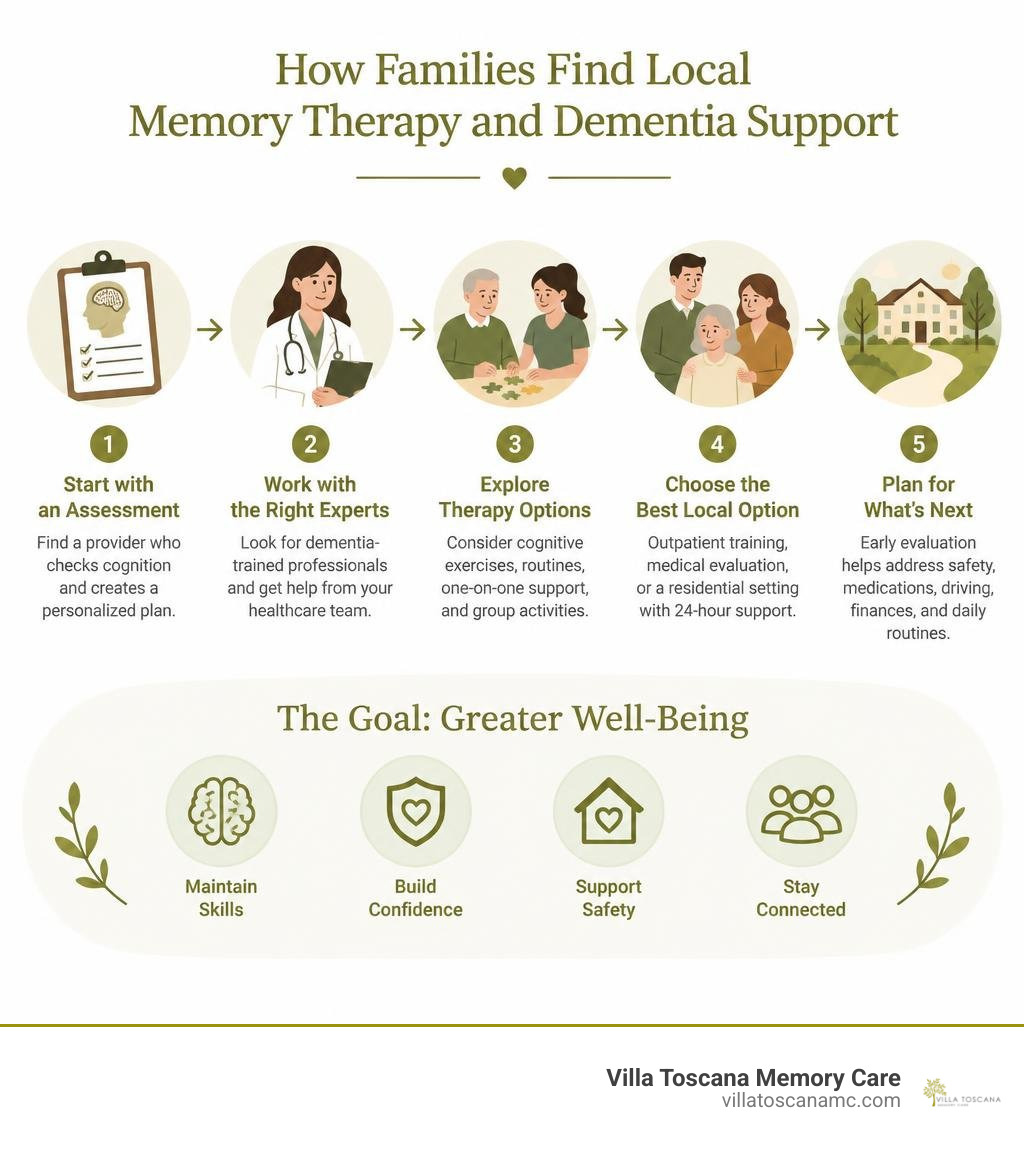
To find memory therapy near me, start with providers that assess cognition before recommending treatment. Look for a clinic or memory care program with dementia-trained professionals, clear progress tracking, family communication, and activities matched to your parent’s abilities. A primary care doctor, neurologist, geriatrician, or neuropsychologist can also help rule out treatable causes of memory changes and refer you locally.
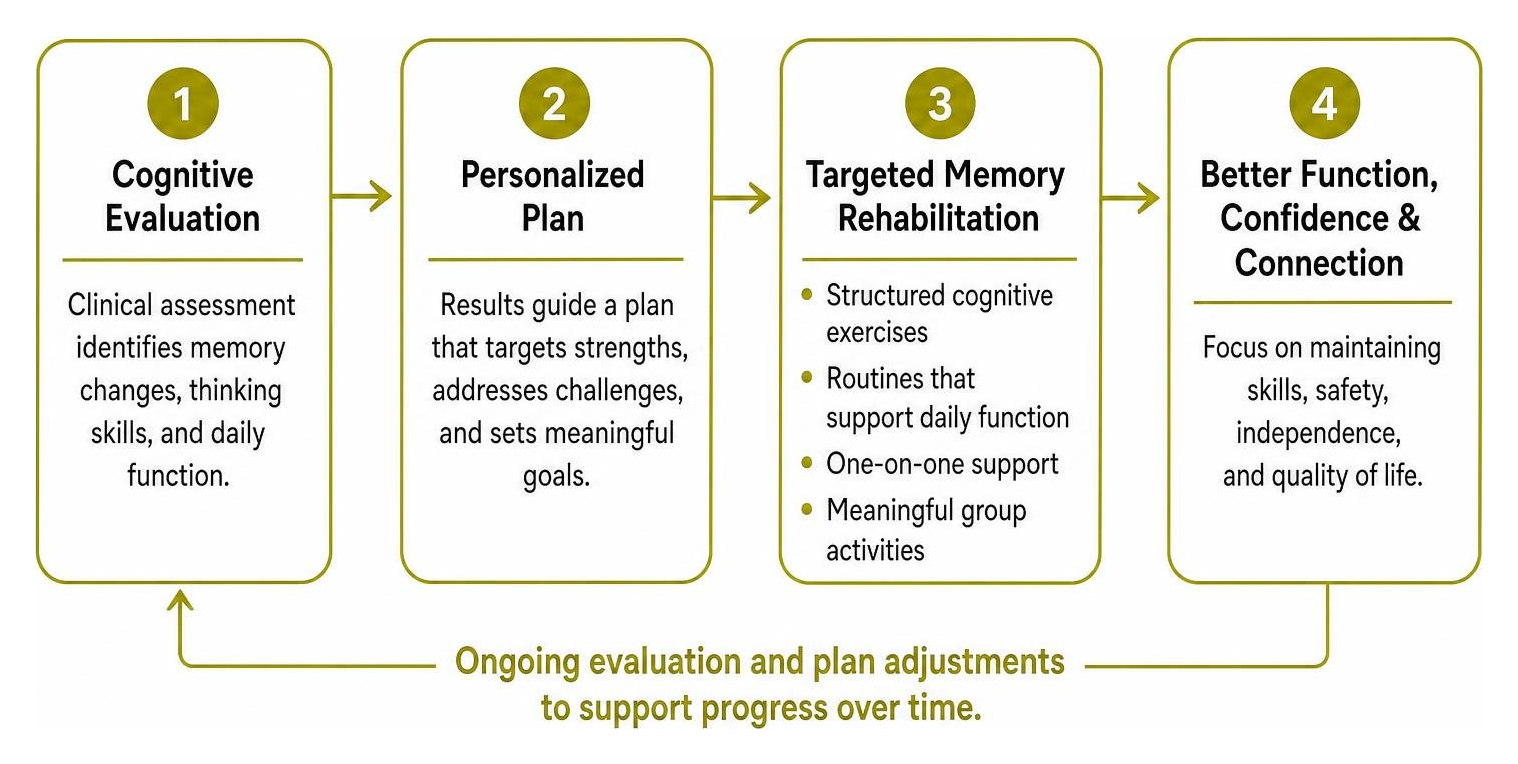
Memory therapy may include structured cognitive exercises, routines that support daily function, one-on-one support, and meaningful group activities. For a parent with mild cognitive impairment or early dementia, the goal is often to maintain skills, confidence, safety, and connection – not to promise a cure. According to the Alzheimer’s Association, early evaluation and diagnosis can help families understand symptoms, plan for the future, and access appropriate treatment and support services.
For families, the best local option depends on what is needed now: outpatient cognitive training, a medical evaluation, or a specialized residential setting with 24-hour dementia support. Early evaluation matters, especially when memory changes affect medications, driving, finances, wandering risk, or everyday routines.
Memory therapy near me vocab to learn:
Understanding Memory Therapy: Who Benefits and How It Works

Memory therapy—often referred to in clinical environments as cognitive rehabilitation or cognitive training—is an evidence-based intervention designed to optimize brain function, strengthen existing neural pathways, and build compensatory strategies for everyday life. Rather than relying on passive memorization drills, structured clinical programs target core mental faculties such as working memory, executive function, processing speed, and sustained attention.
The human brain possesses an incredible trait known as neuroplasticity: the capacity to rewire its neural networks, forge new synaptic connections, and adapt structurally in response to targeted mental exercises and sensory stimulation. Modern neuroimaging tools, including functional Magnetic Resonance Imaging (MRI) and Positron Emission Tomography (PET), demonstrate that personalized cognitive regimens can physically increase the volume of memory centers in the brain, improve metabolic efficiency, and foster stronger functional connectivity across distant cortical regions.
Brain fog isn’t an official weather condition, but when it rolls in, it can make navigating your daily routine feel like driving through thick mist. Fortunately, memory therapy serves as a structured roadmap to clear the skies.
Types of Memory Loss Addressed in Clinical Settings
Memory challenges present across a broad spectrum, ranging from temporary disruptions to progressive neurological conditions. Clinical memory therapy addresses several distinct categories of impairment:
- Temporary and Reversible Memory Impairments: Often triggered by metabolic imbalances, medication interactions, sleep deprivation, acute stress, nutritional deficits, or post-viral neuroinflammation (such as post-COVID brain fog). Addressing the root physiological trigger while engaging in memory therapy helps restore baseline mental clarity.
- Hormonal and Mid-Life Cognitive Shifts: Many women navigating perimenopause and menopause experience pronounced lapses in executive functioning, word retrieval, and concentration. Structured cognitive coaching helps re-establish working memory confidence during these biological transitions.
- Traumatic and Vascular Brain Injuries: Strokes, concussions, or mild traumatic brain injuries (TBIs) disrupt oxygen flow and damage localized neural networks. Therapy promotes neurogenesis and retrains alternative pathways to recover lost communication and recall capabilities.
- Neurodegenerative Conditions: In progressive disorders such as Alzheimer’s disease, Lewy body dementia, or frontotemporal degeneration, cognitive training focuses on preserving remaining strengths, slowing the pace of functional decline, and establishing stable external routines.
Mild Cognitive Impairment vs. Progressive Dementia Approaches
A vital clinical distinction exists between memory interventions designed for Mild Cognitive Impairment (MCI) and those formulated for moderate-to-advanced dementia.
- Mild Cognitive Impairment (MCI): Individuals with MCI experience measurable memory or thinking changes that exceed normal age-related forgetfulness, yet they remain largely independent in their daily activities. Therapy for MCI is restorative and intensive. It focuses on challenging the brain with multi-domain exercises, teaching advanced mnemonic techniques, and building cognitive reserve. Clinical trials show that multi-domain cognitive training in MCI patients can produce measurable functional improvements lasting up to five years.
- Progressive Dementia: In progressive dementias such as Alzheimer’s, the focus transitions from intensive cognitive retraining to supportive cognitive maintenance, emotional well-being, and adaptive environmental cuing. Here, therapists and specialized caregivers leverage procedural memory (habit-based learning) and multisensory prompts rather than complex working-memory tasks. Incorporating meaningful, stimulating activities for seniors with memory loss ensures that individuals stay socially connected, physically active, and mentally engaged without inducing frustration or cognitive fatigue.
Evidence-Based Cognitive Training Modalities and Technologies
Clinics and memory care centers incorporate a diverse range of evidence-based technologies and non-pharmacological interventions to support cognitive vitality.
| Modality | Primary Mechanism | Best Suited For | Typical Clinical Goal |
|---|---|---|---|
| Neurofeedback | Real-time EEG monitoring to rebalance dysregulated brainwaves | Attention deficits, TBI, mild cognitive decline | Enhancing alpha/theta wave balance to improve focus and recall |
| Cogmed Working Memory Training® | Adaptive computerized algorithms targeting working memory capacity | MCI, post-COVID brain fog, executive dysfunction | Expanding working memory span and attention control |
| Photobiomodulation (Light Therapy) | Near-infrared light penetrating cortical tissue to boost ATP biosynthesis | Neurodegenerative decline, vascular impairment | Stimulating cellular metabolism, decreasing neuroinflammation |
| Multi-Domain Cognitive Training | Structured 1-on-1 clinician-guided exercises covering recall, logic, and speed | MCI, early Alzheimer’s, age-related decline | Enhancing neuroplasticity and preserving daily functional independence |
| CVAC™ (Cyclic Variations in Altitude Conditioning) | Whole-body air pressure variations supporting fluid dynamics | Overall cognitive stamina and systemic recovery | Supporting cellular oxygenation and lymphatic flow |
Top Modalities Offered at Memory Therapy Near Me Centers
When exploring regional cognitive centers, such as specialized outpatient clinics or dedicated neuropsychology centers, you will often find specialized therapeutic tools deployed alongside traditional clinician-led coaching:
- Neurofeedback: This non-invasive therapy measures real-time electroencephalogram (EEG) brainwave activity. When the brain produces balanced frequencies associated with calm focus and attention, it receives positive auditory or visual feedback. Over time, this operant conditioning helps patients regulate neurological rhythms that influence memory retrieval and emotional stability.
- Working Memory Protocols (e.g., Cogmed): Working memory serves as the mental workbench where information is held and manipulated over brief intervals. Standardized, computerized protocols dynamically adjust exercise difficulty based on real-time user performance, systematically challenging and expanding working memory capacity.
- Near-Infrared Light Therapy: Emerging photobiomodulation technologies utilize specific wavelengths of near-infrared light directed toward targeted brain regions. Research indicates this light stimulates mitochondrial activity, increasing adenosine triphosphate (ATP) production, mitigating localized oxidative stress, and supporting cellular repair pathways essential for long-term neurogenesis.
Expected Timelines and Long-Term Results
Cognitive rehabilitation is not an overnight fix; it functions much like physical physical therapy for the brain. Just as strengthening physical muscles requires repeated, consistent resistance training over several weeks, building neural density demands regular cognitive engagement.
Most clinical protocols recommend two to three sessions per week over a span of 8 to 12 weeks. Initial improvements in processing speed, mental clarity, and focus are frequently observed within the first six weeks of intervention. For individuals diagnosed with Mild Cognitive Impairment, research demonstrates that the neurological and functional benefits of structured multi-domain training can persist for up to five years, especially when paired with ongoing lifestyle interventions like regular physical activity and nutrient-rich dining.
How to Choose the Best Memory Therapy Near Me

Selecting an appropriate cognitive support provider requires evaluating clinical rigor, practitioner credentials, and the overall therapeutic setting. Memory care is deeply personal, and the right environment makes a profound difference in a loved one’s comfort and long-term engagement.
Comparing Outpatient Clinics and Specialized Residential Programs
Depending on the degree of cognitive impairment and personal support required, families generally choose between two primary avenues of care:
- Outpatient Neuropsychological Clinics: Best suited for individuals in the early stages of cognitive shifts, MCI, or those recovering from acute events (concussions, strokes). Clients live at home and visit a regional clinic once or twice weekly for one-on-one sessions with a therapist, neurologist, or cognitive coach.
- Dedicated Memory Care Communities: When cognitive decline progresses to a point where living independently poses safety risks—or when medication management, personal care, and around-the-clock supervision are required—a residential community becomes the ideal choice. In these specialized settings, memory therapy is not confined to a 45-minute clinical appointment; it is woven into the fabric of daily life through structured schedules, sensory gardens, chef-prepared brain-healthy cuisine, and continuous social engagement.
If you are exploring residential alternatives, understanding the distinction between memory care vs skilled nursing is an important first step in matching care capabilities to your family member’s exact medical and social needs.
Insurance Coverage and Out-of-Pocket Cost Considerations
Navigating the financial landscape of cognitive therapy requires careful review of insurance policies and clinical billing codes:
- Diagnostic Evaluations: Comprehensive neuropsychological evaluations, brain imaging (MRI/PET scans), and consultations conducted by board-certified neurologists or clinical psychologists are typically covered by Medicare and major private health insurance plans when ordered for diagnostic purposes.
- Outpatient Cognitive Training Sessions: Direct cognitive rehabilitation administered by licensed speech-language pathologists or occupational therapists is often covered under standard rehabilitation benefits with clinical documentation. However, standalone cognitive coaching programs, specialized neurofeedback, or proprietary computerized memory protocols may require out-of-pocket payment.
- Residential Memory Programs: Traditional health insurance and Medicare generally do not cover long-term residential room-and-board costs. Families often utilize long-term care insurance policies, veterans’ benefits (such as Aid and Attendance), or personal assets. Reviewing a detailed memory care cost breakdown helps families plan effectively and evaluate level-of-support pricing models across different care settings.
Key Criteria for Vetting Local Memory Care Specialists
When selecting a memory specialist or a dedicated memory support community, rigorous vetting ensures your loved one receives safe, compassionate, and clinically grounded care.
A crucial consideration is the quality and depth of the care team. In residential environments, low caregiver-to-resident ratios and specialized dementia certifications ensure that staff members can recognize non-verbal cues, manage behavioral changes calmly, and provide tailored cognitive stimulation throughout the day. Reviewing staffing ratios and specialized dementia credentials will give you clear insight into the standard of daily care and supervisory oversight provided.
Questions to Ask When Evaluating Memory Therapy Near Me Options
During your initial consultations with clinics or care directors, consider asking the following questions to gauge program quality:
- What formal assessments are used to establish a baseline? Ensure the provider uses standardized neuropsychological tests rather than brief, informal questionnaires.
- Is the therapy protocol tailored to individual cognitive profiles? Effective memory rehabilitation must target the specific domains affected (e.g., retrieval vs. executive function) rather than offering a one-size-fits-all computer game.
- Who directly administers and oversees the sessions? Verify whether protocols are designed and monitored by board-certified neurologists, licensed neuropsychologists, speech therapists, or certified cognitive rehabilitation specialists.
- How is measurable progress tracked and communicated to families? Ask how frequently cognitive metrics are re-evaluated and whether adjustments are made as needs change.
- How are therapeutic techniques reinforced outside of therapy sessions? For outpatient programs, ask about home-based exercises; for residential programs, ask how daily activities incorporate therapeutic goals.
Incorporating Innovative Technologies and Holistic Support
The most impactful modern memory interventions combine targeted mental exercises with holistic, sensory-rich environments. Clinical studies show that combining cognitive stimulation with physical movement, balanced nutrition, and uplifting social interactions yields far greater neural resilience than cognitive drills alone.
Across the senior living sector, forward-thinking providers are embracing progressive therapeutic environments. Families can explore the innovations driving today’s best dementia care awards to see how multisensory spaces, custom environmental acoustics, and interactive culinary experiences are reshaping dementia support from simple management into vibrant, purpose-driven living.
Frequently Asked Questions About Memory and Cognitive Therapy
Does memory therapy work for temporary brain fog from menopause or COVID?
Yes. Brain fog stemming from hormonal transitions during menopause or post-viral neuroinflammation following COVID-19 responds very well to targeted cognitive rehabilitation. Because these conditions rarely involve progressive, irreversible brain tissue loss, structured working-memory exercises, compensatory executive-function strategies, and stress-reduction techniques can help individuals regain baseline mental clarity and focus.
How soon can someone expect measurable results from cognitive training?
Most clinical programs span 8 to 12 weeks, with many participants noticing subtle improvements in attention, processing speed, and mental stamina within 4 to 6 weeks. Measurable improvements on standardized neuropsychological assessments are typically documented at the completion of a full 10-to-12-week therapeutic cycle.
Is memory therapy covered by Medicare or private health insurance?
Coverage depends on how the service is classified and delivered. Initial diagnostic consultations, neurological imaging, and formal neuropsychological testing are almost universally covered by Medicare and commercial insurers. When therapy is delivered as speech or occupational therapy to recover function lost to an acute condition (like a stroke or TBI), insurance often covers the visits. Non-medical memory coaching or maintenance wellness programs, however, are typically private-pay.
Conclusion
Navigating memory changes in yourself or a family member can feel daunting, but you do not have to walk this path without guidance. From outpatient working memory protocols to immersive, compassionate residential environments, modern memory therapy offers proven tools to enhance neuroplasticity, preserve independence, and elevate quality of life.
At Villa Toscana Memory Care, our family-owned, boutique community in Mountain View, California, delivers personalized cognitive support in an elegant, uplifting atmosphere. With 24-hour dedicated dementia care staff, purposeful daily engagement, and fine dining through our partnership with Giorgio’s Italian Grill, we ensure our residents experience dignity, joy, and comfort every day. We invite you to discover our specialized memory care community and see how our tailored approach helps families find peace of mind.