
When a Long Term Memory Care Facility Becomes the Safer Choice
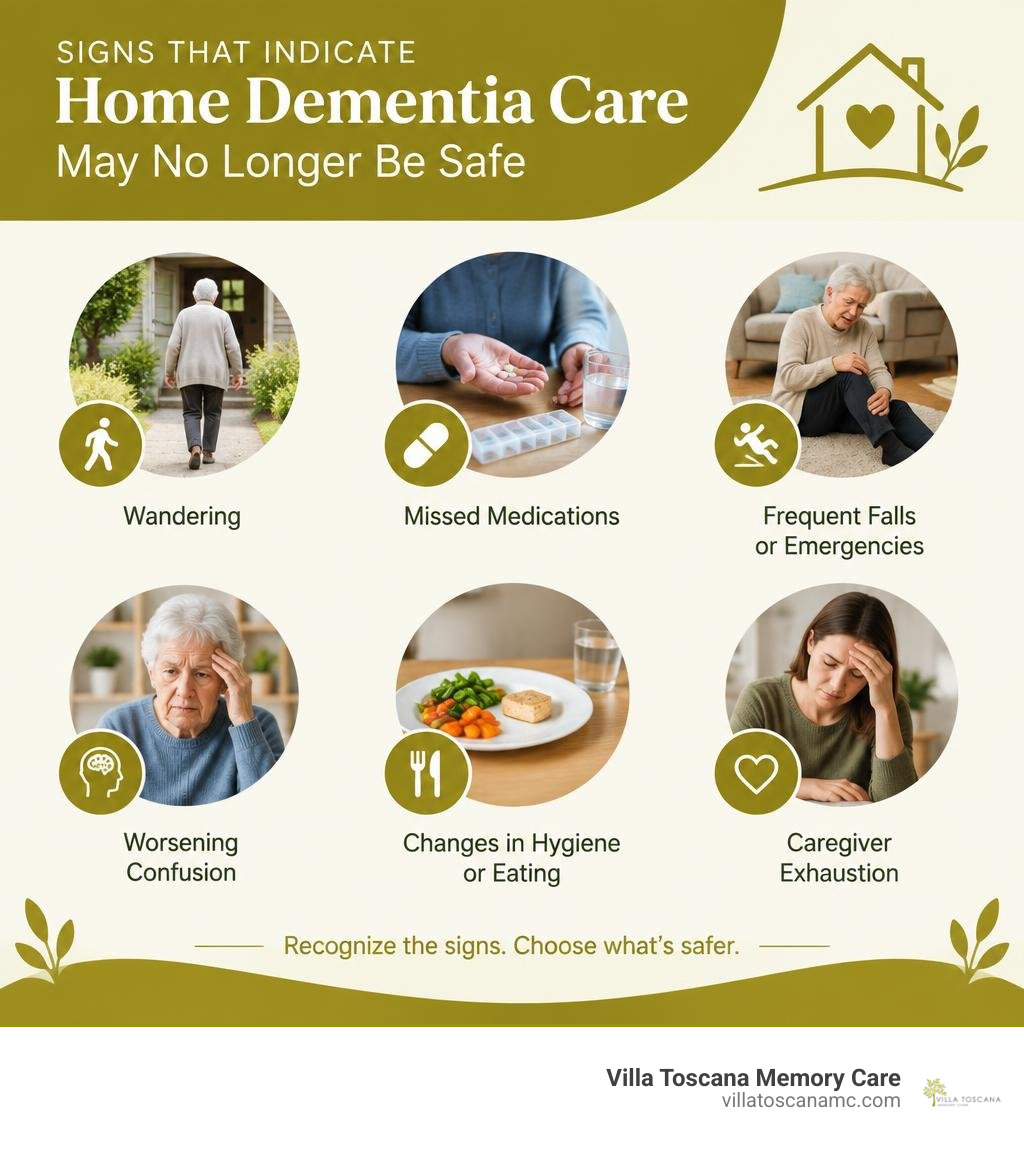
It may be time to consider a long term memory care facility when dementia makes home unsafe or when care requires more supervision than one person can reliably provide. Key signs include wandering, missed medications, frequent falls or emergencies, worsening confusion, changes in hygiene or eating, and caregiver exhaustion.
A move is not a failure of love or commitment. It can provide the consistent routine, secure setting, trained 24-hour support, and meaningful activities a person with dementia may need as symptoms progress.
Families often wait until a crisis forces a decision. A better approach is to start evaluating options when safety concerns first appear, while there is time to compare care, ask questions, plan financially, and make the transition with less stress.
This guide explains the signs to watch for, what specialized residential memory care should provide, and how to choose a community with confidence.
Primary Indicators It Is Time for a Long Term Memory Care Facility
Caring for a family member with cognitive decline is an act of deep dedication. However, progressive neurological conditions eventually alter a person’s daily safety, physical independence, and behavioral stability. Recognizing when home-based support is no longer sufficient is the first step in ensuring your loved one receives the protection and dignity they deserve.
Physical and Behavioral Changes Requiring a Long Term Memory Care Facility
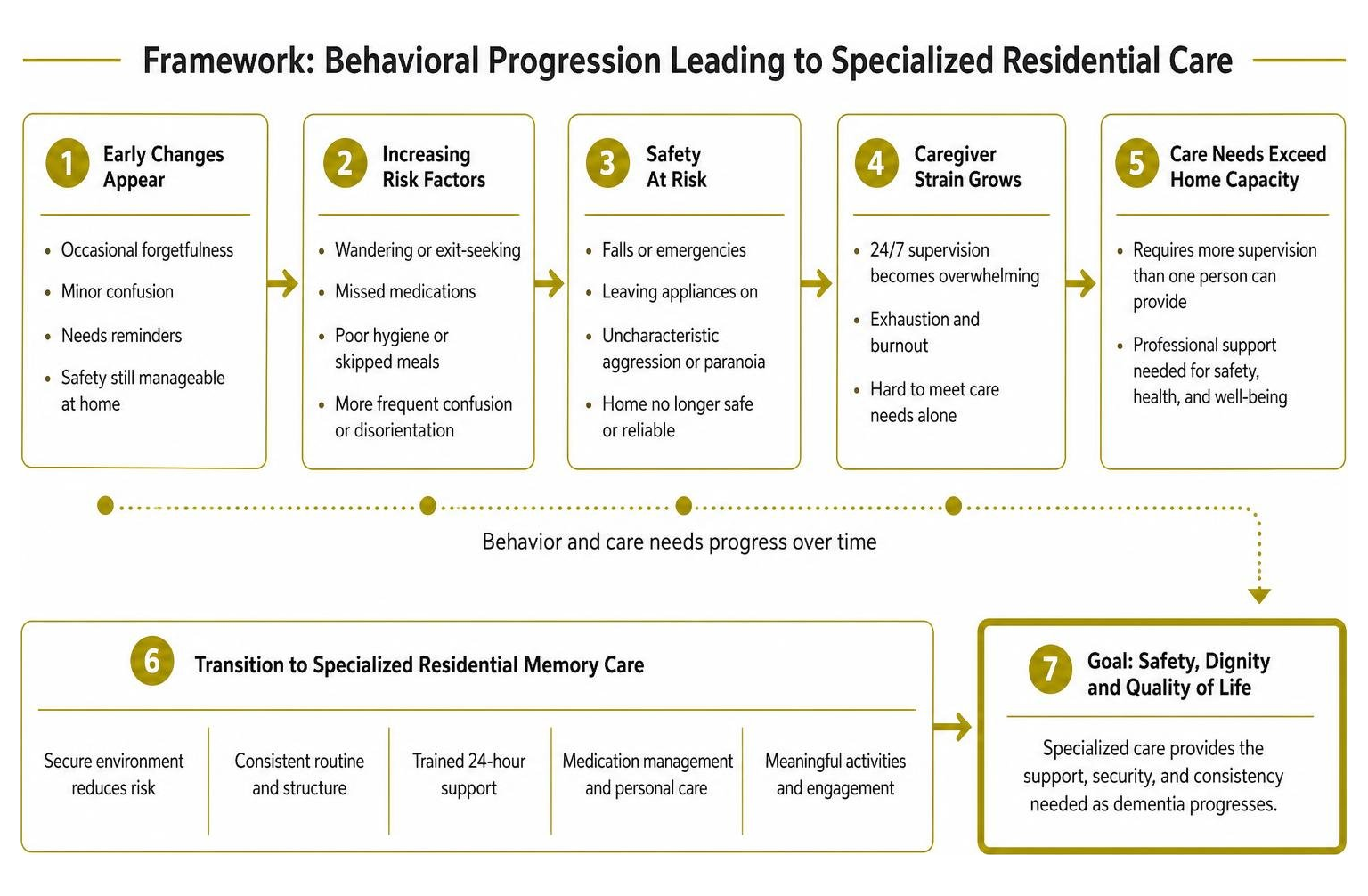
As conditions such as Alzheimer’s disease, vascular dementia, or Lewy body dementia advance, daily routines become increasingly unpredictable. A primary indicator that residential memory care is needed involves wandering and exit-seeking behaviors (often referred to as elopement). An individual may suddenly attempt to “go to work” or return to a childhood home, unaware of outdoor weather conditions or active traffic hazards.
Other critical behavioral and physical signs include:
- Sundowning and Sleep Reversals: Extreme late-afternoon agitation, confusion, pacing, or paranoia that exhausts both the senior and family caregivers.
- Severe Disorientation: Forgetting where rooms are in their own home, misidentifying household objects, or leaving appliances like stovetops and space heaters unattended.
- Medication Mismanagement: Taking double doses or skipping essential prescriptions entirely, leading to sudden health deteriorations.
- Hygiene and Nutritional Neglect: Forgetting to bathe, wearing soiled clothing, skipping meals, or refusing necessary hygiene support due to fear or confusion.
- Uncharacteristic Aggression or Paranoia: Accusing family members of theft, verbal outbursts, or physical resistance during basic personal care routines.
Certain forms of cognitive decline present unique challenges. When navigating the unique challenges of frontotemporal dementia symptoms, families frequently encounter significant personality changes, uninhibited social behavior, and profound executive dysfunction well before memory loss becomes prominent, requiring specialized therapeutic interventions.
Caregiver Burnout and Medical Management Limitations
Caregiving is physically and emotionally demanding. Over time, providing 24/7 supervision takes a measurable toll on the caregiver’s own physical and mental well-being. Chronic exhaustion, weakened immunity, and depressive symptoms are widespread among dementia caregivers.
Ask yourself these vital questions:
- Is the health of the person with dementia or my own health as a caregiver at serious risk?
- Have care needs exceeded what one person can physically manage during transfers, bathing, and nighttime disruptions?
- Are emergency hospital visits becoming more frequent due to preventable falls, dehydration, or medication errors?
- Am I becoming a stressed, irritable, and impatient caregiver, or neglecting my own family and career?
When caregiving compromises your health, finding practical paths to relieve caregiver burden by choosing a dedicated community is often the most compassionate decision you can make. It transforms your role from an exhausted, round-the-clock nurse back into a loving son, daughter, or spouse.
Understanding Residential Dementia Care and Levels of Support
Understanding how care settings differ ensures you choose the appropriate environment for your loved one’s current and future needs. Families navigating memory loss often evaluate the specific intensity and structure of support required across different stages of dementia.
Comparing Memory Care Support Levels
A dedicated memory care community provides specialized care specifically designed for people experiencing memory loss. Unlike general senior care settings, memory care centers entirely on secure environments, specialized cognitive engagement, and behavioral redirection tailored to progressive stages of cognitive impairment.
| Memory Care Level | Primary Focus | Caregiver Support & Oversight | Environmental Design | Key Indicators |
|---|---|---|---|---|
| Early-Stage Memory Support | Cueing, routine maintenance, structured engagement | Dedicated assistance with ADLs, medication oversight | Secure perimeter, intuitive wayfinding cues | Mild cognitive impairment, occasional disorientation |
| Moderate-Stage Memory Care | Behavioral stabilization, redirection, sensory programs | 24/7 specialized dementia care staff, validation techniques | Anti-wandering monitoring, enclosed courtyards | Sundowning, exit-seeking, communication challenges |
| Advanced-Stage Memory Care | Comprehensive physical care, comfort, intensive monitoring | High-ratio hands-on assistance, licensed nursing oversight | Specialized sensory rooms, adaptive dining support | High fall risk, complete ADL dependence, severe mobility decline |
Understanding these distinctions helps families select the level of specialized memory support that matches their loved one’s social engagement needs, cognitive cues, and behavioral redirection requirements rather than a generic senior living setting.
Specialized Services and Secure Environmental Design

A purpose-built memory care environment is intentionally designed to reduce anxiety and prevent disorientation. Modern communities eliminate long, dead-end hallways that trigger frustration, replacing them with circular walking paths that allow residents to stroll safely without feeling trapped.
Key design elements and services include:
- Keypad Security and Delayed Egress Doors: Monitored entryways prevent unsafe exit-seeking while preserving resident freedom within the community.
- Sensory Cues and Wayfinding: Distinct wall colors, shadow boxes outside suites, and intuitive visual signage help residents locate their personal living spaces independently.
- Secure Courtyards: Enclosed outdoor gardens and walking paths allow residents to enjoy fresh air and sunshine safely.
- Neighborhood Layouts: Smaller living clusters with dedicated dining and living rooms foster familiar social connections and minimize overwhelming noise.
Our specialized dementia care services integrate 24-hour trained support, personalized wellness monitoring, and custom care plans, while our therapeutic community amenities provide secure indoor and outdoor spaces that encourage autonomy and active engagement.
Financial Planning and Memory Care Costs in 2026
Long-term care planning requires an understanding of regional pricing structures, inflation trends, and available payment mechanisms.
Analyzing Regional and National Memory Care Rates
Across the United States, memory care rates reflect the intense staffing and security required for dementia care:
- National Monthly Averages: The national average cost for dedicated memory care spans between $5,647 and $6,442 per month (approximately $67,700 to $77,300 annually), showing steady annual cost increases of around 5.7%.
- Regional Variations: Monthly memory care rates vary across metropolitan and suburban markets, often ranging from $4,500 to over $8,500 per month depending on location, licensing tier, suite style, and the individual level of care required.
- High-Cost Metro Areas: Coastal and high-density metropolitan areas often range higher depending on licensing level, private vs. semi-private suite layouts, and specialized dining offerings.
Selecting the right layout, such as private suites or shared companion rooms, impacts monthly investments; you can review typical memory care floor plans to determine what fits your family’s financial plan and your loved one’s social preferences.
Funding Options and Insurance
Paying for residential dementia care usually involves combining multiple resources:
- Private Pay / Asset Liquidation: Personal savings, retirement accounts, home equity conversion, or life insurance policy conversions.
- Long-Term Care Insurance (LTCI): Many comprehensive policies provide daily or monthly stipends that cover residential memory care once a physician certifies cognitive impairment and the need for assistance with two or more Activities of Daily Living (ADLs).
- Veterans Aid and Attendance Benefit: Eligible wartime veterans and surviving spouses can receive substantial monthly pension supplements to offset memory care costs.
- Medicare Limitations: It is critical to recognize that Medicare does not cover room-and-board fees in residential care or memory care communities; it covers only medically necessary clinical visits, prescription drugs, therapy, and hospice care.
- State Medicaid Programs & Waivers: In select states, Medicaid Home and Community-Based Services (HCBS) waivers provide partial funding for memory support services for individuals meeting strict income and medical eligibility criteria.
How to Evaluate Quality and Choose the Right Facility
Finding the right community requires looking beyond marketing brochures and evaluating the day-to-day interactions between staff and residents.
Essential Questions to Ask on a Long Term Memory Care Facility Tour
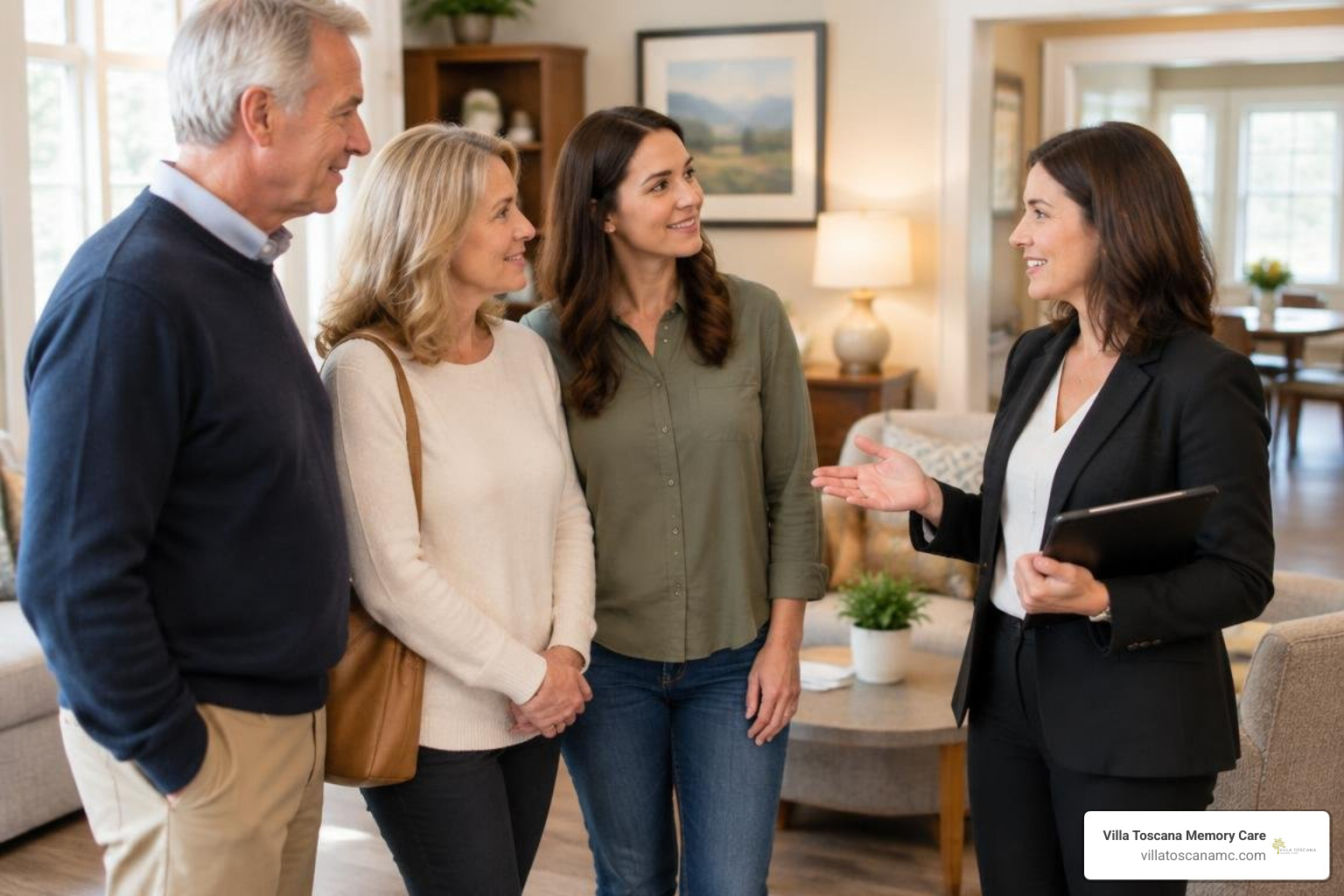
When touring prospective communities—both during scheduled appointments and unannounced follow-ups—bring a focused checklist:
- Staffing and Training: What specific dementia training do caregivers receive upon hire and annually? Are licensed nurses on-site 24/7? Learning about memory care staffing ratios and state mandates will help you evaluate whether a community provides sufficient caregiver presence day and night.
- Behavior Management: How does the care team handle resistance, sundowning, or exit-seeking without resorting to heavy sedative medications?
- Inspection and Disclosure Compliance: Does the facility provide its latest state licensing inspection survey and specialized care unit disclosure forms without hesitation?
- Physician and Therapy Access: Is there a dedicated medical director or visiting physician? Are physical, speech, and occupational therapies available on-site?
Take the time to evaluate our dedicated care team to see how specialized training elevates the resident experience. We welcome you to experience our approach by scheduling a facility tour of our community.
Therapeutic Engagement and Daily Life Programs
A quality memory care program offers structured, sensory-rich routines that honor each resident’s life history. Daily activities should be adapted to cognitive stages rather than following a one-size-fits-all schedule.
Look for communities that offer:
- Reminiscence Therapy: Using music, familiar aromas, tactile memory boxes, and historical photographs to spark joyful memories and encourage storytelling.
- Cognitive and Physical Wellness: Gentle morning stretches, sensory gardening, and adaptive art projects designed to preserve fine motor skills.
- Culinary Experiences: High-quality nutrition tailored to sensory changes. At Villa Toscana Memory Care, our culinary partnership with Giorgio’s Italian Grill delivers delicious, scratch-made dining experiences that turn daily mealtimes into an engaging social ritual.
Discover how stimulating activities for seniors with memory loss support daily mood regulation, and explore our ongoing calendar of wellness activities designed to give each day purpose.
Steps for a Smooth Moving Day Transition
Transitioning a loved one into memory care can evoke complex feelings of guilt and sadness, but thoughtful planning can make moving day calm and reassuring.
Our team is always here to provide guidance throughout every stage of the journey; reach out directly to contact us for personalized transition advice.
Frequently Asked Questions About Memory Care Transitions
How do state regulations protect memory care residents?
State licensing departments (such as the California Department of Social Services or equivalent state agencies) establish strict operational standards for residential care facilities for the elderly (RCFEs). Regulations require specialized memory care communities to:
- Maintain clear disclosure statements detailing specialized services, staffing patterns, and additional fees.
- Ensure all care staff complete mandatory dementia-specific training covering communication, wandering prevention, and positive behavior support.
- Comply with structural safety standards, including secured perimeters, delayed egress exits, and non-hazardous outdoor green spaces.
What local support resources are available for families?
Families researching care options can access several objective resources:
- Area Agencies on Aging (AAA) & Eldercare Locator: Free public services that help seniors and families locate local long-term care resources and benefits.
- Alzheimer’s Association 24/7 Helpline: Offers round-the-clock clinical guidance, local caregiver support groups, and decision-making tools.
- Long-Term Care Ombudsman Program: Independent advocates who assist families in reviewing facility quality and understanding resident rights.
What should I do if my loved one refuses to move to memory care?
Reluctance is common when cognitive impairment clouds insight into personal safety. Helpful strategies include:
- Involve a Trusted Physician: Seniors often accept recommendations more readily from a doctor who can explain the move as a wellness or rehabilitation recommendation.
- Use Therapeutic Validation: Avoid arguing or presenting extensive logistical details that trigger anxiety. Focus on positive aspects like chef-prepared meals, beautiful gardens, and social gatherings.
- Engage an Elder Mediator or Social Worker: Professional care managers can facilitate constructive family discussions and defuse emotional tension.
Conclusion
Choosing to transition a loved one to residential memory care is an act of deep protection, love, and foresight. When safety concerns, medical complexities, and caregiver exhaustion grow, a dedicated memory care setting provides the 24-hour security, specialized enrichment, and compassionate support your family member deserves.
At Villa Toscana Memory Care, we provide award-winning, family-owned memory care that combines luxurious, intentionally designed surroundings with attentive, personalized care and exceptional cuisine. Discover how our community provides lasting peace of mind by exploring our exceptional long-term memory care today.