
Why a Memory Care Activities Director Matters
A memory care activities director plans and leads safe, meaningful daily experiences for people living with dementia. Their work goes far beyond filling time. They use each resident’s history, abilities, interests, and daily mood to create activities that support connection, comfort, movement, and a sense of purpose.
For families, a strong program should include:
- Consistent routines that can reduce boredom, isolation, and late-day stress
- Cognitive, sensory, creative, social, and physical engagement
- Flexible options for residents who need calm, one-on-one support
- Clear communication with care staff and families about what helps each resident thrive
The best activities are not one-size-fits-all. A former gardener may respond to planting herbs. A lifelong parent, teacher, musician, or business owner may find comfort in familiar roles, music, objects, and conversations. Directors also coordinate with caregivers so programming can adapt when a resident is tired, anxious, confused, or having a difficult day.
At Villa Toscana Memory Care, this role helps turn daily care into opportunities for dignity, familiarity, and meaningful moments. Families can learn more about the broader principles behind these approaches through the Alzheimer’s Association guidance on dementia-friendly activities.
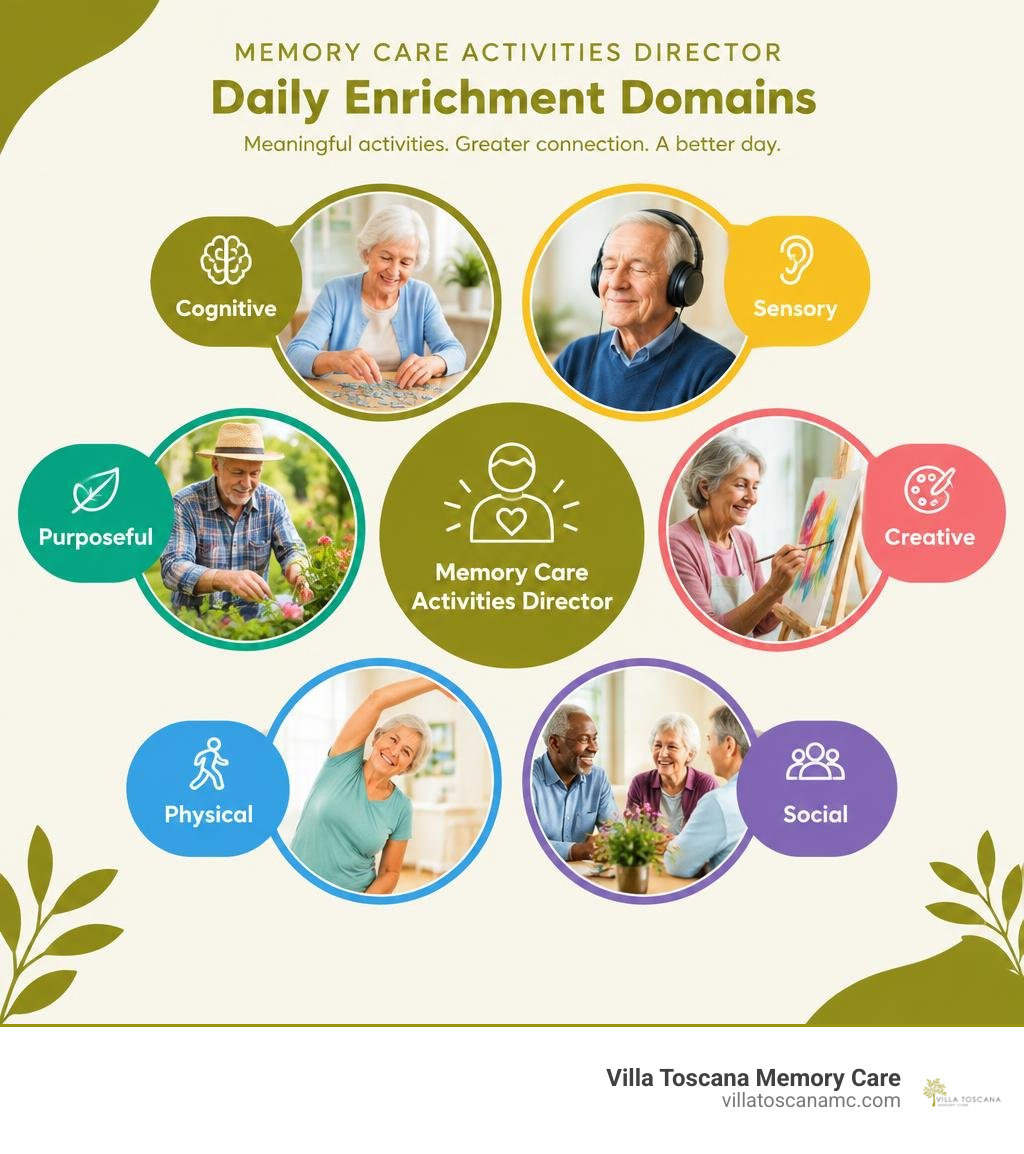
Memory care activities director word roundup:
Core Roles of a Memory Care Activities Director in Dementia Support
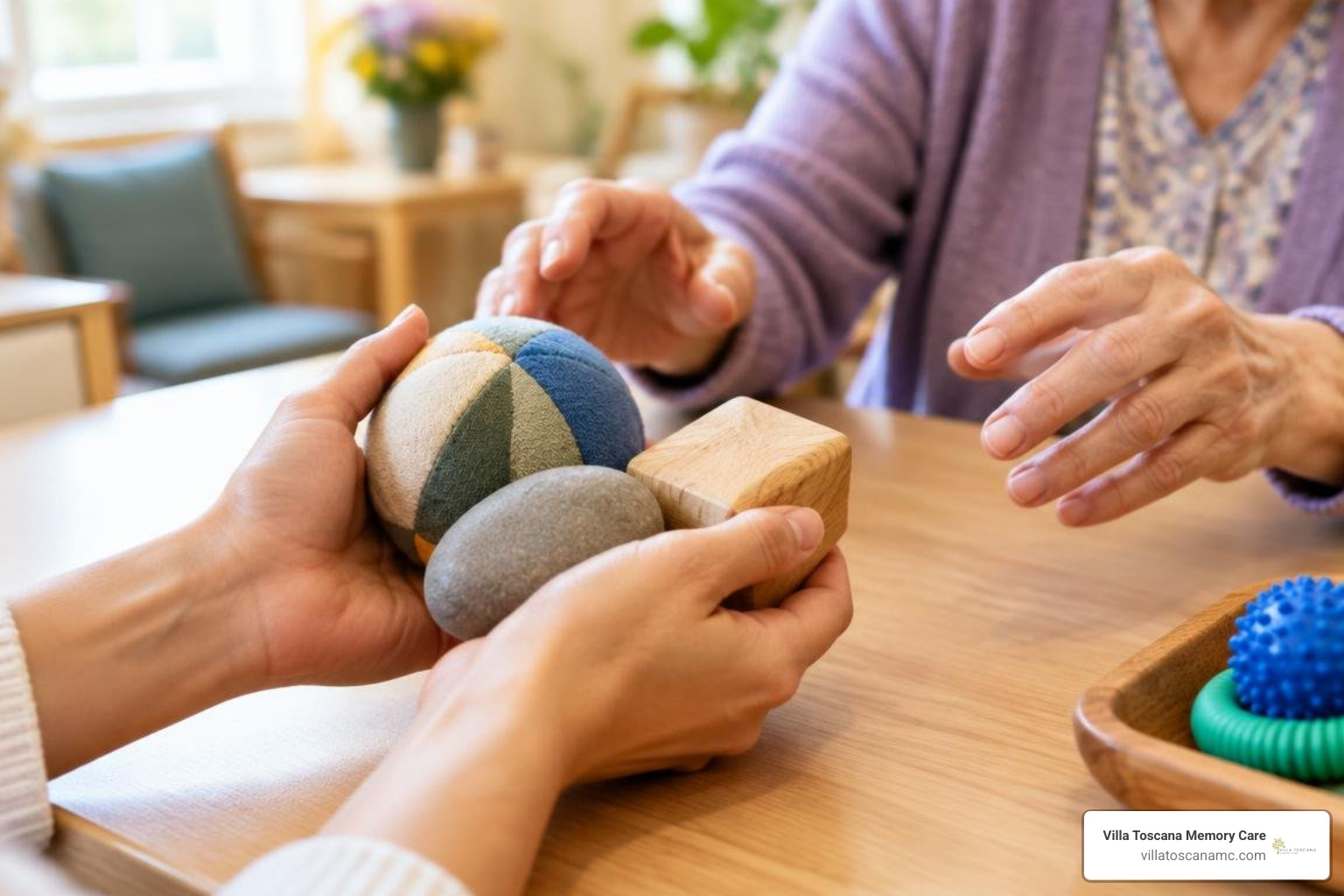
Living with memory loss alters how an individual perceives the surrounding environment. Without intentional, structured engagement, days can feel disorienting, overwhelming, or profoundly lonely. A skilled activities director steps into this space as an architect of daily joy, designing an environment where cognitive abilities are preserved, sensory comfort is prioritized, and emotional wellness remains central.
Rather than offering generic entertainment, our leaders craft specialized therapeutic programs rooted in clinical insight. They bridge the gap between clinical healthcare and personal fulfillment. Every interaction—from a morning stretch session to an afternoon sensory culinary experience—serves a specific therapeutic purpose.
Designing Evidence-Based Cognitive and Sensory Programs
Evidence-based dementia care relies on neuroplasticity—the brain’s remarkable ability to adapt and form new connections even amidst cognitive decline. By introducing multi-sensory stimulation, structured reminiscence, and targeted physical movements, directors stimulate retained neural pathways while bypassing damaged areas of memory.
Sensory enrichment is particularly transformative for seniors in moderate to advanced stages of cognitive change. When spoken language becomes challenging, sensory pathways—such as tactile textures, familiar aromas, and melodic rhythms—remain accessible. Thoughtfully curated stimulating activities for seniors with memory loss enable residents to experience success rather than frustration, reinforcing their self-worth.
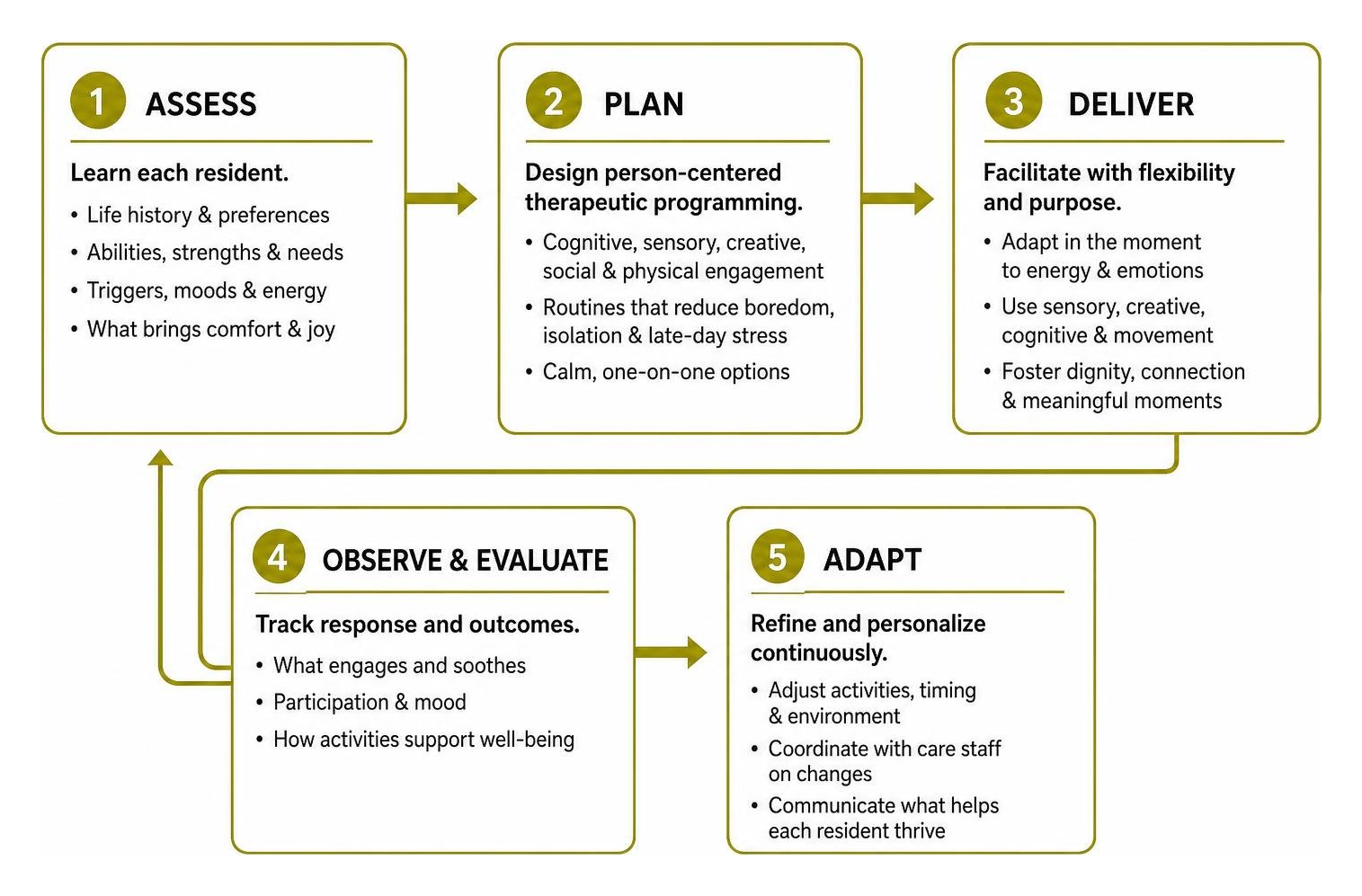
Therapeutic interventions typically target four core operational domains:
- Sensory Awakening: Aromatherapy (such as lavender for relaxation or citrus for alert focus), tactile textile exploration, and nature sounds.
- Cognitive Preservation: Word-association games, thematic trivia, pattern recognition, and reminiscence discussions that draw on preserved long-term memories.
- Motor Skill Maintenance: Gentle chair yoga, seated balloon volleyball, and rhythm-based hand percussion that preserve fine and gross motor coordination.
- Emotional Expression: Expressive watercolor painting, choral sing-alongs, and guided storytelling that offer non-verbal outlets for complex feelings.
How a Memory Care Activities Director Balances Crisis Intervention and Daily Routine
Dementia symptoms fluctuate throughout the day. A morning characterized by cheerful conversation can give way to late-afternoon restlessness, anxiety, and confusion—a pattern commonly known as sundowning. A premier activities director builds proactive daily rhythms specifically engineered to balance structured routines with dynamic, real-time crisis mitigation.
When behavioral distress arises, it is rarely random; it is almost always an unmet physical, emotional, or sensory need. An experienced director recognizes early behavioral triggers and de-escalates agitation before crisis points occur.
- Mid-Afternoon Calming Rituals: Transitioning the community into lower lighting with soft ambient acoustics, weighted blankets, and herbal tea tastings to mitigate evening distress.
- Redirection Through Purpose: Offering an anxious resident a soothing, purposeful task—such as sorting familiar textures or arranging faux florals—to restore feelings of autonomy and safety.
- One-on-One Validation: Meeting residents directly within their perceived reality rather than attempting to reorient them to modern facts, alleviating fear and building immediate emotional security.
Tailoring Activities to Resident Histories and Gender-Specific Needs

Effective memory care is deeply person-centered. To provide meaningful engagement, an activities director must become an investigative biographer, learning who the resident was decades before their diagnosis. By honoring their personal achievements, cultural backgrounds, and lifelong interests, we build programs that validate their unique identity.
Why the Memory Care Activities Director Prioritizes Women-Centered Life Enrichment
Dementia disproportionately impacts women. Globally and domestically, women represent roughly two-thirds of all individuals diagnosed with Alzheimer’s disease and related dementias, while also comprising the overwhelming majority of informal family caregivers prior to residential placement.
Because many women have spent their lifetimes caring for children, aging parents, and local communities, their cognitive decline often intersects with deep-seated habits of nurturing and domestic responsibility. When displaced from these familiar roles, women in memory care can experience profound disorientation or a perceived loss of social value.
To counter these barriers, our programming intentionally creates empowering environments tailored to these life journeys:
- Nurturing Life Stations: Interactive, failure-free stations featuring gentle baby doll therapy, sorting fabrics, or arranging table settings that honor their past contributions without inducing stress.
- Supportive Social Circles: Facilitating small, intimate peer discussions that foster reciprocal friendships and rebuild the tight-knit social networks women often lose during cognitive decline.
- Validation of Professional & Creative Identity: Celebrating past careers in education, healthcare, arts, and business through leadership roles in daily group activities.
Fostering Identity Preservation and Purposeful Engagement
Every resident deserves to feel that their presence makes a tangible difference in their community. Activities directors design vocational and creative projects that reflect past careers and personal hobbies, ensuring that daily tasks carry authentic significance.
Managing Program Resources and Staff Collaboration
Executing rich, daily therapeutic programming requires meticulous organizational leadership. Behind the scenes, an activities director operates as a department head, strategically deploying funds, sourcing adaptive materials, and aligning care staff across multiple shifts.
Maximizing Program Budgets for Direct Resident Care
Effective stewardship ensures that every dollar invested translates directly into therapeutic resident experiences. Much like high-performing global non-profit models that direct up to 89% of resources straight into field programs, a dedicated memory care director ensures that program funds actively support direct resident engagement, adaptive technologies, and specialized materials rather than administrative overhead.
Understanding how communities allocate resources is vital for families reviewing memory care cost breakdowns. A transparent, resource-efficient enrichment program invests in reusable sensory kits, diverse musical playlists, safe culinary supplies, and continuing staff education.
| Program Resource Category | Direct Resident Impact | Therapeutic Outcome |
|---|---|---|
| Sensory & Reminiscence Kits | Tactile therapy, familiar tools, aromatherapy | Reduces evening anxiety and agitation |
| Adaptive Art & Music Supplies | Non-toxic pigments, rhythm instruments, audio | Encourages self-expression and motor dexterity |
| Culinary & Garden Tools | Raised herb planters, safe culinary prep tools | Stimulates appetite and appetite-linked memories |
| Staff Engagement Workshops | Continuous training on validation techniques | Ensures seamless 24-hour therapeutic care |
Coordinating with Care Teams and Staffing Ratios
An activities director cannot work in isolation. The most engaging activity schedule falls flat if bedside caregivers are unaware of individual resident preferences or calming strategies. By working closely with nurse supervisors and direct care staff, directors weave therapeutic engagement into every hour of the resident’s day.
When activities directors partner with floor teams, bathing, dressing, and dining cease to be merely clinical routines—they become opportunities for connection. Maintaining appropriate care coverage and demystifying memory care staffing ratios allows caregivers to actively participate in group sessions, observe subtle changes in resident behaviors, and apply personalized de-escalation techniques around the clock.
Building Trust and Engagement with Families and the Local Community
A thriving memory care neighborhood maintains strong ties with the broader neighborhood. Isolation occurs when senior living communities wall themselves off from the public. An activities director serves as the primary cultural bridge, inviting the community inside while providing safe avenues for residents to stay connected with local traditions.
Locally-Led Community Partnerships and Intergenerational Programs
By forging partnerships with local schools, arts organizations, and therapy animal groups, activities directors create dynamic environments filled with energy and intergenerational warmth.
- Intergenerational Story Hours: Bringing local preschool and elementary students into the community for reading circles, shared art projects, and singing.
- Local Musical Showcases: Welcoming local instrumentalists, choirs, and cultural dance troupes to perform familiar historic melodies.
- Pet Therapy Initiatives: Partnering with local certified therapy animal handlers to provide unconditional companionship, which lowers cortisol levels and sparks spontaneous smiles.
- Cultural and Culinary Celebrations: Partnering with on-site culinary experts—such as our unique culinary collaboration with Giorgio’s Italian Grill—to host themed dinners that celebrate Italian heritage, local harvests, and family traditions.
Alleviating Family Caregiver Burden Through Open Communication
Placing a loved one into memory care is often accompanied by complex feelings of grief, guilt, and emotional fatigue. An activities director acts as a reassuring partner for family members, offering transparent updates and inviting families to participate in uplifting moments.
Directors regularly share photos, progress notes, and stories of joyful engagement, showing families that their loved one is thriving. Furthermore, by hosting educational seminars and family support groups, directors offer practical paths to relieve caregiver burden, transforming the family visit from an exhausting caregiving task into a cherished, restful relationship.
Frequently Asked Questions About Memory Care Programming
What qualifications should families look for in an activities director?
Families should seek an activities director who holds specialized credentials such as Certified Therapeutic Recreation Specialist (CTRS), Activity Consultant Certified (ACC), or specialized certifications from the National Certification Council for Activity Professionals (NCCAP). Beyond formal credentials, look for extensive training in dementia-specific behavioral de-escalation, validation therapy, and a natural warmth in interpersonal communication.
How do daily activities differ between general senior-care settings and specialized memory care?
In traditional independent or assisted living, activities are largely self-directed, cognitively demanding, and focused on large social gatherings. In contrast, specialized memory care activities are failure-free, heavily structured, and centered around sensory stimulation and emotional comfort. Understanding these nuances is critical when exploring memory care versus other senior-care environments. Every memory care activity is broken down into accessible steps that accommodate shifting attention spans and changing cognitive abilities.
How does personalized engagement help manage sundowning behaviors?
Sundowning often stems from mental exhaustion, shifting light patterns, and sensory overstimulation. Activities directors mitigate these evening challenges by structuring the afternoon schedule with calming sensory transitions, soothing music, lower ambient lighting, and engaging one-on-one activities that gently guide attention away from anxiety and toward peaceful rest.
Conclusion
A dedicated memory care activities director is the heartbeat of a vibrant dementia care community. By combining clinical science with heartfelt empathy, they transform ordinary days into rich landscapes of purpose, connection, and joy. From supporting women navigating the unique challenges of memory loss to building bridge programs with local communities, their leadership ensures every individual is treated with dignity.
At Villa Toscana Memory Care, our family-owned community in Mountain View, CA, is built on the belief that every moment matters. Through our innovative, award-winning architectural design, 24-hour dedicated care team, and on-site dining partnership with Giorgio’s Italian Grill, we provide a warm, luxury-style environment where residents thrive. Reach out to our compassionate team today to learn how our personalized activity programming can bring comfort, connection, and peace of mind to your family.