
A Practical Way to Evaluate Memory Care In-Home
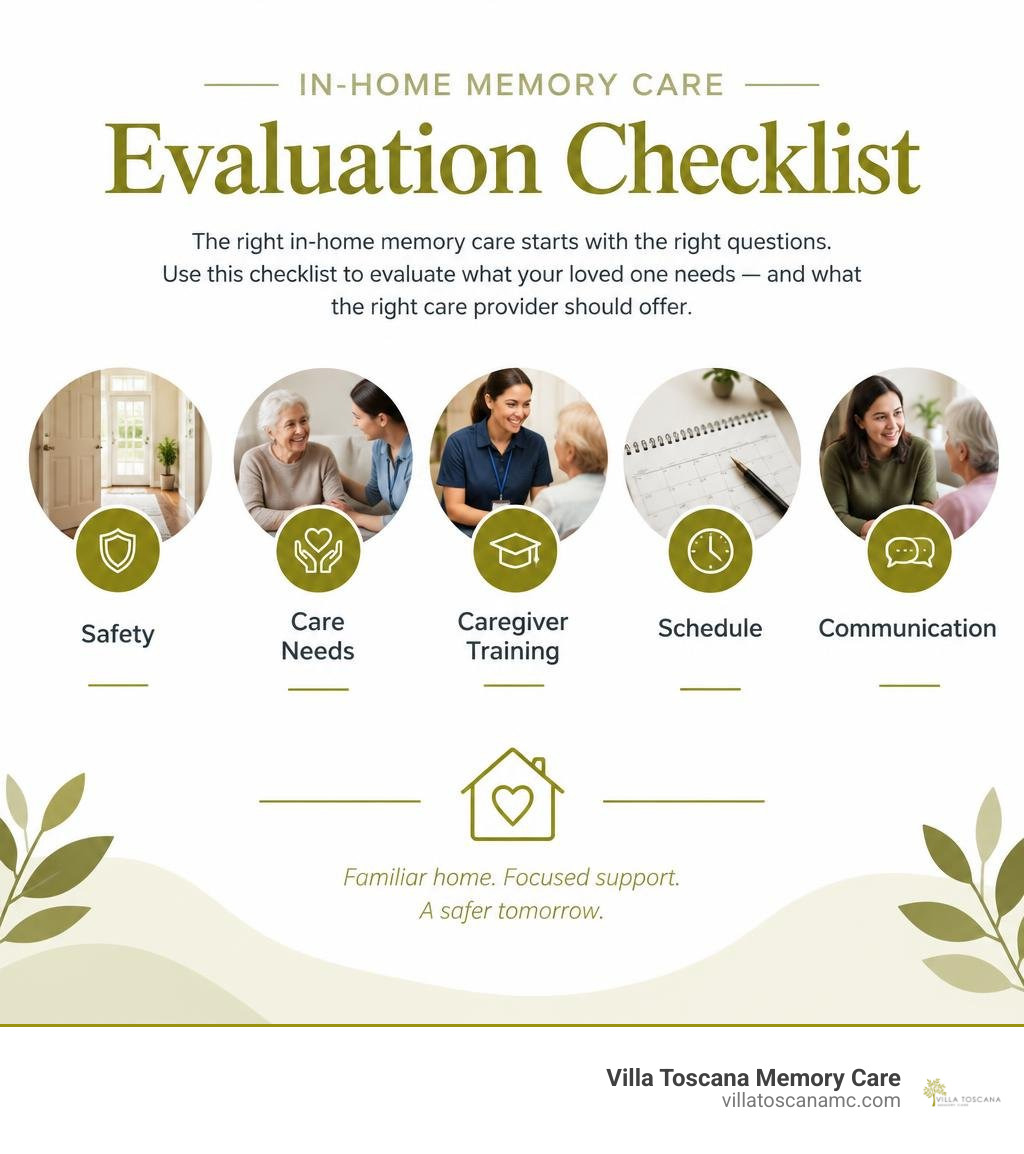
Memory care in-home can help a person with dementia stay in familiar surroundings while receiving structured, one-to-one support. Start by assessing safety risks, daily care needs, and the hours your family can realistically provide. Then choose a provider with dementia-specific training, clear family communication, and a care plan that can grow from a few weekly visits to 24/7 supervision if needed.
Specialized in-home care goes beyond basic help with chores. A trained caregiver can support bathing, meals, medication reminders, meaningful activities, gentle redirection during confusion, and supervision when wandering or late-day agitation becomes a concern.
For many families, home is calming because it is familiar. But staying home is only the right choice when the environment, level of supervision, and caregiver skills can keep your loved one safe. This guide explains how to weigh those factors with confidence.
Relevant articles related to memory care in-home:
Understanding Memory Care In-Home: Services and Core Benefits
When a loved one experiences cognitive decline, maintaining a secure and predictable life becomes essential. Opting for memory care at home allows individuals living with Alzheimer’s or other forms of dementia to remain in their cherished living spaces, surrounded by lifelong memories and familiar comforts.
Unlike generic companion visits, specialized in-home dementia care focuses on one-on-one attention adapted to the nuances of progressive neurocognitive conditions. A dedicated caregiver works to establish structured daily routines, preserves personal dignity through respectful assistance, and minimizes the anxiety often triggered by unfamiliar environments.
| Feature / Care Component | Standard Companion Care | Specialized In-Home Memory Care |
|---|---|---|
| Primary Focus | General companionship & basic household chores | Dementia-specific behavioral management & cognitive safety |
| Caregiver Training | General caregiving & interpersonal skills | Certified dementia techniques, non-verbal cue reading, de-escalation |
| Behavioral Support | Basic conversation and socialization | Sundowning management, gentle redirection, wandering prevention |
| Daily Routine Support | Flexible, ad-hoc daily tasks | Highly structured, therapeutic routines that reduce disorientation |
| Safety Supervision | General presence in the home | Continuous cognitive monitoring, fall prevention, emergency intervention |
Core Services Provided in In-Home Dementia Support
Specialized home dementia support addresses both practical physical requirements and psychological well-being. Caregivers assist with activities of daily living (ADLs)—including bathing, grooming, dressing, and incontinence management—with extreme patience, ensuring your loved one feels safe and respected.
Beyond personal hygiene, caregivers oversee nutritious meal preparation tailored to changing swallowing or dietary abilities and offer consistent medication reminders. Cognitive wellness is supported through personalized sensory tasks, reminiscence discussions, and stimulating activities for seniors with memory loss that honor the person’s lifelong passions.
Customizing Care: Part-Time, Full-Time, and 24/7 Supervision
Every family’s journey with dementia evolves at its own pace. Memory care at home offers scheduling flexibility to adapt to changing needs:
- Hourly and Respite Care: Ideal for families who need a few hours of support each week to run errands or rest, using short-term respite care for elderly loved ones to prevent burnout.
- Part-Time Daily Shifts: Morning or evening shifts focused on challenging transition periods such as waking routines, bathing, or meal preparation.
- Full-Time Daytime Support: Comprehensive 8-to-12-hour shifts designed to provide continuous supervision and cognitive engagement while family members work.
- 24/7 and Overnight Monitoring: Around-the-clock coverage with rotating awake caregivers to protect individuals who experience nocturnal disorientation or wandering.
Recognizing Care Triggers and Evaluating Financial Considerations
Caring for someone with progressive memory loss requires tremendous physical and emotional stamina. Recognizing when family efforts need professional reinforcement is vital for both senior safety and family health. If you find yourself overwhelmed, discovering practical paths for relieving caregiver burden through practical support can restore balance to your household.
Common signs that professional home care is needed include:
- Noticeable decline in personal hygiene or unexpected weight loss
- Missed or doubled doses of essential medications
- Increased household hazards, such as burners left on or spoiled food in the refrigerator
- Physical caregiver exhaustion, chronic stress, or sleep deprivation
- Disorientation in familiar surroundings
Behavioral Changes, Wandering, and Sundowning Management
Progressive dementia often brings challenging behavioral shifts, particularly late-afternoon agitation known as sundowning. When natural light fades, confusion and restlessness can intensify.
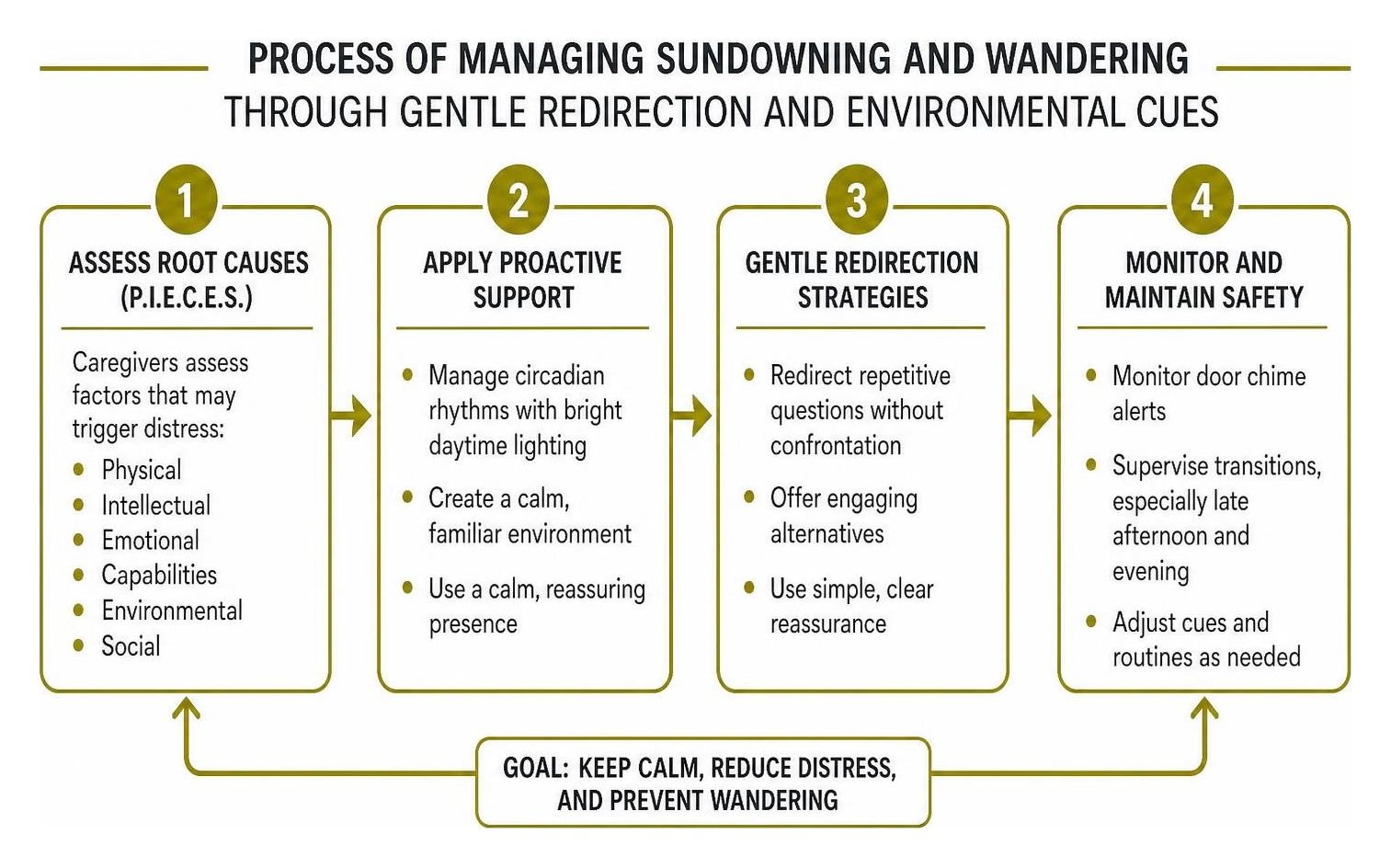
Professional caregivers implement proactive methods like the P.I.E.C.E.S. framework (assessing Physical, Intellectual, Emotional, Capabilities, Environmental, and Social factors) to uncover the root causes of distress. By managing circadian rhythms with bright daytime lighting, gently redirecting repetitive queries without confrontation, and monitoring door chime alerts, caregivers keep your loved one calm and secure.
Evaluating the Cost of Memory Care In-Home Across Care Levels
The financial investment for in-home memory care depends heavily on the number of hours required, location, and the complexity of assistance needed. While standard caregiver rates in various nationwide regions can start around $21.00 to $25.00 per hour, metropolitan areas and specialized dementia rates often trend higher depending on the caregiver’s clinical certifications.
To finance these services, families often explore a mix of private funds, long-term care insurance policies, and specialized benefits such as in-home aides for veterans. Reviewing a detailed memory care cost breakdown by level of support helps families budget for transitioning from part-time hourly visits to full-time or 24-hour home monitoring.
How to Choose and Vet a Qualified In-Home Dementia Provider
Finding the right caregiver requires careful vetting to protect your loved one’s physical safety and financial well-being.
- Agencies vs. Independent Caregivers: Licensed home care agencies manage background checks, bonding, general liability insurance, payroll taxes, and backup staffing if a primary caregiver falls ill. Hiring an independent caregiver directly may reduce hourly costs, but your family assumes full legal employer responsibilities, liability risks, and scheduling management.
- Trial Shifts: We recommend scheduling short, supervised trial shifts before committing to a long-term contract. This allows you to observe how the caregiver interacts with your loved one, de-escalates moments of confusion, and communicates with your family.
Essential Caregiver Certifications and Dementia Training
When vetting candidates, look beyond general eldercare experience. Dementia care demands specific training:
- Certified Dementia Practitioner (CDP) or equivalent state dementia credentials
- CPR and Basic First Aid Certification
- Safe Patient Mobility & Transfer Training to prevent mechanical injuries
- Medication Administration Assistance Compliance
- Non-Confrontational Communication & Redirection Techniques
Essential Interview Questions Before Starting Memory Care In-Home
Use this checklist during caregiver and agency interviews:
- What specialized dementia and Alzheimer’s training have you or your staff completed?
- How do you respond when a client refuses to bathe, eat, or take medications?
- What specific techniques do you use to manage sundowning, restlessness, or repetitive questions?
- How do you handle medical emergencies or sudden behavioral changes during a shift?
- What is your protocol for daily documentation and keeping family members updated?
- If hiring through an agency: What is your process for providing replacement coverage if our regular caregiver is unavailable?
Home Safety Modifications and Daily Care Strategies

A safe home environment reduces the risk of accidents while allowing your loved one to move around comfortably. Incorporating proactive dementia fall prevention techniques is essential to maintain independence and prevent hospitalizations.
Key home safety modifications include:
- Securing Walkways: Remove throw rugs, eliminate clutter, and ensure wide, unobstructed pathways throughout the house.
- Bathroom Safety: Install grab bars in showers and next to toilets, add non-slip mats, and set water heater thermostats to 120°F (49°C) to prevent burns.
- Kitchen Precautions: Install safety knobs or auto-shutoff valves on stoves, and store sharp knives and cleaning chemicals in locked cabinets.
- Wandering Prevention: Place discreet deadbolts above or below eye level, install door and window sensors, and place nightlights in hallways.
Structured Routines and Cognitive Wellness at Home
Predictability provides emotional security for those navigating memory loss. Establishing consistent daily rituals helps ground their day:
- Morning Structure: Consistent waking times, natural sunlight exposure, and a nutritious, unhurried breakfast.
- Sensory and Music Therapy: Listening to familiar music from their youth or engaging in tactile hobbies like gardening or folding linens.
- Reminiscence Projects: Looking through photo albums or conversing about cherished memories to foster joy and self-worth.
- Calming Evenings: Dimming overhead lights before sunset, serving herbal tea, and offering calm companionship to ease the transition into sleep.
Evaluating In-Home Support vs. Residential Memory Care Communities

While in-home care offers distinct early advantages, dementia is a progressive condition. As care requirements grow more intensive, families frequently re-evaluate whether home care continues to provide the safest, most enriching lifestyle.
Understanding the distinctions between assisted living vs memory care options and reviewing memory care vs skilled nursing differences will clarify which setting matches your loved one’s clinical needs. In residential memory care settings, environments are purpose-built to prevent wandering while encouraging supervised socialization, supported by strict memory care staffing ratios and state mandates.
When evaluating these options, learning the steps for finding private memory care communities ensures your family chooses an environment that offers purposeful living alongside 24/7 specialized supervision.
Frequently Asked Questions About In-Home Dementia Care
How many hours of in-home memory care does someone with dementia need?
Care requirements vary based on the stage of the condition. In early stages, part-time assistance of 10 to 20 hours per week often suffices to assist with transportation, medication oversight, and social stimulation. As the condition advances into the moderate stage, daily visits spanning 6 to 8 hours are common to manage personal hygiene, meals, and safety. In late-stage dementia, 24/7 or live-in supervision is typically necessary to prevent falls and night wandering.
Does insurance or Medicare pay for in-home memory care services?
Traditional Medicare does not cover non-medical custodial care, which includes ongoing assistance with ADLs, companionship, or full-time supervision at home. It only covers intermittent, medically necessary skilled nursing or therapy ordered by a physician. Families typically rely on private savings, long-term care insurance policies, or specific state Medicaid Home and Community-Based Services (HCBS) waivers to help fund non-medical in-home care.
When is it time to transition from home care to a dedicated memory care community?
The decision to transition often arrives when safety concerns exceed what in-home caregivers can reliably manage. Key transition triggers include frequent nocturnal wandering, physical aggression, high fall risks, or the need for constant medical intervention. Transitioning is also warranted when family caregivers experience health complications, ensuring your loved one remains safe while ensuring safe care while recharging family energy.
Conclusion
Finding the right balance between comfort, independence, and round-the-clock safety is a deeply personal journey for every family facing dementia. Whether you start with customized in-home support or transition to full-time residential services, keeping your loved one’s dignity and emotional wellness at the heart of your plan ensures peace of mind.
When your family is ready to explore dedicated, boutique-style cognitive support and vibrant residential living, our team at Villa Toscana Memory Care is here to guide you every step of the way.