
Find Short Term Memory Care Facilities Near Me for a Safe Caregiver Break
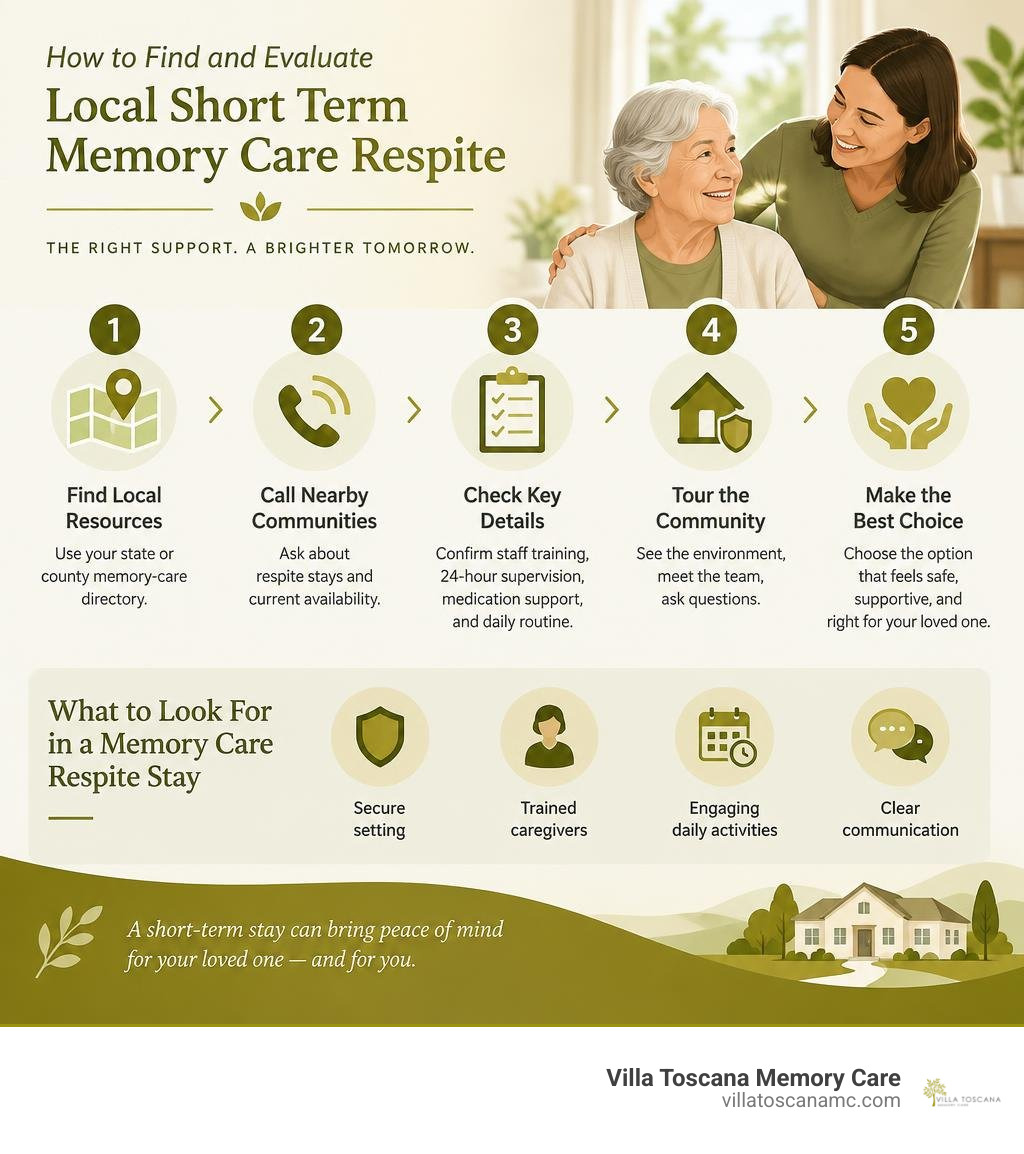
To find short term memory care facilities near me, start with your state or county memory-care directory, then call nearby communities to ask whether they offer respite stays. Confirm current availability, staff training, 24-hour supervision, medication support, and how they will handle your loved one’s daily routine before scheduling a tour.
A short-term memory care stay gives a person living with dementia a safe, structured place to receive specialized support for a limited time. It also gives family caregivers time to rest, attend to work or health needs, travel, or simply recover from the constant demands of care. According to the Alzheimer’s Association, planned respite is a core part of sustainable dementia caregiving.
Unlike a general short-term rehabilitation stay, memory care respite is built around the needs of people with Alzheimer’s disease and other forms of dementia. Look for a secure setting, trained caregivers, engaging daily activities, and clear communication with family members. A well-planned stay can protect your loved one’s routine while helping you avoid burnout.
Understanding Short-Term Memory Care and Respite Support
Caring for someone with Alzheimer’s or another form of progressive cognitive decline is an act of deep devotion, but it is also physically and emotionally demanding. When caregiving responsibilities begin to feel overwhelming, temporary respite care steps in as an essential support system. A short-term memory care stay provides a safe, nurturing environment designed specifically for individuals with cognitive impairments. These temporary stays typically range from a few days to several weeks, offering safety monitoring, structured enrichment, and tailored assistance while family caregivers take time off.
Whether you are recovering from an unexpected illness, managing a demanding work project, or taking a much-needed vacation, short-term memory care ensures your loved one receives consistent, professional attention. Learning everything families need to know about short-term respite care helps normalize temporary stays as a healthy component of long-term eldercare planning rather than an emergency measure.
What Distinguishes Respite Stays from Other Senior Care Options
Navigating senior living options can feel complex, especially when attempting to differentiate between standard assisted living, skilled nursing facilities, and dedicated memory support environments. Standard assisted living communities assist with basic activities of daily living (ADLs) such as dressing and bathing, but they may lack the secure architectural layouts and behavioral support necessary to manage dementia-related wandering or confusion. Skilled nursing facilities focus primarily on intensive clinical medical needs and post-acute physical therapy.
In contrast, short-term memory care communities operate as dedicated Special Care Units (SCUs) or freestanding memory care residences. These settings combine 24-hour personal support with specialized cognitive therapies, dementia-friendly dining programs, and secure indoor and outdoor walking paths. Understanding memory care vs skilled nursing is critical for selecting the right level of medical oversight and environmental security.
| Care Setting | Primary Purpose | Level of Dementia Specialization | Typical Stay Duration |
|---|---|---|---|
| Short-Term Memory Care | Temporary cognitive support & caregiver relief | High (Secured layout, trained dementia staff) | 3 days to several weeks |
| Long-Term Memory Care | Continuous specialized dementia support & residential living | High (Secured layout, specialized programming) | Permanent residential |
| Standard Assisted Living | General daily living support (meals, hygiene) | Moderate to Low (Varies by license) | Long-term residential |
| Skilled Nursing Facility | Intensive medical oversight & physical rehab | Variable (Focus is on clinical recovery) | Weeks to long-term |
Specialized Daily Services: From 24-Hour Trained Staff to Cognitive Engagement
High-quality short-term memory care communities provide comprehensive support designed to maintain stability and prevent cognitive fatigue. These services include:
- 24-Hour Awake Staffing: Continuous monitoring ensures immediate help with nighttime wandering, sundowning symptoms, or sudden mobility challenges.
- Medication Administration: Experienced caregivers oversee complex daily medication schedules, ensuring correct dosages and timely administration.
- Nutritional and Dietary Adaptations: Communities provide balanced meals tailored to specific requirements, including pureed, diabetic, or low-sodium options, alongside assistance with hydration and dining cues.
- Therapeutic and Sensory Programming: Days are enriched with purpose-driven routines, ranging from music and art therapy to gentle fitness classes. Incorporating stimulating activities for seniors with memory loss helps reduce anxiety, promote social connection, and maintain daily cognitive function.
At Villa Toscana Memory Care, our innovative, award-winning community layout in Mountain View, California, delivers this level of continuous support within an intimate, luxury setting. Through our exclusive culinary partnership with Giorgio’s Italian Grill, we pair engaging daily therapy programs with delicious, freshly prepared dining that residents genuinely enjoy.
The Critical Role of Respite Stays in Relieving Caregiver Burnout
Dementia caregiving requires around-the-clock vigilance. Family caregivers frequently manage everything from hygiene assistance and medication schedules to financial planning, meal preparation, and behavioral interventions. Over time, the constant stress of anticipation takes a significant physical and mental toll. Utilizing practical paths for dementia care support prevents chronic stress from escalating into severe burnout.

Recognizing the Signs of Chronic Dementia Caregiver Stress
Caregiver burnout develops gradually, often making it difficult to spot until physical and emotional health have already suffered. Common warning signs include:
- Sleep Deprivation: Waking multiple times during the night to check on a loved one or manage sundowning behaviors.
- Emotional and Physical Exhaustion: Feeling perpetually drained, irritable, or overwhelmed by routine caregiving tasks.
- Social Isolation: Withdrawing from friends, personal hobbies, and social activities due to lack of time or caregiving guilt.
- Frequent Illness: Weakened immune function resulting in recurrent colds, headaches, digestive issues, or elevated blood pressure.
- Anxiety and Depression: Persistent feelings of helplessness, chronic worry about the future, or sudden emotional outbursts.
How Planned Respite Helps Families Recharge While Maintaining Quality Care
Accepting external support is not an admission of defeat; it is an essential strategy for sustainable caregiving. Scheduling regular respite intervals allows caregivers to catch up on restful sleep, schedule their own medical appointments, reconnect with family and friends, or simply take time to decompress.
Learning how to recharge your energy while ensuring safe care helps eliminate unearned guilt. When family members are rested and emotionally replenished, they can bring renewed patience, compassion, and presence back to their caregiving role.
How to Evaluate and Choose Short Term Memory Care Facilities Near Me
Selecting the right short-term memory care facility requires evaluating physical security, staff expertise, dining quality, and overall atmosphere. Visiting communities in person and observing how caregivers interact with residents provides vital insight into daily life at the community.

Using State Directories to Filter Short Term Memory Care Facilities Near Me
Statewide senior living and dementia directories are excellent resources for mapping out nearby options. These directories organize licensed communities by county and city, making it easy to identify providers that offer specialized short-term respite care.
When reviewing listings across state resources—such as care directories in California, Georgia, or Illinois—note whether communities hold dedicated memory care licensing endorsements and request informational packets directly from their eldercare coordinators. Cross-referencing directory listings with state health department databases also ensures the facility holds an active, unblemished license.
Key Questions to Ask When Touring Short Term Memory Care Facilities Near Me
When touring potential memory care residences, asking specific operational questions will help determine if the community meets your loved one’s unique requirements:
- Respite Availability: Are respite suites fully furnished, and what is the minimum duration required for a short-term stay?
- Emergency Admissions: If an urgent family situation arises, what is your protocol for finding respite care stays on short notice?
- Staff Training: What specific dementia care certifications and behavioral management training do your caregivers undergo?
- Wandering Protocols: How are community exits secured, and what technologies or architectural safeguards prevent wandering?
- Dietary Support: How does the culinary team accommodate special texture modifications, pureed meals, or specific physician-ordered diets?
- Daily Routine Integration: How will staff learn about and adapt to my loved one’s lifelong preferences, sleep habits, and personal interests?
Evaluating Staffing Ratios, Safety Features, and Specialized Amenities
Because memory care requires close personal engagement, staffing ratios are one of the most critical factors to evaluate. Learning about memory care staffing ratios and state mandates helps you evaluate whether a community provides enough direct-care staff per resident during both daytime hours and overnight shifts.
In addition to staffing levels, assess the physical environment. Look for secure outdoor courtyards that permit fresh air without wandering risks, wide and well-lit hallways, clear visual cueing for bathrooms and dining rooms, and dedicated sensory spaces designed to soothe overstimulated residents.
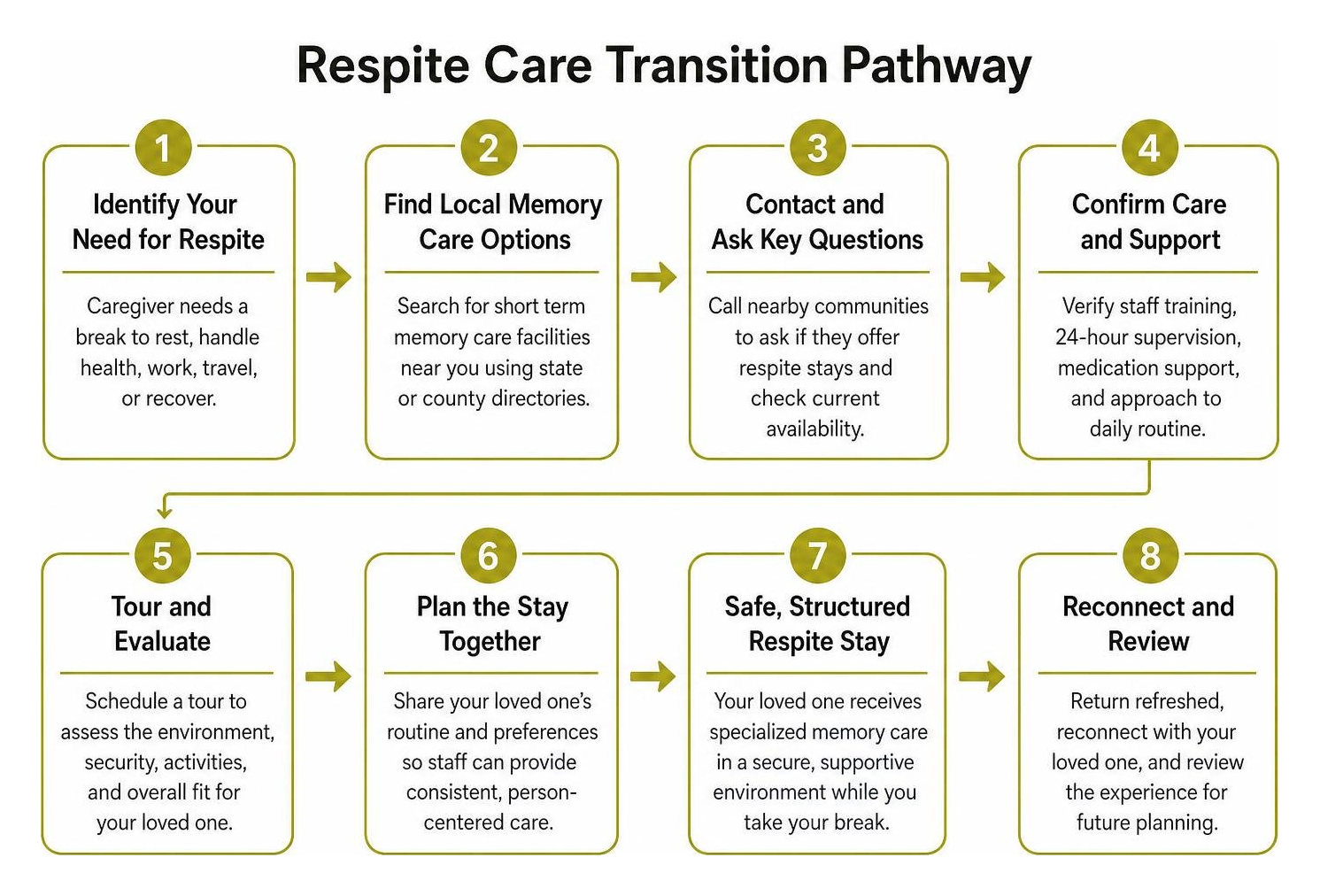
Step-by-Step Guide to Planning a Smooth Respite Care Transition
Transitioning a loved one with dementia into a new environment—even for a short stay—requires thoughtful preparation. Following a structured transition process helps reduce disorientation and creates a comfortable, familiar setting from day one.
Gathering Medical Assessments and Care History Documentation
Before admitting a resident for a respite stay, licensed memory care communities require specific administrative and health assessments. Preparing these documents ahead of time streamlines the intake process:
- Physician’s Health Report: A recent physical assessment detailing primary diagnoses, allergies, and physical mobility limitations.
- Medication Orders: An up-to-date, signed list of all prescription and over-the-counter medications, complete with exact dosage schedules and physician instructions.
- Personal Profile and Routine Map: A detailed summary of daily habits, including preferred waking and sleeping times, bathing routines, food preferences, favorite music, and known calming strategies.
- Legal Documentation: Copies of healthcare power of attorney, advance health directives, and emergency contact details.
Our comprehensive services include individualized intake assessments, ensuring our care team understands your loved one’s health history, communication preferences, and personal passions before they arrive.
Preparing Your Loved One for a Temporary Stay
Managing the emotional aspects of a transition requires a calm, reassuring approach. Use these practical strategies to ensure a positive experience:
- Pack Familiar Comforts: Bring favorite clothing items, a cozy blanket, family photo albums, and familiar personal toiletries to make the respite room feel immediately comfortable.
- Use Simple, Reassuring Language: Avoid overwhelming your loved one with lengthy explanations or dates. Describe the stay simply and positively—for example, as a temporary wellness retreat or a short stay while home maintenance is completed.
- Coordinate with Staff During Move-In: Plan your arrival around a mealtime or an engaging group activity so your loved one is naturally welcomed into the community flow.
- Establish Clear Communication: Agree on a check-in schedule with community staff so you can stay updated on your loved one’s adjustment without interrupting their daily routine.
Frequently Asked Questions About Short-Term Memory Care
How long can a resident stay in a short-term memory care facility?
Respite stays typically range from a minimum of three to seven days up to thirty to sixty days, depending on community licensing and family needs. Many families utilize short-term stays as a “trial period” to see how well their loved one adapts to a specialized memory care community before deciding on a permanent transition.
How much do short-term memory care respite stays typically cost?
Respite care is generally billed at a daily or all-inclusive weekly rate covering housing, all meals, medication management, personal care, and activities. Reviewing our guide on the true cost of short-term respite care provides transparency into budgeting. While standard Medicare does not cover residential respite, financial assistance options such as Veterans Aid and Attendance benefits, long-term care insurance policies, or local caregiver support grants may help offset costs.
What is the process for requesting assistance or scheduling a respite admission?
To begin, reach out to local memory care communities to verify respite suite availability and schedule an initial consultation. The community’s admissions team will review your loved one’s medical history, conduct a brief wellness evaluation, and coordinate move-in dates. You can contact us at any time to discuss availability, ask questions, or arrange a private tour of our boutique community.
Conclusion
Caregiver wellness and quality dementia care go hand in hand. Taking a planned break through a short-term memory care stay protects your health while ensuring your loved one receives skilled, compassionate support in an environment built for their security.
At Villa Toscana Memory Care, our family-owned community in Mountain View, California, offers an award-winning setting where seniors enjoy personalized attention, beautiful surroundings, and restaurant-quality dining through our partnership with Giorgio’s Italian Grill. Whether you need a brief respite stay to rest and recharge or are exploring long-term memory support, explore our boutique memory care community and let us support your family every step of the way.