
What Is It Like Living With Dementia?
Living with dementia can mean knowing what you want to say but struggling to find the words. A familiar room may feel confusing. A simple task may take more time. These changes can bring fear or frustration, but they do not erase a person’s need for choice, connection, and purpose. Understanding what it is like living with dementia begins with recognizing that the person is still present, still feeling, and still deserving of dignity.
For families, empathy starts with a shift in perspective: don’t focus only on what your parent can no longer do. Notice what helps them feel safe, heard, and involved. Dementia affects each person differently, and understanding their experience is the first step toward better support.
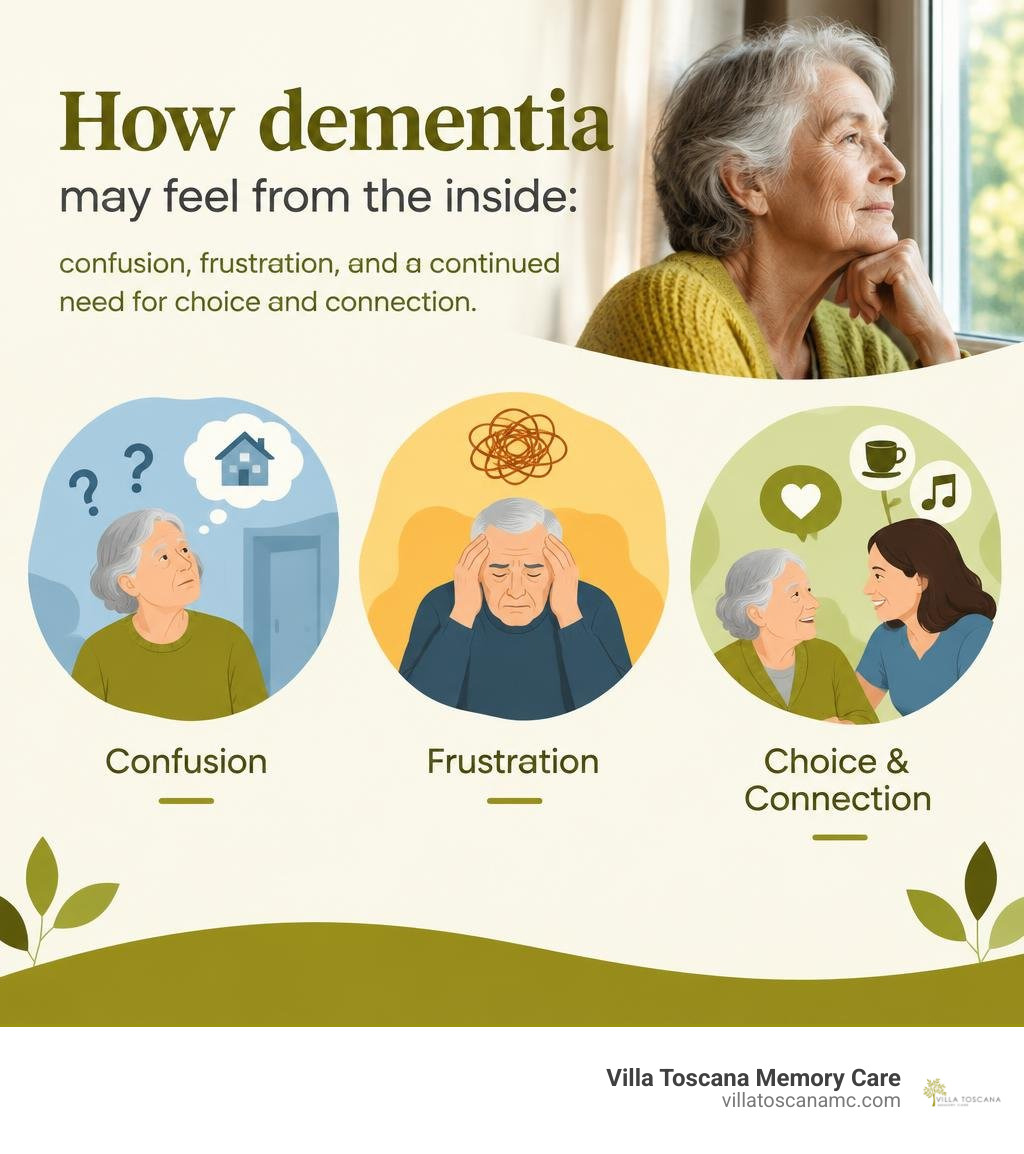
Simple what is it like living with dementia glossary:
Understanding What Is It Like Living with Dementia on an Everyday Basis
To genuinely comprehend dementia, we must peel back the medical labels and look at the lived experience from within. Globally, around 50 million individuals navigate cognitive decline—a figure projected to triple by 2050. Across the United States, approximately 5.8 million people live with conditions under the dementia umbrella. Yet behind these massive figures lie intimate, moment-by-moment realities of sensory disruption, fluctuating awareness, and shifting perceptions of reality.
Living with cognitive impairment does not feel like simply forgetting a pair of reading glasses; it can feel like being unmoored from shared reality. Familiar rooms lose their spatial landmarks, sensory input can become overwhelming or muffled, and sequencing everyday actions—such as brewing a cup of tea or buttoning a shirt—suddenly demands immense cognitive effort.
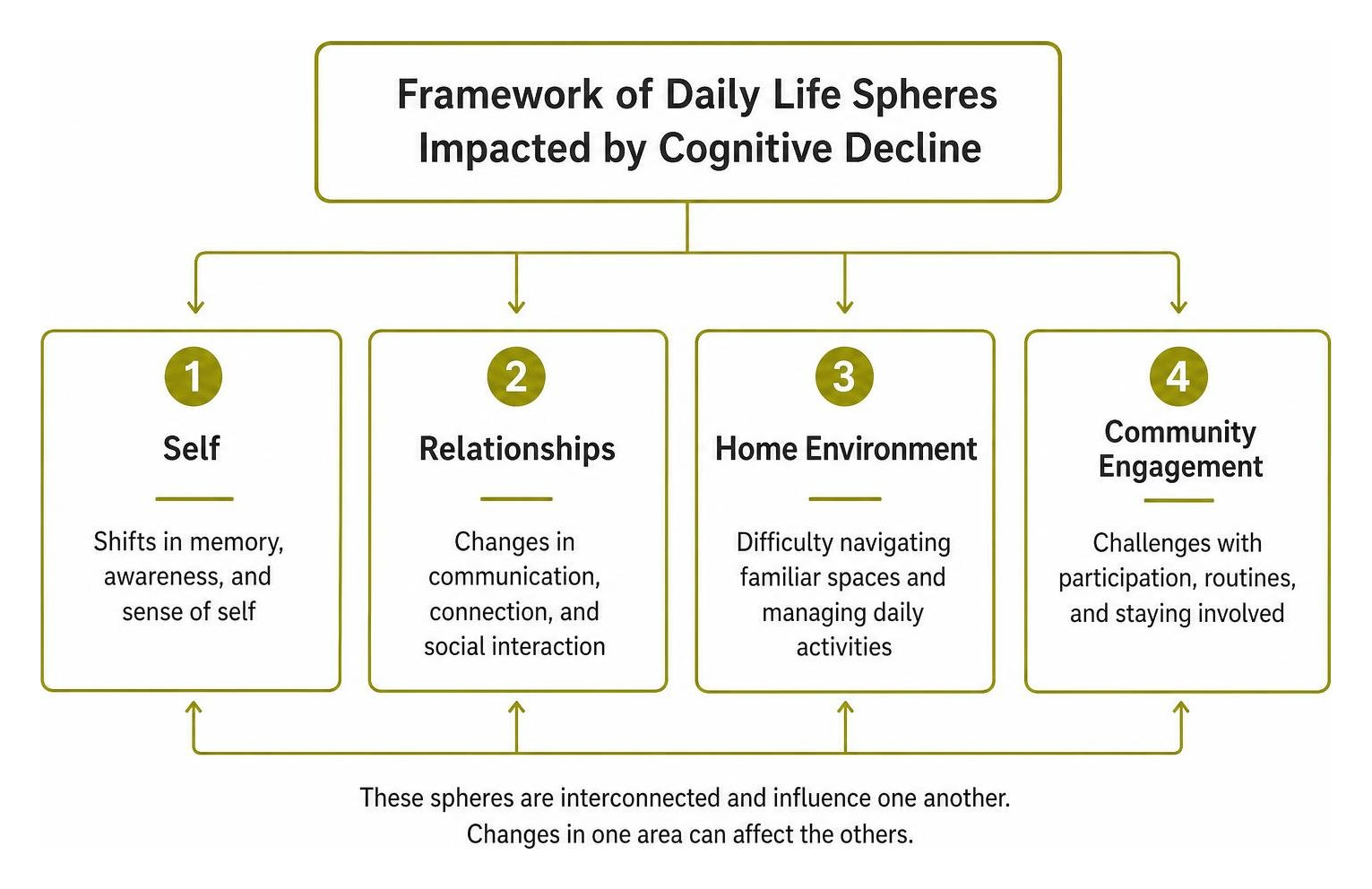
Qualitative research synthesizing the day-to-day realities of cognitive change reveals that disruptions ripple across multiple spheres of life, including one’s sense of self, interpersonal relationships, home environments, and community engagement (Huizenga et al., 2022). Rather than experiencing total cognitive darkness, individuals often move between moments of acute clarity and periods of sensory disorientation. A person might recognize their living room perfectly one minute, and in the next, perceive shadows on the floor as bottomless holes. Recognizing these shifts helps caregivers respond not with correction or debate, but with calm reassurance and safety.
The Early Shifts: What Is It Like Living with Dementia Before Diagnosis
Long before an official diagnosis is confirmed in a neurology clinic, subtle shifts begin altering a person’s inner landscape. In the early stages, an individual might know precisely what concept they want to communicate, but the exact word vanishes. As one patient described it, knowing what the letter “K” looks like, yet suddenly losing the motor memory of how to draw it, produces intense internal anxiety.
Early changes can also surface as:
- Showing up at an incorrect destination or feeling disoriented on long-familiar driving routes.
- Misjudging spatial depths, tripping over slight floor transitions, or misinterpreting visual patterns.
- Withdrawing quietly from dinner conversations because tracking multiple overlapping voices becomes exhausting.
- Experiencing uncharacteristic changes in mood, impulse control, or decision-making, which can be prominent when navigating the unique challenges of frontotemporal dementia symptoms.
Because individuals frequently retain sharp insight during these early stages, they often develop elaborate workarounds to hide their symptoms out of fear or embarrassment. Facing diagnostic appointments, MRI scans, and cognitive testing can feel daunting. Yet, obtaining an early, accurate diagnosis opens the door to proactive planning, therapeutic support, and clinical trial opportunities that help preserve cognitive vitality for years.
Preserving Agency: What Is It Like Living with Dementia in a Changing World
One of the most distressing psychological challenges of cognitive decline is the erosion of personal agency. When well-meaning family members notice memory lapses, the instinct is often to step in and take over every task—managing clothes, taking away the car keys abruptly, or answering questions on their behalf.
However, as thoughtful caregiving accounts like The Dementia Diaries demonstrate, agency is an essential human need. Stripping away choice amplifies fear and can trigger understandable agitation or withdrawal. When people are treated as passive recipients of care rather than active partners in their own lives, their sense of dignity plummets.
Preserving agency does not mean leaving someone in unsafe situations; it means scaffolding their environment so they can still make meaningful choices. Offering simple options—such as choosing between a blue or green sweater, or picking between oatmeal and eggs for breakfast—reinforces self-worth. It tells the individual: Your voice still matters, and you are still in control of your world.
The Psychological Toll and Reclaiming Joy Beyond the Deficit Model
The traditional biomedical deficit model views dementia almost entirely through what is lost: lost memories, lost skills, and lost independence. While the grief of these losses is genuine and must be processed, viewing a human being solely as a collection of deficits ignores their enduring capacity for emotional connection, creativity, and joy.

Many seniors discover vibrant, unexpected creative outlets after diagnosis. Without the internal self-criticism that often stifles artistic exploration earlier in life, some individuals take up painting, gardening, or music, expressing their inner world through colors and melodies when words become elusive. Implementing structured, stimulating activities for seniors with memory loss creates pathways for meaningful engagement that celebrate what remains rather than mourning what has faded.
Emotional contagion plays a powerful role in dementia. Even when short-term memory is compromised, emotional memory remains remarkably intact. A person may not remember what they ate for lunch thirty minutes ago, but they will carry the calm, warmth, and laughter of a shared conversation throughout the entire afternoon. Prioritizing short-term pleasures—a warm hand massage, listening to favorite jazz records, or watching birds in the garden—brings authentic quality of life to every single day.
Adapting the Physical Environment to Foster Safety and Calm
The physical space around a person with dementia either acts as a supportive partner or an obstacle. When sensory processing changes, cluttered countertops, poor lighting, and high-contrast floor patterns can trigger visual hallucinations, distress, or physical falls.
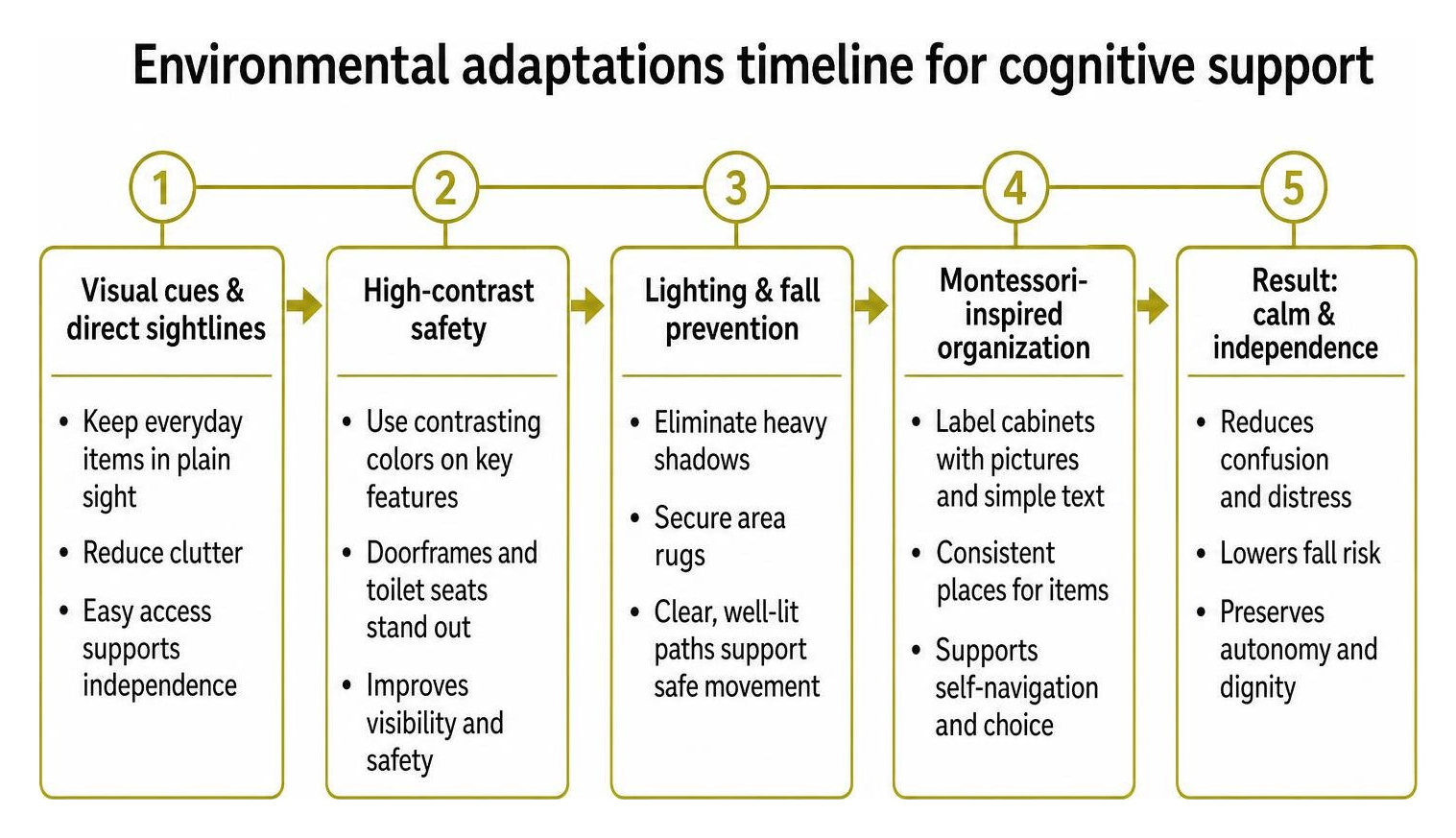
Creating a prepared, soothing environment directly supports autonomy and independence:
- Visual Cues and Direct Sightlines: Keep frequently used personal items—like a hairbrush, toothbrush, or favorite cardigan—in plain sight rather than tucked inside closed drawers.
- High-Contrast Safety: Use contrasting colors on doorframes and toilet seats so they stand out clearly against walls and floors.
- Lighting and Fall Prevention: Eliminate heavy floor shadows and secure area rugs, integrating proactive home fall prevention strategies that allow safe, uninhibited movement.
- Montessori-Inspired Organization: Label cabinet doors with both pictures and simple text to make self-navigation effortless.
When the environment is intuitive, seniors spend less energy deciphering their physical surroundings and more energy enjoying their daily routines.
The Caregiver Dynamic: Walking Alongside Without Taking Over
Caring for a parent or spouse with memory loss is an emotional journey marked by moments of deep connection and profound fatigue. Family members often experience anticipatory grief—mourning changes in their loved one while they are still sitting right in front of them.

The most sustainable way to support someone with dementia is to walk alongside them rather than trying to force them back into our reality. When a loved one insists they need to catch a bus to a job they retired from thirty years ago, arguing with logic (“Mom, you’re 82 and haven’t worked in decades”) only creates panic and defensiveness. Instead, validation therapy invites us to join their emotional reality: “You were so dedicated to your work. Tell me about your favorite project while we have a cup of coffee.”
Caregivers cannot pour from an empty cup. Sustaining this level of gentle presence requires reliable external support. Exploring practical dementia care support to relieve caregiver burden and finding an Alzheimer’s support group ensures that family members receive emotional guidance, practical coping tools, and regular respite care to prevent physical and emotional burnout.
Frequently Asked Questions About Living with Dementia
What are the earliest daily challenges experienced with dementia?
The earliest challenges usually center on subtle lapses in short-term recall and executive functioning. A person might find themselves struggling to balance their checkbook, missing turnoffs on routine commutes, repeating questions during conversations, or struggling to find everyday words. Importantly, they are often aware of these moments, which can lead to social withdrawal or anxiety.
How does dementia reshape relationships with family and friends?
Relationships inevitably undergo a shift in roles. Adult children often find themselves stepping into protective, caregiving responsibilities, which can cause complex emotional dynamics. Friends may pull away simply because they feel unsure of how to interact. Adapting requires shifting communication from debating facts to sharing calm, present-focused emotional moments, valuing quiet presence over verbal perfection.
Can a person maintain quality of life after receiving a diagnosis?
Yes. A dementia diagnosis changes the rhythm of life, but it does not mean life is over. Through tailored routines, creative arts, music therapy, pet companionship, and person-centered support, many individuals live purposeful, connected, and joy-filled lives for many years following their diagnosis.
Conclusion: Reframing Dementia Through Compassion and True Presence
Living with dementia is a complex, evolving human experience. By moving away from a mindset of deficit and tragedy, we can meet our loved ones where they are with genuine empathy, patience, and warmth. When we focus on preserving agency, adapting physical spaces, and validating emotional truths, we protect the dignity and identity of the person behind the diagnosis.
At Villa Toscana Memory Care, we believe that every individual deserves an enriching environment designed around their unique life story. Serving families throughout Mountain View, Los Altos, Palo Alto, Sunnyvale, and the greater Bay Area, our community blends specialized 24-hour care, engaging memory programs, and exquisite dining in partnership with Giorgio’s Italian Grill. Reach out to our team today to discover how our compassionate, award-winning community can support your family’s journey.
References
Huizenga J, Scheffelaar A, Fruijtier A, Wilken JP, Bleijenberg N, Van Regenmortel T. “Everyday Experiences of People Living with Mild Cognitive Impairment or Dementia: A Scoping Review..” International journal of environmental research and public health, 2022. PMCID PMC9518176.