
Find Alzheimer’s Support Near You and Take the Next Step
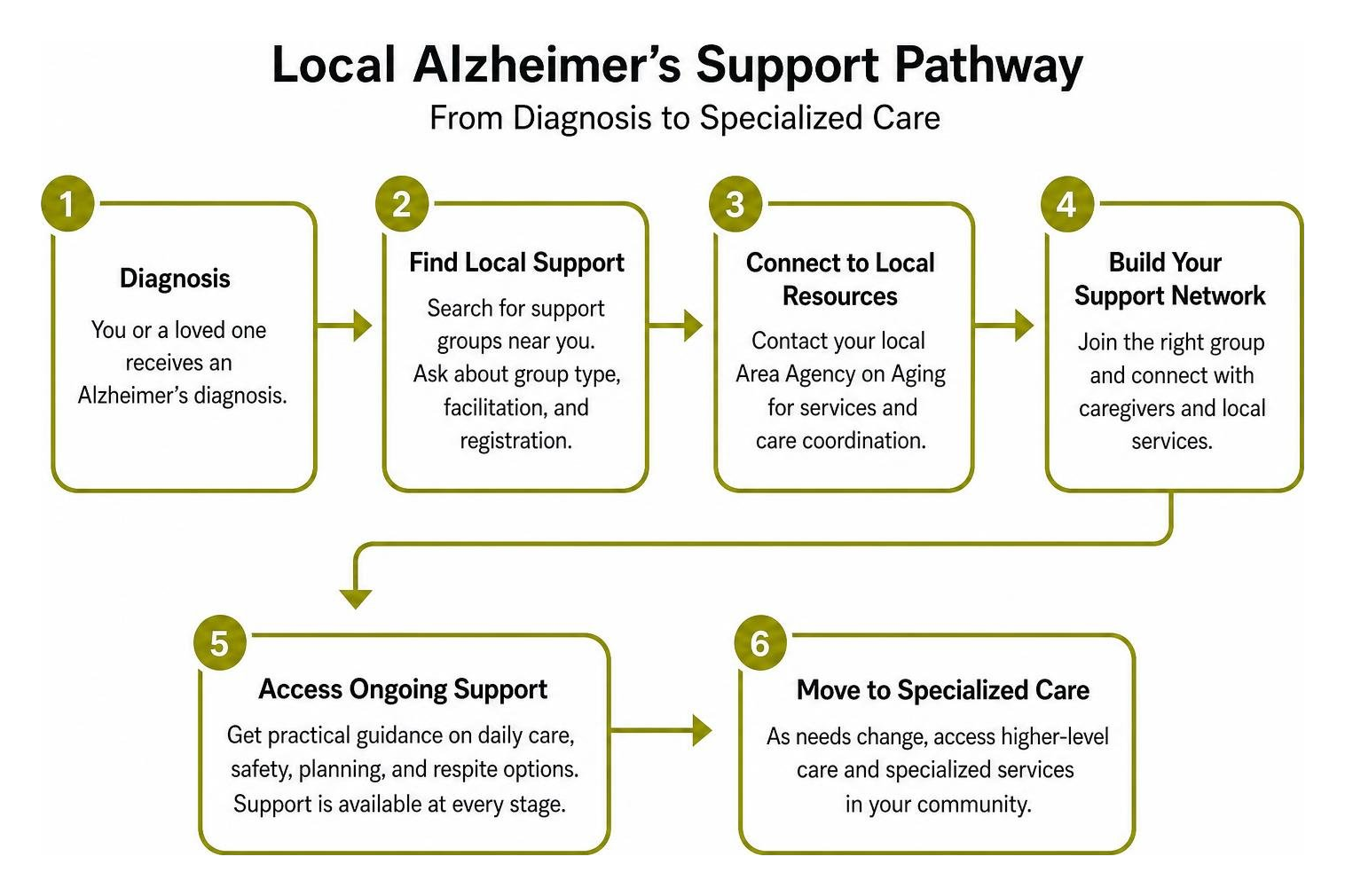
To find Alzheimer’s support near me, start with the Alzheimer’s Association’s local support-group finder or call its 24/7 helpline at 800-272-3900. You can ask for groups in your city or county, including in-person, virtual, caregiver, early-stage, and multilingual options.
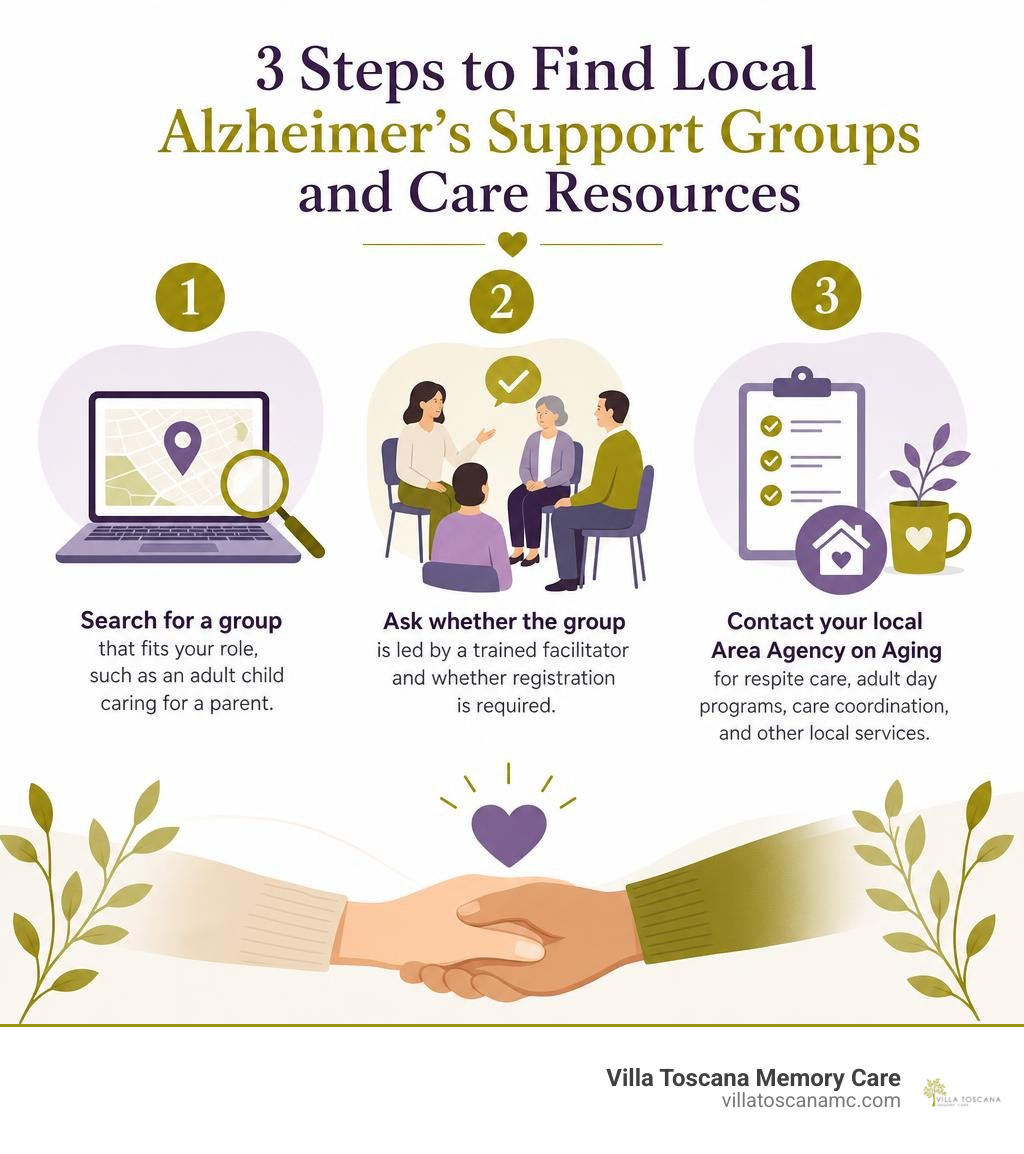
- Search for a group that fits your role, such as an adult child caring for a parent.
- Ask whether the group is led by a trained facilitator and whether registration is required.
- Contact your local Area Agency on Aging for respite care, adult day programs, care coordination, and other local services.
The right group can offer more than a place to talk. It can help you find practical answers about safety, daily care, financial planning, and the next level of support as dementia changes. You do not need to wait for a crisis to build a support network.
How to Locate Local Alzheimer’s Support Near Me
Navigating the landscape of memory loss can feel overwhelming, whether you are noticing subtle cognitive shifts in a parent or adjusting to an official diagnosis. The key is remembering that dementia care is a marathon, not a solo sprint. Community networks, specialized education programs, and localized caregiver alliances exist to ensure you never have to walk this path in isolation.
Today, federal backing for Alzheimer’s and dementia research has expanded to $3.8 billion annually, reflecting a national commitment to understanding and managing progressive cognitive conditions. Across the country, dedicated community hubs demonstrate how neighborhood-focused spaces provide real, accessible relief to families through social connection, memory cafes, and expert-led clinics. Knowing where to look locally allows you to tap into these vital lifelines right when you need them most.
Step 1: Searching for Alzheimer’s Support Near Me Through Nonprofits
National non-profit networks and community-based organizations form the front line of dementia navigation. In 2024 alone, the Alzheimer’s Association delivered direct care and support more than 10 million times through free consultations, educational workshops, and peer circles. With ongoing research investments exceeding $490 million across 1,220 active projects in 59 countries, these organizations combine scientific breakthroughs with compassionate local grassroots help.
When reaching out to established non-profits, you gain immediate access to:
- 24/7 Multilingual Helplines: Trained specialists offer real-time crisis intervention, decision support, and localized referrals in over 200 spoken languages.
- Online Peer Hubs: Digital boards like ALZConnected® provide 24-hour spaces where family members and individuals living with memory loss share practical coping strategies.
- Community Resource Finders: Searchable databases catalog local chapters, daytime activity meetups, and educational workshops tailored to your zip code.
- Specialized Non-Profit Gatherings: Regional non-profits, such as the Gathering Place Brazoria – Alzheimer’s, Support, offer enriching lunch-and-learn events, legal seminars, and daytime activities for memory-impaired adults right in their home neighborhoods.
Step 2: Accessing Alzheimer’s Support Near Me via State and Area Agencies
Beyond private non-profits, public and state-funded programs provide crucial infrastructure for families. Connecting with your local Area Agency on Aging (AAA) or Aging and Disability Resource Connection (ADRC) opens doors to publicly backed care management, nutritional support, and safety initiatives.
In California, programs like CAlz Connect offer free six-month support programs for individuals aged 45 and older diagnosed with dementia, alongside their primary caregivers. Backed by $750,000 in federal grant funding from the Administration for Community Living and HHS, CAlz Connect utilizes the evidence-based Care Ecosystem framework developed by UCSF. Bilingual community health workers, supported by registered nurses, social workers, and clinical pharmacists, deliver targeted guidance directly via telehealth or phone check-ins across counties such as Los Angeles and Marin.
Similarly, regional initiatives across the state—including those coordinated by Alzheimer’s Los Angeles—ensure that local support circles, educational seminars, and care consultations remain 100% free of charge. Utilizing these municipal and state resources ensures you receive culturally competent, evidence-based guidance without straining your household budget.
Types of Dementia Support Groups Available in Your Area
Support circles are not one-size-fits-all. A group that benefits an adult child managing a parent’s finances might feel unhelpful to a spouse adjusting to daily behavioral shifts at home. Exploring the spectrum of structured groups helps you find peers who genuinely understand your specific daily reality.
In-Person and Virtual Caregiver Circles
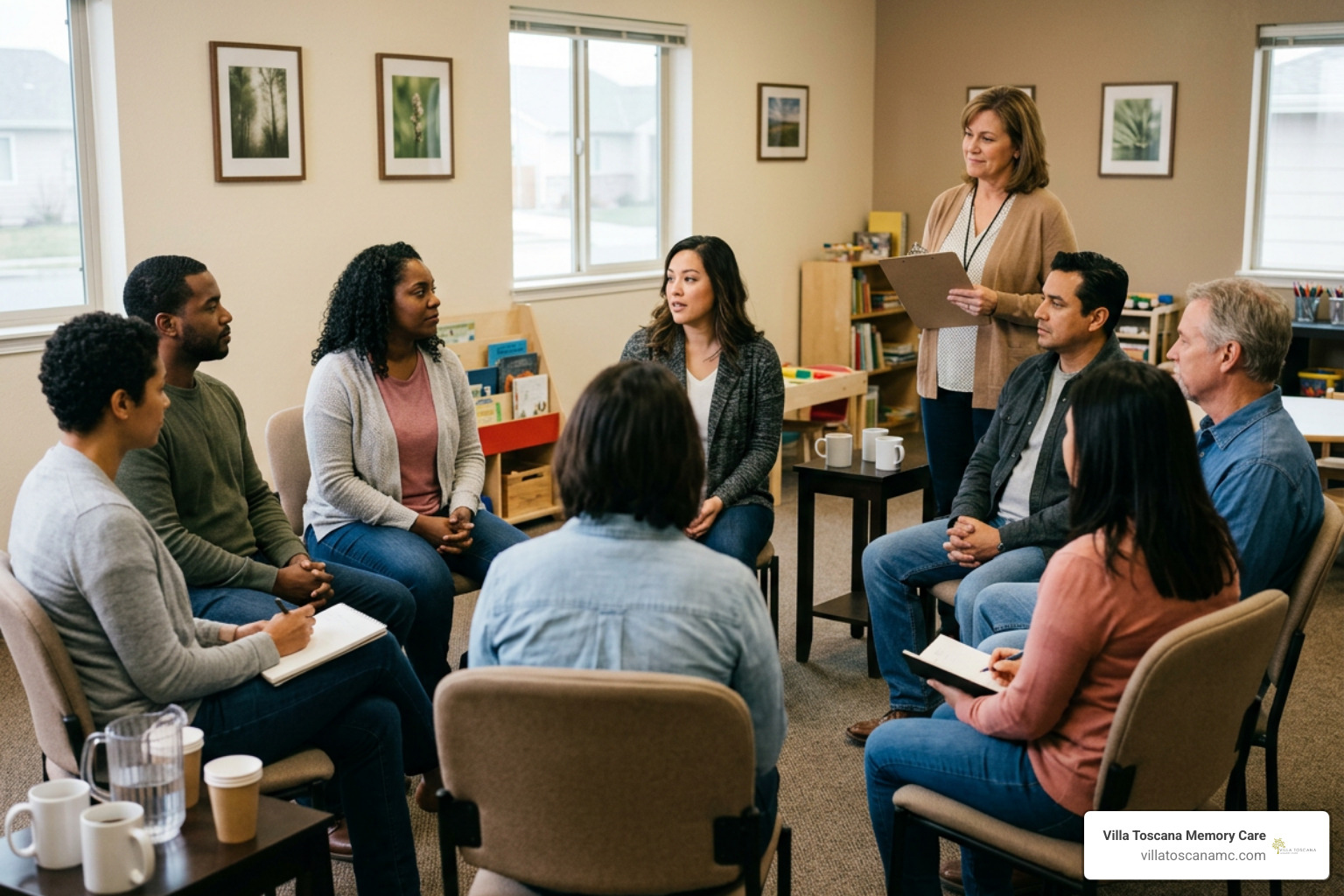
Caregiver circles focus on the emotional and physical well-being of the person providing care. Facilitated by trained social workers, nurses, or certified peer volunteers, these meetings offer a safe haven to unpack complex emotions like anticipatory grief, frustration, and chronic fatigue.
Common configurations include:
- Spousal Support Circles: Tailored for husbands, wives, and partners navigating the painful shift from romantic equality to care dependency.
- Adult Children Caregiver Groups: Designed for individuals in their 20s, 30s, 40s, or 50s juggling full-time careers, raising their own kids, and coordinating care for aging parents.
- Virtual and Telephonic Circles: Accessible via platforms like Zoom, Microsoft Teams, or standard telephone call-in lines, eliminating the need to secure substitute care or commute. Discovering dedicated dementia care support practical paths to relieve caregiver burden starts by surrounding yourself with people who validate your everyday journey.
Early-Stage and Specialized Memory Loss Groups
For individuals who have recently received a diagnosis, specialized peer groups offer empowerment rather than clinical clinical jargon. These circles allow individuals in the early stages of Alzheimer’s or mild cognitive impairment (MCI) to discuss their goals, fears, and future planning directly with others facing the same journey.

Specialized categories encompass:
- Younger-Onset Circles: For adults diagnosed under age 65 who face unique career, financial, and parenting hurdles.
- Culturally and Linguistically Tailored Groups: Meetings conducted entirely in Spanish, Mandarin, Cantonese, Korean, Japanese, or other languages to ensure cultural nuances and family dynamics are honored.
- Community Enrichment and Respite Services: Specialized community groups, such as local Caregiver Services, coordinate day programs, educational series, and targeted support systems that keep individuals socially active and mentally stimulated.
Comprehensive Care Options Beyond Support Groups
While peer groups supply vital emotional sustenance, managing progressive cognitive decline demands physical and structural care. Expanding your care circle early prevents sudden burnout and guarantees your loved one maintains a vibrant, dignified lifestyle.
Respite Care and Enriching Activities
Caregiving is demanding work, and taking periodic breaks is essential to maintaining your own health. Adult day health centers offer structured daytime socialization, light exercise, and cognitive activities while giving family members a predictable window to work or recharge.
When family caregivers need extended time away—whether for travel, medical procedures, or pure recovery—learning everything families need to know about short-term respite care provides reliable peace of mind. During these temporary residential stays, guests experience full immersion in a safe, engaging setting.
Within our dedicated memory care neighborhood at Villa Toscana Memory Care in Mountain View, CA, we emphasize that every single moment matters. By making moments matter stimulating activities for seniors with memory loss, we integrate sensory engagement, music, art, and secure garden walks into every day. Combined with our signature dining partnership with Giorgio’s Italian Grill, residents enjoy familiar, nourishing, restaurant-quality meals within an award-winning, home-like environment.
Financial Programs and Long-Term Planning
Developing a financial roadmap early prevents unexpected crises as care needs intensify. Review the standard care spectrum to understand what services align with each phase of progression:
| Level of Care | Primary Services Provided | Best Suited For | Typical Funding Options |
|---|---|---|---|
| In-Home Caregiver | Assistance with bathing, dressing, light housekeeping, and companion care. | Early to moderate stages; individuals needing partial daily support. | Private pay, Long-Term Care Insurance, select Medicaid waivers. |
| Adult Day Health Care | Daytime social activities, nutrition, cognitive therapy, and basic health checks. | Caregivers needing daytime relief while working or handling errands. | Out-of-pocket, PACE programs, VA benefits, Medicaid. |
| Respite Care Stays | Temporary 24/7 residential care in a secure setting with full dining and activities. | Short-term caregiver relief, post-hospitalization recovery, or trial stays. | Private pay, specialized non-profit grants, select respite vouchers. |
| Residential Memory Care | 24/7 specialized dementia care, medication management, secured architectural design, gourmet dining. | Moderate to advanced dementia, wandering risks, complex behavioral changes. | Private funds, Long-Term Care Insurance, VA Aid & Attendance. |
Specialized residential communities often integrate innovative architectural designs, such as the Green House Project philosophy, to deliver supportive, residential memory neighborhoods that keep residents safe without feeling institutionalized.
For long-term financial coordination, tools such as BenefitsCheckUp.org and Benefits.gov help families identify state and federal entitlements. Consulting with an elder law attorney or a Certified Senior Advisor (CSA) ensures advanced health directives, powers of attorney, and trusts are correctly established before cognitive capacity diminishes.
Frequently Asked Questions About Alzheimer’s and Dementia Care
Are local Alzheimer’s support groups completely free to join?
Yes, the vast majority of local Alzheimer’s and dementia support groups are completely free. Non-profit organizations such as the Alzheimer’s Association, Alzheimer’s Los Angeles, and local community health partnerships host their meetings at no charge to participants. These sessions are led by trained, experienced facilitators and maintain strict privacy standards, allowing you to speak candidly about personal care challenges in a safe environment.
How do I know when it is time for residential memory care?
Knowing when to transition to residential memory care usually involves several key safety and wellness indicators:
- Frequent Wandering or Disorientation: Walking away from home or getting lost in familiar surroundings.
- Escalating Safety Risks: Leaving the stove on, mismanaging prescription medications, or falling frequently.
- Severe Changes in Daily Needs: Inability to manage essential activities of daily living (ADLs), such as bathing, dressing, and proper nutrition.
- Severe Caregiver Exhaustion: Chronic physical illness, insomnia, depression, or profound stress experienced by the primary caregiver.
- Sundowning and Behavioral Shifts: High agitation, anxiety, or aggression in the late afternoon and evening hours that cannot be safely managed at home.
Can I participate in a virtual support group without high-tech equipment?
Absolutely. Virtual support groups are designed to be accessible to everyone regardless of tech skills. You do not need an advanced computer or high-speed webcam setup to participate. Most organizers provide simple, standard dial-in telephone numbers. This allows you to call in from any landline or basic mobile phone, listen to the conversation, and speak whenever you feel comfortable.
Conclusion
Finding the right support network transforms the dementia caregiving experience from an isolating struggle into a shared, supported journey. From local volunteer coffee meetups and state-funded programs like CAlz Connect to comprehensive caregiver education circles, abundant resources are ready to support your family every step of the way.
When the time arrives to explore specialized residential care, having an experienced, compassionate team by your side makes all the difference. At Villa Toscana Memory Care, our family-owned community in Mountain View, California, delivers personalized 24-hour memory support, engaging cognitive enrichment, and exceptional dining in partnership with Giorgio’s Italian Grill. Reach out to our compassionate team today to tour our community, discover our respite options, or let us help guide your family toward the right care resources in your neighborhood.