
Understanding Respite Care Short Term Stay Near Me: Options and Care Levels
When searching for a short-term care solution, understanding the different settings and care models is essential. For many families, the phrase respite care short term stay near me represents an urgent need for safe, temporary support that can be arranged quickly and matched to a loved one’s care level. Respite care is designed to offer short-term relief for family caregivers while providing older adults with professional supervision, assistance with activities of daily living (ADLs), social interaction, and balanced nutrition. Stays generally range from a few days to several weeks or months, depending on your family’s needs and community policies.
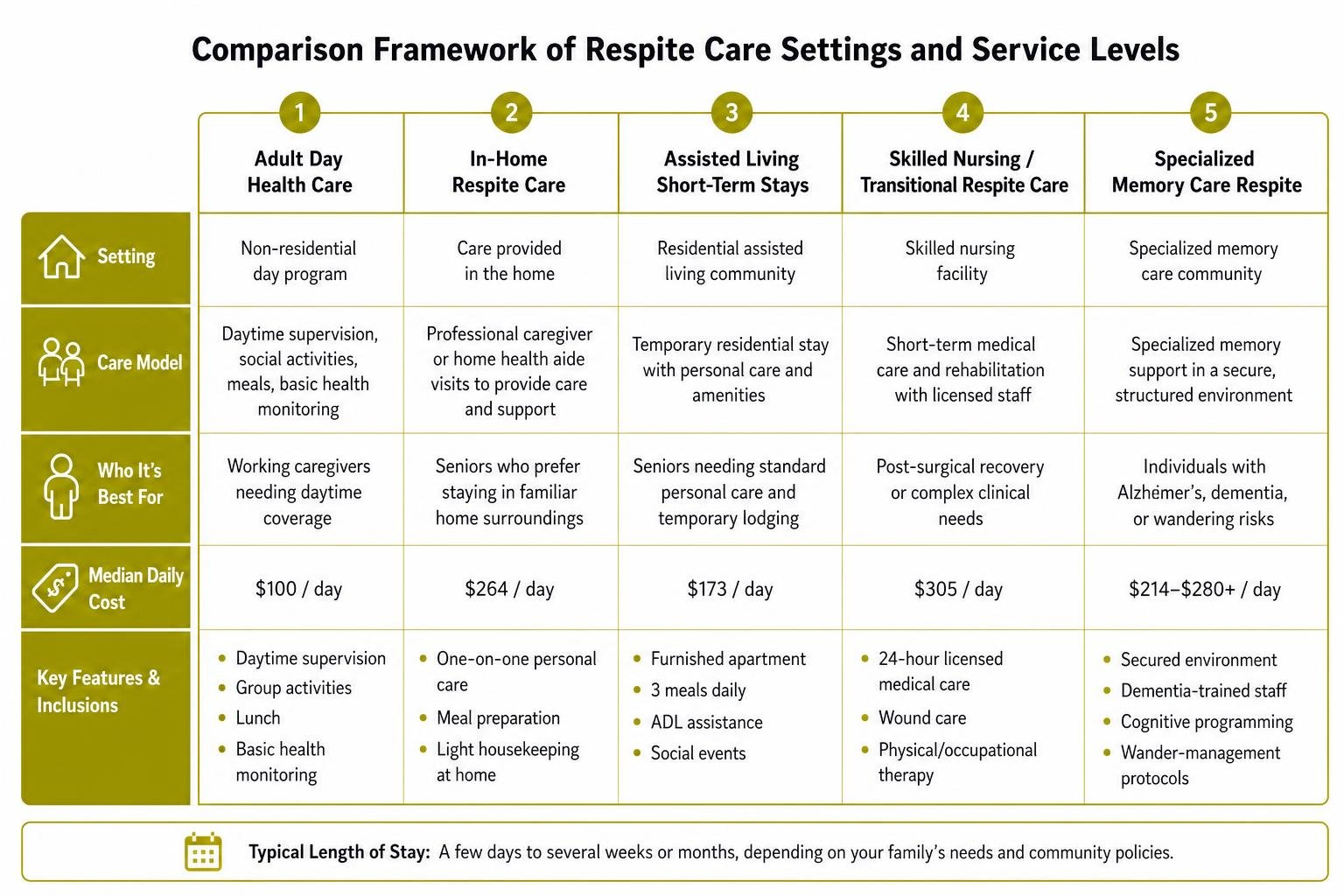
Short-term care options fall into several main categories:
- Adult Day Health Care: Non-residential day programs offering social activities, meals, and basic health monitoring, allowing caregivers to work or handle personal tasks during daytime hours.
- In-Home Respite Care: Professional caregivers or home health aides visit the home to provide companionship, personal care, or skilled nursing support.
- Assisted Living Short-Term Stays: Temporary residential stays in an assisted living community offering furnished suites, 24/7 personal care assistance, chef-prepared dining, and group activities.
- Skilled Nursing / Transitional Respite Care: Short-term stays focused on intensive medical support, post-hospitalization recovery, or skilled rehabilitation before returning home.
- Specialized Memory Care Respite: Dedicated residential memory support tailored specifically for seniors living with Alzheimer’s disease or other forms of dementia.
Specialized Memory Care Respite Stays
For families supporting a loved one with cognitive impairment, standard assisted living may not provide the environmental security or specialized programming required. Memory care respite stays are purposefully structured to support individuals experiencing memory loss, confusion, or behavioral changes associated with dementia.
In this setting, seniors receive continuous supervision and hands-on help with ADLs such as bathing, dressing, personal hygiene, and mobility. Communities utilize wander-management protocols, secure indoor and outdoor environments, and purposeful sensory programming to reduce anxiety and promote engagement. Our tailored memory care services ensure each resident experiences compassionate, individualized care designed specifically for cognitive well-being.
Choosing Community-Based Respite Short Stays
Opting for a residential community stay provides peace of mind through continuous, around-the-clock staffing and emergency response systems. Short-term guests receive access to the same services, dining experiences, and social calendars as full-time residents.
To help evaluate your options, the table below highlights national median daily costs and core features across various respite care settings:
| Care Setting | Median Daily Cost | Key Features & Inclusions | Best Suited For |
|---|---|---|---|
| Adult Day Health Care | $100 / day | Daytime supervision, group activities, lunch, basic health monitoring | Working caregivers needing daytime coverage |
| Assisted Living Community | $173 / day | Furnished apartment, 3 meals daily, ADL assistance, social events | Seniors needing standard personal care & temporary lodging |
| In-Home Care (Aide/Companion) | $264 / day | One-on-one personal care, meal prep, light housekeeping at home | Seniors who prefer staying in familiar home surroundings |
| Specialized Memory Care Community | $214-$280+ / day | Secured environment, dementia-trained staff, cognitive programming | Individuals with Alzheimer’s, dementia, or wandering risks |
| Skilled Nursing Facility | $305 / day | 24-hour licensed medical care, wound care, physical/occupational therapy | Post-surgical recovery or complex clinical needs |
Step-by-Step Guide: How to Secure Short-Term Respite Care Fast
Arranging a short-term stay on short notice—whether due to an unexpected family emergency, caregiver illness, or sudden post-hospital discharge—can feel overwhelming. Following a structured plan helps streamline the placement process.
Step 1: Assessing Immediate Needs for a Respite Care Short Term Stay Near Me
Begin by clarifying your loved one’s current physical, medical, and cognitive care requirements. An accurate assessment ensures you select a community capable of managing their care seamlessly from day one.
- Acuity and Daily Care: Determine how much assistance is required for bathing, dressing, toileting, and transfers.
- Medication Administration: Note whether medications require professional administration, insulin monitoring, or specialized schedules.
- Transitional Recovery Needs: If transitioning from a hospital or rehab setting, identify any needed physical therapy or post-operative monitoring.
- Cognitive and Safety Requirements: Clarify whether the individual experiences sundowning, exit-seeking behaviors, or disorientation that necessitates a secured memory care community.
Step 2: Vetting Accommodations, Dining, and Daily Programming
A high-quality respite stay should feel welcoming, enriching, and comfortable rather than clinical. When vetting prospective communities, examine the environment and daily lifestyle offerings.
Check that guest accommodations are fully furnished with comfortable bedding, accessible private bathrooms, and built-in emergency call systems. Review the culinary offerings to ensure menus provide fresh, nutritionally balanced meals tailored to specialized dietary needs.
At Villa Toscana Memory Care, our culinary program is enhanced through an on-site partnership with Giorgio’s Italian Grill, delivering restaurant-quality dining that brings comfort and enjoyment to our residents every day. Explore how our enriching short-term senior amenities and engaging daily activities keep temporary guests socially active, stimulated, and supported throughout their stay.
Step 3: Fast-Tracking Admissions Paperwork and Pre-Screening
State regulations require health screenings before admitting a resident, even for temporary stays. To prevent unnecessary delays:
- Request the Physician’s Health Report: Have your loved one’s primary care physician complete the required medical assessment form and physical exam.
- Gather Medication Orders: Obtain signed physician orders for all prescription and over-the-counter medications, including explicit dosage instructions.
- Prepare a Negative TB Screening: Most communities require documented proof of a recent negative tuberculosis (TB) test or chest X-ray.
- Complete the Community Assessment: Participate in an intake evaluation conducted by the community’s nursing director to finalize the personalized service plan.
Respite Care Costs and Financial Assistance Options
Planning for the financial aspects of a short-term respite stay allows you to focus on your loved one’s care without unexpected surprises.

Understanding Median Daily Rates and What Is Included
Respite care in residential communities is typically billed at a daily or nightly rate. Across the nation, assisted living respite averages $173 per day, while specialized memory care and skilled nursing respite can range between $214 and $305+ per day depending on location and acuity level.
Most community respite rates are all-inclusive, covering:
- Fully furnished private or companion suites
- Three chef-prepared meals and daily snacks
- 24-hour trained staff supervision and personal care
- Medication management
- Weekly housekeeping and personal laundry services
- Full participation in life enrichment and social programming
Insurance, Medicare, Medicaid, and Veterans Benefits
Because standard Medicare does not cover non-medical residential care, families often combine private funds with specific public or private benefits:
- Medicare Coverage: Standard Medicare does not cover room-and-board respite care in assisted living. However, Medicare Part A covers up to 5 consecutive days of inpatient respite care at a Medicare-approved hospital or skilled nursing facility when the recipient is actively enrolled in the Medicare hospice benefit.
- Medicaid: In select states, Medicaid Home and Community-Based Services (HCBS) waivers pay for respite care to relieve family caregivers. Under specific inpatient respite provisions, Medicaid may cover 100% of approved respite costs for up to 5 consecutive days per episode.
- VA Benefits: Eligible veterans and surviving spouses receiving VA pensions may qualify for the VA Aid and Attendance benefit, which provides monthly funds that can be applied directly toward respite care. The VA also operates short-term respite programs through VA medical centers and contracted community residential care homes.
- Long-Term Care Insurance: Many long-term care insurance policies include a short-term respite benefit or allow policyholders to tap their standard daily care allocation once the elimination period has been satisfied.
Key Factors in Selecting Short-Term Memory Support
Selecting the right community requires looking closely at daily engagement, safety features, and staff interaction.

Preparing Your Loved One for a Respite Care Short Term Stay Near Me
Transitions can sometimes trigger apprehension or caregiver guilt. Approaching the stay with positive, transparent communication helps ease the adjustment:
- Frame the Stay Positively: Present the short stay as a wellness retreat, a temporary vacation, or a structured recovery bridge rather than a permanent change.
- Pack Familiar Comforts: Bring favorite clothing, family photographs, a familiar blanket, and preferred toiletries to make the suite feel immediately comfortable.
- Maintain Routine: Share your loved one’s typical daily routines, waking times, food preferences, and personal history with the care team during intake.
- Establish a Consistent Check-in Plan: Coordinate with the staff on the best communication rhythm so you remain informed while allowing your loved one time to settle into daily community life.
What to Inspect During an On-Site Tour
When visiting a community in person, look beyond the physical finishes to evaluate the atmosphere and culture of care:
- Observe whether residents appear engaged, well-groomed, and relaxed.
- Check security features, such as keypad-controlled entry points and enclosed courtyards designed for safe wandering.
- Review daily activity calendars to verify that cognitive exercises, music, and sensory activities occur consistently.
- Inquire about staff-to-resident ratios during day and night shifts.
We welcome families exploring memory support to schedule a personalized tour of our community to see our award-winning architectural design and meet our dedicated care team.
Frequently Asked Questions About Short-Term Respite Care
How quickly can a short-term respite stay be arranged in an emergency?
A short-term respite stay can often be arranged within 24 to 48 hours if an apartment is available and the required medical documentation (physician orders, health assessment, and TB screening) is expedited.
What is the typical minimum stay required for senior respite care?
Minimum stay requirements vary by provider. Many communities require a minimum stay of 3 to 14 days, while others set a 30-day minimum. Maximum stays typically range from 30 to 60 days before transitioning to permanent residency.
Does Medicare cover any portion of short-term respite stays?
Standard Medicare does not cover residential respite care in assisted living or memory care communities. Medicare Part A only covers up to 5 days of inpatient respite care when a patient is receiving hospice care in an approved facility.
Finding Peace of Mind Through Short-Term Respite Care
Caring for an aging family member is an act of deep dedication, but sustaining quality care requires that caregivers also look after their own physical and emotional health. Taking time to recharge prevents burnout and ensures your loved one receives consistent, compassionate support.
Villa Toscana Memory Care provides luxury-style, family-owned memory care in Mountain View, CA. With 24-hour trained staff, an award-winning layout designed for comfort and security, and exceptional dining in partnership with Giorgio’s Italian Grill, we offer a safe, engaging environment for your loved one.
When you need temporary care or are planning ahead for caregiver relief, contact our senior care team to learn more about our short-term stay options and explore helpful resources on our blog. You can also explore guidance from trusted resources like the National Institute on Aging to learn more about caregiver support and temporary care practices across the senior living industry.