
Understanding Short-Term Respite Care: Services, Duration, and Benefits
Caring for an aging parent or relative is profoundly meaningful, but it can also be physically and emotionally demanding. Short-term respite care offers temporary, professional residential care designed to give family caregivers a well-deserved break while ensuring seniors receive around-the-clock attention. According to the National Alliance for Caregiving, more than 53 million Americans provide unpaid care to an adult family member each year, and many report high levels of emotional stress and physical strain. Respite care helps address that burden by creating a planned, supportive pause in the caregiving routine.
During a short-term stay, seniors enjoy a welcoming, fully supported lifestyle that mirrors full-time residential living. Daily services typically include:
- Activities of Daily Living (ADLs): Discreet assistance with bathing, dressing, grooming, and mobility.
- 24-Hour Trained Staff: Round-the-clock monitoring and support to handle daytime needs and nighttime wakefulness safely.
- Medication Management: Structured administration of prescriptions and routine health monitoring.
- Nutritious Dining: Daily chef-prepared meals catering to specific dietary needs and culinary preferences.
- Enriching Activities: Life-enrichment programs such as music therapy, gentle movement classes, art sessions, and supervised social gatherings.
- Housekeeping and Laundry: Regular linen service and daily room maintenance.
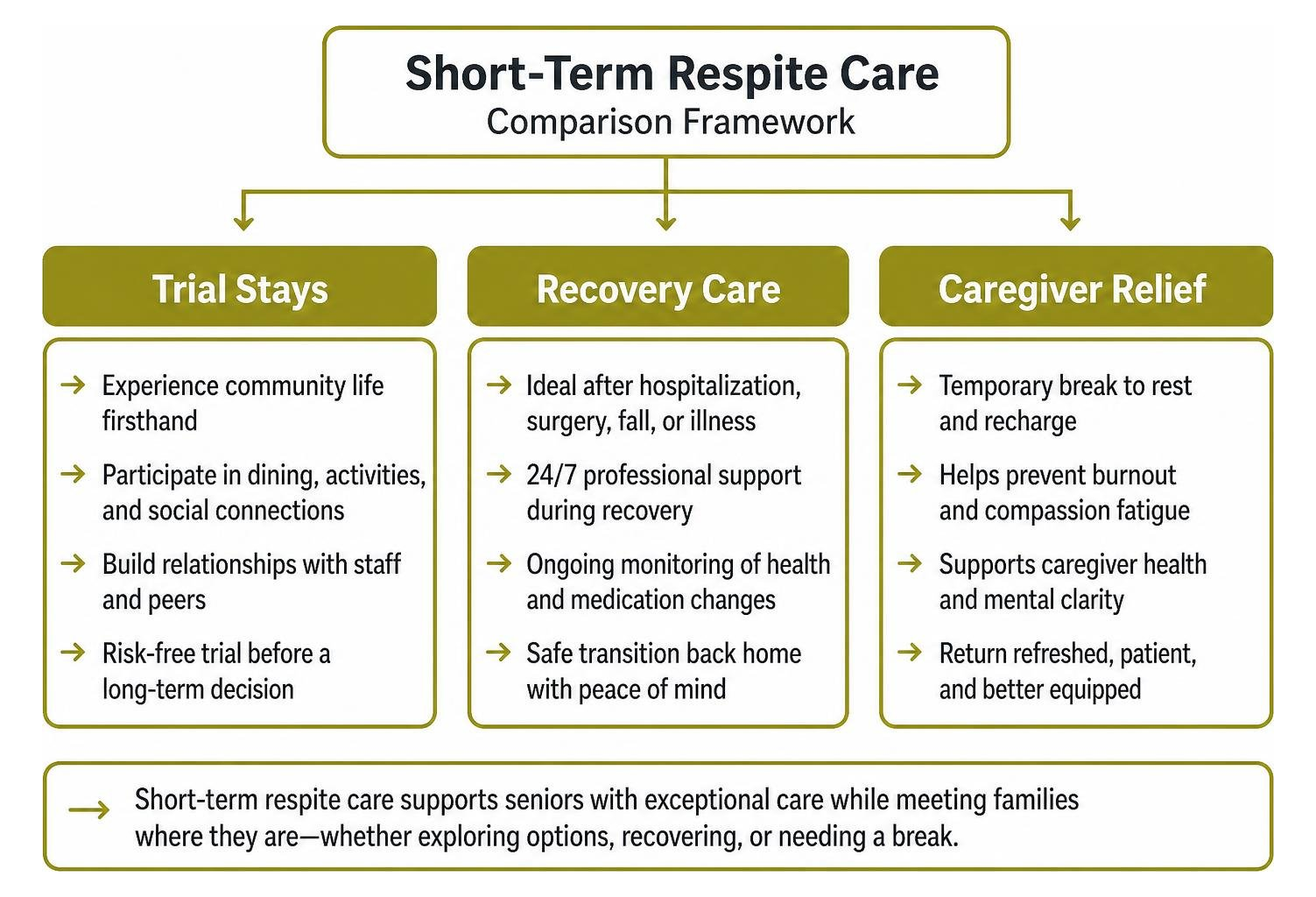
For family caregivers, stepping away for a short period is essential to prevent chronic burnout. Taking proactive time to recharge your energy while ensuring safe care for your loved one helps maintain your own physical health and mental clarity. It creates a sustainable caregiving rhythm where you return refreshed, patient, and better equipped to provide care. Planned respite can also reduce the risk of caregiver depression, sleep deprivation, and social isolation, all of which are common when caregiving responsibilities continue without interruption.
Senior Living Trial Runs and Recovery Stays
Respite care serves multiple practical purposes beyond planned vacations. One common use is post-hospitalization rehabilitation and recovery. After surgery, a fall, or a sudden illness, returning directly home can be overwhelming for both the senior and their family. A transitional stay provides a supportive bridge where health vitals, medication changes, and physical recovery are supervised 24/7 before returning home. This type of short-term residential care can help reduce hospital readmissions by giving seniors time to regain strength, mobility, and confidence in a structured environment.
Additionally, temporary stays offer a risk-free “trial run” for seniors and families contemplating permanent residential placement. Moving into an assisted living or specialized memory care community is a major milestone. A short stay allows your loved one to experience community life firsthand—participating in dining, building connections with staff, making new friends, and joining daily activities—without the pressure of a long-term commitment. Families often find that this low-commitment experience makes the eventual transition to permanent care feel less uncertain and more familiar.
Minimum Stay Requirements and Length of Care
The length of a respite stay varies based on individual family needs and community policies. Some community adult day programs offer single-day care, while residential communities typically accommodate stays lasting from a few days to several weeks or months. Overnight and weekend stays are also available in many settings, giving caregivers flexibility for short trips, personal appointments, or simply a restful break at home.
Many residential and memory care settings require a minimum stay, often ranging from 7 to 30 days. These minimum duration requirements ensure continuity of care, allowing the clinical team to thoroughly understand your loved one’s daily routine, personal history, and behavioral nuances while giving the resident adequate time to settle comfortably into their new surroundings. Longer stays may also be arranged when a caregiver needs extended recovery time or when a family is using the stay as a more complete trial of community life.
How to Choose the Best Short Term Respite Care for Elderly Near Me
Finding the right care partner involves assessing physical safety, staff qualifications, and the overall atmosphere of the setting. When touring communities in your area, consider both in-home options and residential communities to determine what matches your family’s situation.
| Feature / Consideration | In-Home Respite Care | Residential Respite Care |
|---|---|---|
| Primary Setting | Senior’s personal home | Purpose-built residential community |
| Staffing & Supervision | Single aide on scheduled shift | 24/7 team with clinical oversight |
| Social Opportunities | One-on-one companionship | Group activities, events, and peer interaction |
| Dining & Nutrition | Prepared by aide or pre-made | Freshly prepared, restaurant-style dining |
| Safety Features | Limited to existing home setup | Emergency pull cords, secure exits, single-level design |
| Best Suited For | Short daytime relief; minimal care needs | Comprehensive care, dementia support, trial stays |
Key Facility Amenities and Specialized Memory Support
When touring residential communities, pay close attention to environmental design and clinical capabilities:
- Thoughtfully Designed Living Spaces: Look for private, fully furnished suites equipped with accessible walk-in showers and easy-to-reach emergency call systems. Single-story floor plans without confusing elevator banks help minimize fall risks and disorientation.
- Dementia-Informed Staff: For seniors experiencing Alzheimer’s disease or related dementias, verify that caregivers possess specific training in redirecting behaviors, managing sundowning, and fostering cognitive engagement.
- Culinary Quality: Dining should be a highlight of the day. For example, our boutique community pairs specialized memory care with an on-site culinary partnership with Giorgio’s Italian Grill, delivering fresh, gourmet meals tailored to individual dietary textures and nutritional needs.
- Low Staff-to-Resident Ratios: Smaller boutique settings allow team members to learn subtle personal preferences, such as how someone takes their morning coffee or which soothing playlist helps them unwind in the evening.

How Do I Find Short Term Respite Care for Elderly Near Me on Short Notice?
Caregiver emergencies happen—whether due to sudden family illness, mandatory travel, or unexpected home repairs. When you need immediate placement, speed and clear communication are essential.
Start by contacting local memory care communities directly to check immediate bed availability. In urgent situations, learning how families handle finding the best respite care short-term stay near me on short notice will help you streamline paperwork. You can also utilize national databases like the ARCH National Respite Network or the Family Caregiver Alliance’s CareNav system to identify local organizations that maintain emergency respite lists.
The Financials: Costs, Insurance, and Payment Assistance
Understanding the cost structure of temporary care helps families plan effectively. Residential respite care is generally billed as an all-inclusive daily rate or a flat monthly rate covering accommodation, three meals daily, utilities, laundry, and personal assistance. According to the Administration for Community Living, respite care is one of the most frequently requested support services among family caregivers, yet many families are unaware of the payment options available to them.
While rates vary depending on geographic region and the level of medical or memory support required, families can review our guide to breaking down the true cost of short-term respite care to budget accurately.

Payment Options and Veteran Benefits
- Private Pay: The majority of short-term residential stays are funded out-of-pocket through family savings or personal funds.
- Long-Term Care Insurance (LTCI): Many comprehensive policies include allowances for short-term residential respite care or adult day services. Check your policy’s elimination period and daily benefit limits.
- Veterans Aid and Attendance: Qualified veterans and surviving spouses may apply VA pension benefits toward respite care. The VA often covers up to 30 days of respite per calendar year to relieve family caregivers.
Medicare, Medicaid, and Public Benefit Options
Standard Medicare Part A and Part B do not cover short-term residential care or assisted living room and board. However, there is a specific exception: if an individual is enrolled in the Medicare Hospice Benefit, Medicare covers up to five consecutive days of inpatient respite care at an approved facility to give their primary caregiver relief.
Medicaid coverage for respite care varies significantly by state through Home and Community-Based Services (HCBS) waivers. In addition, organizations like the National Council on Aging (NCOA) help seniors navigate public assistance programs, having submitted over $668M in benefit applications to support healthier, more secure aging. Families can also contact their local Area Agency on Aging for guidance on state-specific respite vouchers, caregiver grants, and other community-based funding resources.
Frequently Asked Questions About Temporary Senior Care
What is the typical duration for short term respite care for elderly near me?
Respite stays range from a single weekend to 30, 60, or 90 days. Stays can often be extended if a caregiver’s recovery takes longer than anticipated, provided the community has continued bed availability and can meet the resident’s evolving care level.
What items and medical records should be packed for a respite stay?
Communities provide furnished suites, so you only need to bring personal necessities:
- Current medication list and prescriptions in original pharmacy packaging with physician orders.
- Comfortable clothing, non-slip footwear, and personal toiletries.
- Familiar comfort items, such as family photos, a favorite blanket, or personal music devices.
- Legal and medical documents, including healthcare directives, power of attorney, and emergency contact details.
Can respite care accommodate seniors living with advanced dementia or Alzheimer’s?
Yes. Dedicated memory care communities are built specifically for individuals living with cognitive changes. They feature secured perimeters to prevent wandering, structured daily schedules to reduce anxiety, and sensory-based engagement activities tailored to each stage of memory loss.
Conclusion
Caregiving is an act of deep dedication, but maintaining your own health and peace of mind is vital for providing the best support. Leveraging temporary professional care ensures your loved one stays engaged, safe, and socially connected while giving you time to recover.
At Villa Toscana Memory Care in Mountain View, California, our family-owned community combines specialized, 24-hour dementia care with an innovative living environment and exceptional on-site culinary dining. To explore your family’s temporary and long-term care options, read our guide on everything families need to know about short-term respite care or reach out to schedule a private tour today.