
Why Dementia Care Awards Matter to Families
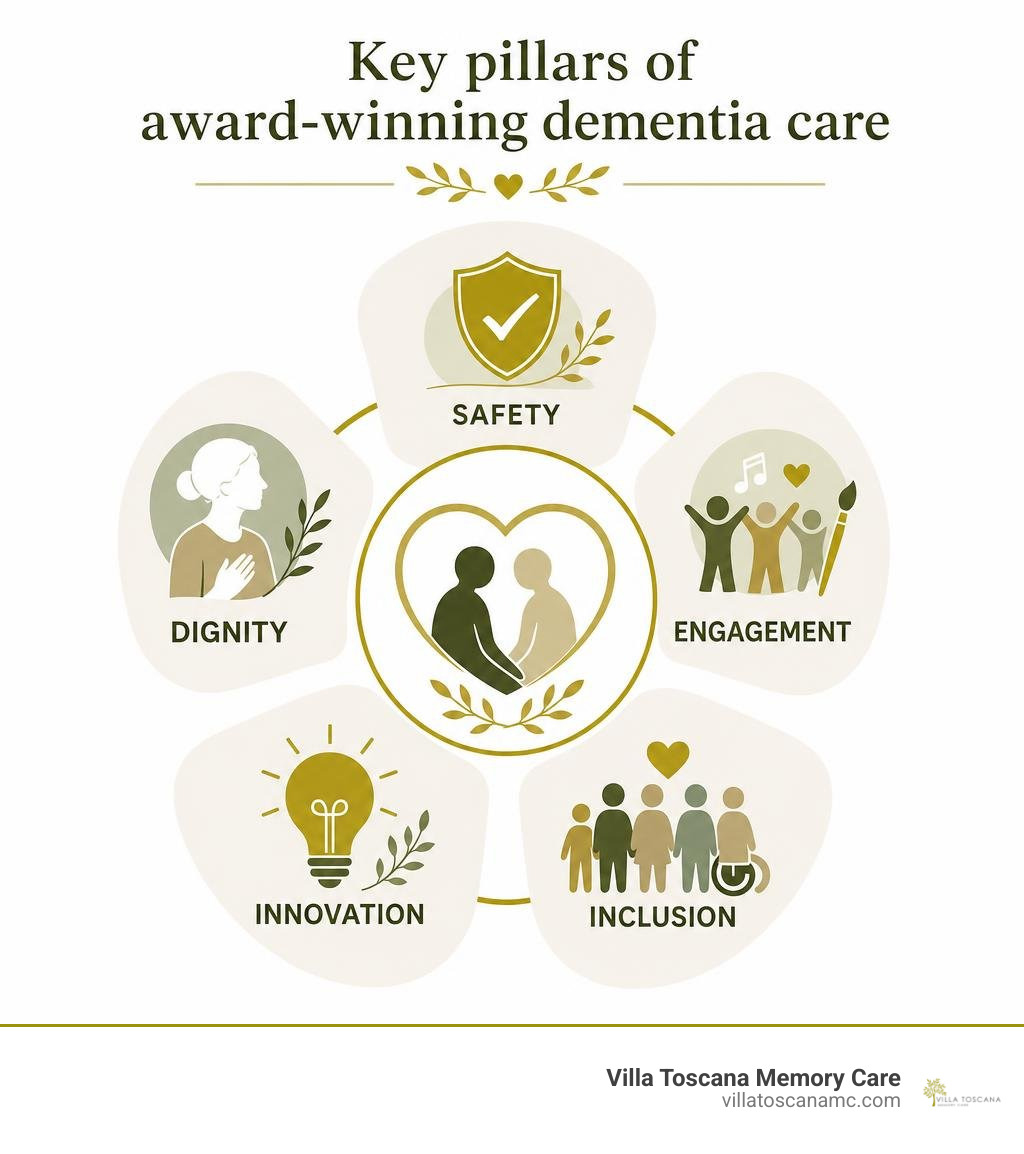
The best dementia care awards do more than celebrate a provider or employee. They show what modern, high-quality support can look like: safe care, trained teams, meaningful activities, respect for personal choices, and clear partnership with families.
Awards may recognize residential memory care, home care, nursing teams, community programs, technology, nutrition, inclusive services, and people living with dementia or caring for someone they love. For families comparing care options, these themes can offer a useful checklist of what to ask about.
Recent recognition programs increasingly highlight care that is:
- Person-centered, shaped around each person’s history, routines, and preferences
- Safe without being restrictive, balancing independence with thoughtful support
- Engaging, through music, art, movement, food, and intergenerational activities
- Innovative, using tools that can support sleep, pain assessment, communication, and fall prevention
- Inclusive, serving people and families across cultures, ages, abilities, and care settings
An award is not a guarantee that a community is the right fit for every family. But the practices these programs honor can help adult children look beyond attractive buildings and ask the questions that matter most: Will my parent be known as a person? Will they have purpose and connection? Will our family receive honest, consistent communication?
This guide explores the ideas, people, and care standards behind today’s most meaningful dementia care recognition.
Major Categories Recognized Across Modern Dementia Care Awards

Modern recognition schemes provide a structured look at how memory care has evolved. Rather than evaluating a community merely as a generic senior facility, industry bodies look at specific care metrics and specialized environments. In many national ceremonies, such as the National Dementia Care Awards, care homes must demonstrate that 70% or more of their resident population lives with a cognitive diagnosis to qualify for dedicated care community categories.
As highlighted when the Winners of the Dementia Care Awards 2026 Announced! showcase went live, excellence spans far beyond administrative oversight. Recognition focuses on frontline professionals, tailored culinary programs, interdisciplinary support, and purposeful physical spaces.
Frontline Caregivers and Specialist Nursing Teams
At the core of every high-performing memory care community are the caregivers, registered nurses, and clinical specialists who build daily trust with residents. Awards frequently honor specialized leaders like Admiral Nurses and dedicated dementia care managers who mentor their staff on non-verbal communication and behavioral empathy.
Judges look closely at workforce development programs that embed foundational principles—such as the 6Cs (care, compassion, competence, communication, courage, and commitment)—into daily routines. Our belief is that when Our Team receives continuous training, empathetic coaching, and consistent scheduling, turnover decreases and residents experience deep emotional safety.
Creative Nutrition and Dining Experience
Dining in memory care is much more than food service; it is a vital therapeutic touchpoint that preserves dignity and independence. Major recognition programs evaluate creative nutrition categories based on how culinary teams handle the nuances of cognitive decline.
- IDDSI Texture Compliance: Ensuring modified meals follow the International Dysphagia Diet Standardisation Initiative without sacrificing visual appeal or flavor.
- Fortified Mini-Meals: Providing energy-dense, nutrient-rich smaller portions for individuals who find large meals overwhelming.
- Sensory Hydration: Developing fruit-infused waters and finger-food snacks to encourage continuous fluid intake and prevent dehydration.
- Resident-Led Menus: Partnering with dietitians, families, and residents to incorporate familiar cultural recipes and comfort foods.
Dementia-Friendly Environmental Architecture
The physical layout of a community directly shapes mood, safety, and cognitive ease. Awards programs evaluate whether architectural choices soothe sensory overload while encouraging purposeful movement.
Winning environments feature:
- Acoustic Management: Sound-absorbing materials that soften ambient noise and clarify conversational speech.
- Circulation and Wayfinding: Intuitive walking loops with visual cues and memory shadowboxes outside suites to minimize confusion.
- Secure Natural Spaces: Sensory gardens featuring non-toxic flora, textured paths, and natural sunlight that helps regulate circadian rhythms.
We have seen how thoughtful physical architecture elevates daily living, earning industry Awards that validate how specialized design keeps residents calm, safe, and oriented.
Key Breakthroughs Celebrated in Recent Dementia Recognition Programs
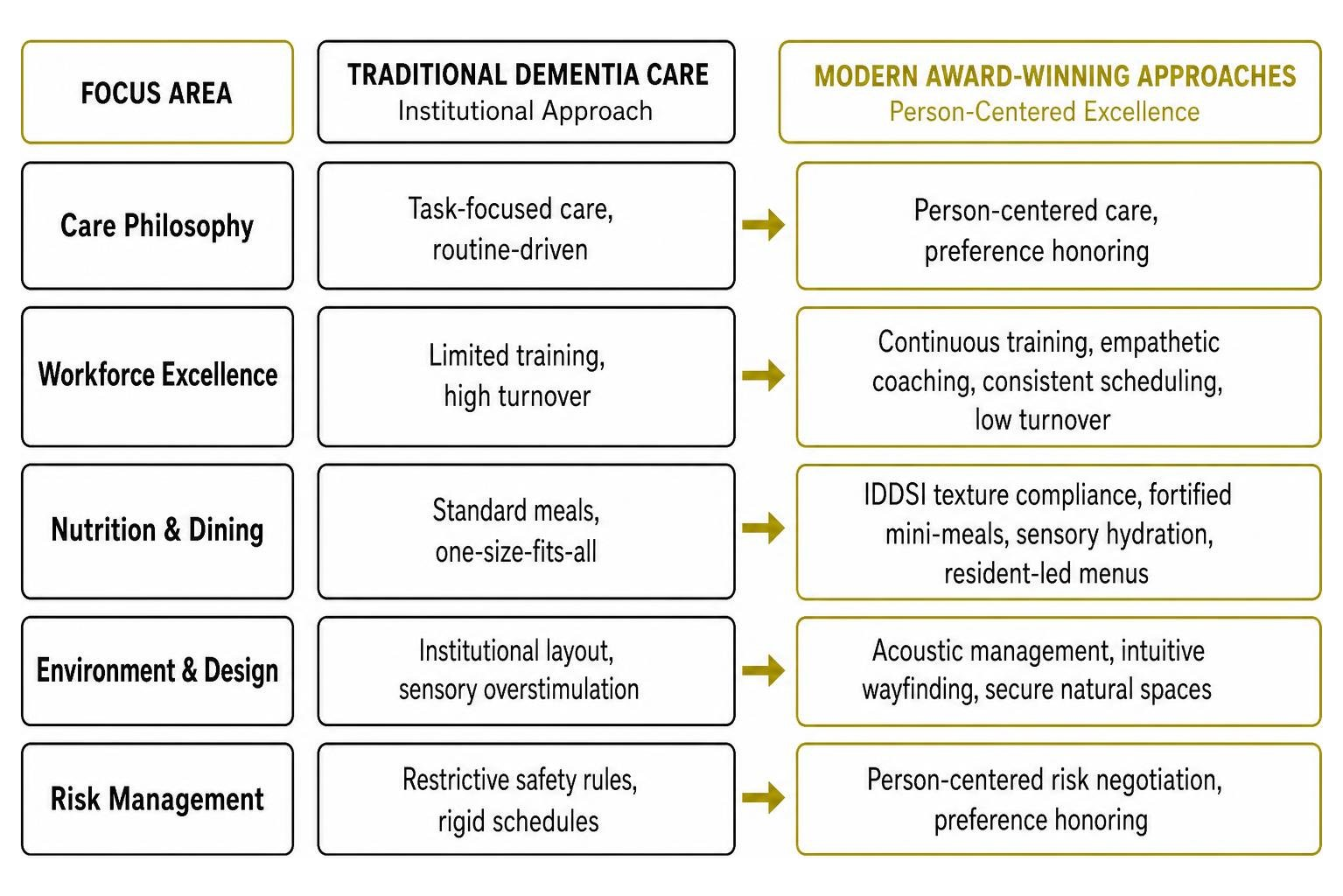
The shift from institutional care to person-centered support has transformed memory care practices over the past decade.
| Focus Area | Traditional Institutional Approach | Award-Winning Modern Practice |
|---|---|---|
| Risk Management | Restrictive safety rules, rigid schedules | Person-centered risk negotiation, preference honoring |
| Pain Identification | Subjective observation, verbal reporting | Non-verbal AI facial analysis, digital pain assessments |
| Dining Strategy | Standard plated meals, scheduled feeding times | IDDSI texturing, nutrient fortification, self-serve snacks |
| Nighttime Monitoring | Intrusive physical checks, room entries | AI sleep tracking, passive motion monitoring, fall detection |
| Daily Engagement | Passive television watching, generic crafts | Creative arts, intergenerational visits, sensory stimulation |
Technology and Clinical Excellence in Dementia Care Awards
The integration of non-invasive assistive technology represents one of the fastest-growing categories in modern awards. These tools provide objective data without compromising resident dignity.
For instance, digital non-verbal pain assessment apps use facial recognition to identify subtle muscle movements associated with discomfort in residents who cannot verbally express pain. Over 8.8 million digital pain assessments across more than 1,800 facilities worldwide have demonstrated how early pain detection prevents agitation and reduces unnecessary antipsychotic medication.
Similarly, optical and acoustic AI monitoring systems track nighttime movement and sleep cycles. By identifying agitation or unsafe bed departures before a fall occurs, these systems can improve resident sleep quality by up to 50% and reduce falls by as much as 63%, while giving care teams 30% more time to focus on direct care. These clinical advancements guide our approach to luxury Services tailored to complex needs.
Person-Centered Risk Engagement and Autonomy
A major development in gerontological nursing honors the balance between resident independence and physical safety. When Dr. Liza Behrens honored with national innovation award for dementia care program recognition was celebrated for her DIGNITY framework, it highlighted how crucial choice is for cognitive health.
Her work shows that honoring daily preferences—such as when a resident wants to get dressed, their favorite meal choices, or how they move around the community—directly reduces behavioral symptoms like anxiety and depression. Rather than defaulting to rigid safety restrictions, modern award winners use collaborative risk negotiation to honor individual choice while keeping residents safe.
Arts, Lifestyle, and Intergenerational Engagement
Award panels consistently recognize that life does not end with a dementia diagnosis. Dynamic lifestyle programs focus on cognitive stimulation, creative expression, and intergenerational joy.
Whether it is partnering with local preschools for weekly music sessions or exploring sensory arts, proactive Activities rekindle fond memories and foster real social connection. Families can see practical examples of how creative pursuits maintain cognitive function in our guide on Making Moments Matter: Stimulating Activities for Seniors with Memory Loss.
The Societal Impact of Recognizing Lived Experience and Advocacy
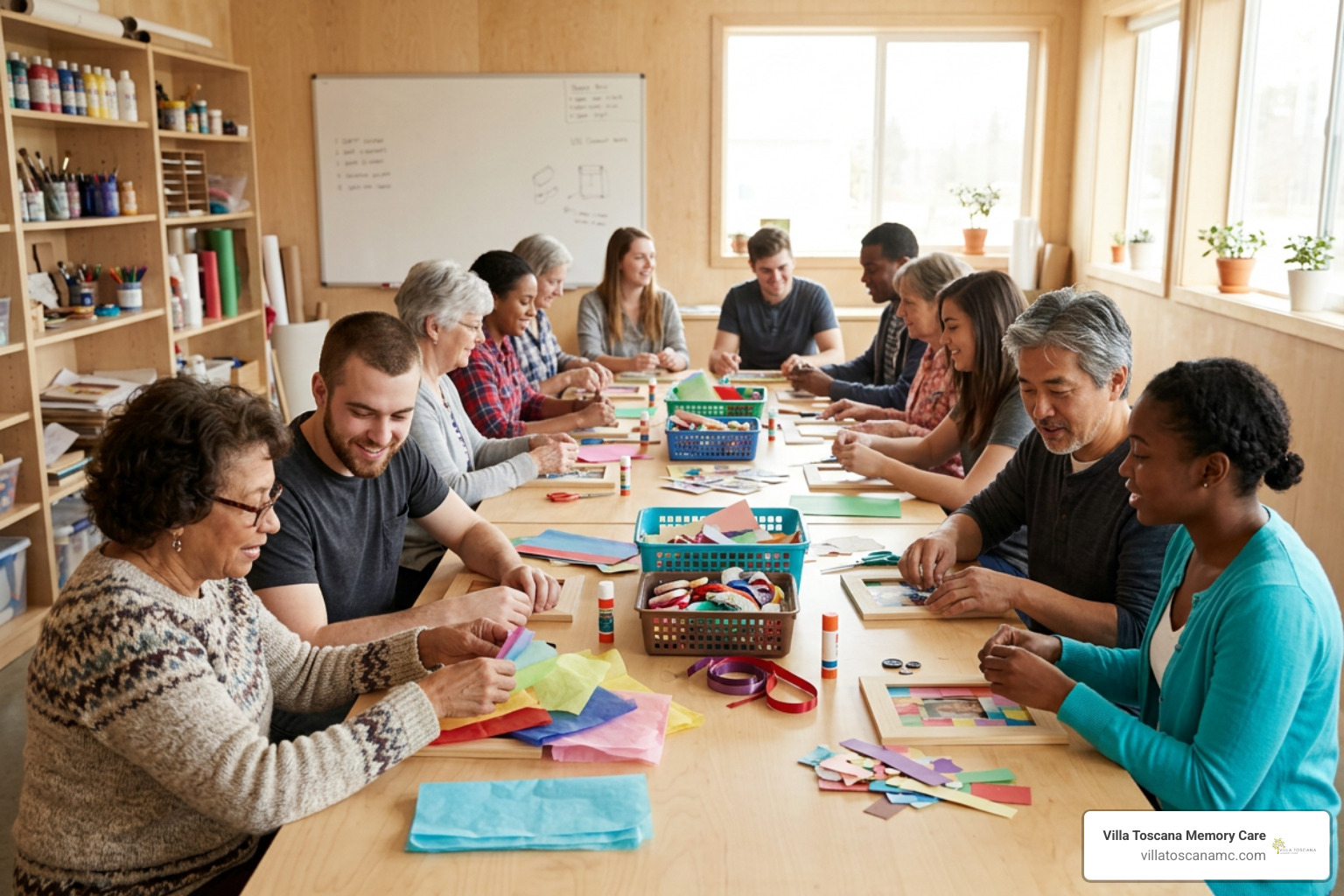
Beyond institutional excellence, modern awards recognize that effective dementia care happens within the broader community. Award schemes celebrate co-production, grassroots advocacy, and inclusive outreach.
Spotlighting Unpaid Family Carers and Advocates
Unpaid family carers provide billions of hours of vital care each year. Recognizing their contributions on a national level highlights the urgent need for accessible respite and community resources.
Awards celebrate family members who turn personal caregiving challenges into grassroots advocacy groups, specialized sporting programs for people with young onset dementia, and public education campaigns. Incorporating people with lived experience onto award judging panels ensures that evaluations reflect what truly matters to families navigating cognitive decline.
Expanding Equity and Inclusive Care for Diverse Communities
Cognitive health challenges affect every demographic, yet cultural barriers can sometimes hinder access to diagnosis and support. Modern awards honor organizations that tailor their services to diverse communities through multilingual care teams, culturally familiar dining options, and accessible community hubs.
Promoting equity means creating programs where everyone feels understood, valued, and supported in their overall Health & Wellness.
Benchmarking Excellence: How to Evaluate Award-Winning Care
When evaluating a memory care community, awards provide a helpful starting point, but families should know how to assess what happens beyond the trophy case.
How Organizations Nominate and Win Dementia Care Awards
Winning a respected industry award requires extensive documentation and real-world results. Independent judging panels—comprising clinicians, academics, and family advocates—evaluate entries against strict criteria:
- Quantitative Health Outcomes: Demonstrable reductions in fall rates, medication reliance, and hospital transfers.
- Staff Stability and Training: Low caregiver turnover and ongoing certifications in dementia care best practices.
- Resident and Family Co-Production: Documented evidence that care plans and community programs are shaped directly by resident and family feedback.
- Innovation and Adaptability: Successful implementation of non-pharmacological therapies, smart technology, and specialized physical design.
Evaluating Industry Standards for Families
When touring memory care communities, use the principles behind award-winning standards as your guide:
- Observe Engagement: Are residents actively involved in meaningful pursuits, or are they sitting quietly in front of a television?
- Assess Dining Quality: Does the community offer varied, chef-prepared meals with dignified texture-modified options?
- Evaluate Staff Demeanor: Do team members interact warmly and patiently, using calm, person-centered communication?
- Check Environmental Design: Are common areas bright and quiet, with secure outdoor access and clear wayfinding cues?
Frequently Asked Questions About Dementia Care Recognition
What do judges look for when evaluating memory care programs?
Judges evaluate whether a provider delivers outcome-focused, person-centered support. They look for measurable data on resident well-being, staff retention, personalized dining approaches, non-pharmacological care interventions, and clear partnerships with family members.
Who is eligible to enter or receive national dementia honors?
Eligibility is broad across the care sector. It includes residential memory care communities, nursing homes, home care agencies, specialized dementia nurses, chefs, activity coordinators, technology creators, architectural designers, unpaid family caregivers, and individuals living with dementia who advocate for the community.
How do award-winning practices translate into daily resident well-being?
Award-winning methods directly improve daily life by creating predictable, soothing routines that minimize agitation. By using objective pain monitoring, specialized acoustic architecture, and engaging lifestyle programming, residents sleep better, stay mobile, maintain their nutritional health, and feel a genuine sense of belonging.
Conclusion
The innovations celebrated across today’s dementia care landscape illustrate how compassion, clinical excellence, and thoughtful design can transform the experience of memory loss. By celebrating person-centered risk negotiation, non-invasive technology, creative nutrition, and inclusive community advocacy, these honors highlight the gold standard of modern memory support.
At Villa Toscana Memory Care, we embody these award-winning principles every day. Located in Mountain View, CA, our family-owned community combines specialized, 24-hour trained care with an innovative architectural design and high-quality dining through our on-site partnership with Giorgio’s Italian Grill. We invite you to tour our community, meet our compassionate team, and experience how dedicated, person-centered memory care brings peace of mind to the entire family.