
Everything Families Need to Know About Short Term Respite Care
Short-Term Respite Care Gives Families Time to Recharge
Short-term respite care provides temporary, supervised care for a loved one while a family caregiver takes time to rest, work, travel, attend appointments, or handle an emergency. It may last a few hours, a day, overnight, or several weeks. Care can happen at home, in an adult day program, or in a residential memory care community.
For adult children caring for a parent with dementia, respite is not stepping away from responsibility. It is a practical way to protect your health while making sure your parent has support, structure, and supervision. This matters: research suggests roughly 20% of caregivers experience depression, and ongoing stress can make caregiving harder for everyone.
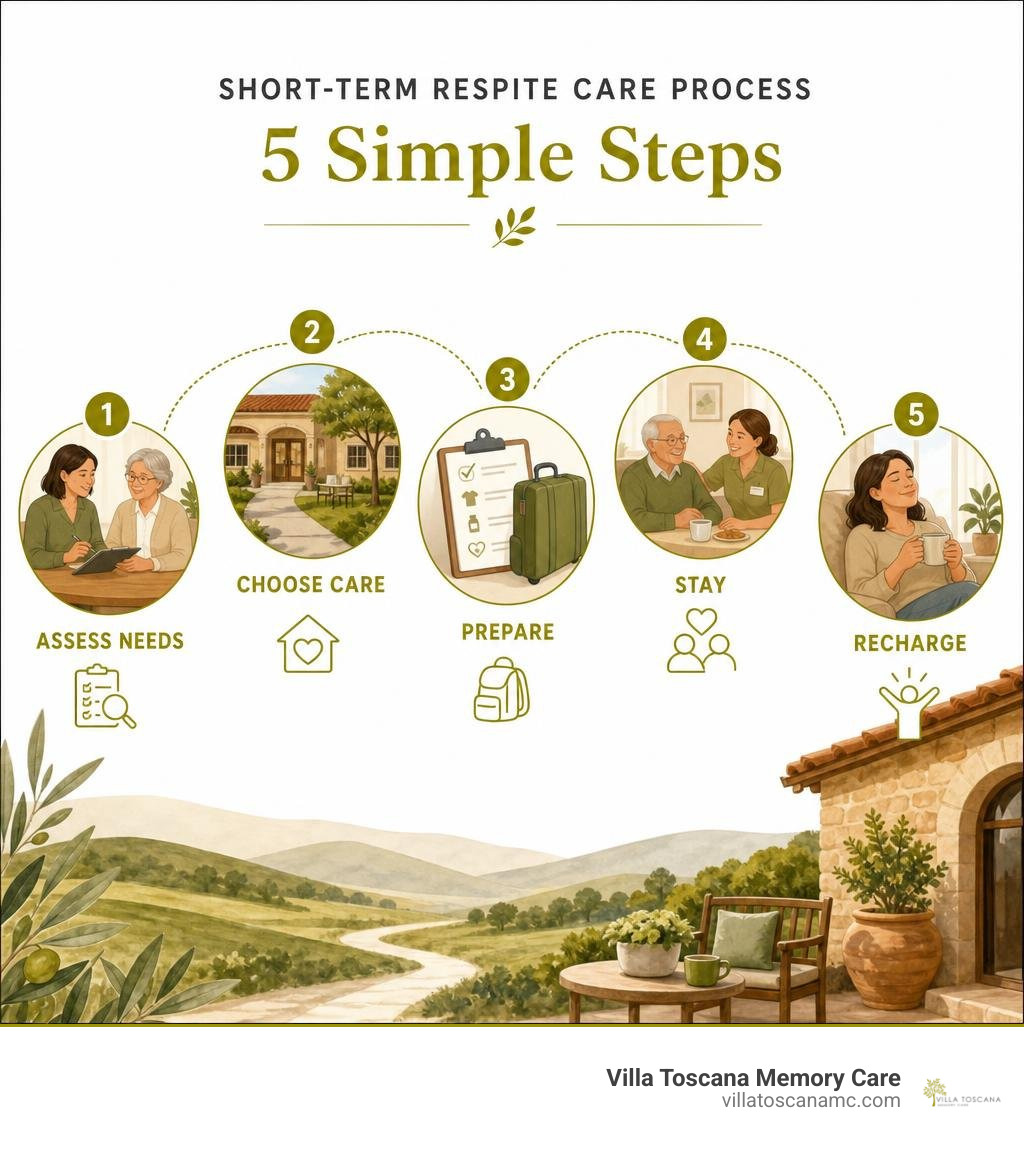
A short stay can also help a parent experience a new setting, meet staff, and take part in familiar routines before a longer stay is ever needed. The best option depends on their care needs, comfort level, mobility, medical needs, and dementia-related safety concerns.
What Is Respite Care and Who Benefits Most?
At its core, respite care offers a safe harbor for primary caregivers and their loved ones. Whether managing chronic illnesses, physical disabilities, or cognitive decline, day-to-day caregiving requires immense emotional and physical stamina. Respite services step in to assist with essential activities of daily living (ADLs)—such as bathing, dressing, meal preparation, and medication management—while primary caregivers take necessary time away.

Far from being a sign of surrender, seeking temporary relief is an active step toward sustainable care. As highlighted by the American Cancer Society in their guide to finding respite care, planning breaks helps prevent full-scale caregiver collapse. Respite also serves as a low-pressure trial stay, allowing families to experience professional care environments firsthand.
Benefits for Family Caregivers
Caregiving without breaks is like driving a car without ever stopping for gas; eventually, the engine stalls. The demands on primary caregivers often lead to physical exhaustion, isolation, and sleep deprivation. Respite provides tangible benefits:
- Burnout Prevention: Stepping away breaks the relentless cycle of daily caregiving stress.
- Physical Recuperation: Catch up on sleep, attend your own medical checkups, and regain your strength.
- Time for Personal Priorities: Complete work tasks, run errands, or spend time with other family members without distraction.
- Emotional Wellness and Guilt Reduction: Taking time to recharge refreshes your patience and mental clarity, helping you return to your loved one with renewed warmth and energy.
Benefits for Care Recipients
Respite care is equally valuable for the person receiving care. Rather than feeling like a disruption, a well-planned stay opens doors to fresh experiences:
- Social Stimulation: Interacting with compassionate staff and peers combats the isolation that often accompanies aging at home.
- Dedicated Life Enrichment Activities: Guests participate in dedicated life enrichment activities, including art projects, music therapy, light exercise, and cognitive games tailored to their abilities.
- Consistent Professional Supervision: Round-the-clock professional attention ensures medications are administered on time and safety needs are continuously met.
- Predictable, Structured Routines: Consistent daily schedules provide comfort, security, and a healthy sense of purpose.
Understanding Respite Care Short Term Options and Settings
Short-term care is not a one-size-fits-all model. Depending on your loved one’s level of independence, health conditions, and your scheduling needs, several environments are available:
| Setting | Best For | Typical Duration | Level of Medical / Safety Support |
|---|---|---|---|
| In-Home Care | Low-to-moderate needs; seniors who prefer staying in their own home | A few hours to full daytime shifts | Basic personal care, companionship, light homemaking |
| Adult Day Centers | Socialization during working hours; mild-to-moderate support needs | Daytime hours (e.g., 8 AM – 5 PM, Mon–Fri) | Group activities, meals, basic medication reminders |
| Residential Assisted Living / Memory Care | Moderate-to-advanced needs, 24/7 safety oversight, dementia care | Overnight, several days, or multiple weeks | 24-hour trained staff, secure environments, comprehensive ADL & memory support |
In-Home vs. Facility-Based Respite Care Short Term Stays
Choosing between in-home assistance and a residential community comes down to the depth of care required. In-home aides visit your residence for scheduled hourly blocks. While this keeps your loved one in familiar surroundings, high turnover in the home care industry can sometimes lead to scheduling gaps—especially with the demand for home health and personal care aides projected to grow by 21% through 2033.
Facility-based residential stays, on the other hand, offer complete 24/7 coverage. Guests enjoy comforting community amenities, private suites, chef-prepared dining, and around-the-clock teams ready to handle any sudden medical or behavioral need. Senior care specialists emphasize that residential short stays provide guests with a supportive, vacation-like change of scenery alongside essential physical accommodations.
Specialized Memory and Dementia Respite Care
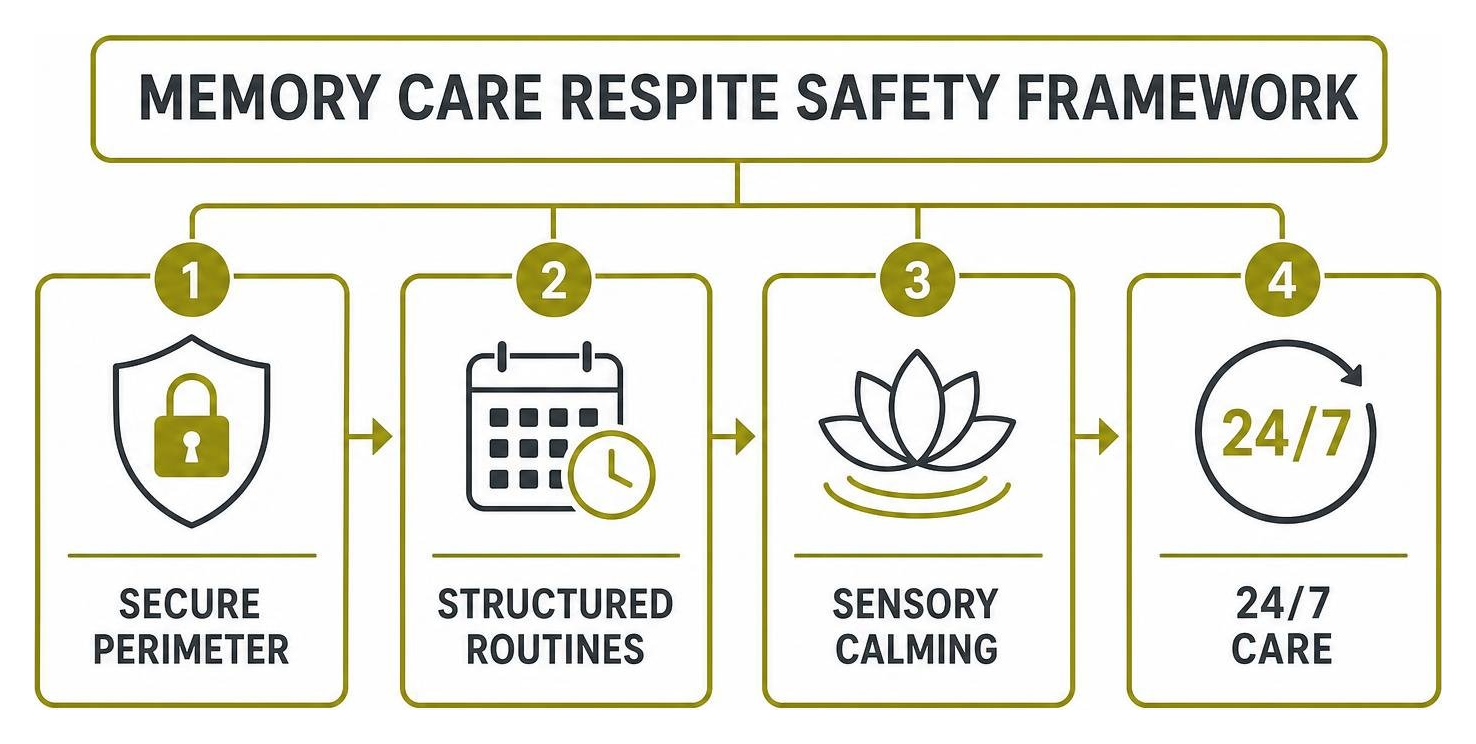
Caring for an individual with Alzheimer’s disease or related dementias introduces distinct challenges, including exit-seeking behaviors, sundowning, and communication difficulties. In specialized memory care environments, short-term respite is designed specifically to reduce sensory overload and minimize confusion.
Secure community layouts prevent wandering, while specialized staff use gentle redirection and sensory engagement techniques to create a soothing, dignifying atmosphere.
Financial Guide: Paying for Respite Care Short Term Services
Understanding the costs associated with temporary care allows you to budget effectively and explore public relief options before booking a stay.

Paying for Respite Care Short Term Services and Coverage Options
While many residential respite stays are funded out of pocket via private pay, several public and private programs can significantly lower expenses:
- Medicare Part A Hospice Respite: Traditional Medicare strictly covers respite care when tied directly to the Part A hospice benefit, providing up to 5 consecutive days of inpatient care in a Medicare-certified facility (usually with a modest 5% coinsurance payment).
- The Medicare GUIDE Model: Through the Guiding an Improved Dementia Experience (GUIDE) Model, Medicare reimburses participating providers up to $2,500 annually per eligible dementia patient to cover dedicated respite services.
- Veterans Affairs (VA) Benefits: Eligible veterans enrolled in VA healthcare may receive coverage for up to 30 days of respite care in an approved facility per calendar year.
- Medicaid HCBS Waivers: Many state Home and Community-Based Services (HCBS) waivers provide voucher programs to cover planned or emergency respite care for qualifying low-income seniors.
- Older Americans Act (Title III-E): Administered through local Area Agencies on Aging (AAAs), the National Family Caregiver Support Program provides grant funding and low-cost respite relief to family caregivers caring for adults aged 60 and older.
- Long-Term Care Insurance: Many comprehensive private long-term care policies include daily stipends that can be applied directly to short-term residential stays.
How to Choose a Quality Respite Provider and Plan Your Loved One’s Stay
Selecting the right environment requires careful observation. When vetting potential communities or in-home agencies, ask targeted questions:
- What are your staff-to-resident ratios during the day and overnight?
- How are care teams trained in dementia management and de-escalation?
- What is your protocol for administering daily medications?
- Do you require a pre-admission clinical assessment to tailor routines?
Planning for Emergency and Crisis Respite Care
Crises happen—whether a primary caregiver suffers a sudden illness, faces an urgent hospital admission, or encounters a family emergency. Trying to vet a care provider during an active crisis creates unnecessary stress.
To prepare, pre-certify your loved one with a preferred local memory care community ahead of time. Complete the initial health screening, keep copies of medical records readily accessible, and establish emergency contact protocols. Having these steps in place ensures a safe, swift transition whenever unexpected needs arise.
Transition Tips for a Smooth Respite Stay
Helping a parent settle into a short-term residential stay is smoother when approached with care and intention:
- Maintain Routine Continuity: Share your loved one’s detailed daily schedule, sleep habits, and food preferences with the care staff.
- Bring Familiar Comforts: Pack favorite clothing, family photo albums, a familiar blanket, and preferred toiletries to make their private suite feel like home.
- Stay Present for the Arrival: Spend time settling into the room together and enjoying a meal before saying a warm, positive goodbye.
- Partner with the Care Team: Trust our personalized memory care services to provide attentive, empathetic care, allowing you to step away with complete confidence.
Frequently Asked Questions About Short Term Respite Care
How long does a typical short-term respite stay last?
Short-term respite stays are flexible. They can range from a few hours during the day to overnight visits, a weekend, or several weeks. Most residential communities offer stays ranging from a few days to a month, providing primary caregivers sufficient time for travel, medical recovery, or personal rejuvenation.
Does Medicare pay for non-hospice short-term respite care?
Original Medicare Part A and Part B do not cover non-hospice short-term respite stays. However, relief is expanding through new initiatives like the Medicare GUIDE Model (offering up to $2,500 annually for eligible dementia patients) and select Medicare Advantage (Part C) plans that offer supplemental caregiver relief benefits.
How do I help my loved one adjust to respite care if they resist?
Resistance is natural when facing a change in environment. Frame the stay positively—perhaps as a brief wellness retreat, a temporary stay while household projects are completed, or an opportunity to enjoy chef-prepared dining and social events. Involve them in packing their favorite items, visit the community beforehand, and reassure them that their stay is temporary.
Conclusion
Caring for a loved one is one of life’s most meaningful responsibilities, but you cannot pour from an empty cup. Incorporating planned, short-term respite into your routine is not an indulgence—it is a cornerstone of sustainable, loving care.
At Villa Toscana Memory Care, our family-owned community combines specialized dementia support, 24-hour dedicated staff, and culinary dining in partnership with Giorgio’s Italian Grill to create an uplifting environment for our guests. Whenever you are ready to take a well-deserved breath, schedule a personalized visit with our team to explore how our short-term respite stays can support your family.