
Dementia Fall Prevention Starts With a Safer Daily Routine
Dementia fall prevention works best when families act on several risks at once: make walking paths clear and well lit, arrange a medication review, support strength and balance exercises, check vision and hearing, and use the right mobility aids and footwear. These steps should match the person’s abilities, routines, and dementia symptoms.
People living with dementia fall more often than other older adults. Memory loss, poor depth perception, slower reactions, changes in walking, and confusion in unfamiliar spaces can all make everyday hazards more dangerous. Research also links falls with slower gait speed, difficulty with daily tasks, depression, multiple medications, and other health conditions.
A fall is not an inevitable part of dementia. Proactive changes can protect independence and give caregivers more confidence at home. The goal is not to restrict every movement. It is to create a calm, easy-to-navigate space where a loved one can move safely with the support they need.
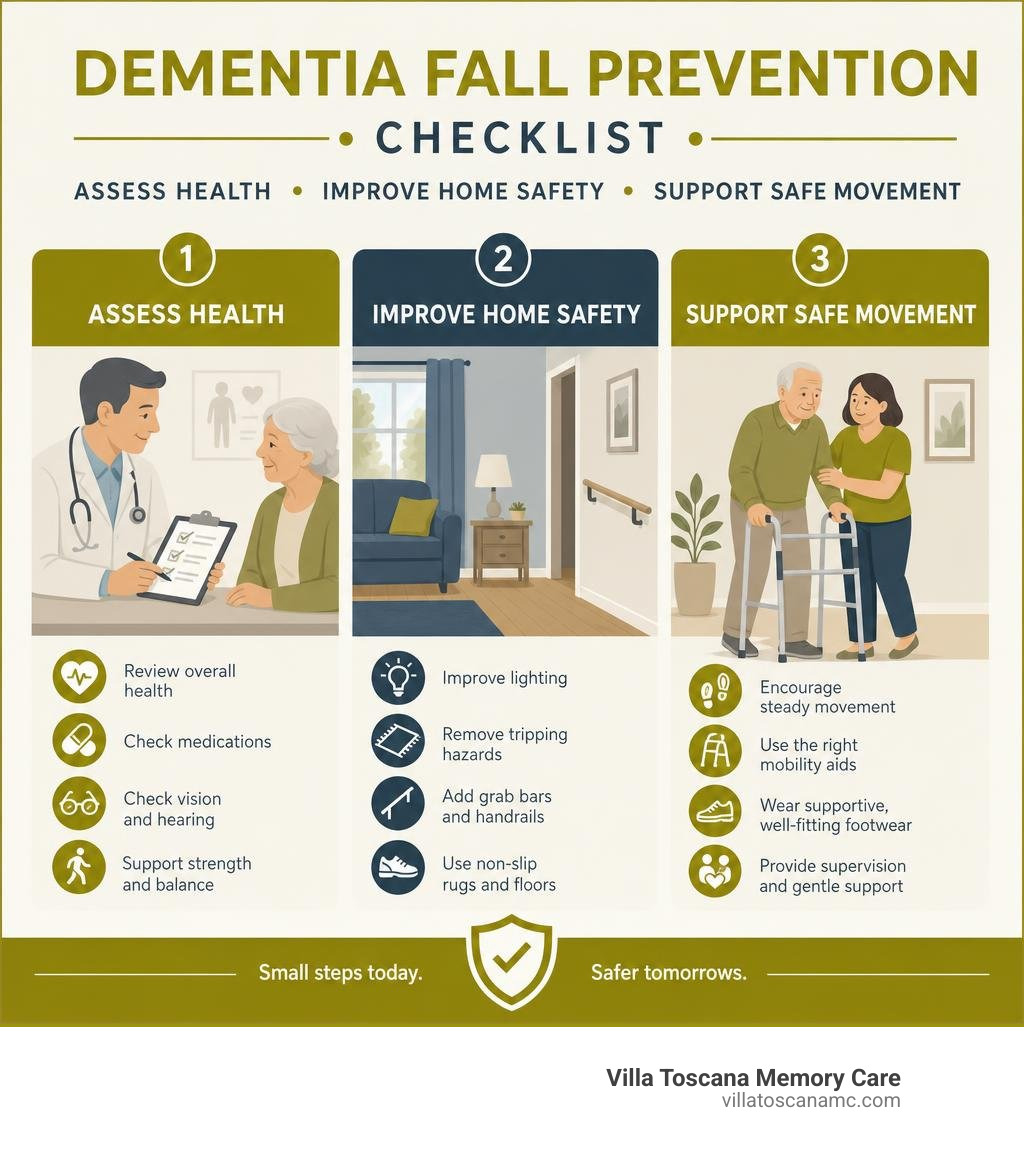
While roughly one in four older adults over 65 reports falling annually, the statistics for seniors living with cognitive decline are much more alarming. Older adults with dementia fall two to three times more often than cognitively healthy peers, with 60% to 80% experiencing at least one fall each year. Falls cause over 50% of accidental injuries and 39% of fatal injuries in the older population, making proactive prevention one of the most critical aspects of compassionate memory care.
Why Cognitive Decline Increases Fall Risk: Subtypes and Causes
To understand fall risk in dementia, we must look beyond basic muscle weakness. Walking safely requires complex brain processing: calculating spatial depth, sequencing motor steps, maintaining posture against gravity, and making quick balance corrections.
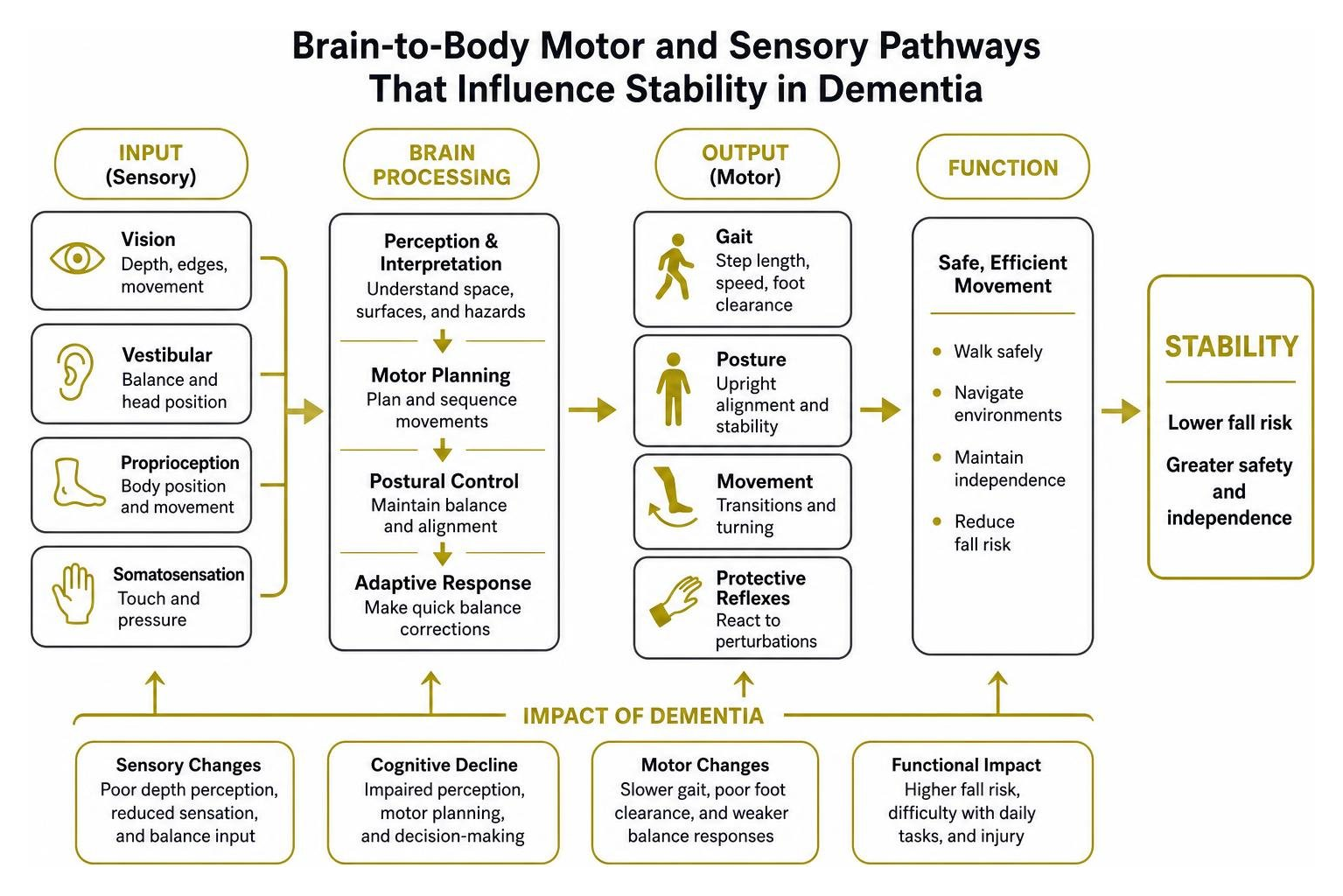
As cognitive decline progresses, several key physiological and perceptual changes compromise stability:
- Neurological gait alterations: Decreased step symmetry, variable stride lengths, and slower foot-clearing increase tripping risks.
- Visuospatial disorientation: The brain loses its ability to interpret shadows, depth, and edge boundaries, turning patterned rugs into perceived obstacles or flat floors into perceived drop-offs.
- Loss of motor planning (Apraxia): The automatic sequencing needed to sit down, stand up, or navigate around furniture breaks down.
- Restlessness and wandering fatigue: Pacing behavior can push an individual past physical exhaustion, causing sudden muscular collapse.
Clinical investigations confirm that fall incidence is not uniform across all memory disorders. Findings from the registry study on Personalised Prevention of Falls in Persons with Dementia demonstrate significant variations in fall frequency and underlying clinical risk drivers across diagnostic categories:
| Dementia Subtype | Estimated Fall Incidence | Primary Driving Clinical Risk Factors |
|---|---|---|
| Vascular Dementia (VD) | ~55% | Marked reductions in gait speed, physical ADL limitations, vascular comorbidity |
| Mixed AD / VD | ~51% | Combined executive dysfunction, physical weakness, balance deficits |
| Dementia with Lewy Bodies (DLB) | ~55% | Visual hallucinations, autonomic fluctuations, Cornell depression score elevation |
| Alzheimer’s Disease (AD) | ~32% | Visuospatial disorientation, progressive apraxia, loss of hazard awareness |
| Frontotemporal Dementia (FTD) | ~29% | Behavioral disinhibition, impulsive transfers, loss of executive planning |
Subtype Variations: Alzheimer’s, Vascular, and Lewy Body Dementia
Each dementia diagnosis shapes physical vulnerability in distinctive ways:
- Vascular Dementia: Frequently presents with a “lower-body parkinsonism” profile, characterized by magnetic or shuffling gait, high motor stiffness, and sudden focal motor weaknesses from vascular lesions.
- Dementia with Lewy Bodies (DLB): Combines parkinsonian rigidity with vivid visual hallucinations, marked attention fluctuations, and severe autonomic dysregulation that leads to sudden drops in blood pressure upon standing.
- Frontotemporal Dementia: While physical balance remains intact longer than in vascular conditions, behavioral changes present unique challenges. Exploring the unique symptoms of frontotemporal dementia reveals that impulse control issues and rapid, unassisted movements frequently lead to accidental falls.
The Interplay of Physical Frailty and Neuropsychiatric Symptoms
Physical decline rarely happens in isolation. Neuropsychiatric factors play a central role in fall mechanics:
- Depression and Mood Disorders: High depressive symptom ratings, as measured by the Cornell Depression Scale, consistently correlate with elevated fall rates. Depression saps physical energy, slows motor initiation, and reduces engagement in physical maintenance.
- Fluctuation Scores: Day-to-day cognitive and alertness swings (measured by tools like the MAYO fluctuation score) create unpredictable physical performance. A resident capable of steady walking at breakfast may struggle to transfer safely by dusk.
- Orthostatic Hypotension: Dysregulated autonomic systems cause blood pressure to plummet when shifting from lying to standing, inducing sudden lightheadedness.
Clinical Assessments and Strategies in Dementia Fall Prevention

A one-size-fits-all checklist cannot adequately safeguard someone living with memory loss. Global consensus outlined in the World guidelines for falls prevention and management for older adults highlights the necessity of multifactorial assessments and opportunistic case-finding to catch micro-changes before an accident occurs.
Evaluating Gait Speed, ADL Independence, and Physical Function
Clinicians and caregivers evaluate stability using standard, objective functional tests:
- The Four-Meter Walk Test (Gait Speed): Gait velocity is a strong independent predictor of fall outcomes. Fallers in memory studies demonstrate significantly lower average velocities (around 3.01 m/s) compared to non-fallers (3.36 m/s).
- Short Physical Performance Battery (SPPB): Combines balance testing, chair stands, and walking speed to score lower-extremity power and balance reserves.
- Physical Self-Maintenance Scale (ADL Scoring): Tracks an individual’s need for physical assistance with hygiene, toileting, and feeding. A declining ADL score signals heightened fall vulnerability during routine transfers.
Assessing Sensory Loss and Assistive Device Appropriateness
Preserving physical balance requires sensory inputs from vision, hearing, and proprioception:
- Sensory Deficits: Undiagnosed cataracts or presbycusis diminish environmental awareness. Regular optometrist visits and properly calibrated hearing aids restore sensory baselines.
- Assistive Device Fit: Handing a standard walker to an individual with mid-stage Alzheimer’s without professional guidance can increase hazard exposure. Cognitive deficits make braking, steering, and maneuvering multi-wheeled frames difficult. Occupational and physical therapy evaluations ensure that mobility equipment matches both the person’s physical and cognitive capacities.
Step-by-Step Environmental Adaptations for Home Safety
Modifying the physical living space creates a forgiving environment that compensates for declining spatial memory. Following evidence-based frameworks, such as the CDC Steadi home safety strategies, helps systematically eliminate physical trip hazards.
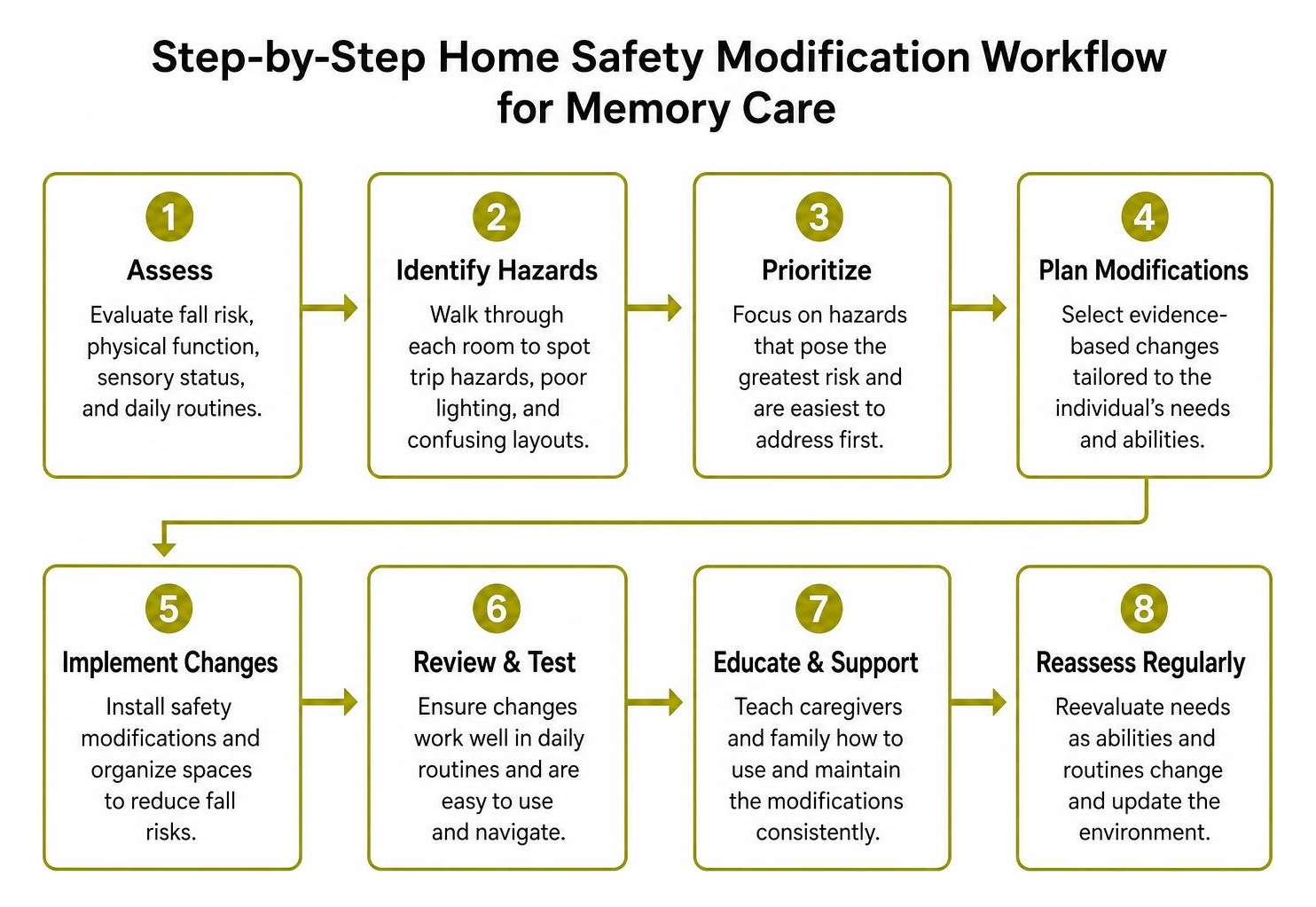
Room-by-Room Modifications for Dementia Fall Prevention

Targeted room updates reduce confusion and physical strain:
- Bathrooms:
- Install professionally anchored grab bars with non-slip textures beside the toilet and throughout the shower stall.
- Replace traditional tubs with curbless, walk-in showers with non-skid floors.
- Use a secure, high-contrast shower chair to reduce fatigue during hygiene routines.
- Living Rooms and Corridors:
- Remove loose rugs and runners, or permanently secure transitions with beveled thresholds.
- Secure electrical and medical cords behind furniture or run them through baseboard channels.
- Ensure furniture is weighted and sturdy so it does not shift if used for “furniture walking” balance support.
- Bedrooms:
- Keep the bed at a height where the individual’s feet rest flat on the floor while seated.
- Clear a direct, unobstructed path from the bed to the bathroom.
Lighting Optimization, Glare Reduction, and Visual Contrast Strategies
Visual clarity directly supports physical stability:
- Eliminate Glare and High Contrast Shadows: Harsh direct sunlight or reflective floor waxes create visual illusions that look like holes or barriers. Use matte flooring and diffuse, high-lumen LED lighting.
- Automated Night Lighting: Install motion-activated path lights along baseboards between bedrooms and bathrooms to assist during nighttime waking.
- Color Contrast Principles: A white toilet against a white tile floor disappears to a person with reduced contrast sensitivity. Installing a brightly colored toilet seat, contrasting grab bars, and clear pictorial door signage makes navigation intuitive.
Physical Exercise, Medication Review, and Sensory Health
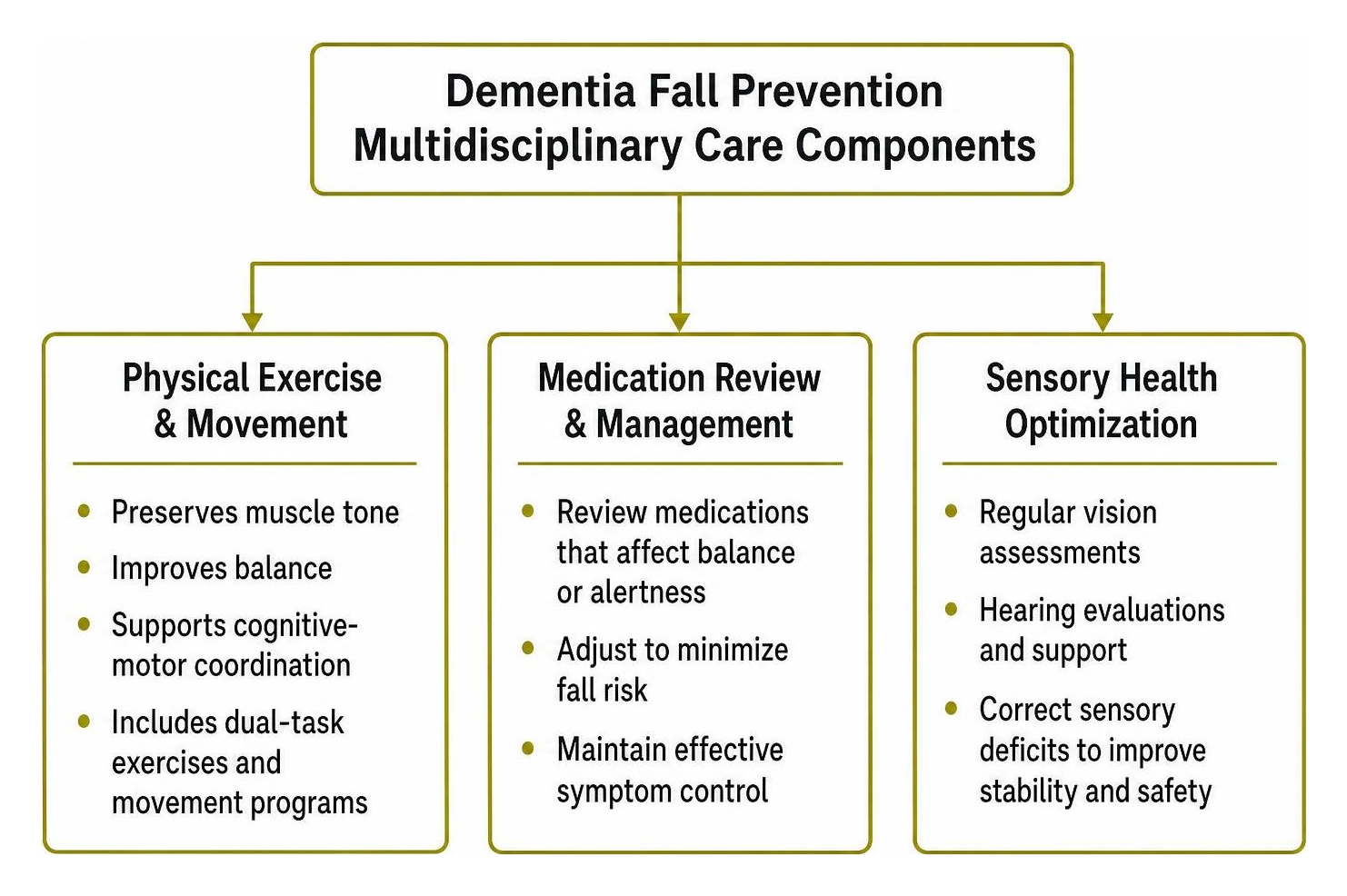
Physical conditioning, pharmacological balance, and sensory corrections form the medical foundation of ongoing fall mitigation.
Dual-Task Exercises and Movement Programs in Dementia Fall Prevention
Physical movement programs preserve muscle tone, balance, and cognitive-motor coordination. Prominent community-tested regimens include:
- The Otago Exercise Program: A structured physical therapy program focusing on lower-leg strength and progressive balance retraining, cutting fall rates by up to 35%.
- The LiFE (Lifestyle-integrated Functional Exercise) Program: Integrates balance challenges into everyday moments, reducing fall events by 31%.
- Combined Physical and Cognitive Training: Groundbreaking research on combined cognitive stimulation and fall prevention exercise illustrates that embedding seated and standing physical conditioning alongside cognitive engagement maximizes resident safety and participation.
- Structured Recreation: Participating in engaging memory loss activities—such as guided seated stretches, low-impact dance, and ball-toss games—promotes mobility without causing overwhelming stress.
As highlighted by a comprehensive meta-analysis on cognitive impairment exercise interventions, structured exercise produces medium-magnitude improvements in balance (SMD 0.66) and significant reductions in fear of falling (SMD -0.73), restoring confidence during daily routines.
Managing Polypharmacy, Psychotropic Burden, and Footwear
Medications remain one of the most common contributors to falls in older adults:
- Psychotropic and Sedative Burden: Antipsychotics, sleep medications, and benzodiazepines slow reaction times, cause drowsiness, and impair coordination. Regular reviews should focus on deprescribing or tapering unneeded psychoactive drugs.
- Cardiovascular Monitoring: Antihypertensive medications must be checked regularly for orthostatic hypotension.
- Supportive Footwear: Footwear should have firm, non-skid rubber soles, low heels, and secure Velcro closures. Walking in socks, smooth-bottom slippers, or poorly fitted shoes significantly increases slipping risks.
Immediate Post-Fall Protocols: Emergency Steps for Caregivers
When a fall happens, calm, structured intervention prevents secondary injuries and de-escalates panic.
First Response: Checking for Injury and Safe Transfer Techniques
- Pause and Breathe: Do not rush to lift the person up immediately. Rushing can worsen an undetected fracture or spinal injury.
- Conduct an Injury Sweep:
- Look for bleeding, swelling, or unnatural limb rotation (which may indicate a hip fracture).
- Check for signs of head impact or changes in responsiveness.
- Assess Pain Levels: Ask clear, simple questions or watch for non-verbal signs of pain like grimacing, guarding, or vocalizing.
- Determine the Transfer Approach:
- If injury is suspected: Keep the person warm and comfortable on the floor and call 911 immediately.
- If uninjured and alert: Place a sturdy chair next to them. Guide them to roll onto their hands and knees, place their hands on the chair seat, step one foot forward into a kneeling lunge, and push up to a seated position while you offer light support.
Incident Root-Cause Analysis and Long-Term Care Planning
Every fall offers valuable clues for preventing the next one. Document the circumstances thoroughly: What time did it happen? What shoes were they wearing? Had a medication changed recently? Were they rushing to the bathroom?
When fall risks outpace what can be safely managed at home, families often seek structured dementia caregiver support to build sustainable care routines. In cases where progressive memory loss requires around-the-clock environmental oversight, comparing memory care and skilled nursing environments helps families choose the right level of support, safety infrastructure, and social engagement.
Frequently Asked Questions About Fall Risks in Memory Loss
Why are individuals with dementia at higher risk of falling than other older adults?
Cognitive decline impairs visuospatial processing, motor planning, balance reactions, and hazard recognition. Combined with medication side effects, changes in walking patterns, and unpredictable day-to-day fluctuations, these issues make individuals with dementia two to three times more likely to fall than cognitively healthy seniors.
How can family caregivers safely manage nighttime wandering to prevent falls?
Install automated, glare-free motion path lights from the bed to the bathroom, ensure comfortable hydration and toileting before sleep, keep clutter off the floor, and use discrete door or bed sensors that notify caregivers when their loved one gets up.
Which common medications increase fall risks in people with memory loss?
Sedatives, sleep aids, antipsychotics, antidepressants, and high-dose blood pressure medications can cause drowsiness, muscle weakness, confusion, and orthostatic hypotension. Routine medication reviews with a physician help minimize unnecessary fall risks.
Conclusion
Proactive fall prevention for people with dementia is not about restricting movement or taking away independence. It is about creating a thoughtfully adapted environment, supporting steady physical mobility, and addressing clinical vulnerabilities early. By combining home safety updates, purposeful exercise, routine medication reviews, and attentive care, families can significantly lower fall risks.
At Villa Toscana Memory Care, we provide a safe, engaging, and luxury-style environment designed to support physical stability and daily comfort. From our specialized memory-care architecture in Mountain View, CA, to 24-hour assistance and restaurant-quality dining through Giorgio’s Italian Grill, we help residents maintain their dignity and independence in a secure, nurturing community.