
Dementia Care Support Starts With a Clear Plan
Dementia care support can reduce caregiver burden by matching your parent’s needs with the right help now: in-home assistance, adult day programs, respite care, caregiver groups, care coordination, or 24-hour residential memory care.
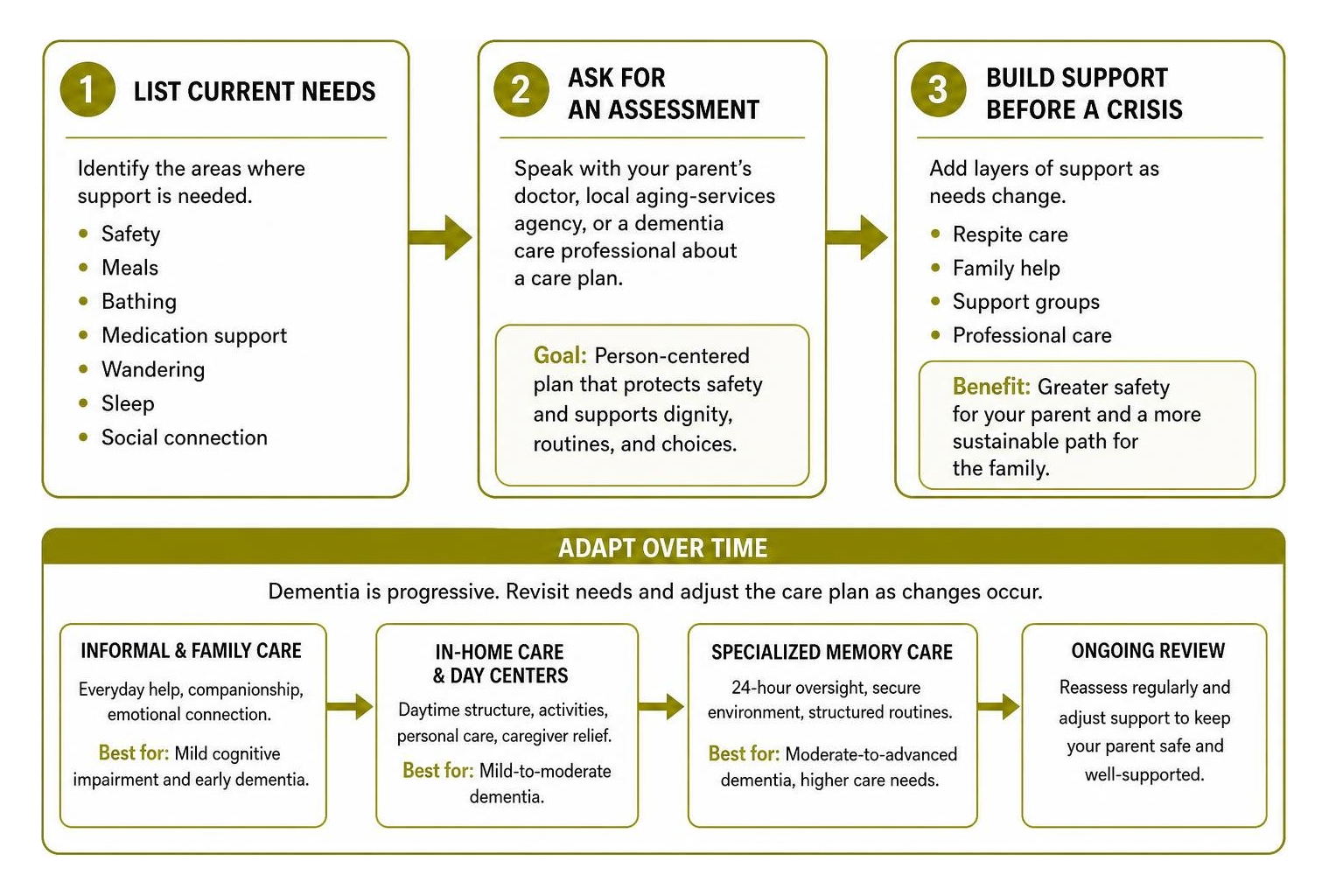
Start with these three steps:
- List current needs: safety, meals, bathing, medication support, wandering, sleep, and social connection.
- Ask for an assessment: speak with your parent’s doctor, local aging-services agency, or a dementia care professional about a care plan.
- Build support before a crisis: add respite, family help, support groups, and professional care as needs change.
Dementia changes more than memory. It can affect judgment, communication, mobility, daily routines, and a family’s relationships. The best support is person-centered: it protects safety while helping your parent keep familiar routines, choices, dignity, and meaningful activities.
For many adult children, the question is not whether they need help. It is which kind of help will make life safer for a parent and more sustainable for the family.

Understanding the Spectrum of Dementia Care Support Services
Navigating cognitive change requires a flexible approach. Dementia is progressive, meaning what works today will shift down the road. According to global health data, one in six people over 80 live with dementia, over 42,000 individuals under 65 are diagnosed with young-onset conditions, and roughly 5% face rare forms such as Frontotemporal Degeneration (FTD) or Lewy Body Dementia (DLB). Finding the right balance between independent living and specialized supervision makes all the difference.
| Care Model | Primary Focus | Best Suited For | Key Advantages |
|---|---|---|---|
| Informal & Family Care | Everyday routine assistance, emotional connection, companionship | Mild cognitive impairment and early-stage dementia | Familiar home environment, preserved family bonds |
| In-Home Care & Day Centers | Scheduled respite, meal prep, cognitive exercises, hygiene help | Mild-to-moderate dementia needing daytime structure | Caregiver relief, social interaction, aging in place |
| Specialized Memory Care | 24-hour clinical oversight, secure architecture, structured routines | Moderate-to-advanced dementia, wander risk, high care needs | Total family peace of mind, purposeful design, professional care |
To find clinical frameworks and support pathways, reviewing an authoritative NHS guide on dementia help and support can help clarify post-diagnosis care plans.
Caregiver Relief and Family Support Options
Providing round-the-clock care is physically and mentally demanding. Family respite offers crucial breathers so you can recharge. Whether through private duty home aides, companion programs, or community adult day centers, these services ensure your loved one engages in structured routines and social interactions without placing the entire physical burden on one person. Sharing duties among family members or utilizing drop-in day clubs keeps life manageable while sustaining your loved one’s engagement.
Specialized Residential Memory Care Solutions
When daily care needs exceed what home care can manage, specialized residential communities step in. Purpose-built communities offer secure environments designed to eliminate wandering hazards, minimize sensory overload, and encourage positive wayfinding. At Villa Toscana Memory Care, our dedicated memory-care setting pairs 24-hour trained staff with personalized assistance. We even bring culinary delight to daily life through our on-site culinary partnership with Giorgio’s Italian Grill, offering rich, flavorful meals that bring joy and connection to our residents. You can explore our dedicated services to see how comprehensive memory care supports the whole family.
Practical Strategies for Daily Living and Home Safety
Living with dementia requires thoughtful adaptations to everyday environments and communication styles. Focusing on what your loved one can still do, rather than lost skills, preserves dignity and self-esteem.

When communicating:
- Speak slowly using concise, clear sentences.
- Maintain calm eye contact at eye level without towering over them.
- Offer simple, binary choices (e.g., “Would you like soup or a sandwich?”) rather than open-ended questions.
- Validate the emotions behind their words rather than correcting factual errors.
For deeper practical advice, refer to NHS practical guidance on looking after someone with dementia.
Overcoming Daily Hygiene, Dining, and Sleep Challenges
Everyday tasks often present hidden hurdles:
- Bathing Anxiety: Deep water and rushing overhead showerheads can be terrifying. Use handheld sprayers, keep the bathroom warm, play soothing music, and wash parts of the body incrementally while keeping the rest draped in warm towels.
- Nutrition and Dysphagia: As taste buds change, individuals often crave stronger flavors or sweeter profiles. If handling utensils causes frustration, serve nutritious finger foods. Ensure regular dental check-ups, as unspoken tooth or denture pain is a frequent trigger for food refusal. Offering stimulating activities for seniors with memory loss alongside enjoyable mealtimes enhances cognitive vitality and sensory joy.
- Sleep-Wake Cycles: Circadian rhythms often get disrupted, leading to sundowning and nighttime disorientation. Maximize natural daytime sunlight exposure, encourage gentle daytime activities, reduce evening caffeine, and install dementia-friendly clocks that clearly differentiate day from night.
Adapting the Home Environment for Independence and Safety
Balancing safety with independence means creating a supportive, hazard-free home:
- Install secure grab bars in showers and beside toilets.
- Remove loose throw rugs and clear wide pathways for walking.
- Place clear text-and-picture labels on cupboards, drawers, and bathroom doors.
- Add nighttime motion-sensor lighting between the bedroom and bathroom.
- Camouflage exit doors with murals or simple privacy curtains to deter disoriented wandering.
Navigating Healthcare Systems, Financial Aid, and Future Planning
Navigating financial, medical, and legal systems early ensures your loved one’s wishes are respected before cognitive capacity declines. Consult the practical guide to caring for a person with dementia for foundational insights on setting up care teams.

Accessing Medicare GUIDE Benefits and Public Programs
Families can access transformative federal and state resources:
- Medicare GUIDE Program: Under Medicare’s Guiding an Improved Dementia Experience (GUIDE) model, eligible beneficiaries receiving traditional Medicare can access comprehensive care coordination, ongoing caregiver training, a 24/7 support line, and up to $2,500 per year in funded respite care.
- Area Agencies on Aging (AAA): Local AAAs help families source home modification grants, meal delivery programs, transportation, and case management.
- Medicaid Home and Community-Based Services (HCBS): State-specific Medicaid waivers can help cover personal care aides and adult day services for qualifying seniors.
Legal Directives and Long-Term Care Planning
Proactive planning protects your family’s future:
- Establish Durable Power of Attorney (POA): Designate trusted healthcare and financial proxies while your loved one retains legal mental capacity.
- Draft Advance Healthcare Directives: Document clear instructions regarding life-support measures, palliative treatments, and end-of-life preferences.
- Organize Financial Assets: Consult an elder law attorney to explore long-term care insurance policies, trusts, and benefit qualifications.
Protecting Caregiver Well-Being and Managing Burnout
You cannot pour from an empty cup. Providing daily dementia care places enormous physical, cognitive, and emotional demands on family members. Acknowledging feelings of frustration, guilt, and anticipatory grief is a vital part of staying resilient.

Finding Local and Virtual Dementia Care Support Groups
Connecting with fellow caregivers reduces feelings of isolation. Support groups offer shared wisdom, practical tips, and deep emotional validation. Many organizations host specialized peer groups tailored to specific dynamics:
- Spouses caring for partners.
- Adult children in their 20s, 30s, or 40s balancing careers, young families, and aging parents.
- Subtype-specific groups focusing on Young-Onset Alzheimer’s, Frontotemporal Dementia, or Lewy Body Dementia.
Utilizing Professional Helplines and Structured Dementia Care Support
When unexpected crises occur or you simply need expert advice, professional lifelines are available around the clock. The Alzheimer’s Association 24/7 Helpline (1.800.272.3900) provides free, confidential guidance and comprehensive care consultations with master’s-level clinicians across more than 200 languages.
Recognizing When It Is Time to Transition to Memory Care
There often comes a point where a loved one’s needs surpass what can safely be managed at home. Recognizing these transitions helps families make proactive, loving decisions.
Key Indicators of Escalating Care Needs
- Frequent Safety Incidents: Unsafe wandering, leaving burners on, or recurring falls.
- Caregiver Exhaustion: Primary caregivers experiencing severe sleep deprivation, chronic health issues, or acute burnout.
- Escalating Behavioral Symptoms: Severe agitation, sundowning, paranoia, or aggressive resistance during personal hygiene tasks.
- Incontinence and Mobility Decline: Complex physical assistance that one person cannot safely manage alone.
Steps for a Smooth Residential Transition
Transitioning to a residential setting can feel overwhelming, but thoughtful steps ease the journey:
- Plan Ahead with Trial Stays: Temporary respite stays allow your loved one to experience the community, dining, and activities before a permanent move.
- Personalize the New Space: Bring familiar bedspreads, cherished family photo albums, and favorite keepsakes to recreate the comforts of home.
- Partner with Care Staff: Share your loved one’s life story, daily habits, former career highlights, and personal passions with the care team.
If you are evaluating dedicated memory care communities in the Mountain View, CA area, we invite you to request a tour of Villa Toscana Memory Care to experience our warm community, engaging programs, and exceptional dining firsthand.
Frequently Asked Questions About Dementia Care Support
What is the Medicare GUIDE benefit for dementia caregivers?
The Medicare Guiding an Improved Dementia Experience (GUIDE) model supports individuals with traditional Medicare who have a documented dementia diagnosis. It provides access to a dedicated care navigator, 24/7 clinical helpline assistance, caregiver education, and up to $2,500 annually in reimbursed respite care services.
How can I balance independence and safety for a loved one with dementia?
Focus on the least restrictive options. Modify the living space with grab bars, auto-shutoff appliances, and clear picture signage. Involve your loved one in daily tasks like folding laundry or setting the table. Focus on their participation and emotional joy rather than perfect results.
What should I do if a person with dementia refuses bathing or food?
Never force the issue. Step back, wait a short while, and reintroduce the activity with a calm, gentle approach. For bathing, address sensory triggers by using a handheld showerhead, warming the room, or trying a soothing towel sponge-bath. For meal refusal, check for oral discomfort or dental pain, provide flavorful bite-sized finger foods, and simplify plate presentation.
Conclusion
Caring for someone with memory loss is a journey of patience, love, and continuous adaptation. Building a comprehensive care circle early—combining community resources, Medicare benefits, peer support groups, and professional care partners—ensures both you and your loved one experience dignity, comfort, and peace of mind.
At Villa Toscana Memory Care, we provide specialized, family-centered memory care in an award-winning setting, combining round-the-clock trained support with exceptional culinary dining from Giorgio’s Italian Grill. Explore how we can support your family at Villa Toscana Memory Care or contact us today for personalized guidance.