
Finding an Alzheimer’s Day Care Center Near You
To find an Alzheimer’s day care center near me, start with your local Area Agency on Aging, an Alzheimer’s Association community resource directory, or your state adult day services directory. Then call several centers, ask about dementia-trained staff, safety procedures, transportation, daily activities, hours, and costs, and schedule a tour before enrolling.
Adult day centers give a person with Alzheimer’s or another dementia a safe, structured place to spend part of the day. They may offer meals, help with personal care, social time, exercise, and memory-friendly activities. For family caregivers, they can create reliable time to work, rest, attend appointments, or simply recharge.
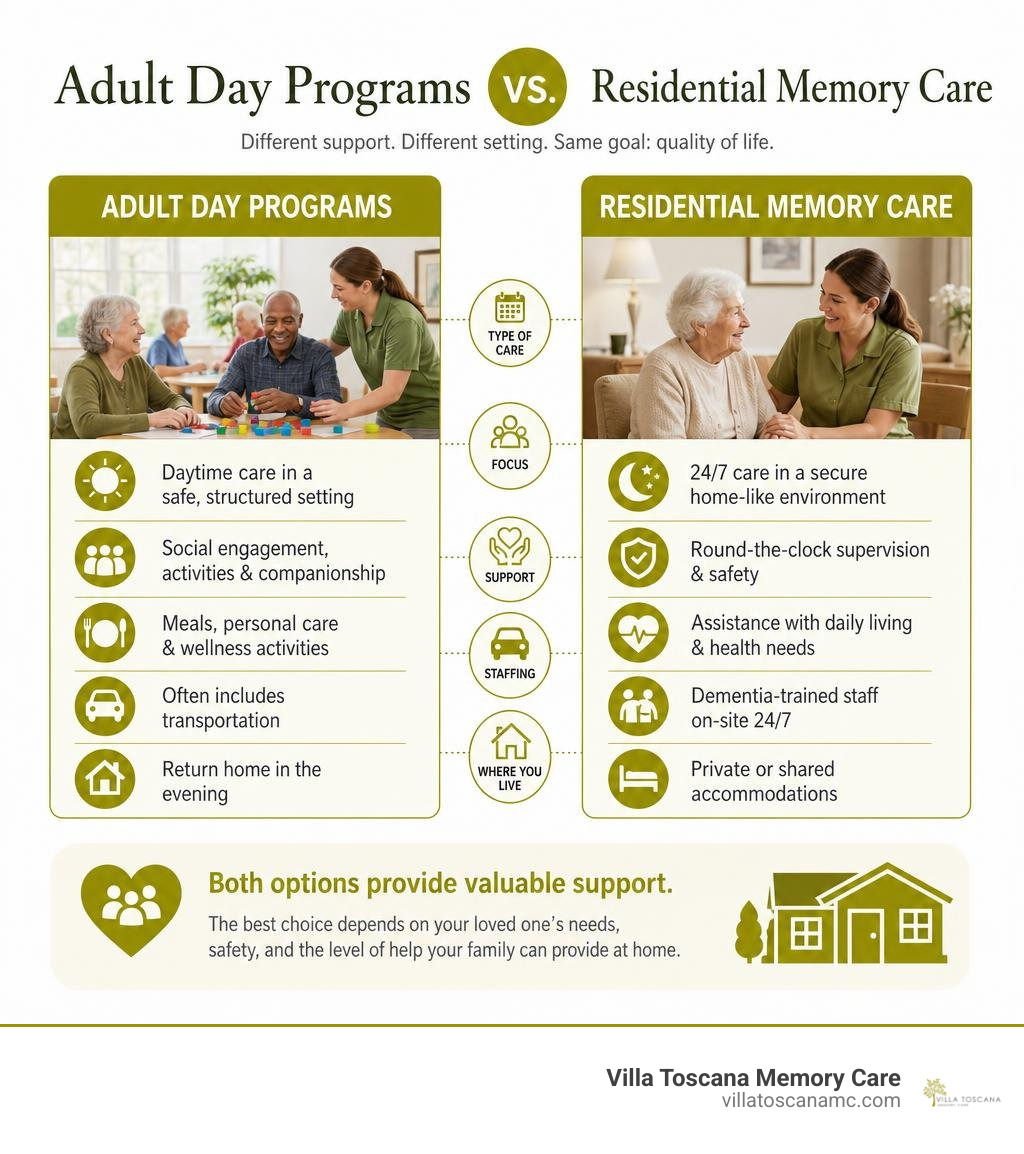
These programs are not the same as residential memory care. Adult day services provide daytime support, while residential memory care provides a secure home and 24-hour staffing. The right choice depends on your loved one’s needs, health, safety risks, and the level of help your family can provide at home.
Understanding Adult Day Services: Social Model vs. Adult Day Health Care
When exploring day programs for a loved one experiencing cognitive decline, it helps to understand that not all facilities offer the same level of assistance. Adult day centers generally fall into two categories: social programs and medical health care models. Knowing the difference ensures your family member receives the right balance of recreational engagement, personal care supervision, and clinical oversight. Exploring comprehensive senior care services helps families map out which level of support best fits their loved one’s current stage of memory loss.
Social Adult Day Programs vs. Adult Day Health Care
Social Adult Day Programs (often referred to simply as ADPs) focus primarily on socialization, group activities, supervision, and basic assistance with activities of daily living (ADLs) like eating and grooming. These centers are designed for individuals who do not require intensive, on-site medical interventions during the day. In many states, social day programs are licensed and regulated by departments of social services.
In contrast, Adult Day Health Care (ADHC) centers operate under a medical model. They provide licensed skilled nursing care, physical therapy, occupational therapy, speech-language pathology, medical monitoring, and direct medication administration. Regulatory oversight for ADHC facilities typically falls under state departments of public health or aging.
| Feature | Social Adult Day Program (ADP) | Adult Day Health Care (ADHC) |
|---|---|---|
| Primary Focus | Socialization, recreation, personal supervision | Skilled nursing, medical care, physical therapy |
| Staffing Model | Activity directors, program aides, CNAs | Registered Nurses (RNs), therapists, CNAs |
| Medical Services | Basic medication reminders (varies by state) | Medication administration, wound care, therapy |
| Participant Needs | Mild-to-moderate cognitive support, ADL help | Complex medical needs alongside memory loss |
| State Oversight | Department of Social Services | Department of Health / Department of Aging |
Specialized Alzheimer’s Day Care Resource Centers (ADCRC)
For individuals navigating progressive dementia, specialized programs such as Alzheimer’s Day Care Resource Centers (ADCRC) offer tailored support. Embedded within either social or health care settings, an ADCRC provides dementia-specific behavioral management, sensory stimulation, and targeted psychosocial support.
These programs structure environments to minimize confusion and sensory overload. Specially trained staff use evidence-based de-escalation techniques, individualized validation strategies, and purposeful sensory therapies to ensure participants feel secure, understood, and engaged.
Core Benefits of Day Programs for Attendees and Caregivers
Caring for someone with dementia is a deeply rewarding journey, but it can also be physically and emotionally exhausting. Adult day services provide a dual-benefit system: structured cognitive enrichment for attendees and vital respite for family caregivers.

Therapeutic Stimulation and Structured Cognitive Activities
Isolation often accelerates cognitive decline. Daytime memory programs counter this by offering engaging daily activities tailored to varying cognitive abilities. Attendees benefit from:
- Reminiscence Therapy: Guided conversations using familiar music, historical photographs, and tactile objects to spark joyful long-term memories.
- Therapeutic Music and Art: Creative expression programs that reduce anxiety, elevate mood, and boost focus without requiring complex verbal skills.
- Adaptive Physical Exercise: Seated yoga, gentle stretching, and balance routines that maintain motor function and promote better nighttime sleep.
- Nutritious Dining: Shared meals and hydration breaks that accommodate special diets and encourage healthy daily caloric intake.
Essential Respite Care and Burnout Prevention
Caregiver burnout is a real health risk. If you wear yourself out to the point of complete physical and mental exhaustion, it becomes nearly impossible to care effectively for someone else. Daytime respite grants family caregivers uninterrupted hours to maintain careers, manage personal health appointments, run household errands, or simply rest.
Participating in day programs also connects families to local caregiver support groups, alleviating guilt and reinforcing that seeking professional assistance is a positive, proactive choice for the entire household.
Program Costs, Subsidies, and Financial Assistance
Understanding the financial landscape of daytime care helps families budget effectively while tapping into available public and non-profit assistance.
Average Daily Rates and Sliding-Scale Fees
Adult day centers are generally one of the most cost-effective care options, priced significantly lower than in-home private nursing or full-time residential memory care.
- Full-Day Rates: Typically range between $70 and $150 per day, covering supervised care, programming, snacks, and a hot lunch.
- Half-Day Rates: Usually around $40 to $80 for four hours or less of service.
- Sliding-Scale Structures: Many non-profit and community-supported centers adjust daily fees based on total household income and ability to pay.
Medicaid, VA Benefits, and Community Respite Grants
Multiple assistance programs can offset or fully cover adult day care expenses:
- Medicaid and HCBS Waivers: In many states, Medicaid covers Adult Day Health Care through Home and Community-Based Services (HCBS) waivers or programs like Community-Based Adult Services (CBAS).
- Veterans Affairs (VA) Benefits: Veterans enrolled in VA health care may qualify for fully covered adult day health care through standard medical benefits.
- Area Agencies on Aging (AAA): Local AAAs frequently distribute respite care grants and local scholarships to help family caregivers facing financial constraints.
- Long-Term Care Insurance: Most private long-term care policies include adult day care benefits when medical necessity criteria are met.
Organizations such as the Adult Day Center – Bay Aging demonstrate how non-profit models integrate sliding scales, Medicaid coverage, and transit assistance, while resources like Joe’s Club – Brevard Alzheimer’s – Titusville Florida highlight community-based adult day services that provide specialized cognitive activities and caregiver relief.
How to Find the Best Alzheimer’s Day Care Center Near Me
Finding the right day program involves researching local licensing, visiting facilities in person, and assessing how staff interact with participants. Looking into a community’s focus on overall health & wellness will give you a clear picture of how they manage nutrition, mobility, and emotional comfort throughout the day.

Evaluating Safety Protocols at an Alzheimer’s Day Care Center Near Me
Safety is paramount when choosing a center for someone living with dementia. During your site visits, evaluate these operational standards:
- Secure Perimeters: Check for keypad-secured exits, delayed-egress doors, and enclosed outdoor garden spaces that prevent wandering.
- Staff-to-Participant Ratios: Look for direct-care ratios of at least one staff member for every four to six participants.
- Staff Credentials: Ensure the team includes Certified Nursing Assistants (CNAs), Medication Aides, and direct-care workers trained in dementia communication and behavioral de-escalation.
- Emergency Preparedness: Ask how medical emergencies, falls, or sudden behavioral shifts are managed and reported to families.
What to Expect During the Trial Period at an Alzheimer’s Day Care Center Near Me
Starting a day program represents a major transition. It is completely normal for a person with dementia to show initial resistance, confusion, or hesitation during their first few visits.
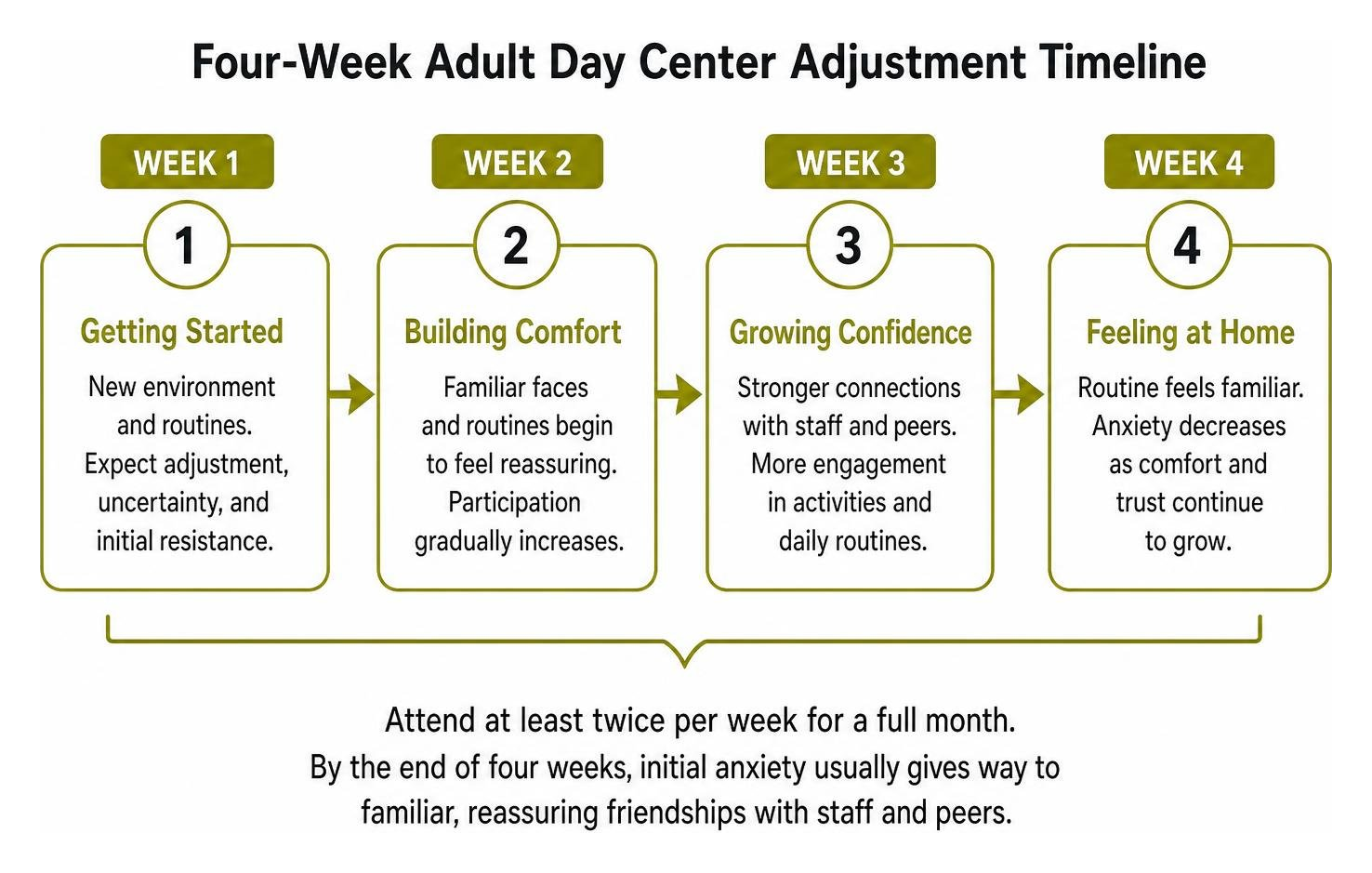
To give the program a fair evaluation, commit to attending at least twice per week for a full month. Occasional, drop-in visits make it difficult to establish a comforting routine. By the end of four weeks, initial anxiety usually gives way to familiar, reassuring friendships with staff and peers.
Frequently Asked Questions About Alzheimer’s Day Programs
How many days per week should someone with dementia attend an adult day center?
Attending two to three days per week is ideal for establishing a predictable routine. Some working families utilize day centers four to five days a week. Consistency helps individuals with memory loss feel secure in their daily schedule.
Does Medicare cover adult day care center services?
Original Medicare (Parts A and B) does not cover adult day care or social adult day programs. However, some Medicare Advantage (Part C) plans offer supplemental adult day care benefits, and Medicaid covers adult day health care for eligible low-income seniors.
What happens if a participant exhibits behavioral challenges or wandering?
Licensed memory day centers employ trained professionals skilled in gentle redirection, sensory engagement, and validation therapy. Facilities feature secured doors and monitored indoor-outdoor walking paths to ensure participants remain safe without feeling restricted.
Conclusion
Finding the right daytime support allows family caregivers to balance daily responsibilities while ensuring their loved one enjoys cognitive stimulation, nutritious meals, and social connection. As dementia progresses, care needs naturally change over time. When daytime respite is no longer enough to manage around-the-clock safety and medical needs, transitioning to a dedicated residential community provides the highest quality of life for the entire family. If your family is exploring full-time care options with personalized attention and chef-crafted dining, contact us at Villa Toscana Memory Care to learn more about our award-winning memory care community in Mountain View, CA.