
Dementia Lighting Design Starts With Brighter Days and Gentler Nights
Let daylight in during the day. Keep living spaces bright and evenly lit, with extra light for reading, meals, and grooming. As evening approaches, dim the lights and shift to warmer tones. At night, use a soft, low-glare light to mark the path to the bathroom.
This day-to-night pattern can help support sleep and make rooms easier to navigate. It also matters because older eyes often need more light to see clearly, even when bright bulbs or glare feel uncomfortable. Thoughtful lighting is one practical way to make daily life calmer and safer for someone living with dementia.
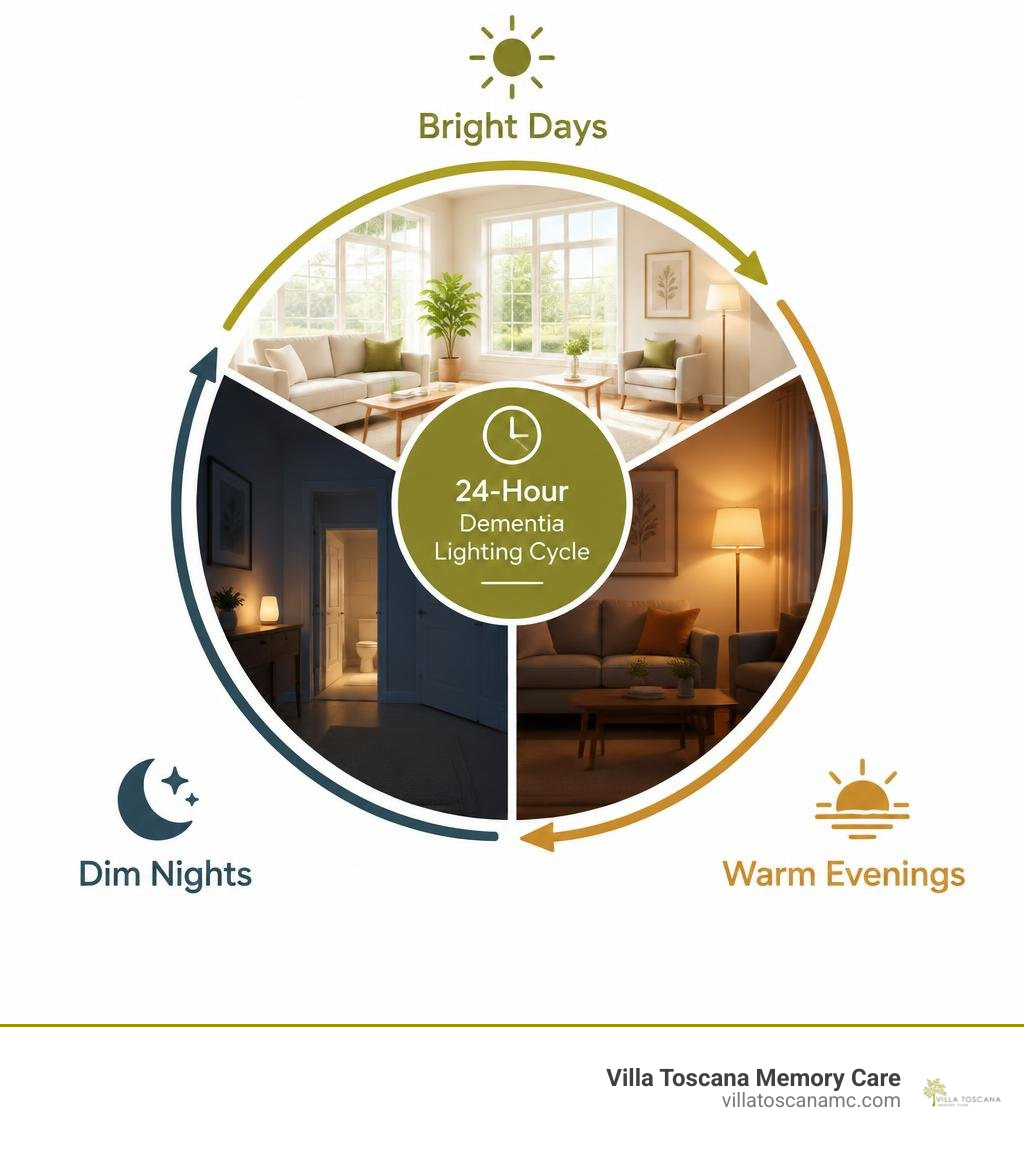
Dementia lighting design word guide:
The Biology of Light: Circadian Rhythms and the Aging Brain
Light is the primary environmental time-giver—or zeitgeber—that sets our internal master clock. When daylight enters the eye, it tells the brain that it is time to be alert, active, and engaged. When darkness falls, the brain produces melatonin to prepare the body for restorative sleep.
In the aging brain, this delicate neurological pathway often begins to unravel. Natural ocular changes such as pupillary miosis (smaller pupil size) and progressive lens yellowing dramatically reduce the quantity and quality of light reaching the retina. Compounding this, neurodegenerative processes disrupt the neural pathways between the retina and the suprachiasmatic nucleus (the brain’s master biological clock), leading to profound sleep fragmentation, daytime somnolence, and nighttime restlessness (PMCID PMC9753196).
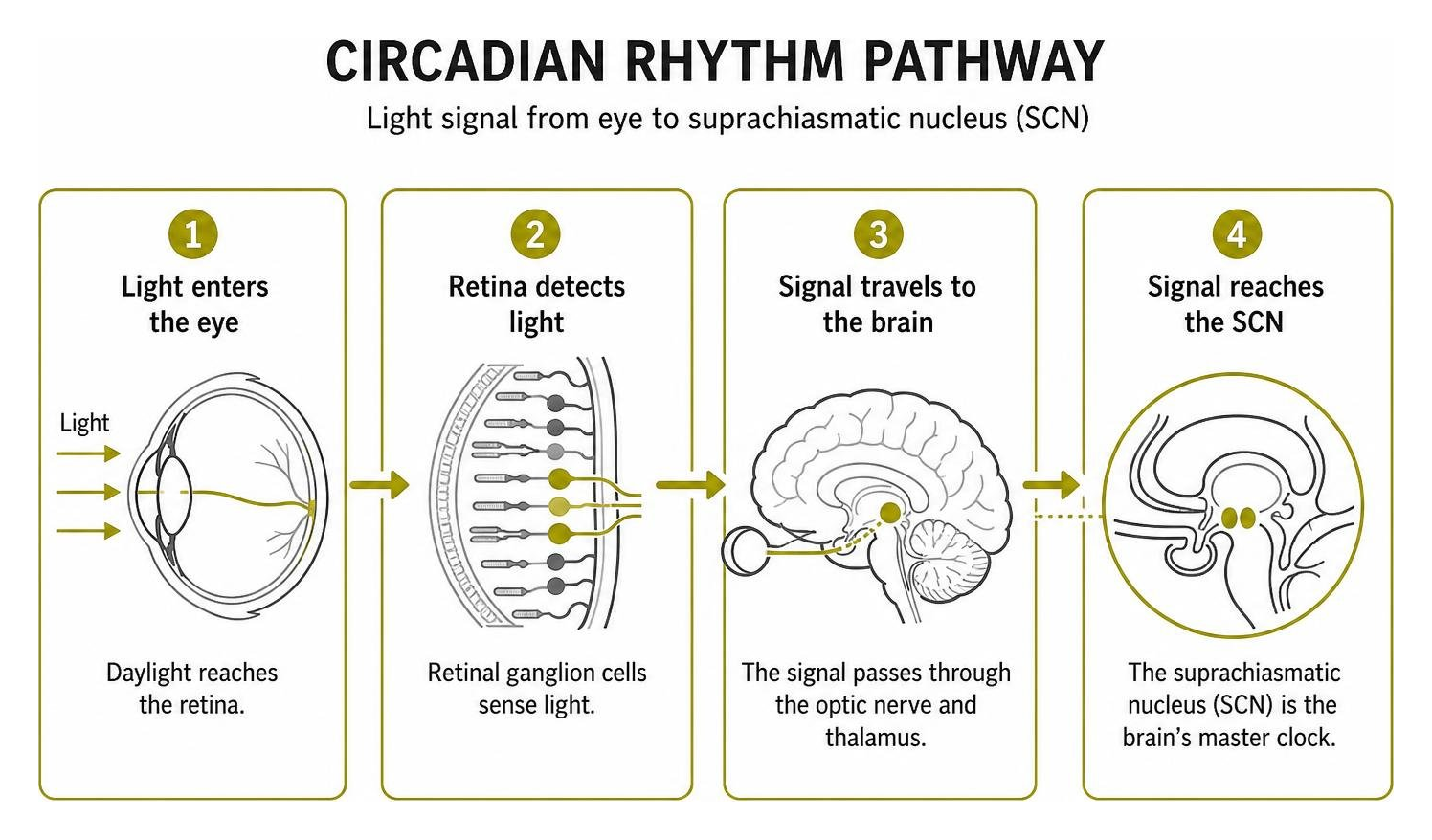
How Visual Aging Alters Dementia Lighting Design Requirements
By the age of 75, the average senior requires roughly twice as much light as standard architectural guidelines recommend, and up to four times as much light as a 20-year-old to achieve satisfactory visual clarity. As seniors reach their mid-80s—the typical age of individuals moving into memory care environments—the crystalline lens inside the eye scatters light, degrading contrast sensitivity and spatial acuity while significantly increasing vulnerability to harsh glare.
Despite these increased illumination requirements, traditional institutional lighting often falls far below necessary biological thresholds. Research on interactive lighting preferences indicates that individuals living with cognitive decline benefit substantially when illumination levels and color temperatures are tailored to counteract these age-related deficits, providing visual clarity without overwhelming sensitive eyes.
Melatonin Regulation, ipRGCs, and Sleep-Wake Fragmentation
Beyond classic vision (rods and cones), our eyes possess specialized photoreceptors called intrinsically photosensitive retinal ganglion cells (ipRGCs). These cells contain the photopigment melanopsin, which is uniquely sensitive to short-wavelength blue light. When stimulated by robust daytime light, ipRGCs suppress daytime melatonin and promote cortisol secretion to encourage alertness.
Between 40% and 70% of seniors struggle with chronic sleep disorders, a condition severely worsened in dementia. Because the average elderly adult spends only about one hour outside per day—and often far less in institutional settings—ipRGCs rarely receive the bright daytime signal needed to synchronize the sleep-wake cycle. As a result, residents often sleep fitfully during the day and stay awake for hours at night. Addressing this through strategic architectural illumination is an indispensable step toward relieving caregiver burden through environmental support.
Core Principles of Dementia Lighting Design
Successful architectural illumination in memory care balances visual performance (photopic vision) with non-visual circadian entrainment. Applying these principles requires precise control of spectrum, intensity, timing, and distribution.
Dynamic Circadian Lighting vs. Static Illumination
Static indoor lighting delivers uniform brightness and unchanging color temperature regardless of whether it is 9:00 AM or 9:00 PM. In contrast, dynamic circadian lighting continuously modulates intensity and correlated color temperature (CCT) throughout the day to mirror the progression of natural sunlight.
| Lighting Parameter | Static Care Lighting | Dynamic Circadian Lighting |
|---|---|---|
| Daytime Spectrum | Monotonous 3000K–4000K | Blue-enriched 5000K–6500K |
| Evening Spectrum | Unchanged | Warm amber 2200K–2700K |
| Biological Effect | Sub-threshold circadian stimulus | Strong ipRGC melanopic activation |
| Rest-Activity Impact | Irregular sleep-wake cycles | Significant stabilization of daily routines |
| Behavioral Impact | Higher rates of evening agitation | Improved mood, reduced apathy and agitation |
A recent cohort study on daylight-simulating luminaires in dementia care environments revealed statistically significant improvements in positive affect (P =.03), reductions in social isolation (P =.048), and increased feelings of home comfort (P =.047) after 5 to 10 weeks of dynamic exposure (PMCID PMC11622703). The same study observed dramatic gains in rest-activity stabilization, including interdaily stability (P <.001) and intradaily variation (P <.001).
Eliminating Glare, Shadows, and Misperceptions

Because dementia alters visual-spatial processing, sudden changes in illumination, harsh specular reflections, and heavy floor shadows can be interpreted as physical obstacles, drop-offs, or threatening figures.
Key strategies to prevent perceptual distortions include:
- Diffuse, Indirect Luminaires: Directing light toward matte-finished ceilings and walls creates uniform vertical illuminance and washes the room in soft light without exposed pinpoint sources.
- Non-Reflective Surfaces: Highly polished floors reflect overhead downlights, creating optical pools that residents may perceive as water or holes in the floor. Matte floor finishes prevent visual hesitation and freeze-gait episodes.
- Graduated Thresholds: Transitional zones, such as entry vestibules, should feature graduated brightness steps and comfortable seating so older eyes have time to adapt when moving between bright outdoor environments and indoor living areas.
Behavioral Impacts: Sundowning, Mood, and Environmental Safety
When circadian rhythms fall out of sync, non-cognitive dementia symptoms frequently escalate. Thoughtful environmental adjustments can stabilize these patterns.
Mitigating Agitation and Sundowning Syndrome
“Sundowning”—the emergence of neuropsychiatric distress, pacing, confusion, and anxiety in the late afternoon and early evening—is closely linked to circadian disruption and sensory exhaustion. When natural light wanes and ambient indoor shadows lengthen, individuals with cognitive impairment struggle to process spatial cues, which can trigger acute anxiety. This behavioral pattern is also evident when navigating frontotemporal dementia symptoms and Alzheimer’s disease alike.
In the St. Katharina dementia lighting research project in Vienna, the introduction of controllable, biologically effective lighting systems supplying up to 2200 lux during daytime hours stabilized daily rest-activity patterns, noticeably reduced evening agitation, and lowered staff-reported workplace stress. Bright morning and midday biological light signals help suppress melatonin production during waking hours, sustaining daytime alertness and preventing the abrupt late-afternoon behavioral collapse typical of sundowning syndrome.
Enhancing Safety and Fall Prevention Through Visual Contrast
Seniors living with dementia are three times more likely to experience a fall than their cognitively intact peers. Dim environments degrade postural stability and make it difficult to detect changes in flooring elevation or spot obstacles. Integrating proactive environmental lighting modifications alongside comprehensive dementia fall prevention strategies creates a reliable framework for physical safety.
- Color and Contrast Definition: High color-contrast switch plates, doorframes, and baseboards assist with depth perception and spatial orientation.
- Illuminated Transitions: Ensuring that bathroom thresholds, hallway corridors, and step edges have focused, shadow-free illumination enables residents to step forward confidently without misjudging distances.
Room-by-Room Practical Implementation Guide
Creating an effective lighting scheme involves layering ambient, task, and architectural fixtures across various living spaces while maintaining a residential atmosphere. These tailored spaces also provide the perfect backdrop for engaging in purposeful activities for memory loss.
Common Living and Dining Areas
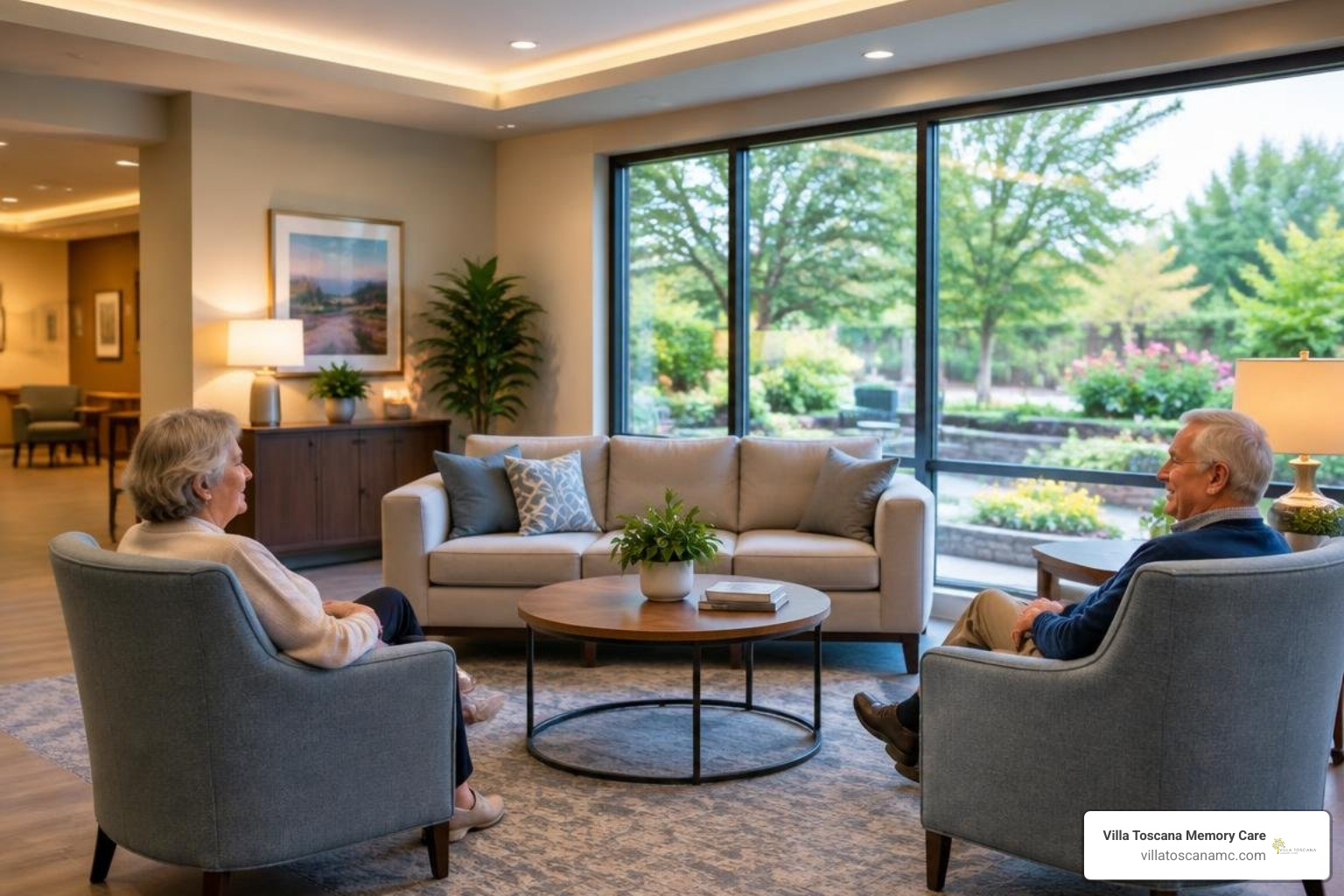
Living rooms, dining halls, and activity spaces require adaptable lighting systems capable of providing bright, energizing daytime environments and calming, low-stimulation evening atmospheres.
- Daytime Illuminance: Maintain 300 to 500 lux of ambient light throughout living rooms, utilizing high-reflectance ceiling surfaces to bounce light downward evenly.
- Dining and Activity Task Lighting: Increase focused illumination to 500–700 lux over dining tables and activity zones to assist with meal identification and manual hobbies.
- Daylight Integration: Arrange seating near clean, unobstructed windows overlooking natural gardens, bird feeders, or secure courtyards to maximize natural circadian exposure as explored in integrative lighting design in care facilities.
Bedrooms, Bathrooms, and Low-Disruption Nighttime Lighting
Bedrooms and bathrooms demand specialized nighttime strategies to prevent sleep disruption during essential visits to the restroom.
- Bedside Task Controls: Install intuitive, touch-activated bedside lamps with warm-toned bulbs (<2700K) so residents can easily manage light without fumbling for small switches.
- Low-Level Amber Guidance: Use motion-activated, floor-level amber or red-spectrum LED step lights (<20 lux) along baseboards from the bed to the ensuite bathroom. Amber wavelengths illuminate obstacles without suppressing melatonin production or triggering full neurological wakefulness.
- Contrasting Bathroom Fixtures: Ensure bathroom lighting brightly highlights the toilet seat and sink basin using high-contrast color palettes without casting harsh glare onto mirrors.
Research Gaps and Future Technical Standards
While the physiological benefits of daylight-simulating light are well established, research in specialized care environments continues to evolve. Key areas of ongoing study include:
- Internet of Things (IoT) Integration: Incorporating unobtrusive, radar-based activity sensors that adjust ambient room spectrum and intensity based on individual resident movement and wake-sleep trends in real time.
- Long-Term Longitudinal Trials: Expanding multi-year studies to evaluate how dynamic lighting interventions affect the progression rate of cognitive and behavioral symptoms across diverse dementia sub-types.
- Standardized Biological Metrics: Moving architectural specifications from traditional visual photopic lux toward standardized circadian measurements.
Technical Dementia Lighting Design Standards: Lux, CCT, and Melanopic EDI
Modern lighting design relies on precise biological metrics to ensure fixtures deliver therapeutic value:
- Melanopic Equivalent Daylight Illuminance (M-EDI): Recommended standards target daytime indoor M-EDI levels exceeding 250 to 500 lux at eye level during morning hours, dropping below 10 lux in the late evening.
- Circadian Stimulus (CS): Target a CS value of ≥ 0.3 in active zones between 8:00 AM and 2:00 PM to stimulate ipRGCs and reinforce sleep-wake alignment.
- Color Rendering Index (CRI): Utilize LED fixtures with a CRI of ≥ 80 (ideally ≥ 90) to ensure accurate color rendering, which aids in meal recognition and visual comfort.
- Photometric Modeling: Utilize software tools like DIALux evo to calculate vertical illuminance at seated resident eye levels, verifying that light fields meet biological thresholds across all room zones.
Frequently Asked Questions About Dementia Lighting
What is the ideal light color for someone with dementia at night?
The ideal nighttime light is monochromatic amber or warm red (<2000K) delivered at low intensity. Blue-depleted amber light provides adequate illumination for navigation without triggering melanopsin-containing ipRGC photoreceptors, keeping melatonin production uninterrupted and helping seniors return to sleep quickly.
How much brighter should indoor lighting be for older adults with memory loss?
Because of natural pupillary constriction and yellowing of the crystalline lens, seniors over age 75 require approximately twice the standard lighting levels of younger adults, and task areas often require 500 to 700 lux. Ambient living areas should maintain 300 to 500 lux of even, diffuse light.
Can dynamic daylight-simulating luminaires reduce agitation?
Yes. Clinical cohort studies and research trials have demonstrated that dynamic, daylight-simulating luminaires help stabilize the body’s circadian clock, significantly improving positive mood, reducing late-afternoon agitation (sundowning), and lowering feelings of social isolation over sustained exposure periods.
Conclusion
Environmental design is a vital component of compassionate, non-pharmacological memory care. By aligning indoor lighting with human circadian biology, memory care environments can turn everyday light into a therapeutic support. Brighter days and softer nights help restore natural rest-activity rhythms, reduce disorientation, and foster a safer, more comforting setting for people living with cognitive decline.
At Villa Toscana Memory Care, our purpose-designed community in Mountain View, CA, brings these evidence-based principles together. We combine circadian-supportive architecture, personalized 24-hour care, and vibrant social programming to help residents thrive in comfort, dignity, and safety.