
Choosing the Right Dementia Care Setting
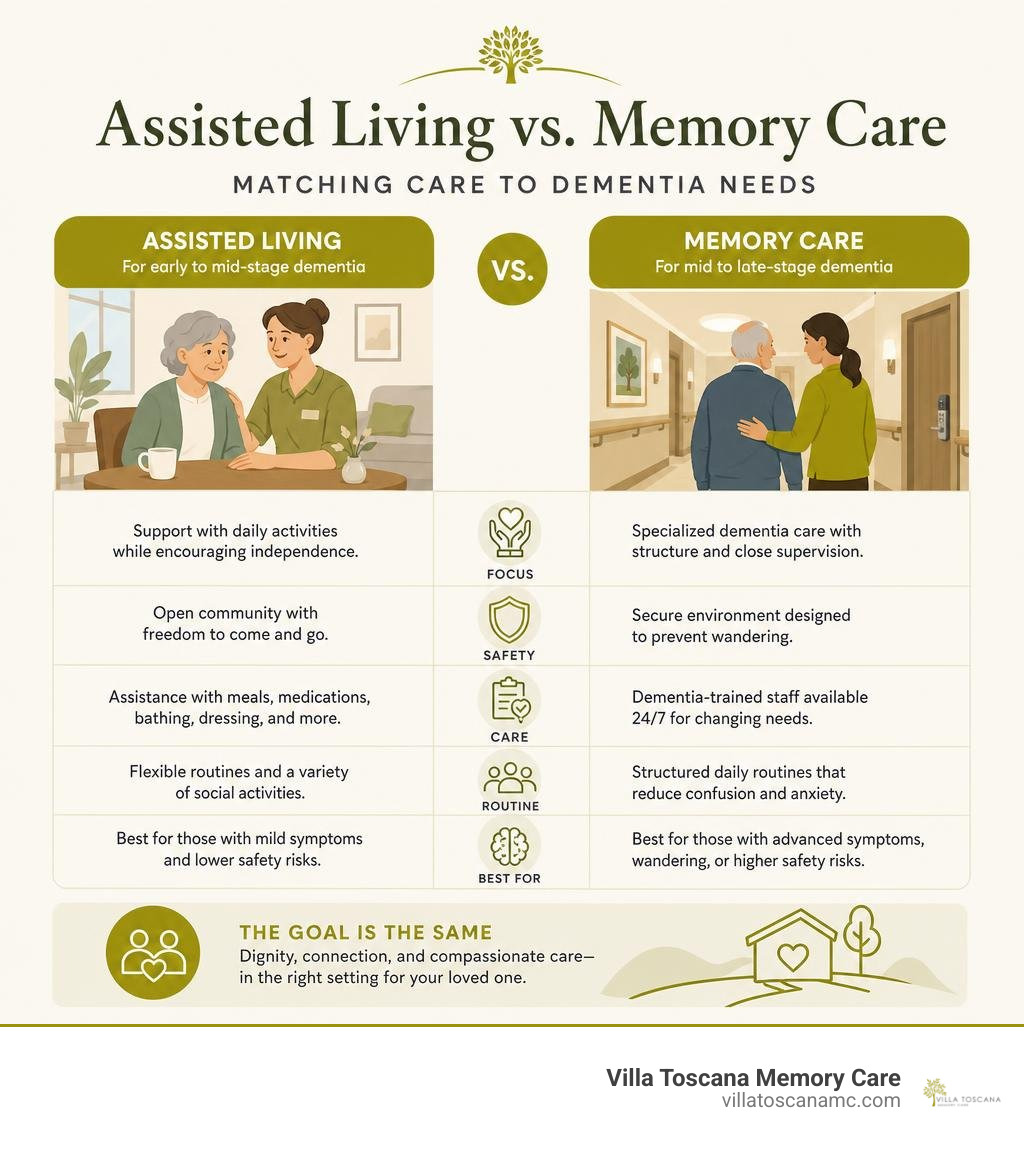
Assisted living for a dementia patient may work when the person can still take part in daily life with reminders and personal-care help. But if wandering, confusion at night, frequent behavioral symptoms, or round-the-clock supervision are concerns, a dedicated memory care setting is often the safer fit.
Start by matching the community to your parent’s current needs:
- Ask whether staff are trained specifically in dementia care and available 24 hours a day.
- Check whether the environment is secure, calm, and designed to prevent unsafe wandering.
- Find out how the community handles medication, meals, falls, agitation, and changes in health.
- Include your parent, their doctor, and close family members in the care decision.
This choice can feel heavy, especially when you are already managing caregiver stress and watching memory loss progress. You are not alone: as many as 68% of assisted living residents live with dementia, and many need moderate to extensive support.
The key difference is simple. Assisted living supports independence with help for daily tasks. Memory care adds dementia-focused staffing, structured routines, and safety features for people whose cognitive changes create greater risk. This guide explains how to compare both options with confidence.
Understanding Residential Care: Assisted Living vs Memory Care
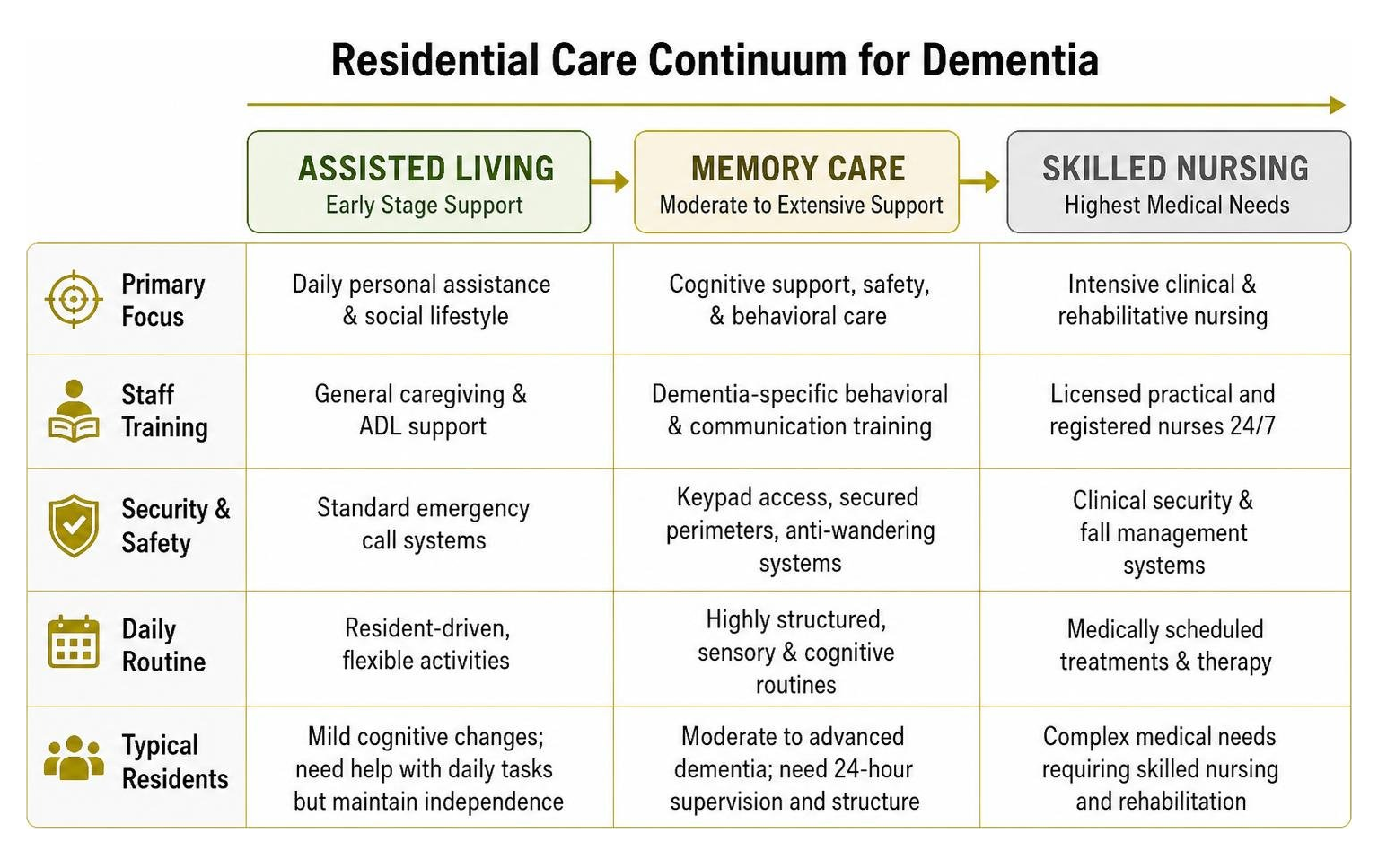
When navigating senior care options, terms like “assisted living,” “memory care,” and “skilled nursing” are often used interchangeably, but they serve distinct stages of health and cognitive function. Understanding these distinctions is crucial when evaluating specialized dementia care options.
Assisted living communities are designed for seniors who need help with basic activities of daily living (ADLs)—such as bathing, dressing, grooming, and managing medications—while maintaining a high degree of personal independence. Residents typically live in private apartments, enjoy communal dining, and participate in social calendars.
In contrast, memory care—often housed within a dedicated wing or a standalone community—provides specialized, 24-hour supervision specifically tailored for individuals experiencing progressive cognitive impairment. These environments offer specialized behavioral support, structured daily programming, and secure architectural designs to manage symptoms that standard assisted living environments cannot safely accommodate.
| Feature | Standard Assisted Living | Specialized Memory Care | Skilled Nursing Facility |
|---|---|---|---|
| Primary Focus | Daily personal assistance & social lifestyle | Cognitive support, safety, & behavioral care | Intensive clinical & rehabilitative nursing |
| Staff Training | General caregiving & ADL support | Dementia-specific behavioral & communication training | Licensed practical and registered nurses 24/7 |
| Security & Safety | Standard emergency call systems | Keypad access, secured perimeters, anti-wandering systems | Clinical security & fall management systems |
| Daily Routine | Resident-driven, flexible activities | Highly structured, sensory & cognitive routines | Medically scheduled treatments & therapy |
| Cost Range | Moderate baseline (approx. $74,400/year base) | Higher tier due to specialized staffing ratios | Highest cost ($114,975–$129,575/year average) |
Assessing an Assisted Living for Dementia Patient in Early Stages
In the early stages of cognitive decline—often categorized as mild cognitive impairment (MCI) or early Alzheimer’s disease—an assisted living setting can provide an ideal balance of autonomy and support. During this phase, individuals may struggle with complex instrumental tasks such as managing finances, balancing complex medication regimens, or driving safely, yet they retain basic self-care abilities.
Assisted living offers structured daily routines that reduce cognitive fatigue. Having meals prepared, housekeeping handled, and medications dispensed on schedule frees mental energy for social interaction and wellness. Participating in memory-stimulating senior activities—such as gentle fitness classes, book clubs, art sessions, and music hours—can help maintain cognitive vitality and reduce the isolation that often accelerates cognitive decline.
Specialized Memory Care and Advanced Dementia Needs
As dementia advances into moderate and severe stages, cognitive deficits begin impacting safety awareness, judgment, and emotional regulation. At this point, standard assisted living environments may no longer provide sufficient security.
Memory care communities incorporate environmental modifications and specialized interventions:
- Secured Perimeters: Enclosed courtyards and coded exit doors prevent elopement and unsafe wandering.
- Specialized Dining Support: Nutrition becomes critical as individuals may forget to eat, lose motor skills needed for utensils, or experience swallowing difficulties. Communities provide adaptive dishware, finger-food options, and cueing assistance.
- Complex Symptom Support: Progressive dementias bring unique behavioral challenges. Implementing tailored care strategies for frontotemporal dementia or Lewy body dementia requires caregivers trained in sensory de-escalation, non-verbal communication, and gentle redirection rather than clinical confrontation.
Choosing Assisted Living for Dementia Patient: Safety, Staffing, and Care Needs
Selecting a residential setting requires looking closely at care capabilities. Clinical research shows that up to 68% of assisted living residents have dementia, with the majority experiencing moderate to severe impairment (Smith et al., 2008). Furthermore, most residents with dementia in these settings take one or more psychotropic medications to manage mood and behavioral symptoms (Smith et al., 2008).

Because care demands are elevated, families must evaluate whether a community provides basic hospitality or genuine clinical oversight.
Staff Training and Resident-to-Staff Ratios
A community’s ability to care for cognitive loss depends on the expertise of its frontline team. When touring prospective communities, explore their staffing models and training protocols:
- Dementia-Specific Certifications: Inquire whether team members receive comprehensive dementia care education covering stages of progression, validation therapy, redirection strategies, and crisis de-escalation techniques.
- Staff-to-Resident Ratios: Because state regulations vary widely regarding minimum staffing, navigating memory care staffing ratios helps ensure your loved one receives consistent attention during critical shifts.
- Psychotropic Medication Monitoring: Given the high prevalence of medication management needs (Smith et al., 2008), ensure the facility has clear oversight protocols involving registered nurses and consulting pharmacists to prevent overmedication and adverse drug interactions.
- Caregiver Retention: High staff turnover disrupts the familiarity that individuals with memory loss rely on. Ask management about caregiver tenure and consistent shift assignments.
Safety, Environment, and Daily Life Enrichment
A well-designed physical environment minimizes confusion, encourages mobility, and promotes dignity. Look for purposeful architectural details:
- Wayfinding Architecture: Visual cues, color-coded hallways, and memory boxes outside resident suites help seniors navigate independently without disorientation.
- Sensory and Calming Areas: Quiet spaces with soothing lighting and tactile elements allow overstimulated residents to decompress, reducing late-afternoon agitation (sundowning).
- Safe Outdoor Living: Secure, continuous walking paths in private gardens allow residents to experience fresh air without encountering physical hazards or dead ends. You can explore how these features come together by reviewing purpose-built memory care amenities and well-structured floor plans.
Comparing Costs and Financial Options for Dementia Care
Financing long-term residential care requires clear planning and realistic cost projections. The national average cost for basic services in an assisted living setting is approximately $74,400 per year (roughly $6,200 per month).
Specialized memory care typically incurs an additional monthly fee—often ranging between $1,000 and $3,000 above standard assisted living rates—to account for higher staffing ratios, secure infrastructure, and specialized programming. For comparison, comprehensive skilled nursing facilities average $114,975 per year for a semi-private room and $129,575 per year for a private room.

Families use a variety of financial resources to cover these expenses:
- Private Pay & Personal Assets: Most families fund residential care through retirement savings, pensions, home equity lines, or the sale of personal real estate.
- Long-Term Care Insurance (LTCI): Traditional or hybrid LTCI policies often offset a significant portion of assisted living and memory care expenses once a physician certifies that the policyholder requires assistance with two or more ADLs or requires supervision due to cognitive impairment.
- Medicaid HCBS Waivers: While standard Medicaid does not pay for room and board in assisted living facilities, many states offer Home and Community-Based Services (HCBS) waivers that help cover personal care services for income-qualified seniors.
- Veterans Aid and Attendance Benefit: Eligible wartime veterans and surviving spouses facing cognitive decline can receive monthly tax-free pension supplements to offset assisted living and memory care expenses.
- PACE Programs: Programs of All-Inclusive Care for the Elderly (PACE) coordinate medical and supportive care, occasionally assisting community-dwelling individuals with specialized daytime and supplemental residential services.
Determining When Assisted Living Is No Longer Appropriate
Dementia is progressive, and a setting that provided ample support during early stages may eventually become inadequate. Recognizing when care needs exceed standard assisted living protects your loved one’s physical safety and overall well-being. Finding practical paths to relieve caregiver burden often involves knowing when it is time to transition to a higher level of support.
Key indicators that a resident requires advanced memory care or skilled nursing include:
- Unsafe Wandering and Elopement Attempts: Attempting to exit non-secured doors or showing consistent spatial disorientation.
- Escalating Behavioral Challenges: Severe aggression, unmanageable vocalizations, or persistent paranoia that compromises the resident’s or community’s safety.
- Advanced Mobility and Transfer Needs: Progression to two-person physical transfers, bed-bound status, or complete dependence for all mobility.
- Severe Dysphagia and Feeding Challenges: Frequent choking episodes, significant weight loss, or the inability to safely chew and swallow without specialized clinical assistance.
- Complex Clinical Needs: The development of pressure ulcers requiring advanced wound staging, frequent intravenous therapies, or complex catheter care.
Transitioning an Assisted Living for Dementia Patient to Memory Care
Moving between care levels requires coordination to minimize transfer trauma. Establish an interdisciplinary care plan involving the resident’s physician, nursing directors, and direct caregivers. Regular participation in family council meetings and maintaining open communication with the care team ensures consistency.
If disputes arise regarding discharge policies or care quality, families can consult their local Long-Term Care Ombudsman—a government-funded advocate dedicated to protecting resident rights. Additionally, incorporating palliative and hospice care partners within a dedicated memory care setting provides comfort-focused clinical management in late-stage dementia.
You can learn more about comprehensive programs by reviewing tailored memory support services and structured daily activities.
Frequently Asked Questions about Dementia Residential Care
How do I know if assisted living is sufficient for moderate dementia?
Determining suitability involves reviewing standardized cognitive evaluations (such as the MMSE or MoCA) alongside functional assessments. If the individual can navigate within a community without elopement risk, cooperates with daily caregiving, and sleeps through the night without severe confusion, assisted living may suffice. However, if they display frequent exit-seeking behavior, require constant cueing to eat, or experience severe sundowning, a dedicated memory care unit with enhanced security is necessary.
What questions should families ask when touring a facility?
When touring prospective communities, consider asking:
- What specific dementia care training and certifications do caregivers receive?
- What is the direct staff-to-resident ratio during the day, evening, and night shifts?
- How are behavioral symptoms, such as agitation or wandering, addressed without immediate reliance on emergency services?
- How often are medications reviewed by an RN or consulting pharmacist?
- What are the discharge criteria if my loved one’s care needs increase?
What resources are available to help research long-term care communities?
Families can use several national and local resources:
- Alzheimer’s Association 24/7 Helpline (800.272.3900): Provides confidential support, crisis assistance, and local care referrals.
- Medicare Care Compare: Offers public ratings, health inspection data, and staffing metrics for certified long-term care providers.
- State Licensing and Inspection Portals: Allow families to review recent state survey reports, citations, and substantiated complaints for any licensed assisted living facility.
- Local Area Agencies on Aging (AAA): Connect families with local Long-Term Care Ombudsmen and regional support programs.
Conclusion
Choosing the right care setting for a loved one living with dementia is an evolving journey. While early-stage cognitive changes can often be managed within standard assisted living environments, progressive memory loss requires the heightened security, dedicated staffing ratios, and sensory-tailored routines of specialized memory care.
At Villa Toscana Memory Care, we provide an award-winning, family-owned setting designed exclusively for seniors with Alzheimer’s and related dementias. Located in Mountain View, California, our community combines 24-hour specialized caregiving, purpose-built architectural suites, and dining partnerships with Giorgio’s Italian Grill to support comfort, safety, and dignity at every stage.
To speak with our care team, schedule a personalized tour, or discover specialized memory care living options, please contact us today.
References
Smith M, Buckwalter KC, Kang H, Ellingrod V, Schultz SK. “Dementia care in assisted living: needs and challenges..” Issues in mental health nursing, 2008. PMCID PMC3093103.